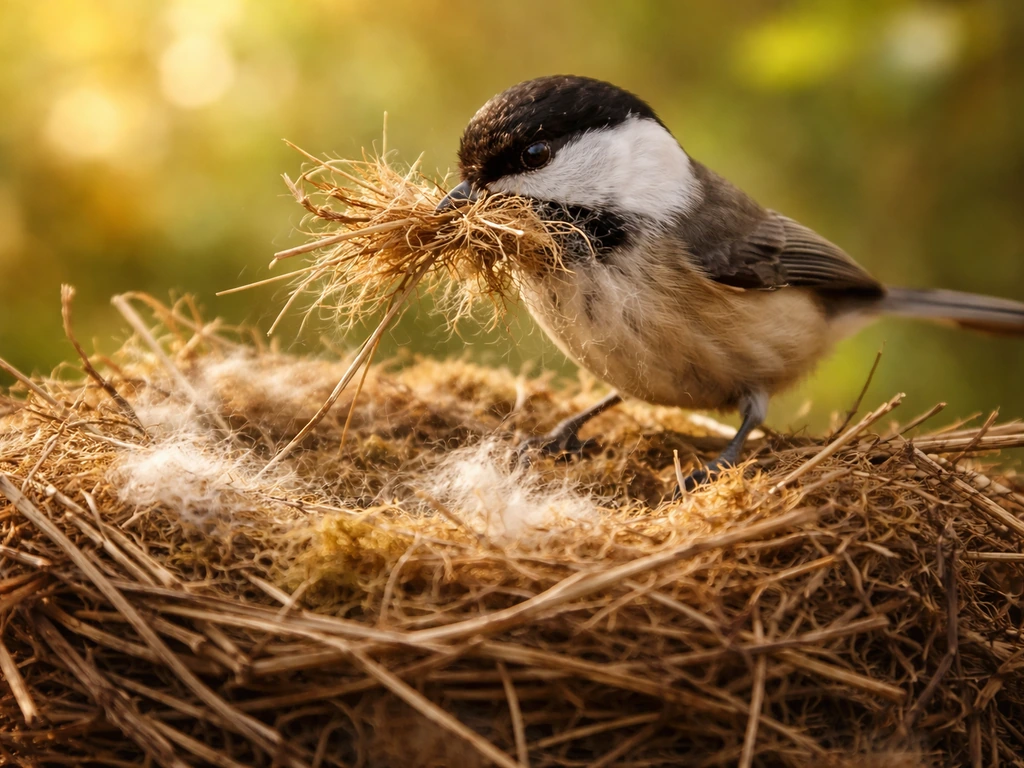
Most birds take anywhere from 2 days to 2 weeks to build a nest, but the real range is wider than that. A killdeer scrapes a nest in literal minutes. A bald eagle adds to a platform nest for months. The average backyard bird you're likely watching (a robin, a bluebird, a barn swallow) lands somewhere between 3 and 20 days depending on the species, the weather, and whether that bird has done this before.
How Long Does It Take to Build a Bird Nest? Timelines

Maya Bennett
26 Apr 2026
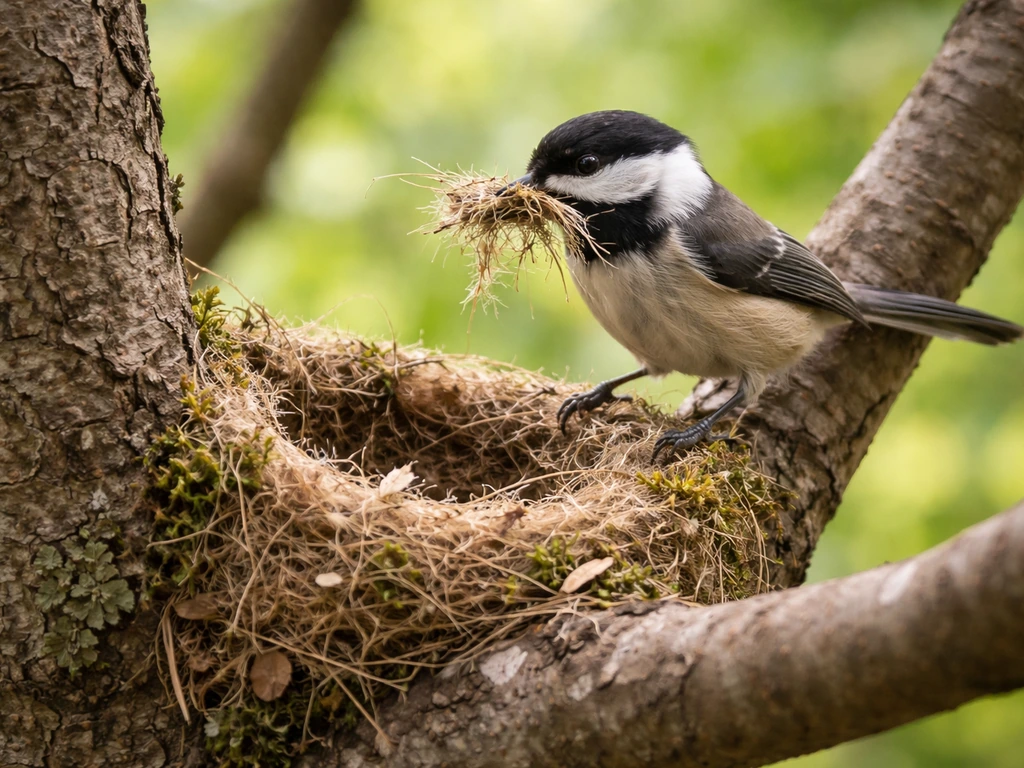
Typical nest-building time ranges at a glance
Before diving into what drives the timeline, here are real-world numbers for common nest types. These are construction-only estimates, meaning the time from first material placement to a nest ready for eggs.
| Nest Type / Species | Typical Build Time | Notes |
|---|---|---|
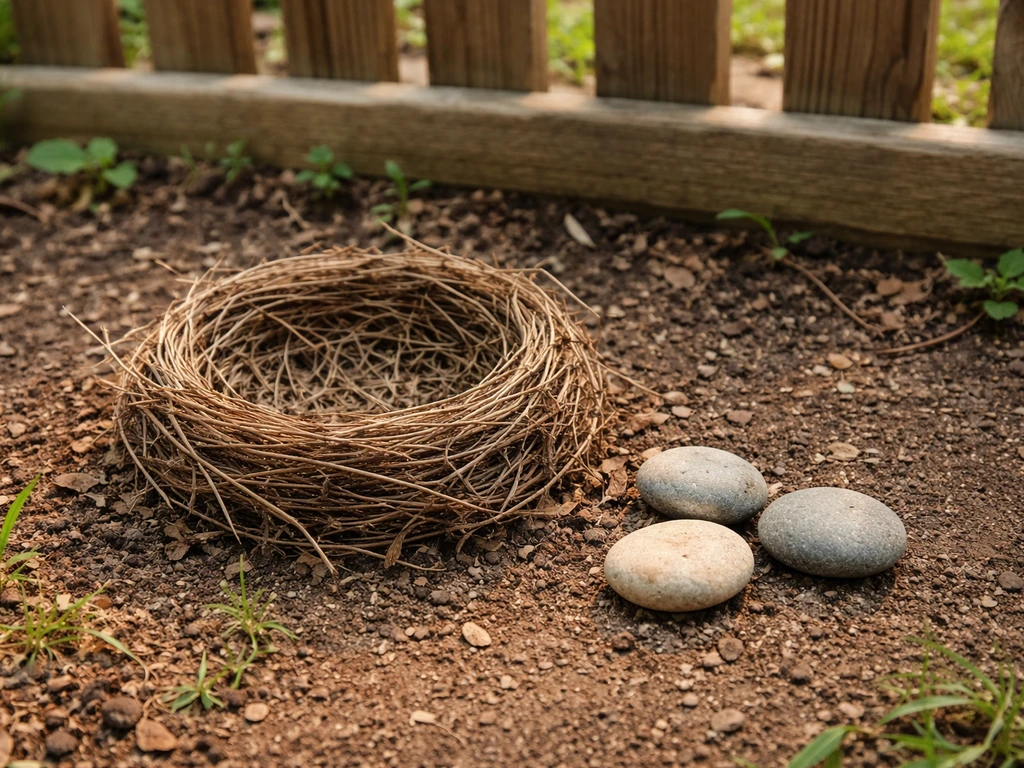
| Scrape nest (killdeer, plovers) | Minutes to 1 day | Minimal construction; bird scrapes soil and may add a few pebbles |
| Cup nest – American robin | 2 to 6 days | Mud-reinforced; timeline varies by mud availability and weather |
| Cup nest – American goldfinch | About 6 days | Female builds in 10–40 minute work sessions |
| Cup nest – red-winged blackbird | Up to 3 days | Woven grass and reeds; relatively fast for a woven style |
| Cavity nest – Eastern bluebird | 3 to 12 days | Highly variable; inexperienced birds take longer |
| Mud/mortar nest – barn swallow | 14 to 20 days | Mud pellets applied in layers; weather-dependent |
| Platform nest – bald eagle, osprey | Weeks to months | Often reused and added to each season; can grow massive |
These ranges give you a working framework. If you're watching a robin carry mud and grass to a fork in your apple tree, you can reasonably expect a usable nest within a week. In many species, both male and female birds may contribute to nest building, so the best answer to whether a male or female builds the nest depends on the species carry mud and grass to a fork in your apple tree. If barn swallows have claimed your porch beam, plan on nearly three weeks before eggs appear.
What actually changes the timeline
No two nest-building projects run on exactly the same clock. Here are the factors that genuinely move the needle.
Species and nest complexity
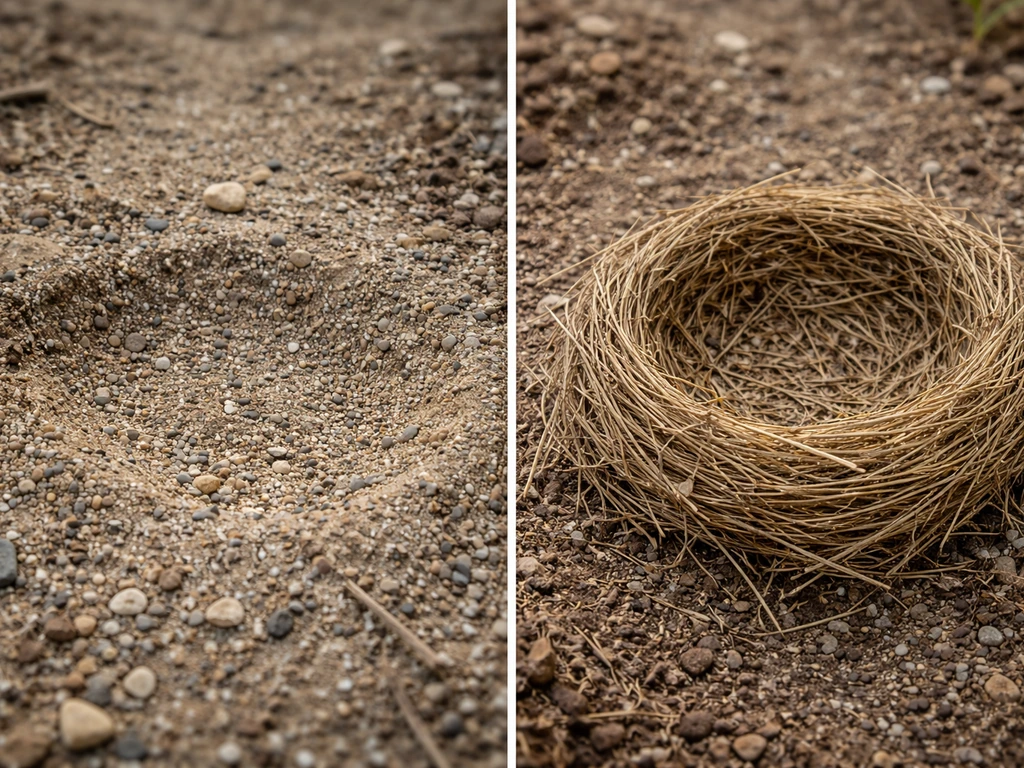
This is the biggest variable. A scrape nest is exactly what it sounds like: a shallow depression in gravel or bare ground, sometimes lined with a few pebbles or shells. It takes almost no time. A woven cup nest from a goldfinch or a mud-mortared swallow nest requires repeated trips, drying time between layers, and precise placement. Cavity nesters like bluebirds fill an enclosed space with loose material, which sounds simple but can stretch to nearly two weeks if the bird is particular about arrangement or keeps being interrupted.
Builder experience
First-time nesters are noticeably slower and less efficient. An experienced female bluebird who has raised multiple broods may finish in 3 to 4 days. A younger bird attempting her first nest can take closer to 10 to 12 days, sometimes starting over or spending time seemingly unsure of the structure. Whether nest building is instinct or also involves a learning component is a genuinely interesting question worth exploring on its own, but practically speaking: expect younger birds to run toward the longer end of any timeline. Whether nest building is instinct or a learned behavior can also help explain why first-time nesters take longer.
Weather and season

Cold snaps, rain, and wind slow nest construction significantly. Barn swallows need mud, and mud requires moisture followed by drying time. If it rains for three days straight, wet mud pellets won't set properly and the birds may pause work entirely. Hot, dry spells create the opposite problem for species that use mud as mortar. Most passerines build fastest in mild, stable spring weather with calm winds.
Material availability
If a robin can't find mud nearby, she'll either travel farther (adding time between trips) or substitute materials. Yards with no bare soil, no puddles, and no exposed garden beds make nest-building harder and slower. Conversely, yards with native plantings, loose leaf litter, and small water features tend to see faster construction because materials are close at hand.
Location and disturbance
A nest in a low-traffic spot gets built faster than one in a spot where the bird is constantly flushed by foot traffic, pets, or nearby noise. Every interruption costs time. If you notice a bird at a potential nest site and then don't see it return for a day or two, human or pet presence nearby may be the cause. This is also why the guidance to back off when a bird changes its behavior due to your presence is so practical: if the bird freezes, alarm-calls, or stops visiting when you're nearby, you're already too close. NestWatch’s monitoring protocol is designed to minimize disturbance risk and improve comparability of the data collected by NestWatchers using recognized field protocols and biologist input back off when a bird changes its behavior due to your presence.
Is that nest being built right now, or is it already in use?
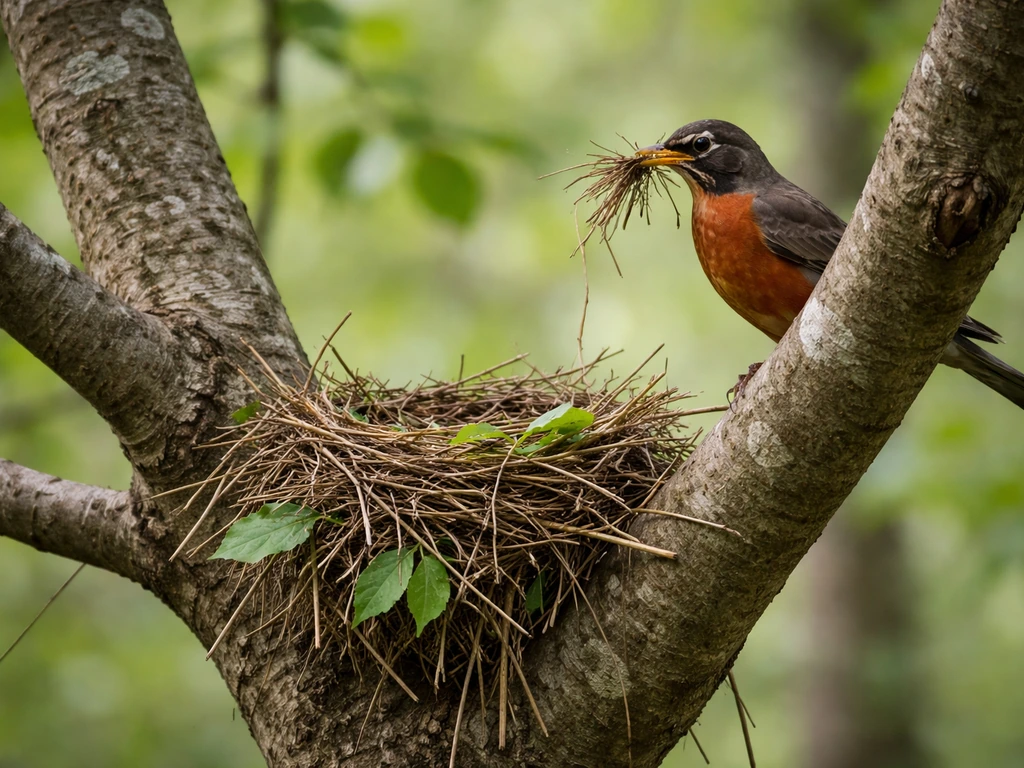
This is the most useful thing to know when you spot a nest, and you can figure it out mostly from a distance. You don't need to get close, and in many cases you shouldn't.
Signs a nest is actively under construction
- Birds making frequent, short trips carrying material (grass, twigs, mud, feathers, spider silk)
- Both birds visiting the site repeatedly without settling in for long periods
- The nest structure looks rough, asymmetrical, or only partially formed
- No eggs visible if you can see into the cup from a safe distance or via a mirror on a pole
- Courtship behavior still occurring nearby (singing, chasing, display flights)
Signs a nest is complete and in active use
- One bird (usually the female) staying on the nest for long, still periods (incubation)
- Material-carrying trips have stopped or dropped sharply
- The nest looks well-formed and compact
- The non-incubating bird perches nearby and may bring food to the sitting bird
- If eggs are visible, incubation has begun
Cornell's NestWatch program actually uses 'building/carrying nest material' as a distinct monitoring stage, separate from 'incubating/on,' specifically because these behaviors are visually different and observable without approaching the nest. That's a useful framework for backyard observation too. Once you see a bird settled on the nest for 15 to 30 minutes at a time with minimal movement, assume eggs are present and keep your distance accordingly. Plan on roughly four weeks from that point (accounting for any delay before full incubation starts, plus the incubation period itself) before the nest is empty.
Nest types and species examples: what to expect from each
Scrape nests
These are the simplest nests in the bird world: a shallow depression in the ground, gravel, or sand, sometimes lined with small stones, shells, or plant fragments. Killdeer are the classic example most North American homeowners encounter, often choosing gravel driveways, flat rooftops, or construction sites. Build time is essentially negligible. If a killdeer is on your gravel and won't leave, eggs may already be there.
Cup nests
This is the most familiar nest shape: a rounded bowl woven from grass, plant fibers, bark strips, and often reinforced with mud or spider silk. Robins, goldfinches, and red-winged blackbirds all build cup nests, though the materials and construction time differ. American robins are known for their mud-and-grass cups, which typically take 2 to 6 days depending on conditions. Goldfinches are more deliberate, working in focused 10 to 40 minute sessions over about 6 days. Watch for the bird repeatedly pressing its breast into the center to shape the cup interior.
Cavity nests
Cavity nesters like Eastern bluebirds, chickadees, and tree swallows use existing holes in trees or nest boxes. The birds fill the cavity with loose material (pine needles, dry grass, feathers) rather than constructing a shaped structure from scratch. Bluebirds typically finish in 3 to 4 days but can stretch to 12 days. If you have nest boxes up, check for fresh material appearing at the entrance hole as the clearest sign of active construction.
Mud and woven nests on structures
Barn swallows attach cup-shaped mud nests to vertical surfaces like barn beams, porch ceilings, and bridge undersides. They carry mud pellets one at a time and layer them over 14 to 20 days, with each layer needing time to dry before the next goes on. You'll see repeated low flights to muddy puddles or stream edges, then return trips to the nest site. Cliff swallows build similar but more enclosed (gourd-shaped) nests in colonies, often under eaves. If swallows are building on your home, that 2 to 3 week window closes fast.
Platform nests
Osprey, bald eagles, and great blue herons build large stick platforms, often reusing and expanding the same nest year after year. A single season's worth of new material can be added in weeks, but these nests are really multi-year projects. A mature bald eagle nest can weigh over a ton. Platform-nesting species tend to return earlier in spring than smaller birds, sometimes arriving at the nest site while snow is still on the ground.
Found an active nest on your property? Here's what to actually do
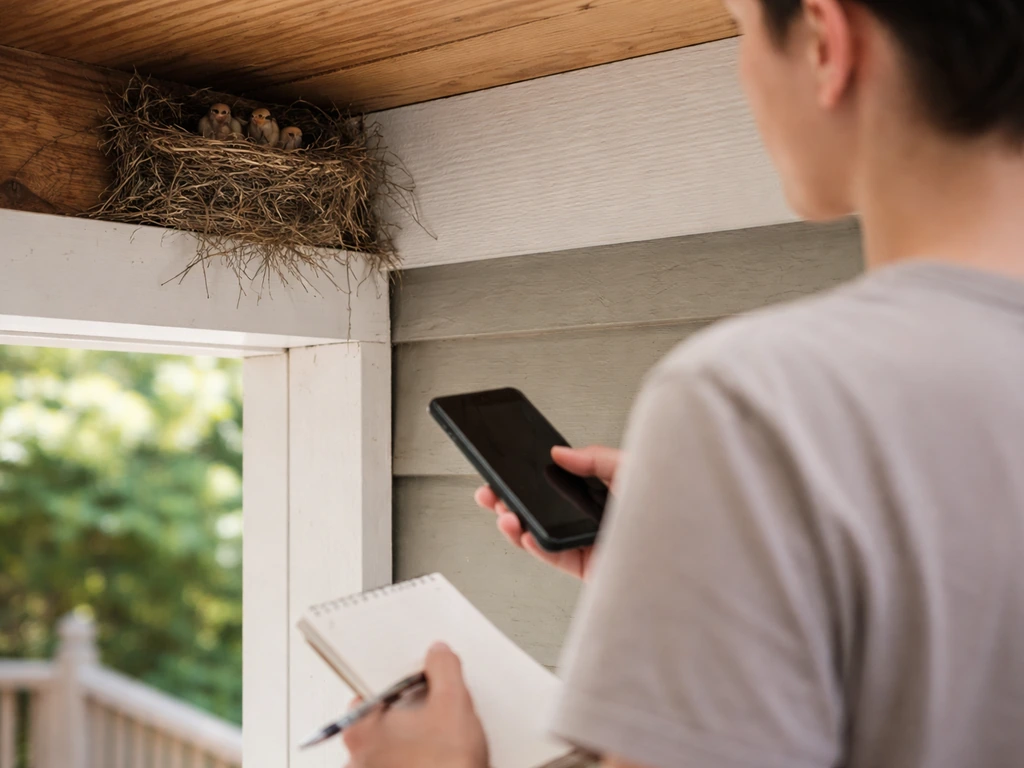
Finding a nest mid-construction, or discovering one already in use, is more common than people expect. The guidance is consistent across conservation organizations: the best first move is to do nothing and step back. Audubon, citing U.S. Fish and Wildlife Service guidance, recommends staying about 330 feet away from an active bald eagle nest to avoid disturbance, though state or local rules may differ.
- Mark the location and note the date. A quick phone photo with a timestamp establishes when you found it and what stage it appeared to be in. You don't need to touch or closely approach the nest to do this.
- Observe from a distance using binoculars. You can gather a lot of information about nest stage, species, and likely timeline from 10 to 20 feet away without causing any disturbance.
- Keep pets indoors or away from the area. Dogs and cats are a major source of nest abandonment and egg/chick predation. Even a curious sniff from a distance can cause some species to abandon.
- Delay any planned work in that zone. If you have trimming, painting, construction, or landscaping planned near the nest, push it back. For most songbirds, the active nest period from construction through fledging runs 5 to 8 weeks total.
- Do not remove or relocate the nest. Even a partially built nest in an inconvenient spot is legally protected for most species in both the US and UK while it is being built or in use.
- If the nest is in an actively dangerous location (inside HVAC equipment, in a frequently used door frame), contact your state wildlife agency or a licensed wildlife rehabilitator before doing anything.
The Audubon Society explicitly recommends binoculars and distance observation over any attempt to get close, and Washington state's wildlife viewing guidelines suggest treating any change in the bird's behavior (freezing, alarm calls, flushing) as a clear signal to increase your distance. These are practical rules, not just ethical ones: stressed birds abandon nests, and abandoned nests mean failed reproduction for a protected species.
Legal protection: what you need to know before touching anything
This is the part most people skip, and it's the part that can get homeowners into real trouble.
In the United States
The Migratory Bird Treaty Act (MBTA) protects approximately 1,100 native bird species, including their nests and eggs. 'Protected' here means you cannot intentionally take, destroy, or disturb a nest while it's in use or being built. This covers the vast majority of birds you'll encounter in a US backyard: robins, swallows, sparrows, wrens, bluebirds, finches, and hundreds more. Non-native species like house sparrows and European starlings are not covered by the MBTA, but most birds you find nesting are. For certain sensitive or listed species, U.S. Fish & Wildlife Service regulations may require you to notify the agency within 72 hours of encountering a nest and to implement avoidance measures. If you're unsure whether your bird is covered, treat it as protected until confirmed otherwise.
In the United Kingdom
The Wildlife and Countryside Act 1981 protects all wild bird species in the UK, along with their eggs and nests, while those nests are in use or being built. It is a criminal offence to intentionally or recklessly disturb nesting birds, including Schedule 1 species (the most sensitive, like peregrines and barn owls) at any stage of nest building. The RSPB's practical guidance is direct: complete any building or garden maintenance work outside the main nesting season, which in the UK typically runs from late February through August, to avoid the issue entirely.
When to contact help
- A nest has been damaged or destroyed and eggs or young are present: contact a licensed wildlife rehabilitator immediately
- You believe a protected species (eagle, hawk, owl, or any Schedule 1 bird in the UK) is nesting on your property and you have construction or utility work planned: contact your state/national wildlife agency before work begins
- A nest is in a location that poses a genuine safety hazard (inside electrical equipment, blocking a critical vent): call your wildlife agency first; they can advise on legal options and timing
- You're unsure whether your bird is protected: assume it is, and verify with your state wildlife agency, the US Fish & Wildlife Service, or the RSPB in the UK
How to plan around a nesting bird: practical next steps
Once you know roughly what kind of nest you're dealing with and what stage it's in, you can build a simple timeline to work around it. Here's how to do that without needing to disturb the birds at all.
Step 1: Identify the species
You don't need to see inside the nest. Watch the adult bird from a distance, photograph it if you can, and use a free app like Merlin (Cornell Lab) to confirm the species from your photos or from the bird's song. Knowing the species tells you the nest type, the typical build time, the incubation period, and the approximate fledging timeline.
Step 2: Estimate the nest stage
Use the behavioral cues from earlier in this article: is the bird carrying material (construction phase) or sitting still for long periods (incubation phase)? If you can safely see the nest cup without approaching, is it rough and incomplete or neat and fully formed? Note the date you first spotted activity.
Step 3: Calculate a rough timeline
Add the species' typical build time to the typical incubation period, then add the nestling period (time from hatching to fledging). For a robin nesting in late April, that's roughly 5 to 6 days of construction, then 12 to 14 days of incubation, then 14 to 16 days until the chicks fledge. Total: about 5 to 6 weeks from the first twig. Cornell's NestWatch recommends planning for approximately four weeks from the time you see eggs, with a week or two of buffer for species with longer incubation, to avoid repeated disturbance.
Step 4: Schedule your work around that window
Mark the estimated fledge date on your calendar and plan any yard work, exterior painting, gutter cleaning, or tree trimming for after that date. Most songbird nesting cycles are complete within 6 to 8 weeks. If you're heading into late summer (August and beyond in most of North America), many species complete their final brood and the nest becomes inactive. That's usually a safe time to resume normal work.
Step 5: Think ahead for next season
If nesting birds are consistently choosing inconvenient spots on your property, the most effective long-term strategy is to give them better alternatives. Install nest boxes suited to the species you're seeing. Plant native shrubs and trees that provide natural nesting cover in areas that work for you. Provide a shallow water source. Birds that have good options available are less likely to try your dryer vent or porch light fixture. Understanding why birds build where they do and what drives their site selection is worth looking into as a follow-on step. If you're curious about the bigger picture, this also connects to the question of why birds build a nest in the first place why birds build where they do.
The short version: most active nests you'll encounter are over within 6 to 8 weeks from construction start, they're legally protected during that entire time, and the most useful thing you can do is observe from a distance, identify the species, estimate the timeline, and plan your calendar around the fledge date. That's really all it takes to be both a responsible neighbor to the birds and a practical homeowner.
FAQ
How long does it take from when I first see nest building until the chicks leave the nest?
It depends on what you mean by “build.” If you only mean construction (first material to a usable nest), many backyard songbirds finish in 3 to 20 days. But if you mean “when you will see young,” add incubation and nestling time. As a rule of thumb, most nests people notice are active for about 6 to 8 weeks from the start of construction.
If the nest looks finished, can I still tell how long it took to build it?
For a bird that is already incubating, you cannot estimate build time from the nest’s appearance alone because it may have been completed days to weeks earlier. Use behavior instead: long sit time on the nest usually means incubation is underway, then plan forward using the species’ typical incubation and nestling periods rather than any “construction” range.
What if I don’t see the bird building for a day or two, did it stop?
Don’t assume “no activity” means abandonment. Some species take breaks to forage, and weather can pause work (for mud mortared nests) or delay visits. A better check is to observe from a distance for consistent cues over a couple of days, and if you see birds resume carrying material, treat it as ongoing.
I found a nest that’s incomplete, how can I tell whether construction is still happening?
If you find a partially built nest, there are usually two realistic scenarios: the bird is still actively constructing, or the nest was started earlier and revisited later. The clearest non-intrusive indicator is repeated material carrying and predictable returns to the same spot. If you see adults settling for long stretches, focus on an incubation timeline rather than construction time.
Do birds ever reuse nests, and does that change how long nest building takes?
Many birds use existing structures or reuse the same nest site year to year. For example, platform nesters may add material for weeks even if a “new build” seems quick. So “how long it takes” varies by whether you’re seeing a first-year nest, a repair cycle, or a full replacement.
If I know the construction stage is nearly over, can I do yard work before the chicks fledge?
Yes. If the nest has eggs or chicks, the legal and ethical requirements generally treat it as protected throughout use, even if you believe the birds will be “done soon.” Plan yard work around the estimated fledge date instead of using “construction time only” as your deadline.
What’s the most reliable way to estimate the timeline if I’m not sure what stage the nest is in?
A good estimate method is to identify the species from a distance, then use three blocks: construction time (only if you know the bird is still building), incubation, and nestling (fledging). If you cannot confirm construction phase, don’t count from your first sighting of the nest appearance, count from the first reliable cue of eggs (settling for long periods) and add the species’ incubation and nestling ranges.
How do I know whether my presence is delaying nest building or causing the birds to abandon?
If you’re seeing distress signs like freezing, alarm calling, or flushing, that indicates you are too close and the nest may be at risk even if the nest is not “technically disturbed” by you touching it. Back away, reduce repeated visits, and avoid shining bright lights or watching from obstructed hiding spots that force frequent bird escapes.
Can a nest that seemed inactive come back into use later?
In many regions, late-season broods can overlap, and some species may raise multiple broods in one year. That means a nest you thought was “inactive” could become active again. Check for fresh material carry-in or renewed incubation cues rather than assuming the nest cycle ended just because you saw it once.
What should I do to identify the bird without accidentally disturbing it?
Use binoculars or a camera zoom rather than approaching. If you need species confirmation, rely on photos, bird song, and the nest type signals described (cup, cavity, platform, mud attachment) without getting close enough to cause repeated flushing.
Next Article
How Fast Can a Bird Build a Nest? Timeline and Checklist
See a species-aware timeline and checklist to estimate how fast birds build nests and when to avoid disturbing them.