The most likely builder of a small round nest in a yard is one of a handful of familiar songbirds: American robins, house finches, chipping sparrows, or hummingbirds. The exact species depends on three quick clues you can check right now without touching anything: where the nest sits, what it's made of, and roughly how big it is. Run through those three things and you'll have your answer in a few minutes.
What Bird Makes a Small Round Nest? How to Identify It

Maya Bennett
18 May 2026
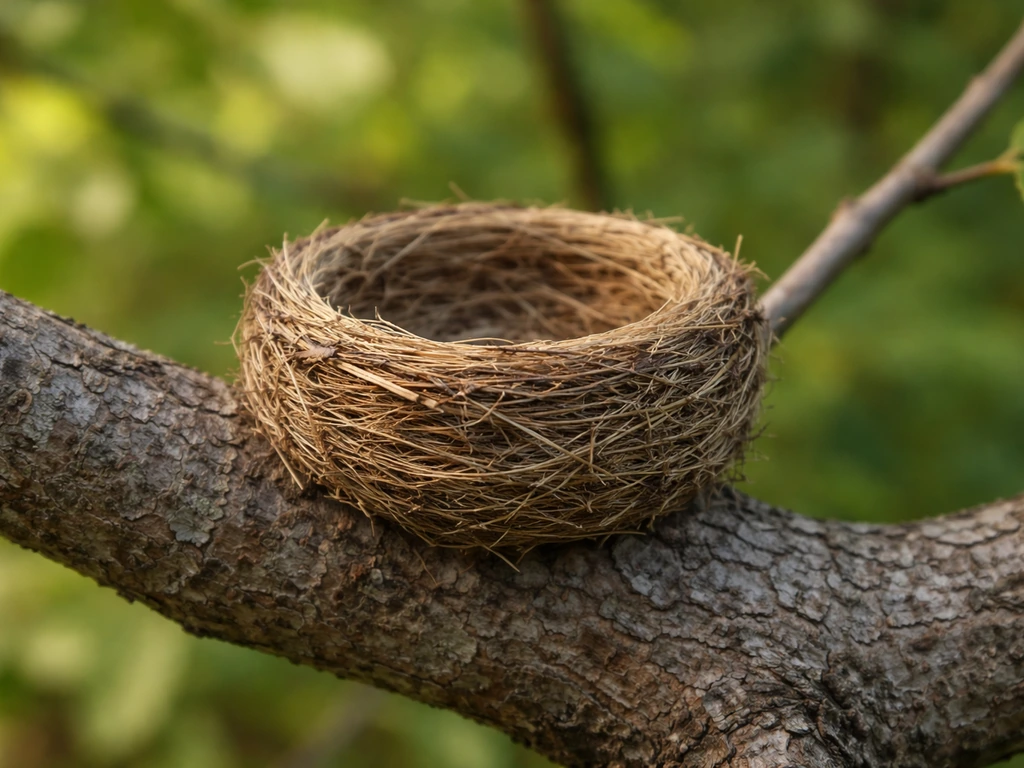
Quick field clues to identify the nest's owner
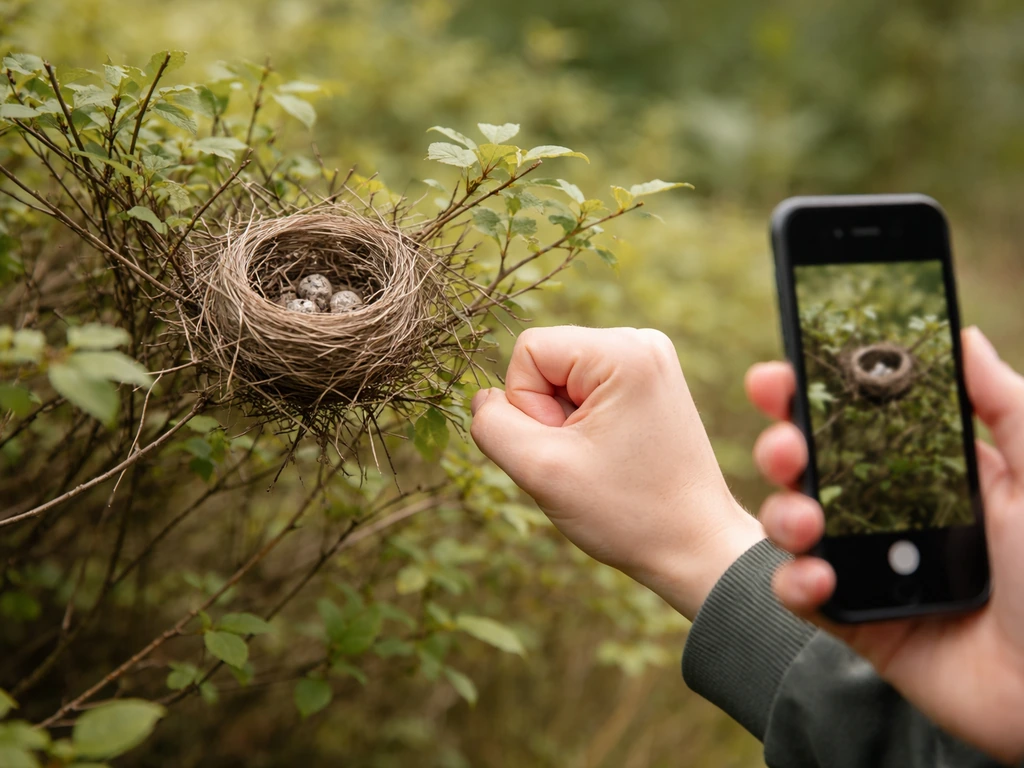
Before you look up any species, grab your phone and take a photo from a respectful distance (at least 10 feet away from an active nest). Then note these four things:
- Size: Is the nest smaller than your fist, roughly golf-ball to tennis-ball scale? Or closer to a grapefruit?
- Shape: Is it an open bowl (cup-shaped, no roof), or is it a fully enclosed sphere with a side entrance?
- Placement: Ground level, in a shrub, wedged in a tree fork, on a branch tip, under an eave, or hanging?
- Materials: Mud lining, woven grass, plant down (fluffy white), hair, feathers, spider silk, or lichen on the outside?
The open-cup versus enclosed distinction is the single fastest filter. Most small round nests people find in yards are open cups, meaning they look like a tight little bowl with no lid. True enclosed or dome-shaped nests are less common and point to a much shorter list of species. If yours has a roof and a side entrance hole, skip ahead to the look-alikes section.
Common birds that build small round nests
Here are the species most likely responsible for a small, round, bowl-style nest in a typical yard or garden setting across North America and much of Europe.
Ruby-throated hummingbird
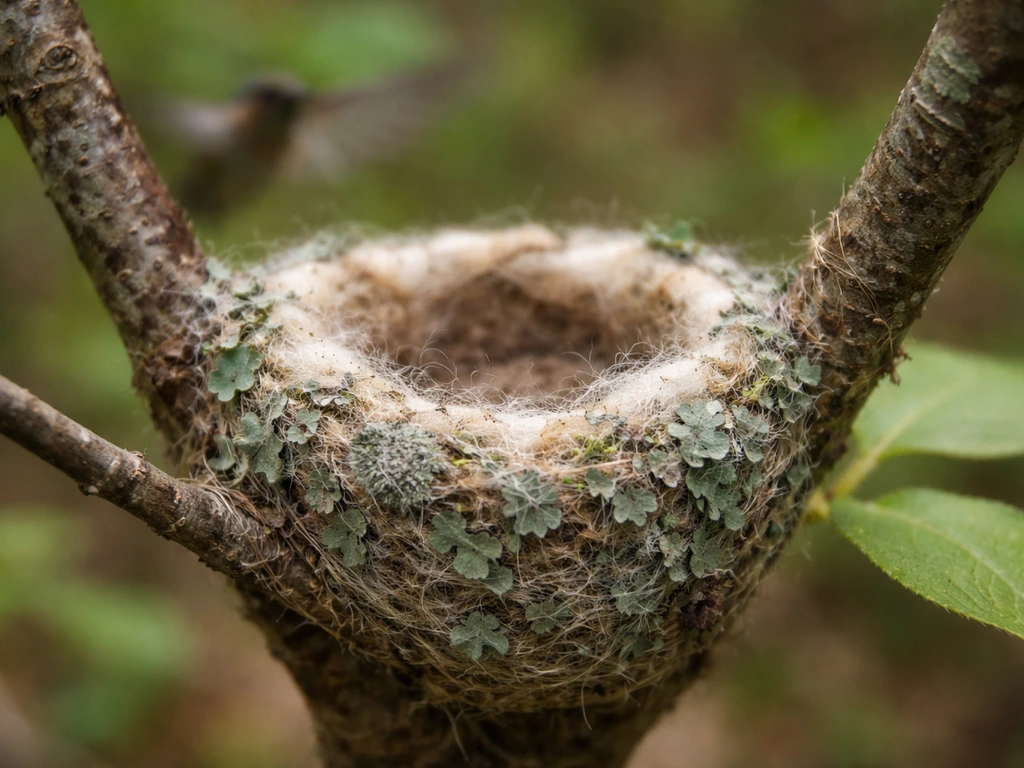
The ruby-throated hummingbird builds what is easily the most impressive small nest relative to its maker. Cup-shaped nests are especially associated with certain songbirds and hummingbirds. The cup is about 2 inches across and 1 inch deep, with an interior roughly the size of a large thimble. It is built from thistle or dandelion down, held together and anchored to the branch with blank" rel="noopener noreferrer">spider silk, and the outside is decorated with bits of lichen and moss so it looks like a natural knob on the branch. Ruby-throated hummingbird cup nests are about 2 inches across and about 1 inch deep, with an interior the size of a large thimble, not an enclosed dome a natural knob on the branch. You'll find it perched on a slender, often slightly drooping branch anywhere from 10 to 40 feet up, never wedged in a fork. If you see a perfectly camouflaged, thimble-sized cup on a branch tip with a speckled lichen exterior, this is your bird.
American robin
Robin nests are the classic "small round nest" most people picture. They are a sturdy mud-and-grass cup, roughly 6 inches across on the outside and about 3 to 4 inches across inside. The defining feature is a hard, smooth mud lining inside the grass bowl. Robins place them in tree forks, on window ledges, in gutters, or on any flat-ish structure 5 to 15 feet off the ground. If you can see a mud interior, it is almost certainly a robin (or, less commonly, an American dipper in the West).
House finch and purple finch
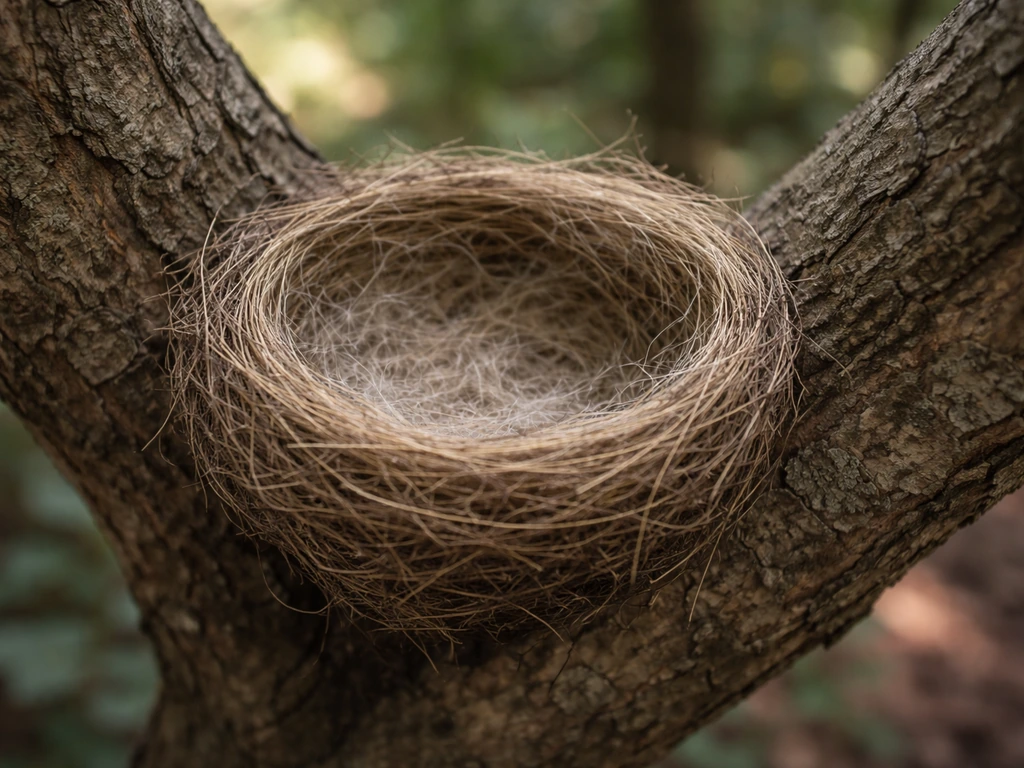
House finches build a loose but deep cup of twigs, grass, leaves, and hair, often with some string or plant fiber. It measures roughly 3 to 4 inches across. They are very opportunistic nesters: hanging baskets, wreaths, under porch overhangs, in dense shrubs, even in old abandoned nests from other species. There is no mud lining and no spider silk, which separates them from robins and hummingbirds respectively.
Chipping sparrow
The chipping sparrow builds one of the neatest small cups of any common yard bird. It is a thin-walled, tightly woven cup of fine grass and rootlets, almost always lined heavily with animal hair (deer hair, horsehair, or pet fur). The nest sits in a shrub or low conifer, usually 3 to 10 feet up. If you find a small, delicate grass cup with a thick fur lining in a dense shrub, chipping sparrow is the leading suspect.
Song sparrow
Song sparrows build a bulkier cup of coarse grass and leaves, lined with finer grass and hair. Crucially, they often nest on or very near the ground, tucked under a clump of grass, in a low shrub, or in the base of a thicket. A small round nest at or near ground level in a weedy or brushy area is strongly suggestive of a song sparrow.
American goldfinch
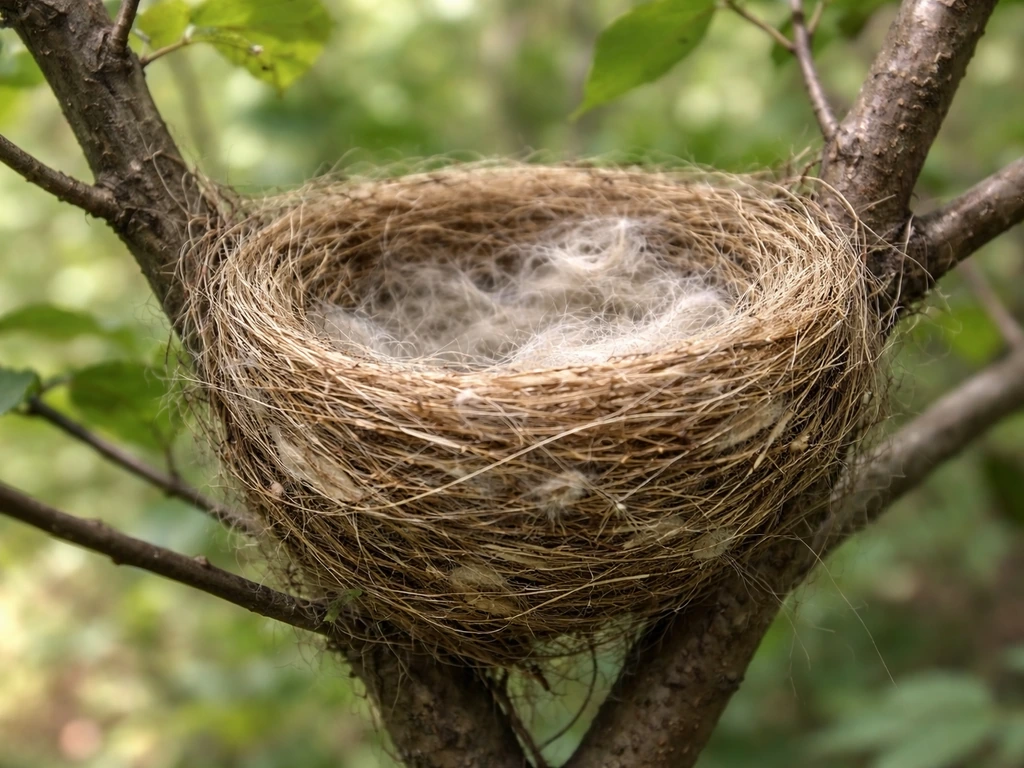
Goldfinches build a remarkably tight, compact cup of plant fibers and thistle down, bound with spider silk, placed in the fork of a shrub or small tree usually 4 to 20 feet up. It is so tightly woven it can hold water. The interior is soft and cottony. Late timing is a reliable clue: goldfinches are among the last birds to nest, typically starting in late June or July when thistles are in bloom.
Nest material, location, and placement checklist
Use this table as a quick-reference field guide. Match your nest's materials and placement to find the most likely species.
| Species | Nest size (outer diameter) | Key materials | Typical placement | Signature clue |
|---|---|---|---|---|
| Ruby-throated hummingbird | ~2 inches | Plant down, spider silk, lichen exterior | Branch tip, 10–40 ft up | Lichen camouflage, thimble-sized interior |
| American robin | ~6 inches | Grass, mud lining | Tree fork, ledge, gutter, 5–15 ft | Hard mud cup interior |
| House finch | ~3–4 inches | Twigs, grass, leaves, hair, string | Hanging baskets, eaves, dense shrubs | Very opportunistic; no mud, no silk |
| Chipping sparrow | ~3 inches | Fine grass, rootlets, animal hair lining | Shrub or low conifer, 3–10 ft | Dense fur or hair lining |
| Song sparrow | ~4 inches | Coarse grass, leaves, fine hair lining | Ground level or near-ground in brushy area | Near-ground placement in weedy cover |
| American goldfinch | ~3 inches | Plant fiber, thistle down, spider silk | Shrub or small tree fork, 4–20 ft | Extremely tight weave; late season (July) |
Season and region: narrow the species fast
Timing matters more than most people realize. If you are reading this in mid-May 2026, you are right in the thick of nesting season across most of North America and Europe, which means the majority of these species are actively building or incubating right now. But the calendar still helps you filter.
- Early spring (March–April): American robins are often the first to build. If the nest is new and it is still cool, robin is the top candidate.
- Late spring (May–June): Peak nesting for hummingbirds, house finches, chipping sparrows, and song sparrows. This is the most ambiguous window, so rely on materials and placement more than timing.
- Midsummer (late June–July): American goldfinches start late on purpose, timing their nesting to thistle seed availability. A new, tightly woven cup appearing in July points strongly to goldfinch.
- Eastern North America: Ruby-throated hummingbird is your hummingbird species. All five songbirds above are common throughout the East.
- Western North America: Anna's and black-chinned hummingbirds replace ruby-throated. Lazuli bunting and lesser goldfinch also build small cups in the West. White-crowned sparrow is a common near-ground cup builder in western shrubby habitats.
- Europe: The list shifts significantly. Common chaffinch and European goldfinch build compact lichen-decorated cups in tree forks. Long-tailed tits build a fully enclosed oval nest (see look-alikes below). Blackbird nests closely mirror American robin nests in structure.
- Tropical and subtropical regions: Many sunbird, vireo, and tanager species build small, intricately woven cups or hanging pouches. If you are outside of temperate zones, placement and weave tightness are your best clues.
Look-alikes: similar small round nests and how to tell them apart
A few nests can genuinely fool you, especially at a glance. Here are the most common cases of mistaken identity.
Enclosed dome nests vs. open cups
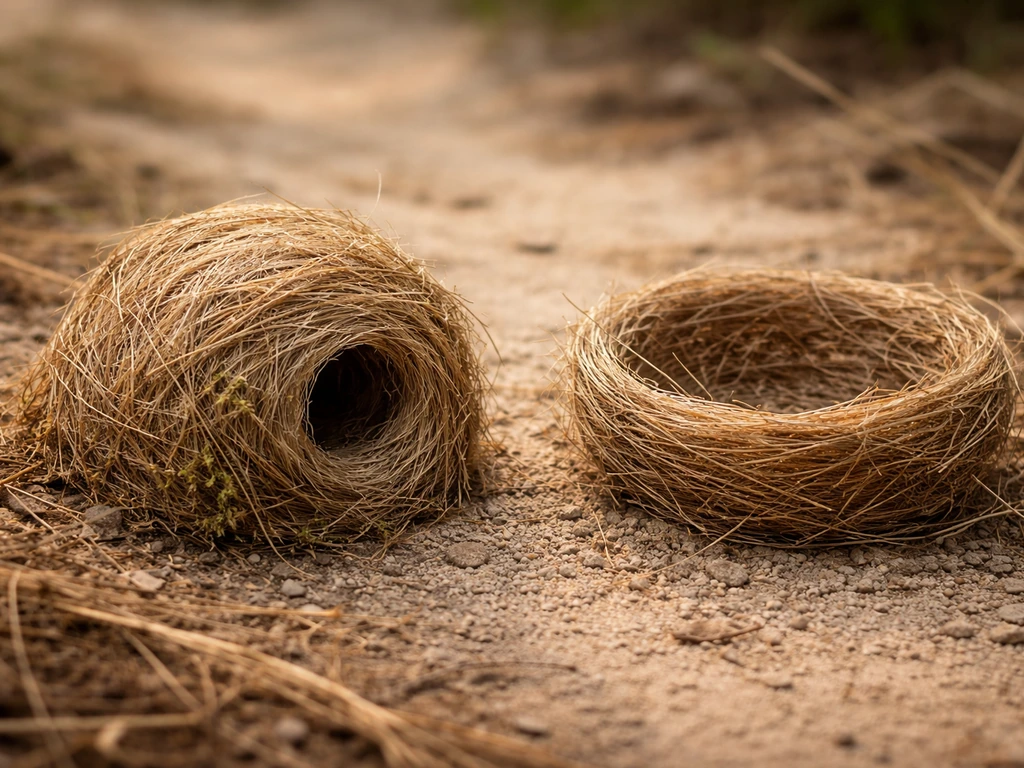
If the nest is a complete sphere or oval with a small entrance hole on the side, you are not looking at any of the species above. In North America, this points to marsh wrens or Carolina wrens (which build domed nests of leaves and grass in dense cover) or the winter wren. In Europe, the common wren builds a domed moss nest in a bank or tree root. The long-tailed tit builds a spectacular oval of lichen, spider silk, and feathers with a side entrance, often in a thorny shrub. These are sometimes described as "small round nests" but the enclosed structure is the giveaway. If you want to explore domed or bottle-shaped nest builders further, those are distinct categories from the open-cup nests covered here. If you’re looking for which bird makes bottle shaped nest, focus on these enclosed nest types and their entrance styles bottle-shaped nest builders.
Hummingbird vs. goldfinch
Both are tiny, both use spider silk and plant down, and both can appear in similar settings. Audubon’s field guide describes the ruby-throated hummingbird nest as a compact cup of grasses and plant fibers lined with plant down and spider webs. The key difference: hummingbird nests have lichen stuck to the outside as camouflage and sit on a single branch tip, while goldfinch nests sit in a fork between two or more branches and have no lichen decoration. Also, hummingbird nests appear in May and June; goldfinch nests rarely appear before late June.
Chipping sparrow vs. house finch
Both are in the 3 to 4 inch range and in similar locations. The chipping sparrow nest is neater, thinner-walled, and almost always has a conspicuous lining of animal hair. House finch nests are messier, bulkier, and made with coarser material including twigs and sometimes string or trash. If you see hair lining, lean toward chipping sparrow. If you see string, yarn, or coarse plant stems, lean toward house finch.
Robin vs. other mud-cup builders
In North America, a mud-lined cup is almost always a robin. The barn swallow also uses mud but builds a more semicircular shelf shape, not a bowl, and almost always under a structure (barn, bridge, eave). The American dipper builds with mud in the West but places its nest right at the water's edge next to a stream, a context that makes confusion unlikely.
Cup-shaped nests in trees vs. cone or bottle-shaped nests
It is worth knowing that some bird species build nests that are distinctly cone-shaped or elongated like a flask hanging from a branch tip, such as orioles and weaverbirds. These are quite different from the compact round bowl described here. Similarly, some vireos build a deep pendant cup that looks almost like a small bag hanging from a branch fork. If your nest is elongated, hanging freely, or tapers to a point at the bottom, you are likely looking at a different nest type entirely.
What to do if you find an active nest
Finding an active nest is exciting, but it comes with real legal and ethical responsibilities. Getting this part right protects both the birds and you.
The legal baseline
In the United States, nearly all wild bird nests (and the eggs or chicks inside them) are protected under the Migratory Bird Treaty Act. It is illegal to disturb, damage, move, or destroy an active nest of any migratory bird species without a federal permit. This applies to the vast majority of songbirds and hummingbirds you are likely to encounter. In the UK and most of Europe, the Wildlife and Countryside Act and Birds Directive provide similar protections. In practical terms: if there are eggs or live chicks in the nest, do not touch it, do not move it, and do not trim the surrounding vegetation until the birds have fledged.
Safe observation distance and behavior
Stay at least 10 to 15 feet away from an active nest during casual observation. Avoid visiting more than once or twice a day. If a parent bird is alarm-calling, fluffing up, or performing distraction displays near you, back off immediately. Prolonged disturbance stresses the adults and can cause nest abandonment, especially during incubation. Take your photos from a distance with a zoom lens or phone zoom, rather than moving in close. Never use flash photography near a nest.
Predator deterrence without interfering
If you are worried about nest predation, there are things you can do that do not involve touching the nest. Keep cats indoors during the nesting season, especially in May and June. Place a predator baffle on any pole or post near the nest if it is accessible to squirrels or raccoons. Avoid placing bird feeders right next to a nest, as feeder traffic attracts predators. If the nest is in a vulnerable low shrub, resist the urge to cut back surrounding vegetation for the few weeks the birds are in residence: dense cover is part of the nest's natural defense.
When the nest is empty and what to do next
Once chicks have fledged (typically 10 to 21 days after hatching depending on species), the nest is legally considered inactive and you can handle or remove it if needed. Most birds do not reuse the same nest, though house finches and robins sometimes do. If you want to keep it as a nature display or for identification purposes later, let it dry fully before storing it in a sealed container to prevent mites or beetles from spreading. And if you were never quite sure which species built it, the empty nest is the safest time to take a close-up photo and run through the materials checklist above one more time.
FAQ
What if I find what looks like a small round nest, but it has no clear bowl or lining visible?
Look for partial views and check whether the nest is an open cup with the rim facing you. If the lining is hidden, use a zoom photo taken from several angles rather than getting closer. Also note height, branch type, and whether there is lichen or spider-silk visible, since those cues can identify hummingbirds, goldfinches, and chipping sparrows even when the interior is obscured.
Can a bird start with one nest type and later remodel it into something that looks different?
Yes. Robins and house finches may add materials or build up the rim during incubation, which can make the cup look deeper or messier over time. The most reliable identifiers are structural clues that rarely change, like whether there is a mud lining (robins) or a lichen-spotted exterior on a single branch tip (hummingbirds).
How big should the nest be if it is really “small and round,” and how do I measure without touching it?
Use a nearby reference object in your photo, like the width of a common handspan or the approximate diameter of a branch, then compare visually. Avoid trying to measure by reaching in. If you can estimate that it is around 2 inches across for a hummingbird cup or around 6 inches outside diameter for a robin, your species list will narrow fast.
What if the nest is right against a wall or window, does that rule out certain birds?
Not necessarily. Robins, house finches, and sometimes song sparrows will use ledges, gutters, and protected edges of buildings. What matters more than “against a wall” is the material and structure, like mud lining for robins, animal hair lining for chipping sparrows, and tight plant-fiber with no mud for house finches.
Do any of these birds build “round nests” but are not the ones most people think of?
Yes. Wrens and the long-tailed tit can produce dome-shaped or oval enclosed nests that look round from certain angles, but the presence of a side entrance hole or a true roof usually means a domed category, not the open-cup birds listed. If you see an entrance hole, treat it as a different nest type and do not force-fit it to an open bowl.
How can I tell hummingbird versus goldfinch when I only see the outside of the nest?
Check whether the nest is decorated with bits of lichen on the exterior, which strongly points to hummingbirds, and whether it is placed on a single branch tip. Goldfinch nests are typically in a fork between branches and often look cleaner on the outside without lichen speckling. Timing helps too, hummingbird nests are more likely earlier in the season, goldfinches later.
What should I do if I accidentally disturb the nest or scare the parents off?
Back away immediately and stay out of the area. Avoid multiple visits in a short time window, because repeated disturbance can cause abandonment. If adults do not return after a reasonable period (often several hours during normal conditions), the safest next step is to leave the site alone and monitor from a distance rather than investigating further.
Is it safe to relocate an empty nest to confirm the bird species?
Do not relocate nests with eggs or chicks, and for legal and practical reasons, treat any nest as potentially active until you see clear signs of fledging. Once you are confident it is inactive, you can observe it more closely yourself. If you keep it, dry it fully and store it sealed to reduce mite or beetle spread.
Will these birds reuse the same nest year after year?
Most species do not. That said, house finches and robins sometimes reuse or reuse parts of nests in subsequent attempts, so a “new” round cup near an old site could actually be a second build. Compare whether the materials are freshly added (drier, newer plant matter) versus the same structure left intact.
How do I reduce nest predation without changing the nest location or touching it?
The biggest immediate impact is predator management: keep cats indoors during nesting season, and if nests are in reach, use physical barriers like pole-mounted baffles. Also avoid high feeder placement near active nests, because feeder activity can increase predator traffic. Maintain nearby cover instead of clearing shrubs, since dense cover can reduce predation pressure.
Next Articles
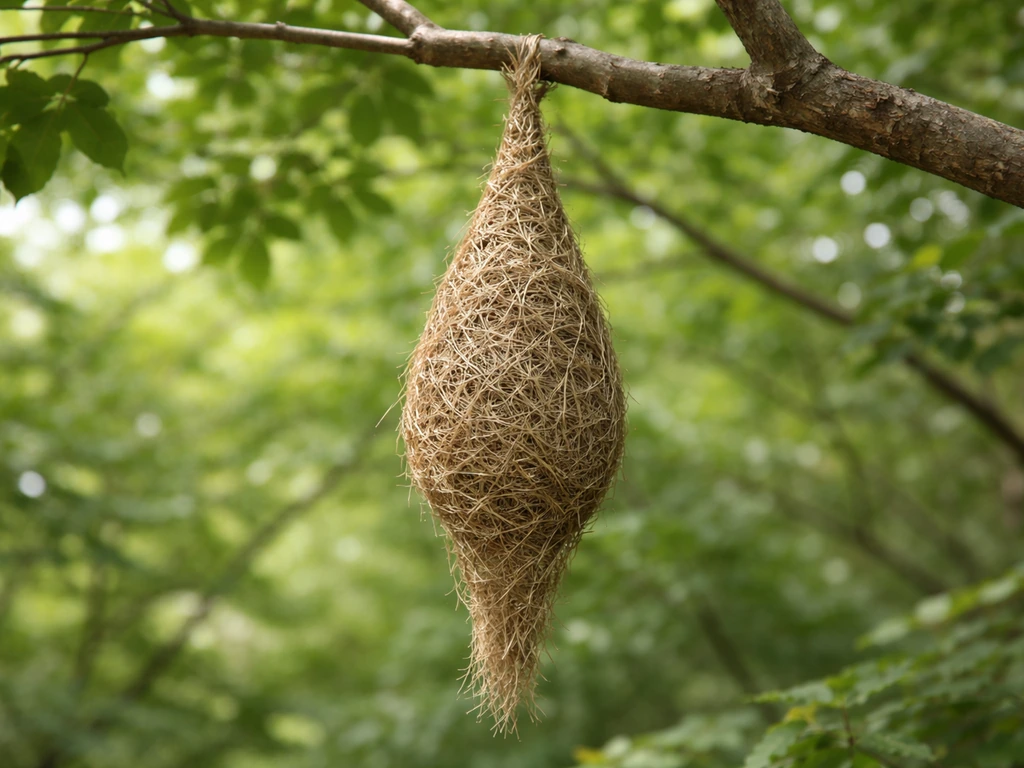
What Bird Makes a Cone Shaped Nest? ID Guide and Next Steps
Identify the bird behind a cone shaped nest using location, entrance, materials, and size, plus safe next steps.
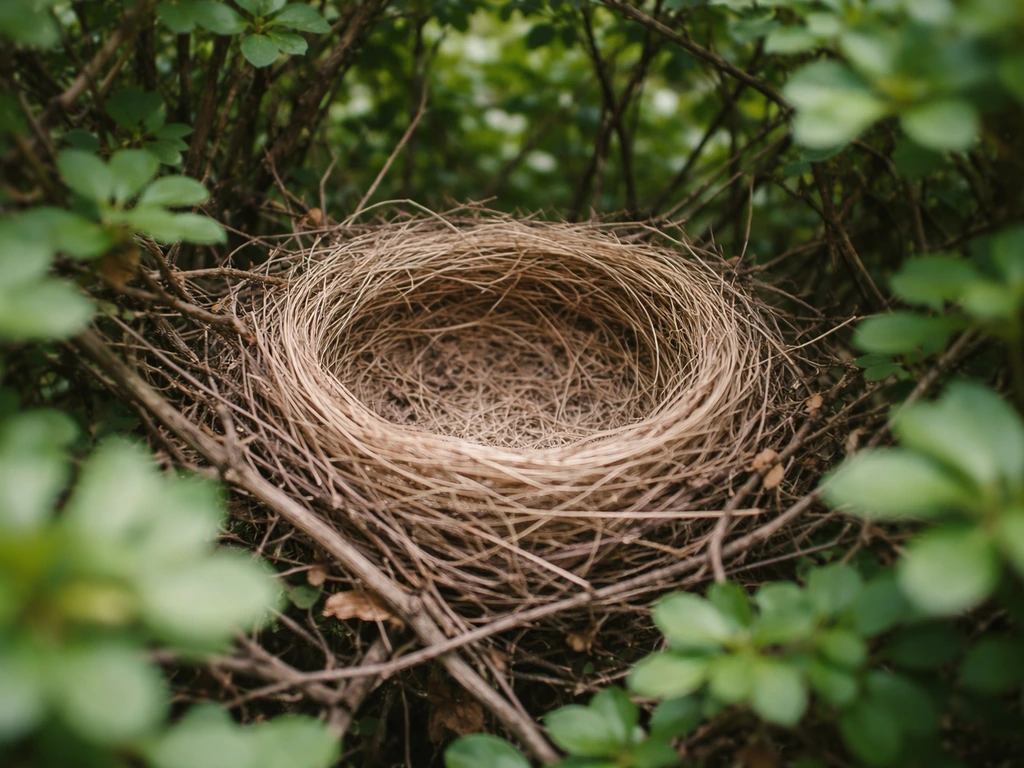
Which Bird Makes a Cup Shaped Nest in Bushes? Identify
Guide to identify which birds make cup-shaped nests in bushes using size, materials, placement and active nest steps.
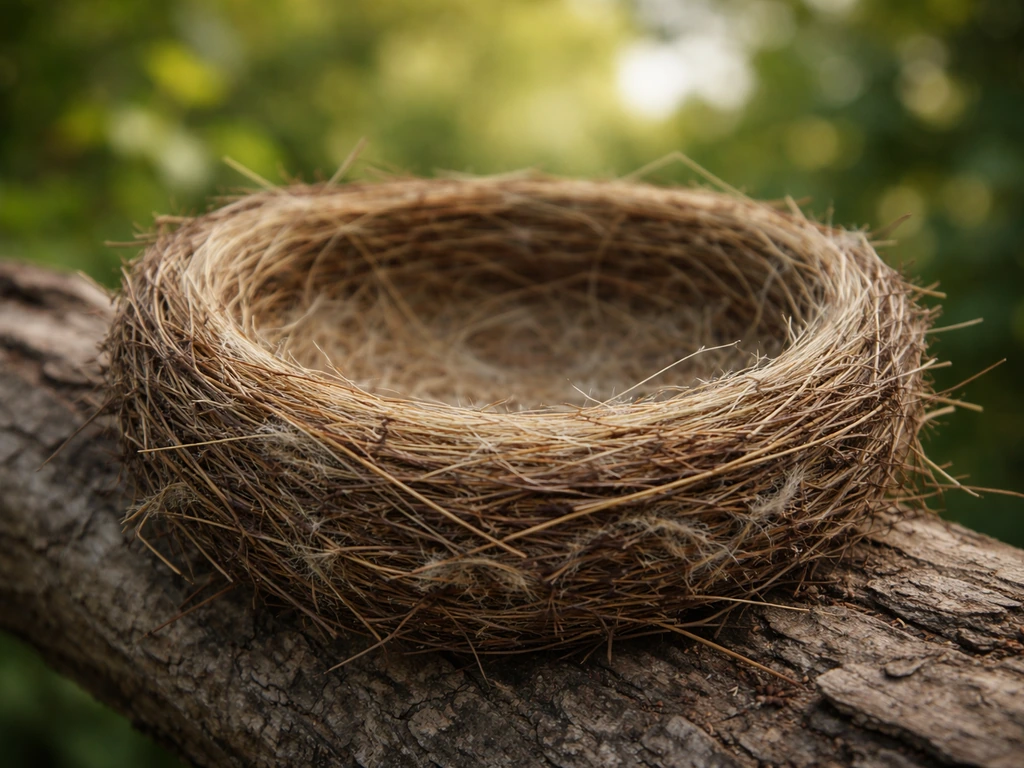
Which Bird Makes a Cup Shaped Nest? How to Identify
Identify cup-shaped nests by structure and materials, then learn which North American birds build them and what to do sa