Purple Martins are the iconic gourd nesters, but they are far from the only ones. If you have a dried gourd birdhouse hanging in your yard, you could be hosting Eastern Bluebirds, Carolina Wrens, House Wrens, Black-capped Chickadees, Tree Swallows, or even a pair of House Sparrows depending on where you live, what time of year it is, and how big that entrance hole is. If you are looking at a fresh garden gourd or pumpkin with a bird messing around near it, that is a different situation entirely and worth sorting out before you do anything. Some birds do nest in cactus plants, so if your situation is a cactus rather than a hollow gourd you may be dealing with a different species.
What Bird Nests in Gourds? ID Guide and What to Do Now

Maya Bennett
29 May 2026
First: which kind of gourd are we talking about?
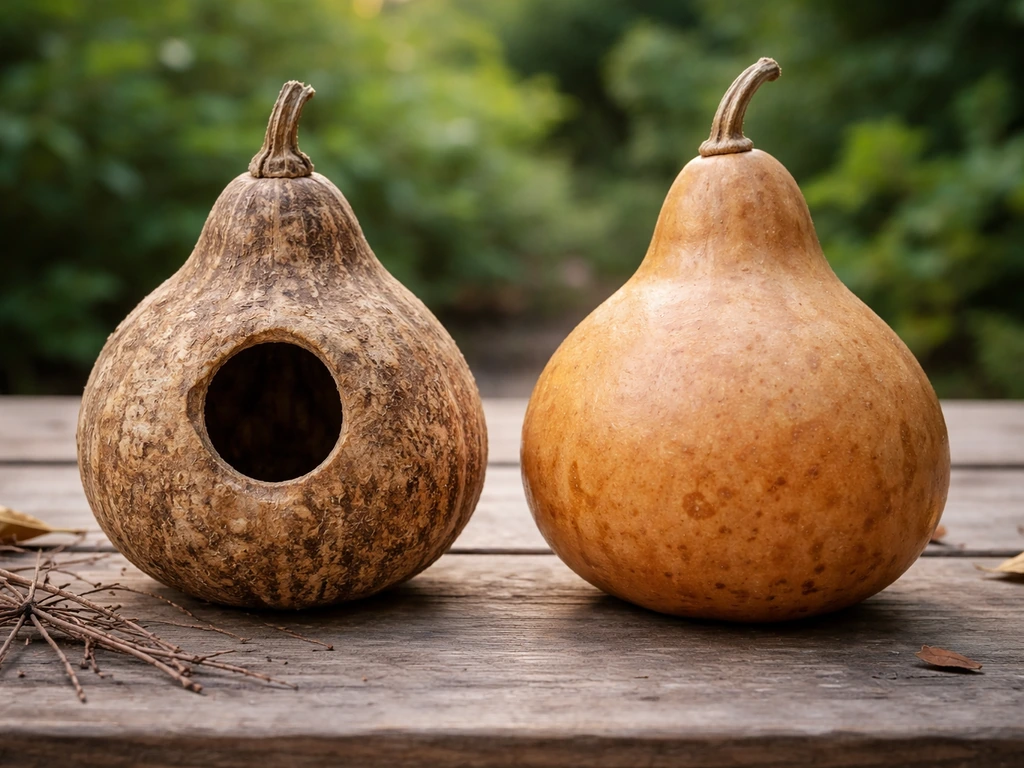
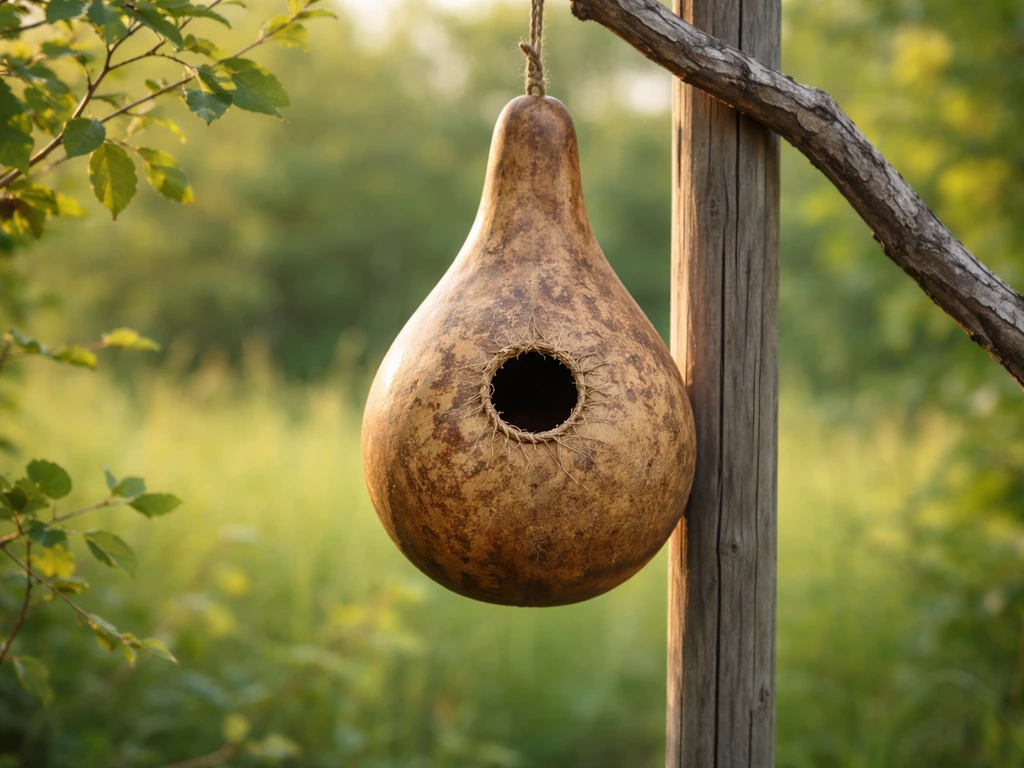
"Gourd" covers two very different scenarios, and it matters for everything that follows. The first is a dried, hollowed gourd birdhouse, the kind you hang from a pole or tree branch specifically to attract cavity-nesting birds. These are purpose-built nesting structures, and most of this article focuses on them. The second is a fresh garden gourd, squash, or pumpkin still growing in the garden or sitting decoratively on a porch.
Birds rarely nest inside an intact fresh gourd because there is no hollow cavity to enter. What you are more likely seeing near a fresh gourd is a bird foraging around it, perching on it, or nesting nearby in a vine tangle or ground cover. If your situation involves a bird nest built inside a rotting or hollow pumpkin left out in the garden, treat it like any open-cup or ground nest and apply the same legal rules described below.
The timing also tells you a lot. Dried gourd birdhouses are most actively used from March through August in most of North America, which is peak cavity-nesting season. If it is late spring or summer and a gourd birdhouse has been hanging in your yard, there is a reasonable chance something has moved in. If you just put it up in fall or winter, you are probably fine to inspect it freely.
Which birds actually nest in gourds
All of the birds that use gourd birdhouses are cavity nesters, meaning they naturally nest in hollow trees, old woodpecker holes, or similar enclosed spaces. Many cavity-nesting birds also choose similar spaces in trees, so the species can vary depending on the exact cavity and region cavity nesters. A gourd birdhouse mimics that environment. The entrance hole size is the single most useful clue for narrowing down which species you have, so if you can measure or estimate it, start there.
| Species | Entrance Hole Size | Typical Season | Where They Show Up | Quick Nest Clue |
|---|---|---|---|---|
| Purple Martin | 2 1/8" round | April–August | Open areas near water, southern and eastern US | Mud, green leaves, grasses; colonial (multiple gourds) |
| Eastern Bluebird | 1 1/2" round | March–August | Open fields, meadows, woodland edges | Loosely woven dry grasses, pine needles, fine grass lining; sometimes horsehair or turkey feathers |
| Tree Swallow | 1 1/2" round | April–July | Near water, open fields | Grasses lined heavily with white feathers |
| House Wren | 1 1/4" round | April–July | Woodland edges, suburban yards with shrubs | Tightly packed small sticks, then soft lining of feathers and hair |
| Carolina Wren | 1 1/2" round | March–August | Dense shrubby areas, southeastern US | Loose dome of leaves, moss, bark, feathers |
| Black-capped Chickadee | 1 1/8" round | April–June | Wooded suburban yards, northern US and Canada | Moss base, animal fur or hair lining; adults cover eggs with fur when leaving |
| House Sparrow | 1 1/2" or larger | March–August | Urban and suburban areas, anywhere | Messy pile of straw, string, feathers, trash; often fills the entire cavity |
Purple Martins are the birds most historically associated with gourd nesting. Indigenous peoples in eastern North America hung dried gourds to attract them centuries before manufactured birdhouses existed. Today, Martin colonies still strongly prefer gourd-style housing over wooden box compartments. If you have a colony setup with multiple gourds on a rack-style pole near open water, Purple Martins are your most likely tenants. For single gourds in a typical backyard, bluebirds and wrens are the most common candidates.
How to identify the nest inside a gourd
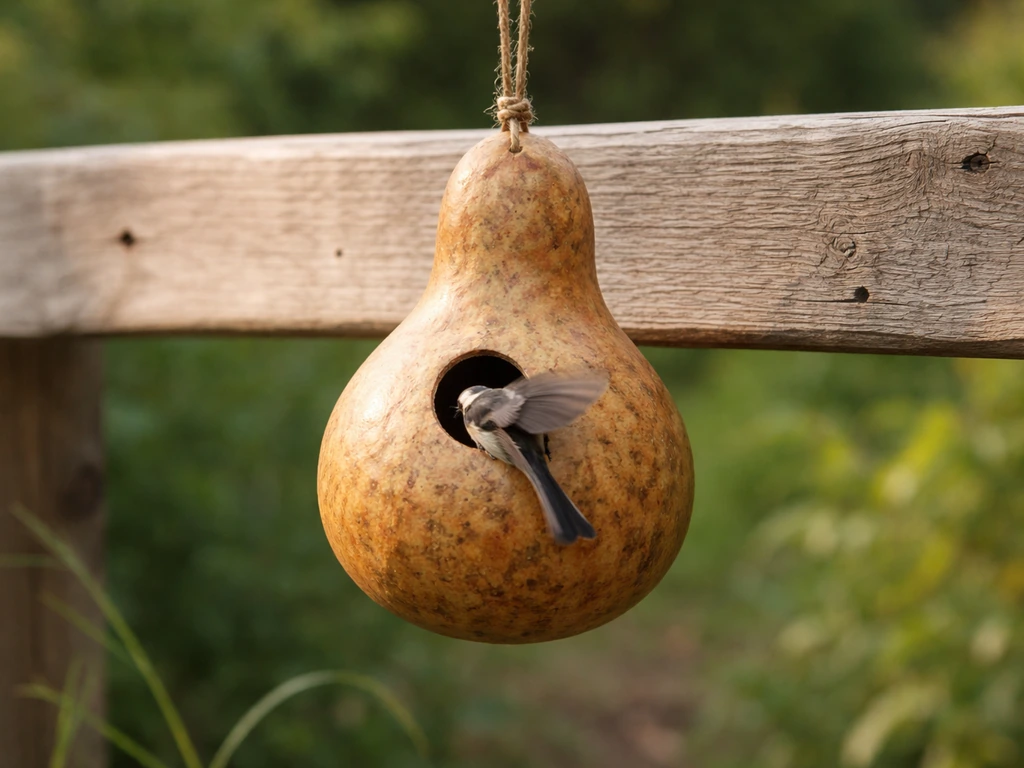
Before you open or peek into anything, watch the gourd from a comfortable distance, ideally 15 to 20 feet away, for about 10 minutes. If a bird is actively using it, you will see adults entering or leaving the hole, hovering near the entrance, or carrying nesting material in. That alone confirms activity. Use binoculars rather than walking up close.
Reading the entrance hole
If you drilled the hole yourself, you already know the size. If the gourd came pre-drilled or you bought it secondhand, measure the hole diameter with a ruler. A 1 1/8" hole points toward chickadees. A 1 1/4" hole is classic wren territory. A 1 1/2" hole opens the door to bluebirds, Tree Swallows, and Carolina Wrens. Anything at 2 1/8" or larger is Martin-sized. Any hole that looks gnawed, chewed, or enlarged beyond its original size may indicate a House Sparrow, squirrel, or European Starling trying to move in.
What the nest materials tell you
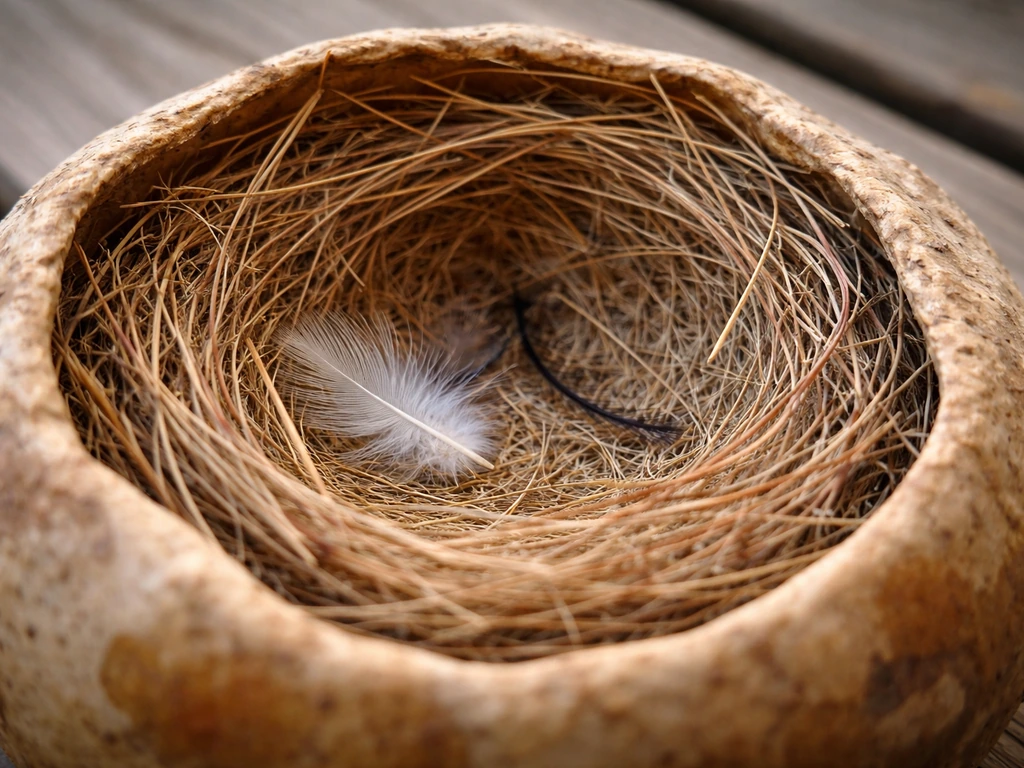
- Dry grasses loosely woven into a cup, with fine grass or pine needles as a base layer: almost certainly a bluebird; look for occasional horsehair or a turkey feather pressed into the lining
- Thick layer of white feathers over a grass base: Tree Swallow
- Tightly packed small sticks that nearly fill the cavity, with a feather and hair cup in the center: House Wren
- Soft moss forming the outer cup, densely lined with animal fur, hair, or plant down; eggs may be covered with a fur "blanket" when adults are away: Black-capped Chickadee
- Chaotic jumble of straw, string, feathers, plastic, or debris crammed into every corner: House Sparrow; this is the easiest nest to identify and the most problematic (more on that below)
- Grasses mixed with green leaves and a few pieces of mud near a large-colony gourd setup: Purple Martin
Timing clues by month
If you are reading this in late May (like right now, late May 2026), most cavity nesters in the continental US are either mid-nest-build, incubating eggs, or feeding nestlings. Bluebirds may already be on a second brood in warmer states. House Wrens are hitting peak activity across the Midwest and Northeast. Purple Martins are well into colony establishment in the South and mid-Atlantic. Chickadees in northern states may have nestlings or recently fledged young. Any gourd that went up in March or April and has not been checked since very likely has an active nest in it right now.
What to do (and not do) with an active nest right now
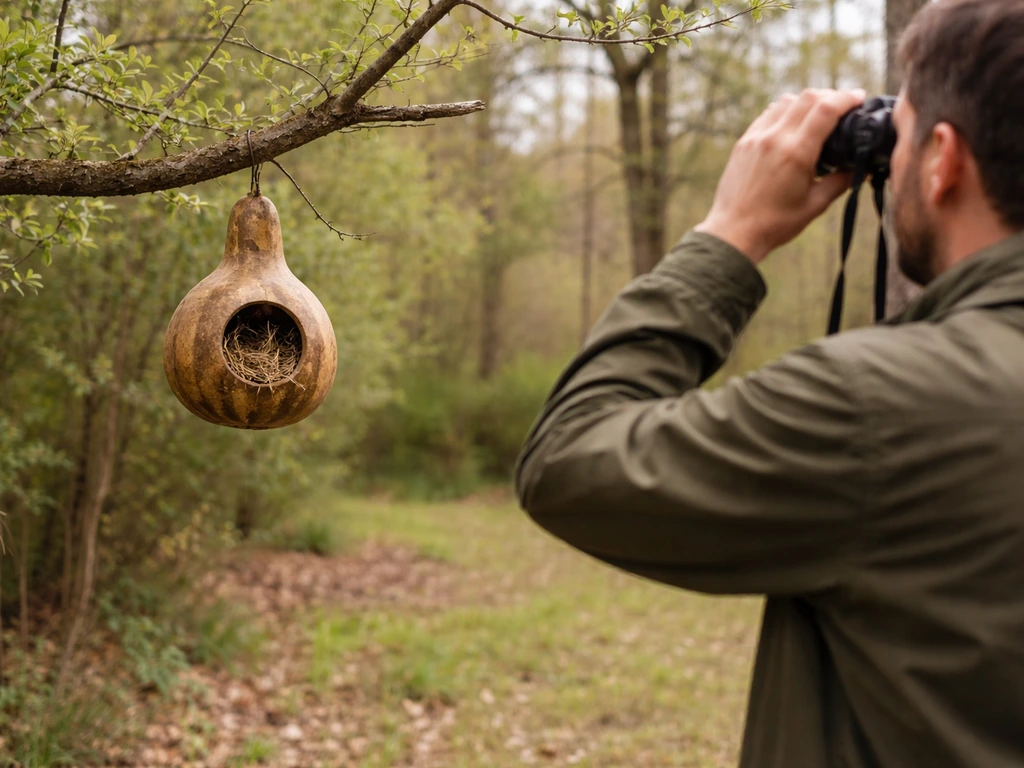
This is the part where people often make well-meaning mistakes. The instinct to peek in, clean out, or move a gourd is almost always the wrong call during nesting season. Here is what to actually do.
Do these things
- Observe from a distance using binoculars; 15 to 20 feet is usually enough to confirm activity without stressing the adults
- Take photos from a distance if you want to document the species; this is useful for ID and your own records
- Make sure the gourd is still firmly mounted and not in danger of falling; a quick visual check of the mounting hardware from a few feet away is fine
- Check that the entrance hole is clear of debris, wasps, or obstructions from outside, again without touching or opening the gourd
- Keep cats, dogs, and curious kids at a distance from the gourd during active nesting
- Back away immediately if adults show alarm behavior: scolding calls, dive-bombing, or refusing to return to the nest while you are present
Do not do these things
- Do not open, shake, or tap the gourd to see if anyone is home
- Do not relocate or move the gourd while it has an active nest with eggs or chicks inside
- Do not block or cover the entrance hole, even temporarily
- Do not spray pesticides anywhere near an active nesting gourd
- Do not handle eggs or nestlings; even well-intentioned handling causes stress and can trigger abandonment
- Do not check the nest more than once or twice a week if you are monitoring; daily disturbance adds up
If you are genuinely worried about the nest (the gourd is swinging dangerously, a predator has been circling, or you think the adults may be injured), keep watching from a distance for a full hour before deciding the situation is an emergency. Adult birds leave the nest regularly for feeding and predator distraction. What looks like abandonment is often normal behavior.
The legal side: what you can and cannot do
In the United States, most wild birds and their active nests are protected under the Migratory Bird Treaty Act (MBTA). This covers the overwhelming majority of songbirds, including every species on the list above except House Sparrows and European Starlings (which are introduced, non-native species and are not protected by the MBTA). In practical terms, the MBTA makes it illegal to disturb, collect, possess, or destroy an active nest containing eggs or living birds without a permit. Permits for nest removal are only issued in very specific circumstances, typically when nests pose a direct human health or safety risk. "I want to clean the gourd" does not qualify.
The USFWS does note that destroying an empty nest (no eggs, no birds present) does not by itself constitute a possession violation, but destroying an active nest significantly raises your legal exposure. The safe rule of thumb: if there are eggs or chicks inside, leave it completely alone until the young have fledged. If you are outside the US and in an EU member state, the Birds Directive (2009/147/EC) applies similar protections, prohibiting deliberate destruction, damage, or removal of nests and eggs, as well as significant disturbance during breeding and rearing.
The one exception most people ask about is House Sparrows. Because they are not native and not MBTA-protected in the US, their nests (including active ones with eggs) can legally be removed. Many bluebird and Martin conservation programs actively recommend doing so to protect native species that are competing for the same gourd. If you confirm House Sparrow occupancy and you are trying to maintain the gourd for native birds, removal of their nest is legal and widely encouraged by conservation organizations. If you are uncertain about the species or are outside the US, contact your local wildlife agency before acting.
Setting up and troubleshooting your gourd birdhouse
If you are setting up a gourd birdhouse for the first time, or trying to figure out why birds are not using one you already have, the details of setup matter a lot. Get these basics right and you will have much better luck.
Drainage and ventilation
Every gourd birdhouse needs drainage holes in the bottom (at least two or three, roughly 1/4" diameter) and small ventilation holes near the top of the cavity walls. These are not optional. Water pooling inside kills eggs and nestlings. Heat buildup without ventilation is equally dangerous. Check that existing holes have not been plugged by nesting material, mud, or wasp nests. If you can see from outside that the bottom holes are blocked, carefully clear them with a thin wire, ideally before nesting season begins or after the birds have fledged.
Mounting height and orientation
Height requirements vary by species, but a general-purpose gourd for small songbirds should be mounted 5 to 8 feet off the ground. Eastern Bluebirds are comfortable at 3 to 6 feet. Purple Martin gourds in a colony setup are typically 12 to 18 feet high on a dedicated rack pole. Face the entrance hole away from prevailing wind and driving rain, and where possible orient it toward open space rather than dense shrubs. Bluebirds specifically prefer an entrance facing open field or lawn.
Hang gourds outdoors by late February or early March in warm climates and by mid-March in cooler northern areas. Birds scout for nest sites early, often before you think they would be looking. Late setup means missed opportunity for early broods.
Predator protection
A mounted gourd without a predator guard is an invitation for raccoons, snakes, and cats to raid the nest. A metal baffle on the mounting pole is the single most effective protection. Cone-style baffles (at least 18 inches in diameter) mounted 4 to 5 feet up the pole stop most climbing predators. Avoid mounting gourds on wooden fence posts or within jumping range of structures, since baffles are useless if a predator can bypass the pole entirely. Adding a hole restrictor (a metal plate over the entrance with the correct diameter opening) prevents larger predators and competing birds like starlings from enlarging the hole and accessing the nest.
Spacing and competition
If you are mounting multiple gourds, space them at least 15 to 20 feet apart for most small songbirds to reduce territorial conflict. Purple Martin colony gourds are the exception; they are social and prefer gourds clustered on a single rack. Monitor for House Sparrow takeovers regularly, especially in suburban settings. Check weekly from April through August and remove House Sparrow nests promptly if you find them.
After the birds fledge: cleaning, refurbishing, and prepping for next year
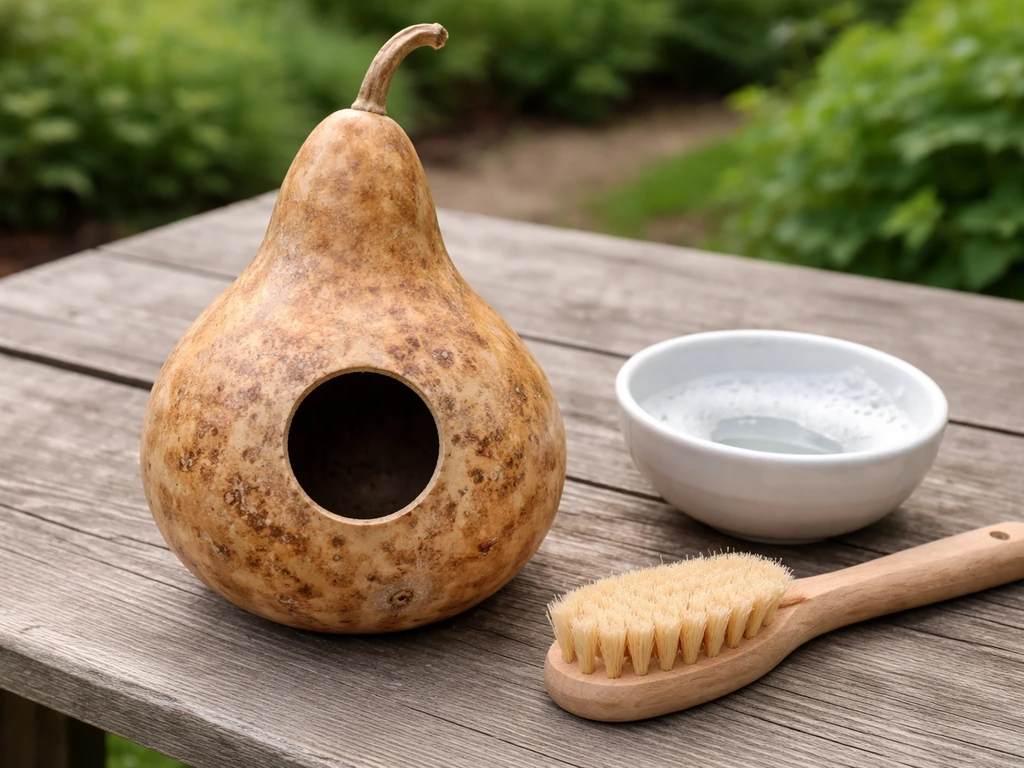
Once the young birds have left and you are confident no additional breeding activity is happening in that gourd, it is time to clean it out. Do not rush this step; some species like bluebirds can raise two or three broods in the same structure across a single season. Wait a full week after the last fledgling has left and watch for any returning adults before you open the gourd.
- Confirm the nest is completely inactive: no adults entering, no sounds from inside, no eggs visible through the hole (use a small flashlight, not your fingers)
- Remove all old nesting material; this prevents parasites, mites, and blowfly larvae from overwintering in the gourd and affecting future broods
- Scrub the interior with warm water and mild dish soap using a long-handled brush
- If there is significant fecal buildup, disinfect with a 1: 10 bleach-to-water solution, rinse thoroughly, and allow the gourd to dry completely in open air before rehanging
- Inspect the gourd for cracks, rot, or damaged drainage and ventilation holes; repair or replace as needed
- Check that the exterior finish (paint, varnish, or preservative treatment) is still intact to prevent moisture absorption
- Rehang the cleaned gourd by late winter or early spring, before the first scouts arrive
If you are dealing with a fresh garden gourd or pumpkin that had a nest built near or in it, the approach is the same after the nest empties: wait until all activity has stopped, then clean up or compost the remaining material. There is no obligation to preserve a natural structure like a hollowed pumpkin beyond the nesting season.
One thing worth knowing as you think about other nesting situations in and around your property: birds that use gourd birdhouses are cavity nesters by nature, which means they share nesting habitat preferences with birds that use tree cavities, garage eaves, and even roof spaces. The identification and legal principles that apply to gourd nests translate directly to those situations as well.
Your next steps right now, in plain terms
Here is a simple decision path based on where you are today:
- Is there a bird visibly entering and exiting the gourd? Yes: it is active. Measure the entrance hole size if you can do so without disturbing the birds, note the nesting materials if visible, and use the table above to narrow down the species. Then leave it completely alone.
- Are there eggs or nestlings inside? Do not touch or move anything. The nest is legally protected (unless it contains only House Sparrows or European Starlings in the US). Your job right now is to make sure the gourd is stable and predator-guarded, then step back.
- Is it a House Sparrow nest and you want to protect native birds? You can legally remove it in the US. Do so and monitor weekly to prevent re-establishment.
- Are you unsure if the nest is still active? Wait 48 hours, observe from a distance, and check again before doing anything.
- Has the nest been empty for a week or more? Clean it out now following the steps above, and get it back up before February or March for next season.
- Is the gourd not attracting any birds? Check entrance hole size against the species table, confirm drainage and ventilation holes are open, add a predator baffle if one is missing, and make sure the gourd went up early enough in the season.
FAQ
How can I tell if a bird is nesting in the gourd versus just hanging around to forage?
If the bird repeatedly enters and exits the entrance hole or carries nesting material directly toward the hole in short trips, that usually indicates active use. Foraging birds tend to perch, hop on the gourd, and move on without consistent, repeated hole visits. A single 1 to 2 minute watch is often misleading, aim for about 10 minutes from a distance and note whether the entry rate stays steady.
What should I do if the gourd’s entrance hole size looks larger than I remember?
Enlarged or gnawed openings often mean House Sparrows, European Starlings, squirrels, or even raccoons have been testing the cavity. In that case, stop trying to “fix it” mid-season by drilling or changing the opening, because you could disturb an active nest. Instead, wait until the young have fledged, then add a hole restrictor sized to the intended species and confirm predator guard baffles are correctly installed.
Can I relocate a hanging gourd birdhouse if birds have already moved in?
During active nesting, moving or reorienting the gourd is treated as disturbance, even if you do it carefully. The safe approach is to leave it in place until nesting activity ends, then adjust height and orientation. If there is a safety risk (for example, it’s swinging into a walkway where people or pets will bump it), reduce hazards without touching the gourd itself, such as tightening the mount or clearing nearby obstructions while watching from a distance.
How often should I check a gourd with a suspected active nest?
For most cavity nesters, frequent checks increase disturbance and can lead to accidental nest abandonment. If the entrance shows ongoing use, limit to visual monitoring at distance (binoculars) rather than handling. If you need to confirm identity, measure the hole diameter from outside and use entry behavior, then avoid opening until you have clear evidence the nest has finished and no adults are returning.
Is it safe to clean out a gourd after I see the birds stop bringing food for a day or two?
Not always. Gaps can happen while adults feed nestlings in longer intervals, during brief weather changes, or when a brooding period shifts. A practical rule is to wait at least a week after the last fledglings are observed leaving, then watch for returning adults over that window before cleaning.
What if I find eggs or chicks but I did not know a nest was active?
Do not attempt to remove, relocate, or clean. Step away and return to distant observation, since legal protections typically apply as soon as eggs or living birds are present. If the nest is in an unsafe location for people or pets, contact local wildlife or animal control for guidance rather than acting yourself.
If House Sparrows are present, can I remove their nest even if I also suspect bluebirds or wrens might be using the gourd?
Only proceed if you can confidently confirm the occupancy is House Sparrow. Misidentification is common because small cavity nests can look similar from a distance. If you are uncertain, keep monitoring from afar and avoid actions that could affect native, protected species. The article’s guidance to confirm species before removal is especially important where native cavity nesters co-occur.
What should I do about a plugged drainage or ventilation hole during nesting season?
Do not dig, poke, or clear holes if you suspect active nesting inside. Instead, postpone any hole clearing until after fledging, unless there is an immediate safety issue that requires urgent intervention. For preventing repeat problems, inspect and clear holes before the next season begins so pooling water or heat buildup cannot harm eggs and nestlings.
Are there any times when birds are less likely to use a gourd, even if it has the right hole size?
Yes. Extreme heat, heavy rain, or a sudden change in predator pressure can temporarily reduce use, even with correct entrance dimensions. Also, if a gourd is newly installed or oriented poorly during late season, birds may prioritize other available cavities nearby. If use is absent, check whether the mount is stable, the entrance faces toward appropriate open space, and whether House Sparrows are occupying nearby cavities before making equipment changes.