Most bird nests handle ordinary rain just fine. The adults shelter the eggs or chicks, the nest materials drain or dry out, and life goes on. Where things get complicated is with heavy or sustained rainfall, ground-level nests vulnerable to pooling water, and very young nestlings who can't yet regulate their own body temperature. Knowing what's actually happening inside that wet nest helps you decide whether to watch and wait or pick up the phone.
What Happens to Bird Nests When It Rains and What to Do
Maya Bennett
24 May 2026
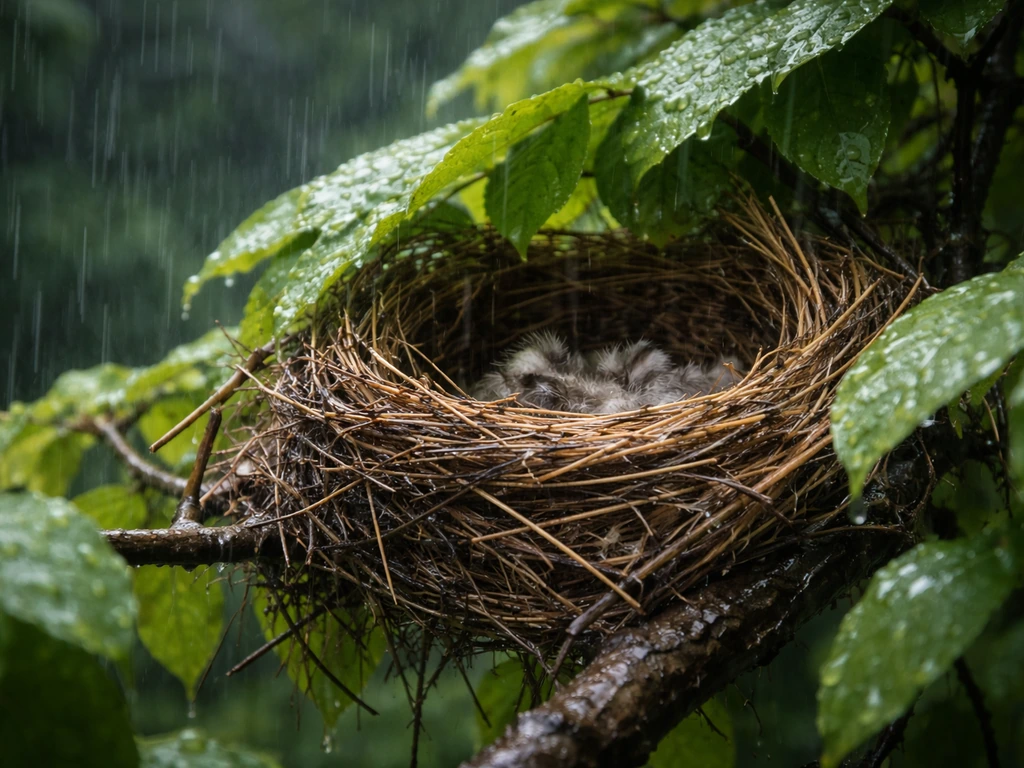
What rain does to a nest right away
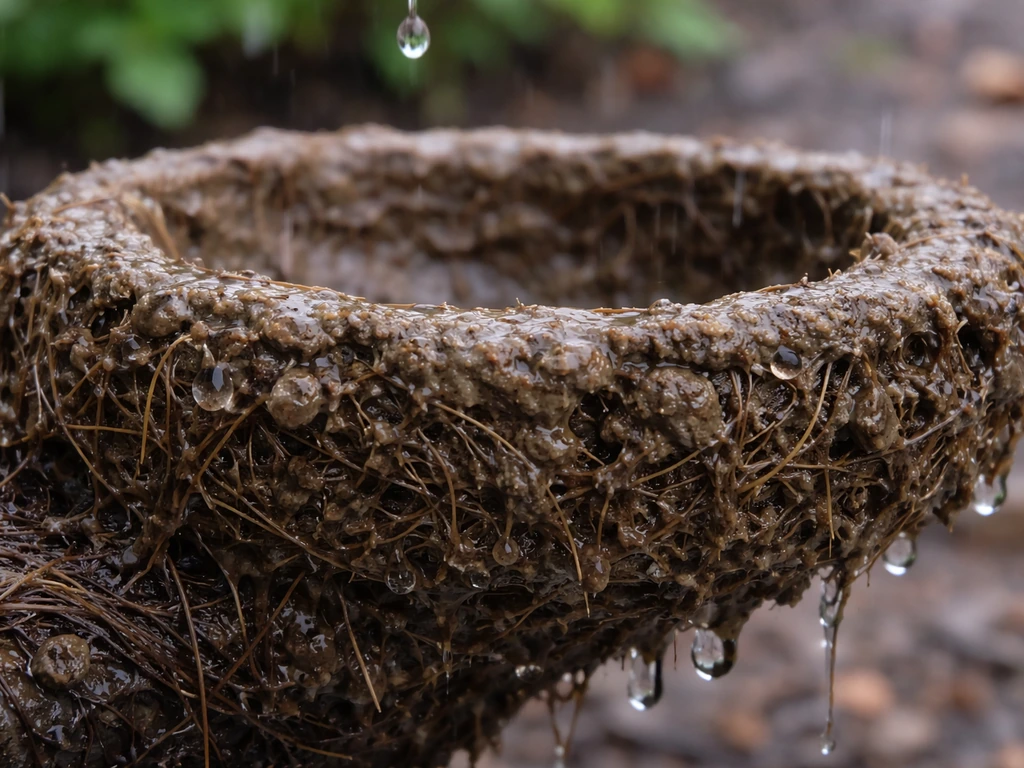
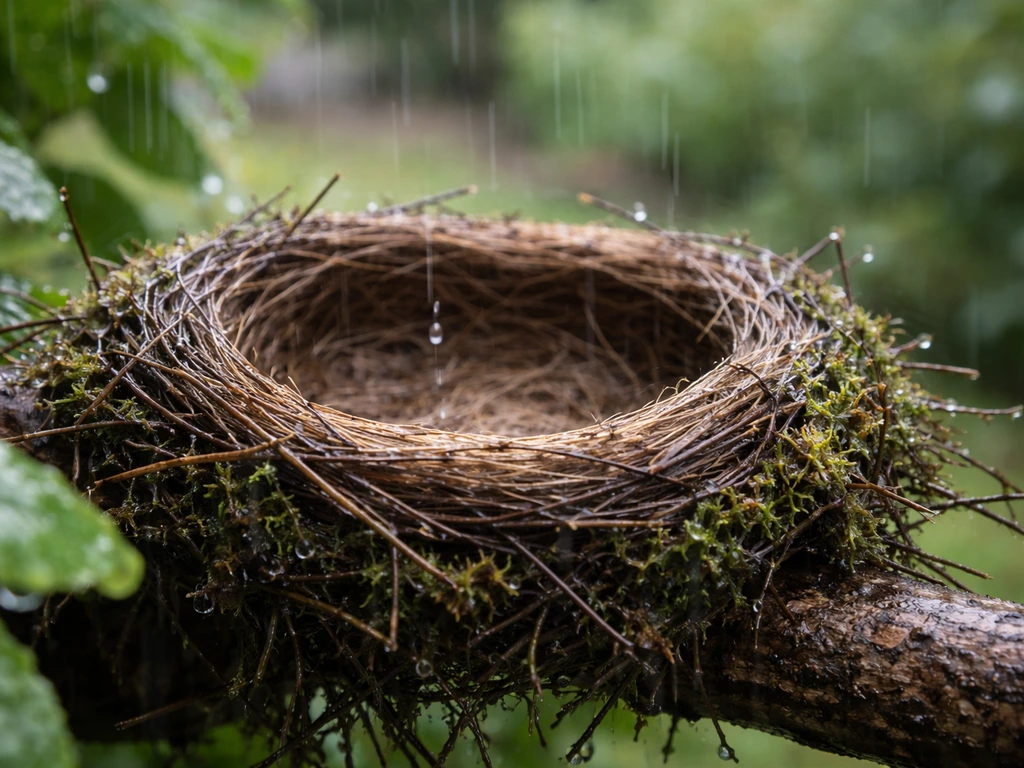
The immediate effect depends almost entirely on what the nest is made of and where it sits. Mud-and-grass cup nests built by robins or barn swallows are remarkably porous: water soaks in, but also drains out through the loose weave of plant fibers, moss, and spider silk. A well-constructed open cup rarely becomes waterlogged after a single storm because the fibrous base acts almost like a sponge that releases moisture as conditions improve. Tightly woven nests with a deep cup hold their shape and shed water from the rim like a shallow bowl.
Dense mud-and-straw nests (think cliff swallows or American robins mid-construction) can soften and crack in prolonged downpours. If a nest is built on a surface that channels runoff directly onto it, like a rain gutter or a downspout bracket, even a modest shower can drown it. Platform nests made of sticks, such as those built by herons, ospreys, or mourning doves on flat surfaces, drain fairly well but can become heavy and structurally stressed when saturated. Ground nests are the most vulnerable: a sudden heavy shower can pool standing water directly in the nest cup within minutes, especially in low-lying spots.
Wind combined with rain is often more damaging than rain alone. Research on heat loss from avian cup nests shows that convective airflow dramatically increases how fast a nest loses warmth, and a wet nest loses heat even faster than a dry one. Sheltered positions, like a nest tucked under a dense shrub canopy or inside a cavity, dampen both wind speed and direct water intrusion. That's one reason cavity nesters like wrens and chickadees have a built-in advantage: measured airflow inside nest cavities runs well below 1 km/h, compared to fully exposed positions.
How rain affects eggs and nestlings
Eggs: chilling and incubation disruption
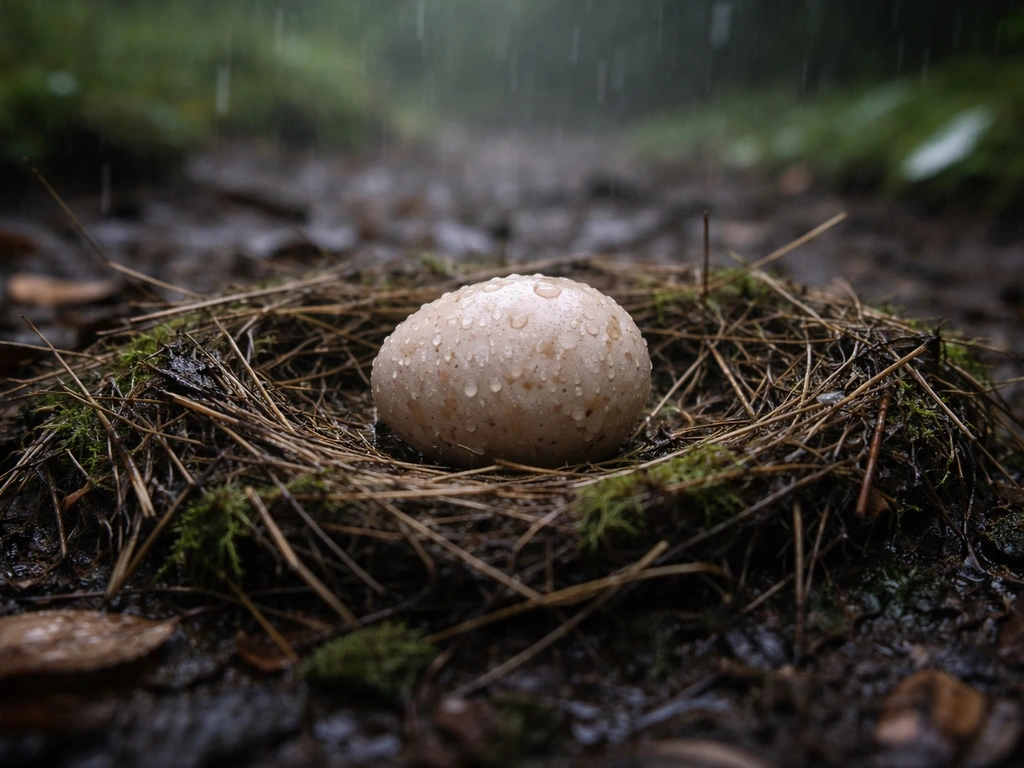
Unattended eggs cool rapidly in wet conditions. Embryo development stalls if egg temperature drops significantly below the incubation range of most songbirds (roughly 35 to 38°C / 95 to 100°F). Short cooling periods are usually tolerable, but sustained chilling, especially if eggs are sitting in pooled water, can be lethal. Research on nest abandonment has found that rainfall events can drive abandonment more strongly than temperature alone, likely because a brooding adult trying to cover wet eggs simultaneously fights heat loss from their own body while managing drenched plumage. If you see a bird sitting motionless on a nest in pouring rain, that's exactly what's happening: she's prioritizing egg temperature over her own comfort.
Nestlings: hypothermia is the real risk
Very young nestlings (generally under two to three weeks old) cannot thermoregulate on their own. They depend entirely on the brooding adult for warmth. Studies of peregrine falcons found that heavy rain events measurably increased nestling mortality, especially in the first three weeks post-hatch. Songbird nestlings face the same vulnerability at a smaller scale.
Research on great tits showed that females significantly reduced their foraging trips during rain, spending more time brooding instead, which means chicks got fed less often during storms. It's a trade-off: warmth or food. For short storms, warmth wins and the chicks catch up after. For multi-day rain events, especially in early spring when temperatures are already low, the combined stress of cold and reduced feeding can tip a brood toward failure.
Flooding is a separate, more catastrophic event. Ground-nesting species like sparrows face nest failure when water rises into the nest cup. Researchers studying saltmarsh sparrows treat a nest as failed when it's observed underwater or when eggs show cold, wet, or dirty conditions after flooding. Height above the waterline matters enormously: even a few centimeters of extra nest elevation can be the difference between a surviving clutch and a lost one.
What to do right after it rains: a safe observer checklist
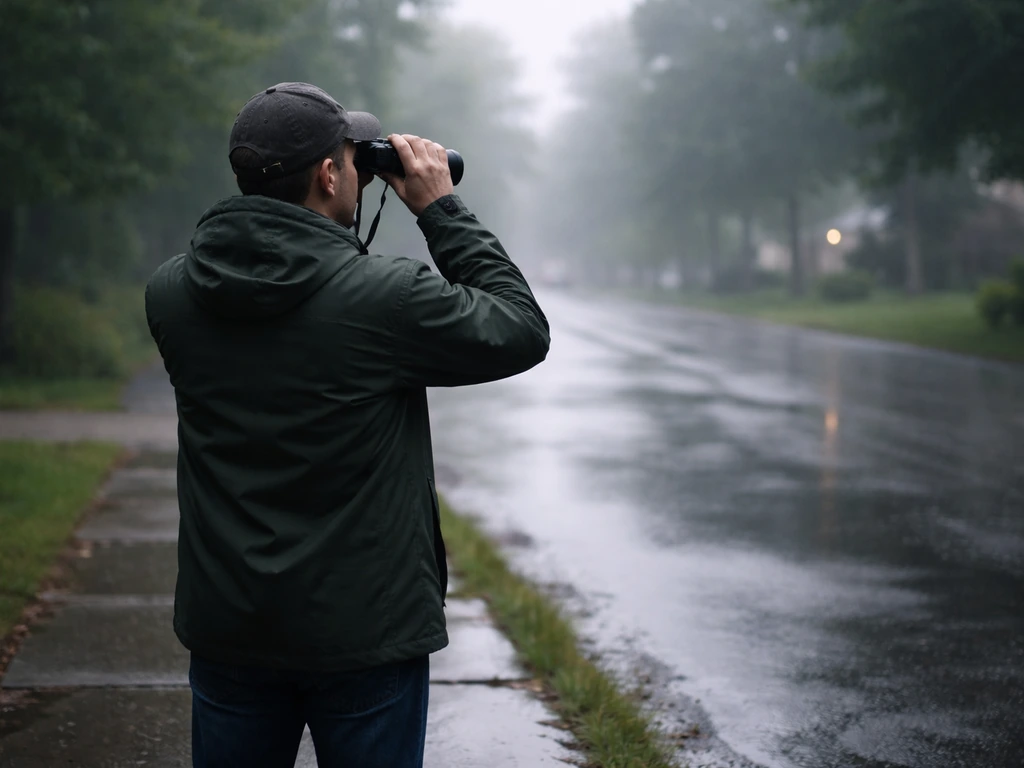
Your first and most important job is to observe without disturbing. Stay at least several meters back and watch quietly for 15 to 30 minutes. What you're looking for: Is an adult returning to the nest? Is the nest physically intact? Are nestlings moving or calling? Take photos from a distance if you need to document the situation.
- Watch from a distance first. Give the adults 30 minutes to an hour to return before drawing any conclusions. Disturbance from humans can delay parental return and make things worse.
- Look at the nest structure, not just its contents. Is the cup collapsed, is it sitting in pooled water, or has it shifted on its mounting? These are structural problems worth noting.
- If a nest is in a gutter or on a surface that actively channels runoff onto it, gently redirect water flow using a bucket or temporary barrier placed well away from the nest, but do not touch the nest itself.
- If a nestling has been knocked out of the nest by rain or wind, it's generally safe to return it. Contrary to popular myth, birds do not abandon young because of human scent. Use clean gloves or a soft cloth, handle quickly, and place the chick back in the nest cup.
- If the nest cup has collapsed or the nest is clearly soaked and hanging by a thread, a temporary substitute nest (a small strawberry basket or margarine tub with holes punched in the bottom, lined with dry natural material like dry grass or leaves) can be attached near the original site. Keep the replacement as close to the original position as possible.
- Do not bring nestlings or eggs indoors unless directed by a licensed wildlife rehabilitator. Indoor environments, incorrect temperatures, and well-intentioned feeding (bread, water, milk) can kill birds faster than the cold.
- If parents do not return within two hours after you've backed well away, or if nestlings appear cold, limp, or unresponsive, contact a licensed wildlife rehabilitator immediately.
When to step in and when to step back
The honest answer is: most of the time, step back. Parent birds are remarkably resilient and experienced at managing wet-weather conditions. Human intervention, even well-meant, often introduces more stress than the rain itself. Audubon is clear on this: active nests with eggs or young are federally protected under the Migratory Bird Treaty Act in the U.
Audubon advises figuring out the nest and species first, and notes that active nests with eggs or young generally cannot be moved or removed without a federal permit active nests with eggs or young are federally protected under the Migratory Bird Treaty Act in the U. .
S. , and moving or disturbing them without a federal permit is illegal for most native species. That protection applies whether the nest is convenient or not.
The cases where intervention is warranted are specific. Intervene (by contacting a rehabilitator, not by DIY treatment) if: a nestling is on the ground and the original nest is destroyed or unreachable; the nest is in an active hazard zone like rising floodwater; nestlings are visibly hypothermic (cold to the touch, eyes closed, unresponsive); or parents haven't returned after two full hours of undisturbed observation. The U.S. Fish and Wildlife Service recommends leaving birds alone and contacting your local wildlife rehabilitation resource rather than attempting home care.
To find a licensed rehabilitator quickly, search your state's fish and wildlife agency website or use the Wildlife Rehabilitators directory. Have the bird's location, approximate age (feathered or naked/downy), and the situation description ready when you call.
How rain affects different nest types and species
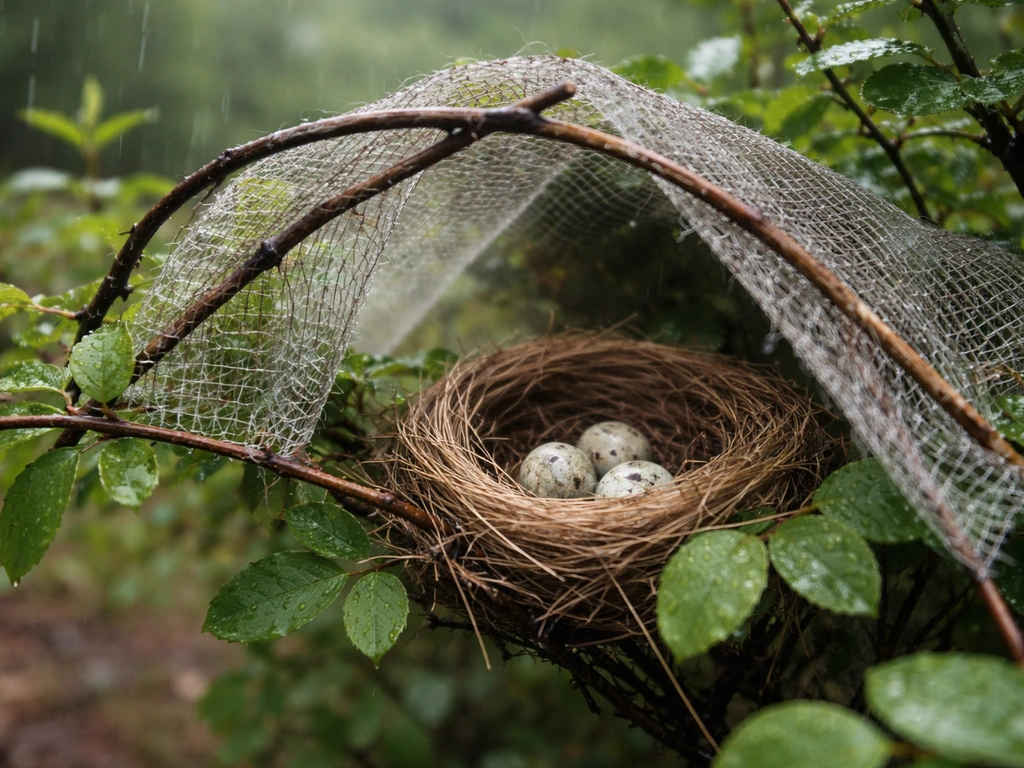
Nest type matters more than almost any other variable when it comes to rain vulnerability. Here's a practical breakdown of what you're likely to encounter.
| Nest type | Example species | Rain vulnerability | Key risk |
|---|---|---|---|
| Open cup (shrub/tree) | American robin, song sparrow, yellow warbler | Moderate | Chilling of eggs/young if adult can't brood; cup may soften in prolonged rain |
| Open cup (ground) | Killdeer, ovenbird, many sparrows | High | Flooding and pooling; nest can fill with water in minutes during heavy rain |
| Enclosed cavity (tree hole) | Chickadees, wrens, woodpeckers, bluebirds | Low to moderate | Water can pool inside if drainage is poor; otherwise well-sheltered |
| Enclosed cavity (nest box) | Bluebirds, wrens, house sparrows, tree swallows | Low if well-designed | Flooding if no drainage holes; mold in wet nesting material |
| Platform/stick nest (elevated) | Herons, ospreys, mourning doves | Low to moderate | Structural weight; nestlings exposed to rain without deep cup shelter |
| Cliff/mud cup | Barn swallows, cliff swallows | Moderate | Mud softens in prolonged rain; can detach from substrate |
| Floating/aquatic | Grebes, coots, some ducks | Designed for water | Flooding of surrounding water level; tipping or anchoring failure |
Ground-nesting birds deserve special attention. Killdeer nest in open gravel or grass with almost no cup, relying on camouflage over shelter. Even modest rainfall can pool around their eggs. Saltmarsh and seaside sparrows, which nest in tidal vegetation, face a constant flood-or-predator trade-off: nests placed higher avoid flooding but are more exposed to predators. Research confirms that nest height relative to water level directly predicts flooding probability and that the best height varies by year depending on rainfall and tide patterns.
Cavity nesters like eastern bluebirds and house wrens get natural rain protection from the entrance hole overhang, but a poorly designed or positioned nest box can collect water as effectively as a bucket. House wrens are also documented to delay egg-laying and adjust clutch sizes during flooding years, showing that even cavity nesters feel the downstream effects of wet seasons on their reproductive timing.
Open-cup nests evolved from enclosed dome structures multiple times across bird families, which means open-cup nesters have long histories of coping with rain exposure. Comparative evolutionary research has shown that open-cup nests evolved from enclosed dome structures multiple times across bird families. They're not defenseless, but they are more dependent on behavioral responses (brooding, nest placement choice, nest repair) than cavity nesters are.
Myths worth retiring
"Rain washes eggs and babies out of the nest"
Heavy rain can dislodge nestlings in rare cases, particularly from shallow or already-damaged nests, but normal rainfall does not wash out intact nests. The structure of a healthy cup nest is specifically designed to channel water away from the center. If you see a bird on the ground after rain, it's more likely a fledgling (a fully feathered young bird learning to fly) than a rain victim.
"Wet eggs are ruined"
Eggs can tolerate brief wetting. The bigger threat is sustained chilling, not moisture on the shell. Waterfowl eggs routinely get wet without any harm. The problem arises when eggs sit in cold standing water for an extended period, which combines the effects of flooding, chilling, and bacterial contamination. A quick shower? The adult returning to brood handles that.
"The parents abandoned the nest because of the rain"
Adults may leave the nest temporarily during a heavy downpour, especially if the rain is coming sideways and brooding itself becomes dangerous. That's not abandonment: that's self-preservation. Research confirms that nest abandonment driven by rainfall is a real phenomenon, but it happens after sustained stressful events, not after a single shower. If you saw an adult on the nest before the rain and the nest looks intact after, give the bird several hours to return before assuming the worst.
"It's safer to bring the nest indoors"
It isn't. Moving an active nest indoors severs the adults' ability to find it, exposes nestlings to incorrect temperatures, and is illegal without a federal permit for most migratory species. If a nest truly needs temporary shelter, a covered but open-air spot (under an eave, inside a shed with an open window) is far better than inside your house. And always loop in a licensed rehabilitator before making that call.
"You shouldn't touch a baby bird because the parents will smell you and leave"
Birds have a limited sense of smell compared to mammals. Returning a fallen nestling to its nest will not cause the parents to abandon it. This myth has probably cost more young birds their lives than the rain has, because people stand there watching a cold chick on the ground rather than putting it back where it belongs.
Preventing wet-nest problems going forward
Nest box design and drainage
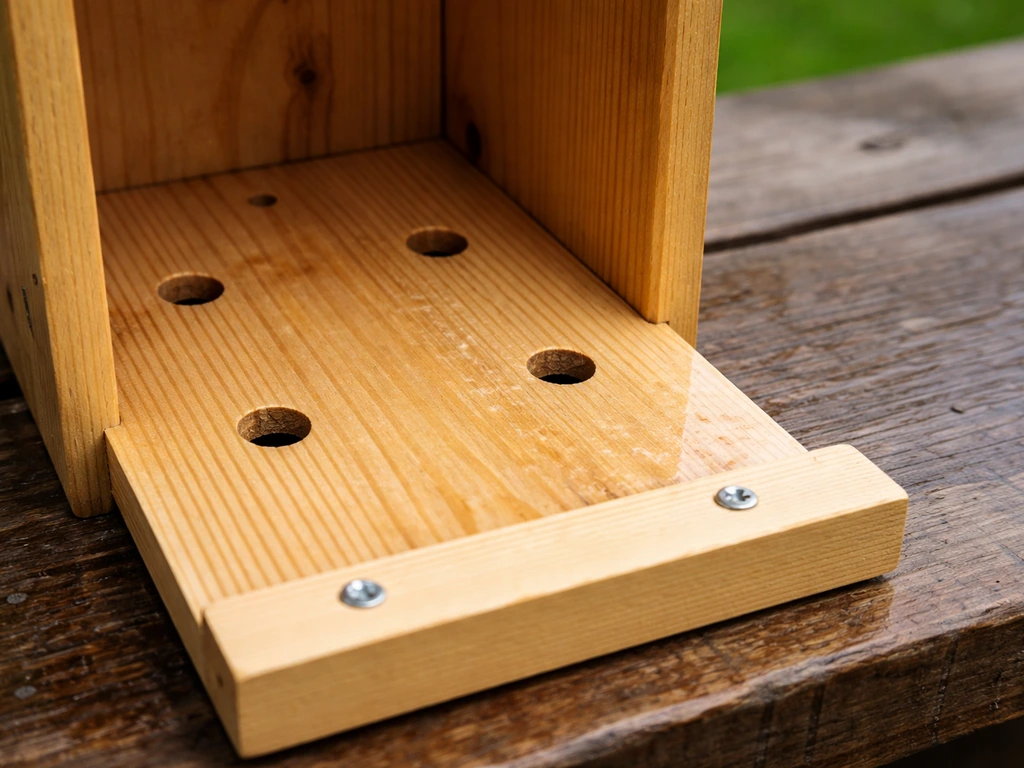
If you're providing nest boxes, drainage is non-negotiable. NestWatch recommends at least four drainage holes in the floor, each roughly 3/8 to 1/2 inch in diameter. The Alaska Department of Fish and Game specifies a similar spec: four 1/4-inch holes minimum, combined with a properly pitched overhanging roof that extends past the entrance hole to deflect rain. A roof that extends at least 1 to 2 inches past the box front cuts direct water entry dramatically. Ventilation gaps near the top of the side walls also prevent the interior from becoming a steam chamber after rain. Missouri Extension guidance reinforces the same combination: drainage holes, ventilated construction, and an angled roof.
Placement and orientation
Where you mount a nest box or where wild birds choose to build matters enormously. You can also reduce crow harassment by managing your yard and nest box setup to discourage crows from targeting active nests. Face nest box entrances away from the prevailing weather direction in your area (usually away from the north and northwest in most of North America). Avoid placing boxes or allowing nest-building in locations where roof runoff, gutter overflow, or downspout splash will land directly on the nest. If a bird has built in a problematic drainage path, use a temporary barrier or redirector away from the nest, but don't disturb the nest structure itself.
Yard and landscaping adjustments
Low-lying areas that pool standing water after rain are poor nest locations and sometimes attract ground-nesting birds anyway. Improving drainage in those areas (French drains, grading, reducing soil compaction) helps reduce flood risk for ground nests over multiple seasons. Dense shrub plantings provide natural overhead shelter for shrub-nesting species and reduce the direct impact of rainfall on open-cup nests. If you've had nests built in gutters or on downspout brackets repeatedly, adding a physical barrier (gutter guard, a repurposed wire cover) during the non-breeding season prevents future nesting there without harming any current occupants.
Balancing rain protection with predator protection
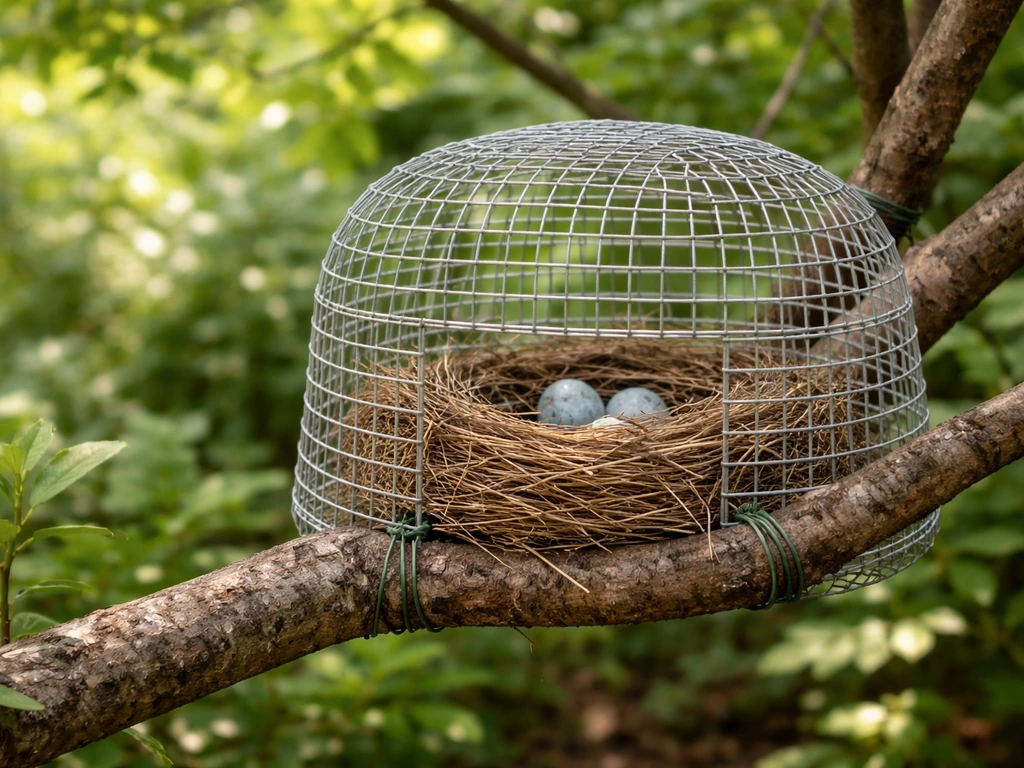
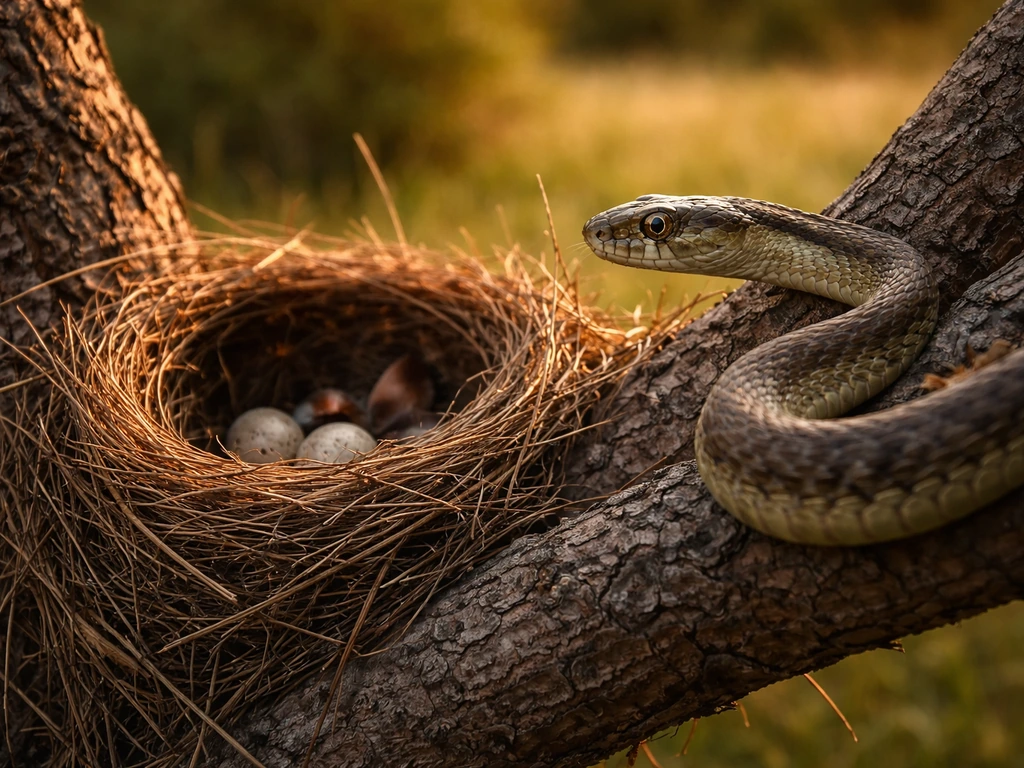
It's tempting to add extra cover or enclosures around a nest you're worried about, but adding physical barriers around an active nest can also inadvertently give predators a hiding spot or make it harder for adults to access the nest quickly. Predator baffles on nest box poles (smooth metal or PVC baffles that prevent climbing) are the best dual-purpose tool: they stop raccoons and snakes from reaching the box while not interfering with rainfall drainage or adult access. You can also reduce the chance of predation by understanding how predators like snakes locate nests how snakes find bird nests. Keep the area around ground-level nest sites clear of tall grass that could funnel water into the nest cup or provide cover for predators.
Wet weather intersects with a lot of other nest threats, from flooding to predator pressure to structural failure. Understanding what rain does and doesn't do on its own puts you in a much better position to respond appropriately, protect the birds you're trying to help, and avoid the well-meaning mistakes that make things worse.
FAQ
If I see an active nest during heavy rain, should I cover it with a tarp or take it into my garage?
Generally no. Covering an active nest can trap heat, block airflow, and create a hiding spot for predators, and bringing nests indoors can make it impossible for parents to locate the young. If you must create temporary protection, use an open-air cover that allows full access for the parents and does not touch or enclose the nest, then contact a licensed wildlife rehabilitator for guidance.
How can I tell the difference between normal rain stress and a true emergency for nestlings?
Look for functional signs, not just wetness. Emergency indicators include nestlings that are cold to the touch, eyes closed and unresponsive, labored or absent movement, or parents not returning after about two hours of undisturbed watching. If you only see wet feathers or the parents pause during the worst rain, that is often within normal behavior.
Is it safe to move a fallen nestling back into the nest after a storm?
Often yes for temperature and food reasons, because the scent myth is incorrect. The key exception is if the nest is unreachable or destroyed, or if the bird appears injured or hypothermic. In those cases, contacting a rehabilitator is safer than repeated handling.
Should I dry a wet nestling or egg with a towel or hair dryer?
Do not do DIY warming or drying. Human handling can chill the chick further, and using heat sources like hair dryers can overheat or burn. If a nestling is chilled, the best next step is a call to a rehabilitator who can warm and monitor safely.
What should I do if rainwater is pooling in a bird nest I didn’t notice before?
First, stop disturbing. If pooling is from a nearby manmade structure, redirect runoff in a non-invasive way that does not touch the nest, for example clearing debris in a gutter upstream or using temporary barriers away from the nest during the non-breeding season. For active nests with flooding risk, contact a rehabilitator rather than trying to bail, relocate, or rebuild the nest.
Why are cavity nesters sometimes still affected by rain in nest boxes?
Rain protection depends on design and placement. A poorly pitched roof can funnel water into the box, missing or clogged drainage can let moisture accumulate, and small entry holes can trap humidity. If you have recurring wet-box problems, the fix is to correct drainage and roof overhang, not to add temporary enclosures around a nest while it is active.
Do birds actually abandon nests after rain, or is that mostly a human assumption?
They can, but usually after sustained stressful conditions rather than a single downpour. If the nest looked intact before the rain and parents return once conditions ease, abandonment is less likely. Give it time, then reassess with quiet observation before assuming the worst.
How long should I watch before concluding parents are not caring for the nest during/after rainfall?
A practical guideline from the article is two full hours of undisturbed observation when conditions are calm enough to allow normal visits. If no adult returns and nestlings are showing cold-stress signs or movement changes, treat it as an emergency and contact a rehabilitator.
What is the best way to reduce rain-related nest failure around my property over the long term?
Improve drainage and eliminate direct runoff paths to likely nesting spots. For nest boxes, ensure adequate floor drainage holes and a roof that extends beyond the front so water is deflected. For ground-nesters, reduce pooling by improving grading or adding drainage, and keep tall grass from funnelling water or providing cover for predators.