To get birds nesting in your yard, start by matching the right species to your habitat, put up a correctly sized and placed nest box or nesting site before breeding season kicks off, make the surrounding area genuinely hospitable with food, water, and native plants, and offer safe nesting materials nearby. Do all that, stay hands-off once a nest is active, and you give birds a real reason to set up home with you rather than somewhere else.
How to Encourage Bird Nesting: Step-by-Step Habitat Setup
Maya Bennett
27 May 2026
Start with the right bird for your habitat

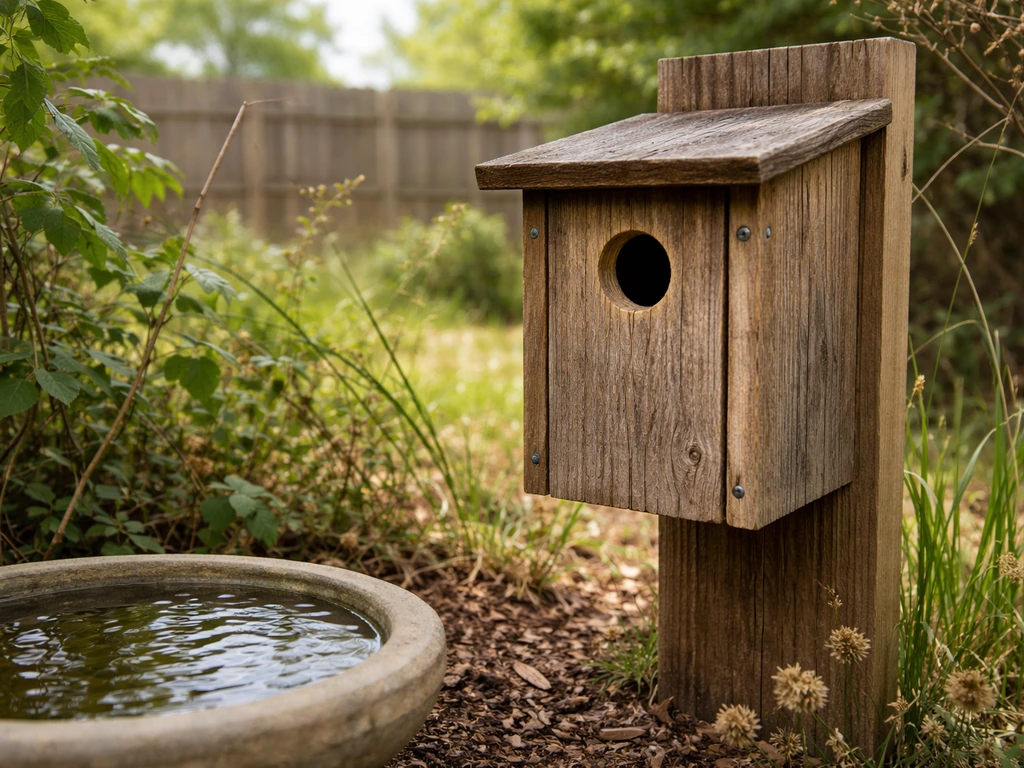
The single biggest mistake people make is buying a generic 'birdhouse' without thinking about who they actually want to attract. Different species need radically different setups. Eastern Bluebirds want open fields or meadow edges. House Wrens prefer shrubby, somewhat overgrown areas near woods. Barn Owls need large open farmland or pasture. Purple Martins are colonial and need multi-compartment housing near open water. Wood Ducks want boxes near wetlands or ponds. If your yard doesn't match a species' natural habitat, no amount of nest-box tweaking will reliably bring them in.
Spend a week simply watching and listening before you buy anything. Note what birds already visit your property and what they seem to be doing. Use a local field guide or eBird to confirm which cavity-nesters or open-cup nesters are regularly present in your area in spring. That list becomes your target list, and it shapes every decision from box size to mounting height to spacing.
Match box specs to your target species
Every cavity-nesting species has a preferred entrance hole diameter, interior box size, and mounting height. These aren't rough suggestions, they're the difference between a box birds use and one they ignore or that attracts the wrong species. New Jersey Audubon and other wildlife agencies publish per-species tables covering nest habitat, box height, entrance hole size, and minimum spacing. Look yours up before you build or buy anything.
| Species | Entrance Hole Diameter | Box Height Above Ground | Minimum Spacing |
|---|---|---|---|
| Eastern Bluebird | 1.5 inches | 5 feet (metal pole) | 250–300 feet |
| House Wren | 1.25 inches | 5–10 feet | 100–150 feet |
| Black-capped Chickadee | 1.125 inches | 4–15 feet | 200+ feet |
| Tree Swallow | 1.5 inches | 5–10 feet | 25–100 feet (pairs) |
| Wood Duck | 4 x 3 inch oval | 4–6 feet over water | 600+ feet |
| American Kestrel | 3 inches | 10–30 feet | 1 mile |
These figures are approximate starting points. Always cross-reference with a species-specific guide for your region. A box that's even a quarter-inch too wide on the entrance can let in House Sparrows that would otherwise be excluded, which is a genuine conservation problem.
Set up the right nesting space for your target birds
Nest boxes and cavity nesters
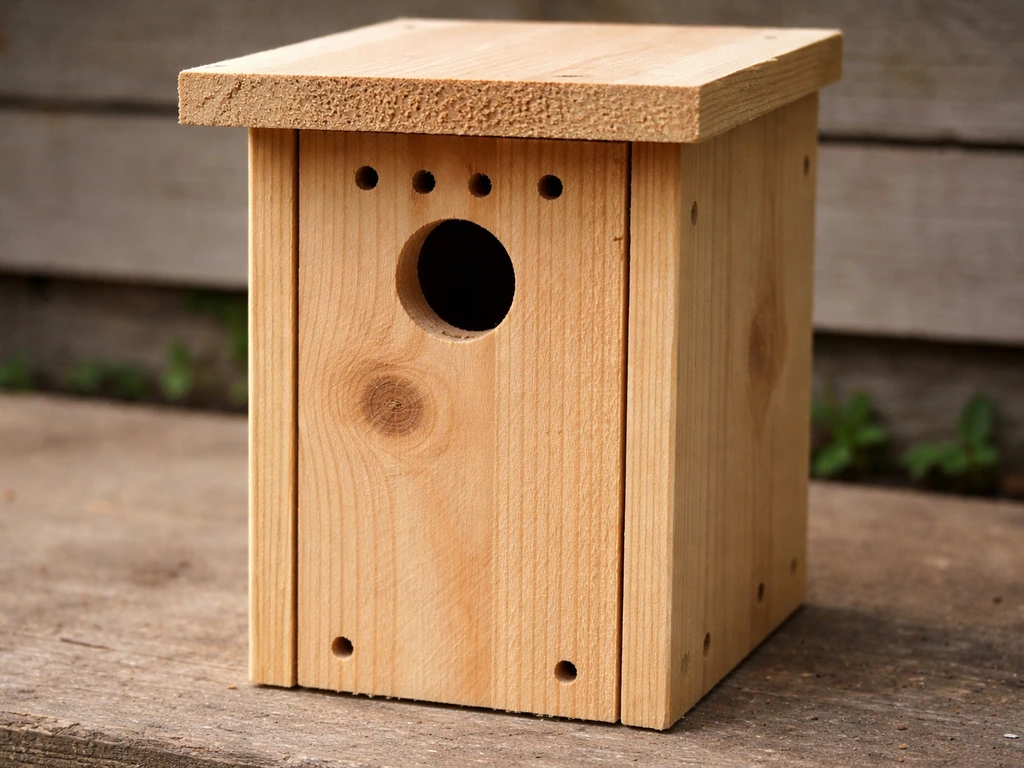
For cavity-nesters, a purpose-built nest box is your best tool. Use untreated wood (cedar and pine both work well) cut to species-appropriate interior dimensions. Connecticut DEEP's bluebird box plans, for example, call for boxes mounted 5 feet above ground on galvanized pipe or a 7–8-foot metal garden stake. Avoid dark exterior colors, which overheat the interior, and never stain or paint the inside of the box or the entrance hole. The raw wood texture inside actually helps nestlings climb out when it's time to fledge.
The box should have ventilation holes near the top of the side walls and drainage holes in the floor. A hinged or lift-off roof makes weekly monitoring much easier without disturbing the nest structure. Mount it so it's stable in wind but still easy for you to reach.
Open-cup nesters and shelf/ledge designs
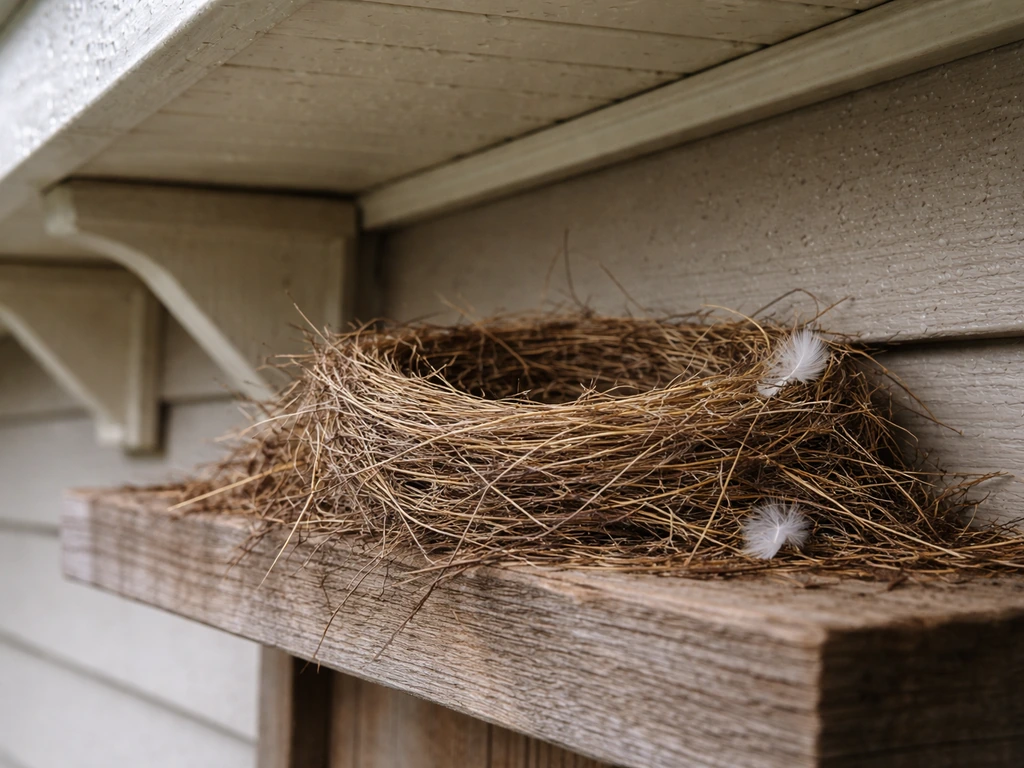
Not all birds want an enclosed box. American Robins, Barn Swallows, and Eastern Phoebes often take to open-fronted shelf boxes or nest ledges mounted on walls, eaves, or outbuildings. These are simple flat platforms or shallow three-sided boxes placed in sheltered locations. Robins and Phoebes prefer ledges on building walls 6–15 feet up, sheltered from direct rain. Barn Swallows favor open structures inside barns or under covered porches where they can build their mud nests against a vertical surface.
Ground nesters and brush patches
Killdeer, Song Sparrows, Towhees, and several other species nest on or near the ground. You don't install anything for these birds, you just stop being tidy in the right spots. Leave a section of unmowed grass or meadow, pile up some brush, and let the leaf litter accumulate under shrubs. Putting up a sign reminding family members or neighbors not to walk through that patch during spring and summer can be the single most effective thing you do for ground-nesting birds.
Make your whole yard work for nesting birds
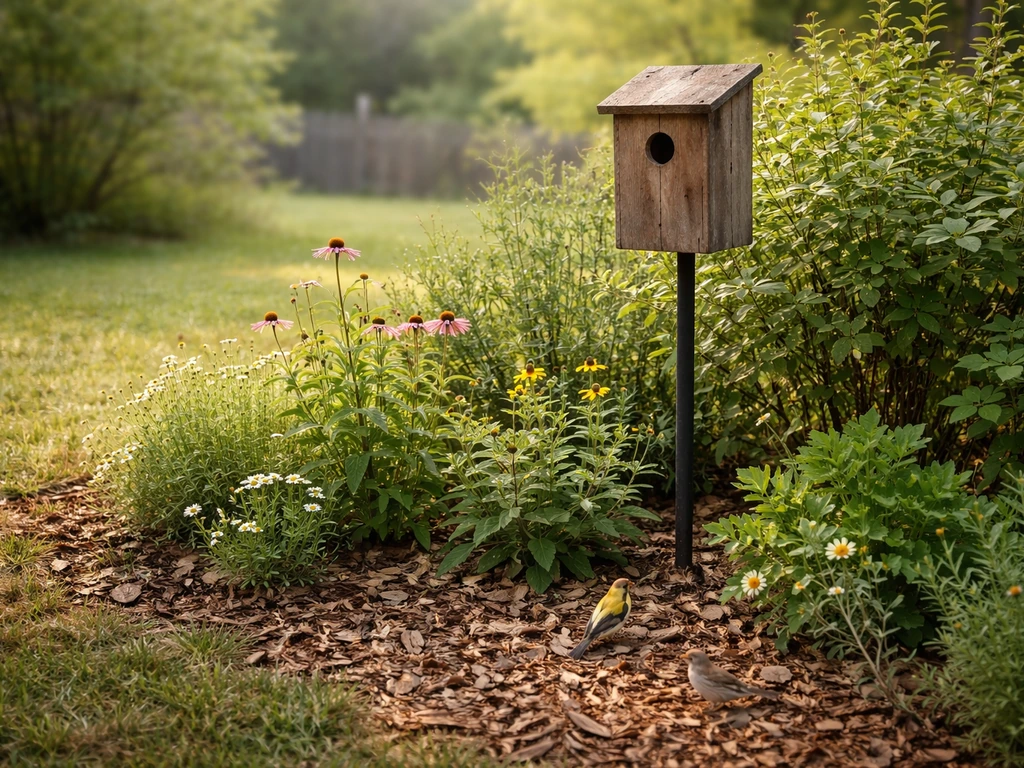
A nest box without a supportive habitat around it is like a house with no grocery store, hospital, or park nearby. Birds scout the whole territory before committing to a nest site. Here's what makes a yard genuinely attractive during breeding season.
- Native plants: Native trees, shrubs, and perennials support the insects that parent birds need to feed nestlings. A pair of Carolina Chickadees, for example, may bring 400 to 500 caterpillars per day to the nest. Non-native ornamentals rarely support that kind of insect biomass.
- Layered vegetation: A mix of tall trees, mid-story shrubs, and low ground cover gives birds places to perch, hunt, hide, and sing. Avoid the manicured lawn-and-one-tree aesthetic if you want nesting activity.
- Water: A shallow birdbath or ground-level water feature (no deeper than 2–3 inches at the center) that you keep clean and fresh is a strong attractant, especially during dry spells. Moving or dripping water gets noticed faster than still water.
- Supplemental food: During the pre-nesting and early nesting period, feeders with sunflower seeds, suet, or mealworms give birds extra energy for territory establishment and egg-laying. Pull mealworm feeders back a bit once chicks hatch so parents forage naturally, which builds a broader diet for nestlings.
- Reduce or eliminate pesticides: Insecticides directly reduce the food supply for nestlings. Even 'targeted' pesticide use on one part of the yard can deplete the insect populations that nesting birds rely on across a much wider foraging range.
- Spacing between nest sites: Territorial birds won't nest too close together. Bluebird boxes should be at least 250–300 feet apart. Placing boxes too close creates competition stress that prevents occupancy in all of them.
Offer nesting materials the right way
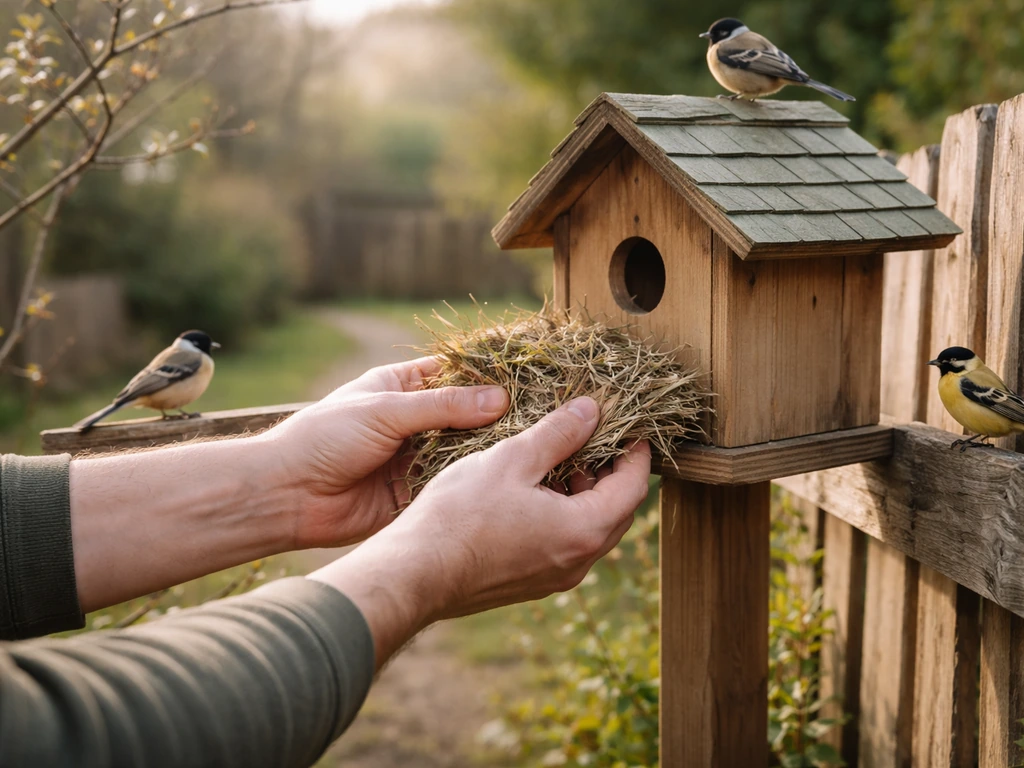
Birds gather nesting materials on their own, but you can give them a head start by putting safe options in an accessible spot. A wire suet cage, a mesh bag, or even just a loose pile on a flat surface works fine. Choosing the best bird nesting material you can safely offer helps birds build sturdy nests without using dangerous items nesting materials. If you are wondering what to put out specifically, focus on safe options like short natural fibers, dried grass clippings, and small twigs what can i put out for bird nesting material. Place it near natural cover so birds feel safe while collecting.
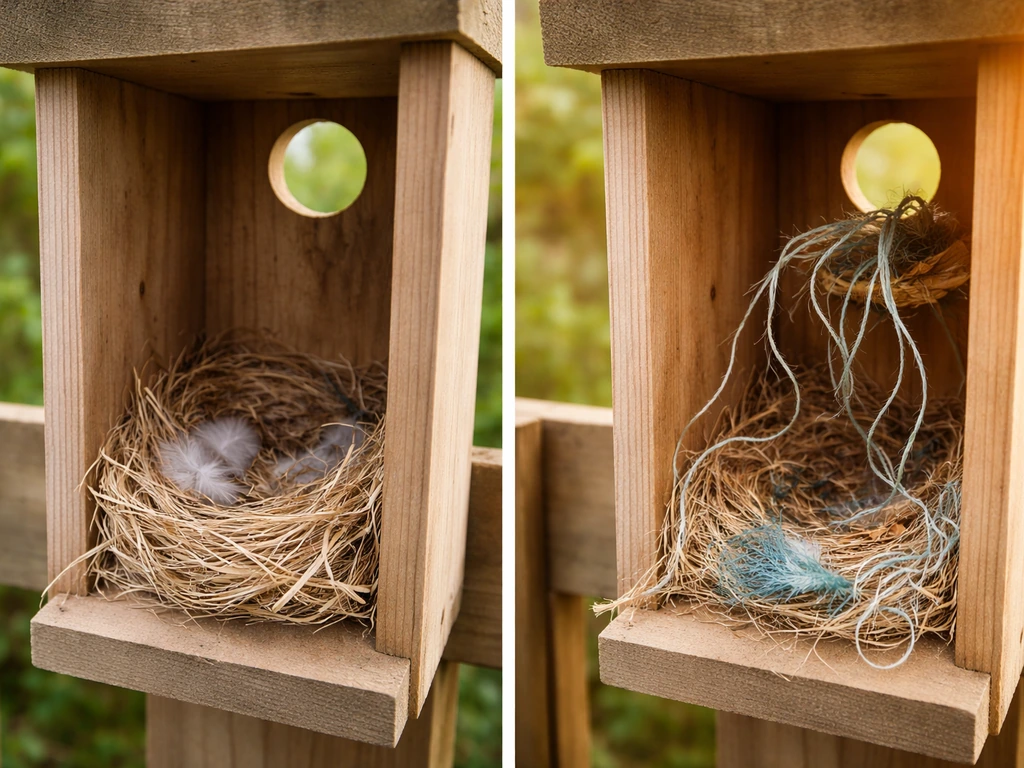
The materials you offer matter a lot. Some common household items people assume are helpful are actually dangerous. That same idea applies to other nesting-materials too, so learn what to leave out for bird nests before you offer anything in your yard string, twine, and yarn. The U.S. Fish and Wildlife Service specifically warns that string, twine, and yarn can wrap around birds' legs and necks, cutting off circulation and often resulting in death. Dryer lint is another one to avoid: it looks soft but compacts when wet and can create a cold, damp pocket around eggs and chicks.
Safe options include short natural plant fibers (cotton fibers from unprocessed cotton, not cotton balls, which can also compact), dried grass clippings cut into short lengths (under 4 inches), small twigs, animal fur or pet hair in small loose tufts (not clumped), and dried leaves. Many birds also collect mud, feathers, moss, and bark strips on their own. Leaving these available naturally in your yard is often more useful than a dedicated material station.
If you're curious about which specific materials work best for different species, or whether common options like cotton balls are actually safe, those topics go deeper than this article can cover in full, but they're worth researching before you stock your nesting-material station.
Timing, placement height, and what to watch for
When to put boxes up
Install nest boxes well before breeding season begins in your region. For most of North America, that means having everything in place by late February or early March for early nesters, and no later than early April for most cavity-nesting species. NestWatch and the National Wildlife Federation both note that it can take time for birds to discover new boxes, so early installation gives them the maximum window to find and evaluate the site before they're in active nest-building mode. If you're installing now in late May, you can still catch late nesters or second-clutch attempts, but get the box up immediately rather than waiting.
Cornell Lab also recommends keeping boxes sealed or closed until the breeding season is about to begin if you install them in fall or winter. This prevents squirrels or other animals from taking up residence and discouraging birds when they arrive.
Height and orientation
Mounting height varies by species, but a few principles apply broadly. For bluebirds, 5 feet on a metal pole is the standard recommendation from multiple state wildlife agencies. Audubon notes that bluebirds may use boxes mounted anywhere from 2 to 50 feet high depending on location and species, but 5 feet on a freestanding pole (not attached to a tree or fence) is best for predator management. Face the entrance hole away from prevailing winds and toward an open area where the arriving bird can approach without navigating through dense cover.
Monitoring after installation
Once boxes are up, check them weekly from April through August. NJ Audubon recommends weekly checks for most species (Wood Ducks are an exception). Keep a simple notebook or phone note with the date, what you saw, number of eggs or chicks, and any issues. This takes two minutes per box and gives you early warning of problems like competing species moving in, parasites, or predator attempts.
When you check, be quick and calm. The Smithsonian's nest monitoring guidelines suggest lightly tapping the box before opening it so the adult bird has a moment to exit on its own rather than flushing in a panic. Open, look, note, close. Don't linger. If you have a camera that can do a quick phone-tap photo inside the box, that's even less intrusive than peering in repeatedly.
Protect active nests from predators, pests, and people
Predator guards are not optional
A nest box without a predator guard is, in many yards, just a raccoon feeding station. The Oklahoma Department of Wildlife Conservation recommends adding a predator guard specifically to prevent raccoons and feral cats from reaching through the entrance hole or climbing the pole. A cone-shaped baffle mounted on the pole below the box, combined with mounting the box on a smooth metal pole rather than a wooden post or tree, makes the box essentially inaccessible to climbing predators. Stovepipe baffles and commercial cone baffles both work. Mount the baffle at least 4 feet off the ground so a jumping raccoon can't bypass it.
Competing species and nest takeovers
House Sparrows and European Starlings are non-native, invasive species not protected under federal law (more on that below). If they take over a box intended for native birds, you can legally remove their nests and eggs. Act early: if a House Sparrow is just investigating the box but hasn't laid eggs, clearing out any beginnings of nest material discourages them without harming anyone. If you're serious about supporting native cavity-nesters, monitoring weekly and addressing House Sparrow takeovers quickly is the most important thing you can do.
Human disturbance at the nest
Once eggs are laid, your job is mostly to stay away. Repeated close approaches cause stress, can trigger nest abandonment, and can attract predators to the location by leaving a human scent trail. Keep children, pets, and lawn equipment at a respectful distance from active nests. If a nest is in a high-traffic area (like inside a porch light or door wreath), do your best to funnel traffic away from it during the nesting period. It usually only lasts 2–3 weeks from hatching to fledging.
Stay legal and avoid the most common mistakes
The Migratory Bird Treaty Act protects most active nests
Under the Migratory Bird Treaty Act, it is illegal to destroy, move, or tamper with an active nest containing eggs or live young of any protected migratory bird species without a federal permit. This covers the vast majority of native North American birds. The law doesn't just apply to professionals: a homeowner who destroys an active Robin nest or disturbs nesting Swallows under their eaves can be in violation. If a nest is in an inconvenient location, the right move is usually to wait. Most nesting cycles run 4–6 weeks from egg-laying to fledging. After the young have left and the nest is confirmed inactive, you can remove it and take steps to prevent re-nesting there if needed.
What you can and can't do with non-native species
House Sparrows and European Starlings are not covered by the MBTA because they are non-native introduced species. You may legally remove their nests, eggs, and (in some contexts with appropriate methods) the birds themselves. Eurasian Collared-Doves are in a similar legal category in many states, though regulations vary, so check your state wildlife agency's rules. When in doubt, contact your state wildlife agency or a licensed wildlife rehabilitator before taking action.
Common mistakes that cost you nesting birds
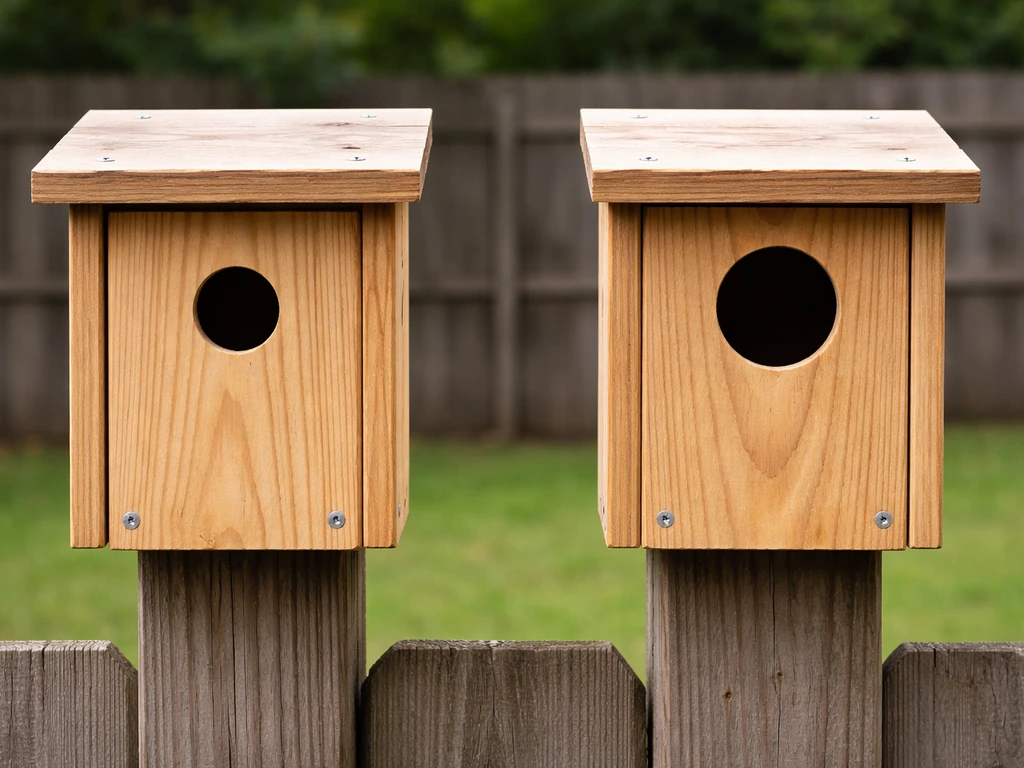
- Wrong entrance hole size: Even a quarter-inch too large lets in predators or unwanted species. Measure carefully or buy boxes certified to species-specific dimensions.
- Mounting on a tree or wood post: This makes the nest box trivially easy for squirrels, raccoons, and snakes to access. Use a smooth metal pole with a baffle.
- Placing boxes too close together: Territorial birds will fight over or abandon boxes that are within sight of each other. Stick to the 250–300 foot spacing guideline for bluebirds and adjust for your target species.
- Installing too late in the season: Birds scout nest sites early. A box that goes up in May may sit empty until the following year unless late nesters are still active in your area.
- Offering dangerous nesting materials: String, yarn, dryer lint, and cotton balls can injure or kill birds. Stick to short natural fibers, dried grass, and loose fur.
- Painting or staining the box interior: The rough raw wood texture is functional. Paint and stain make the interior slippery and can off-gas chemicals harmful to chicks.
- Not monitoring weekly: Problems like mite infestations, predator attempts, and House Sparrow takeovers escalate fast. A two-minute weekly check catches them early.
- Disturbing an active nest: Even well-meaning curiosity can stress nesting birds enough to cause abandonment. Once eggs are laid, keep your distance and keep it brief when you do check.
- Using pesticides: Insecticides reduce the invertebrate prey that parent birds need to feed nestlings. Even indirect use nearby can deplete the food supply across the birds' foraging range.
- Forgetting water: A clean, shallow water source is often the deciding factor for birds evaluating a territory. Don't overlook it.
If you get the habitat match right, put up a correctly spec'd box in the right spot at the right time, add a predator guard, and resist the urge to hover once things get going, you'll give nesting birds exactly what they need. Check the box weekly, keep notes, and troubleshoot early. Most problems that seem mysterious (why won't they use the box?) come down to one of the factors above, and most of them are fixable before next season if not this one.
FAQ
Can I encourage nesting by putting up a nest box even if I am not sure which bird species I want?
Yes, but only for species that naturally nest in cavities you can provide. If you put a cavity box up for birds that prefer open nests (like robins or swallows), you will rarely get use. For open-cup nesters, instead create sheltered ledges or shelf options near where they already forage, and keep those areas free of heavy disturbance during the nesting window.
How long does it usually take before birds start using a new nest box?
You should expect a discovery period. Birds may take days to weeks to investigate a new box, even when habitat is suitable, so avoid changing multiple variables at once. If you install late, prioritize getting the box up immediately, then watch from a distance, because late nesters and second clutches can still use newly available sites.
What if birds look interested in the yard but still do not nest in the box?
Do not use it as a substitute for habitat. If the target species does not find food, water, and cover nearby, a perfectly built box often goes unused. A practical check is to observe what birds are already hunting and where they pause or perch, then place boxes within the general territory those birds are using.
Can I remove an unwanted nest from a nest box?
Yes, but timing and method matter. If you find early nest-building by House Sparrows before eggs are laid, clearing beginnings of nesting material can discourage them. Once eggs or young of a protected native bird are present, you must not disturb them, and the safest next step is to wait until the nest is inactive or to contact your state wildlife agency.
Do mounting choices affect predator problems, and should I change how my box is installed?
Yes, and it is a common cause of failure. If a box is mounted on a rough post or attached to a tree or fence, predators can climb or access it more easily. Aim for a smooth metal pole with a properly mounted baffle, and verify the baffle is high enough that a jumping raccoon cannot get around it.
Should I leave the nest box open year-round?
If you install a box in fall or winter, keep it closed until breeding season begins to prevent squirrels or other occupants. In active season, do not keep opening the box “to check if it is occupied,” instead do quick weekly checks, because frequent hovering can increase stress and raise predation risk.
How can I adjust the placement if I see birds passing the box without investigating it?
Make it obvious and safe for birds to approach. Position entrance holes so birds can land and enter without having to navigate through dense shrubs in front, and consider prevailing winds and sun exposure. If you consistently see birds flying past the box, it often means the approach route or entrance orientation does not match how they naturally approach from nearby cover and open space.
Is it harmful to put multiple nest boxes close together?
Yes, nest spacing can matter when multiple boxes are within the same territory. Even if each box is correct, being too close can increase competition between similar cavity nesters or allow an invasive competitor to monopolize a site. Before adding more boxes, confirm species-specific spacing and minimum distances for your region.
How often should I check boxes, and what should I record to troubleshoot quickly?
Because some invasives can take over quickly, focus monitoring on the right time and the right duration. A key decision aid is to check weekly during the main nesting season, record what species is using the box, and intervene early only when you have clear evidence it is an invasive takeover (like House Sparrow activity) and not a protected native nest.
Can I provide nesting material directly next to the nest box entrance?
You can, but do it in a way that helps without adding hazards. Offer small amounts of safe fibers and twigs in a sheltered spot near natural cover, then stop adding if you notice buildup of suspicious or entangling material. Also avoid placing nesting material directly next to entrances where it could inadvertently help predators or create easier access for competing species.
How do I set up a yard to support ground-nesting birds and cavity nesters at the same time?
If you want multiple species, plan by habitat type rather than by box type alone. Create separate zones, like a “cavity-box zone” near open approach lanes for cavity nesters, and a “ground-nesting zone” with unmowed grass and leaf litter under shrubs for species like killdeer and sparrows. Mixing all features in one small area can still work, but it increases disturbance and confusion during nesting.
Next Articles
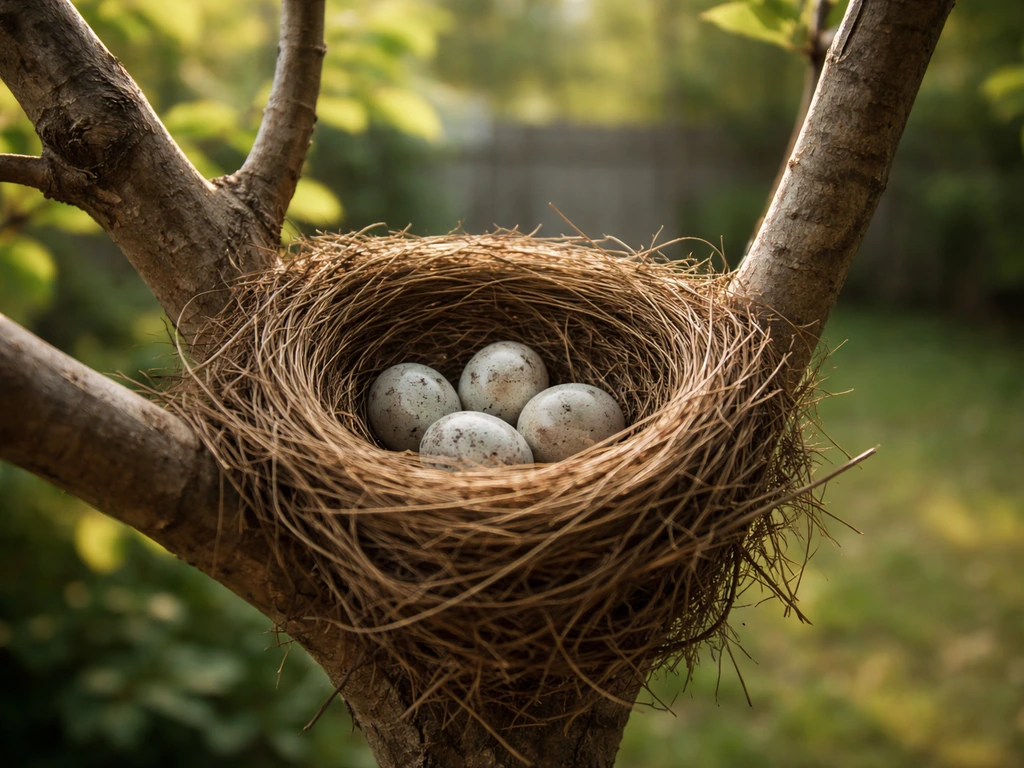
What to Leave Out for Bird Nests: Do Not, Do Instead
Avoid these harmful things around active bird nests and use safe, non-intrusive protections by nest type.
When to Put Out Bird Nesting Material: Timing Guide
Learn when to put out nesting material by season, species, and signs of active nests, plus safe materials and placement.
What to Use for Bird Nesting: Safe Materials and Setup
Practical safe materials and nest-box setup advice: what to use, what to avoid, and how to protect active nests.