
Finding bird eggs in your backyard really means locating an active nest, watching from a safe distance, and identifying the species without touching or disturbing anything. You are not collecting eggs. You are doing low-impact, observation-based nest detection, and that distinction matters both legally and for the birds' survival.
How to Find Bird Eggs in Your Backyard Safely

Maya Bennett
21 May 2026

What 'finding eggs' actually means in practice
Before you start scanning your yard, it helps to be clear on the goal. Locating a nest and confirming eggs are present is a naturalist activity rooted in observation, not collection. Under the Migratory Bird Treaty Act (MBTA), it is illegal to take, possess, or destroy the nest or eggs of any native migratory bird without a federal permit. That covers the vast majority of backyard species, from American robins to mourning doves to house wrens.
Even accidentally destroying an active nest can be prosecutable if it results in the unpermitted loss of eggs or chicks. So the practical aim here is simple: find the nest site, confirm activity from a distance, document what you see, and leave everything exactly as you found it.
This also means egg identification is secondary to nest and species identification. Once you know what bird is nesting in your yard, you can make a reasonable inference about the eggs inside based on known species traits without ever opening the nest or handling anything. That approach protects both you and the birds.
Signs that eggs are probably present right now
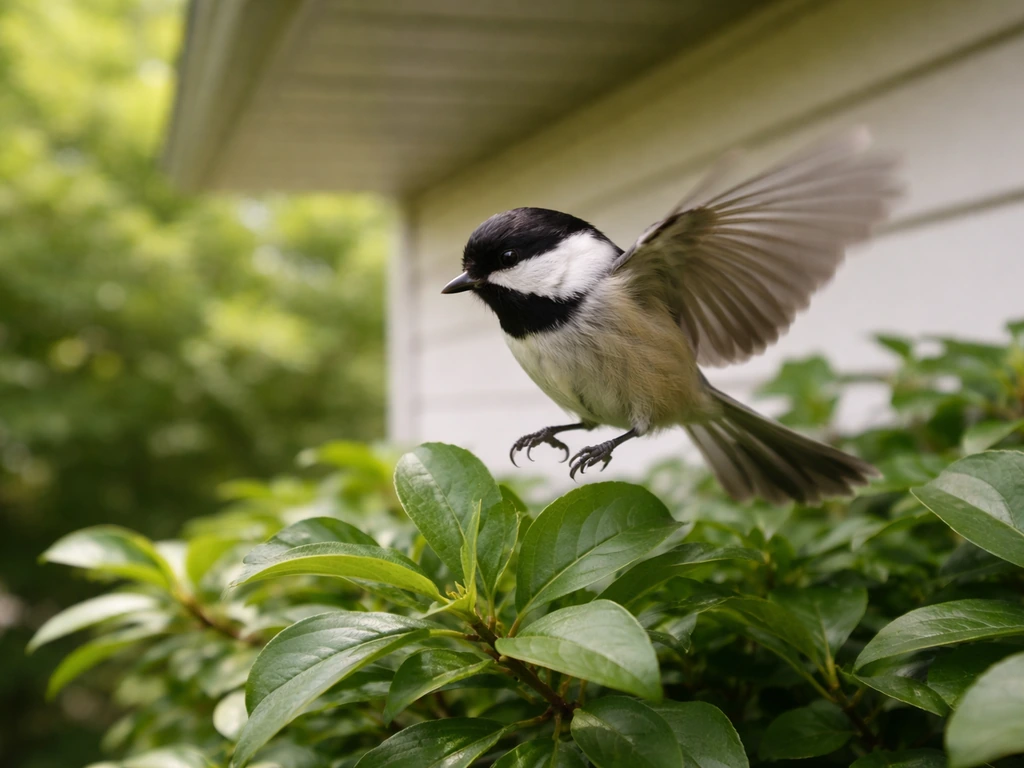
Bird behavior changes dramatically once a female is laying or incubating. Learning to read those behavioral cues is the fastest way to figure out whether a nest in your yard has eggs in it.
Adult behavior to watch for
- A female making short, quiet, solo visits to a single shrub, eave, or tree hollow, often early in the morning, is almost certainly laying or incubating. Cornell's NestWatch notes that females may visit only once a day during the laying phase, and they deliberately try to be sneaky about it.
- A male singing persistently from a fixed perch near one area of your yard is defending territory, which usually means a nest is nearby, often within 30 to 50 feet of his favorite song post.
- Aggressive dive-bombing or loud alarm calls directed at you, pets, or other birds near one specific spot is a strong signal that eggs or chicks are present. Mockingbirds, robins, and red-winged blackbirds are especially obvious about this.
- An adult bird sitting motionless in a shrub, on a low branch, or in a patch of ground cover for long stretches, not feeding, not moving around, is likely incubating.
- Both parents making repeated short trips to the same location, especially carrying food, typically means chicks have hatched, but if only one adult is making infrequent visits without food, eggs are probably still incubating.
Physical cues around the yard
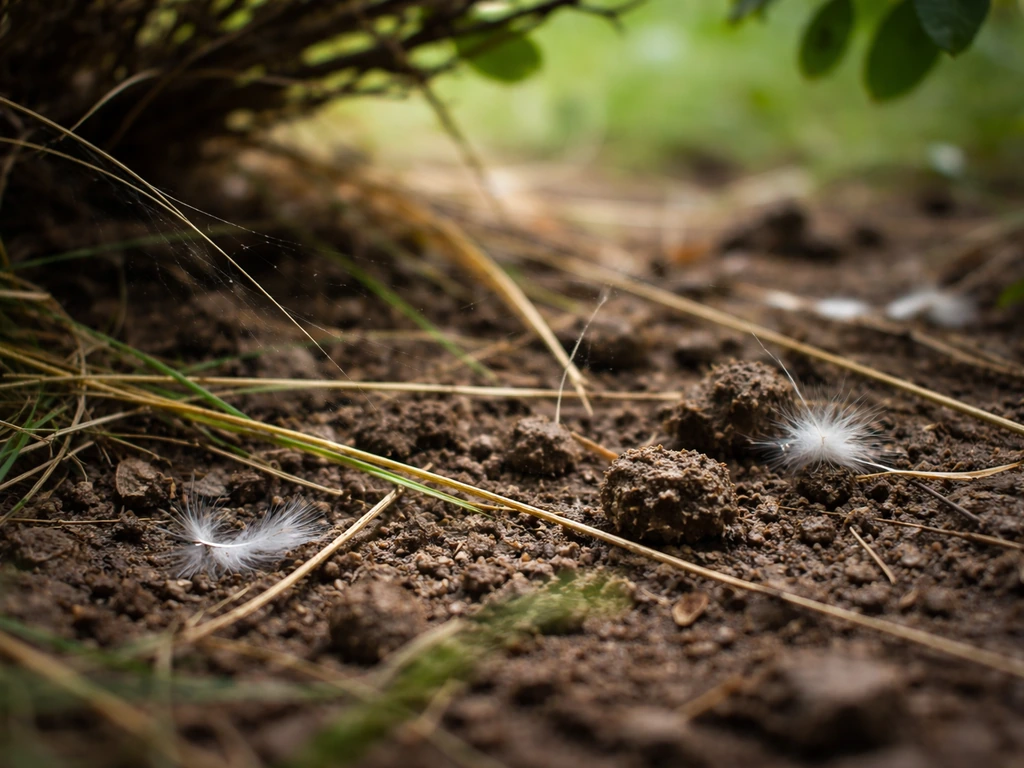
- Fresh nest-building material on the ground below a shrub or tree: bits of grass, mud, spider silk, feathers, or bark strips that weren't there before.
- Mud stains on a fence rail, windowsill, or eave bracket where a nest cup is being constructed.
- A cluster of feathers, dry grass, or plant down pressed into a hollow log, nest box entrance, or dense shrub that looks sculpted rather than windblown.
- Small amounts of eggshell fragments on the ground directly below a nest site, which sometimes fall out when an adult removes shell pieces after hatching begins.
Backyard hotspots: where birds actually hide nests
Different species have completely different ideas about what makes a good nest site. Searching systematically through the most common backyard locations will turn up nests you would otherwise walk right past.
| Nest location | Typical species | What to look for |
|---|---|---|
| Dense shrubs and hedgerows (3 to 8 feet high) | Northern cardinal, gray catbird, song sparrow, brown thrasher | Cup nest woven into a branch fork, often with leaves pulled over it for camouflage |
| Tree canopy (10+ feet) | American robin, Baltimore oriole, blue jay, cedar waxwing | Robin mud cups on horizontal limbs; oriole's hanging woven pouch at branch tips |
| Ground cover and lawn edges | Killdeer, spotted towhee, dark-eyed junco, Eastern meadowlark | Shallow scrape or grass-lined cup hidden under tall grass, at lawn edges, or beside logs |
| Eaves, rafters, and porch ledges | Barn swallow, house sparrow, Eastern phoebe | Mud-and-grass cup plastered to a vertical surface or tucked into a rafter corner |
| Nest boxes and tree cavities | Eastern bluebird, Carolina wren, house wren, black-capped chickadee, tree swallow | Look for feathers or grass poking from the entrance hole; adults perching nearby |
| Fence rails, trellises, and garden structures | House finch, mourning dove, chipping sparrow | Loosely woven platform or cup, often surprisingly flimsy and easy to miss |
| Dense vines and climbing plants | Yellow warbler, common yellowthroat, American goldfinch | Tightly woven cup deep inside vine tangles, often at 4 to 7 feet |
Ground nests deserve special attention because they are the easiest to accidentally destroy. Killdeer famously nest in open gravel or bare soil, sometimes in garden beds or near driveways, with no nest structure at all, just a shallow scrape with eggs laid directly on the ground. If you see a killdeer doing a broken-wing display near a flat open area of your yard, stop moving and look at the ground around you before taking another step.
How to identify the nest and likely species without getting close
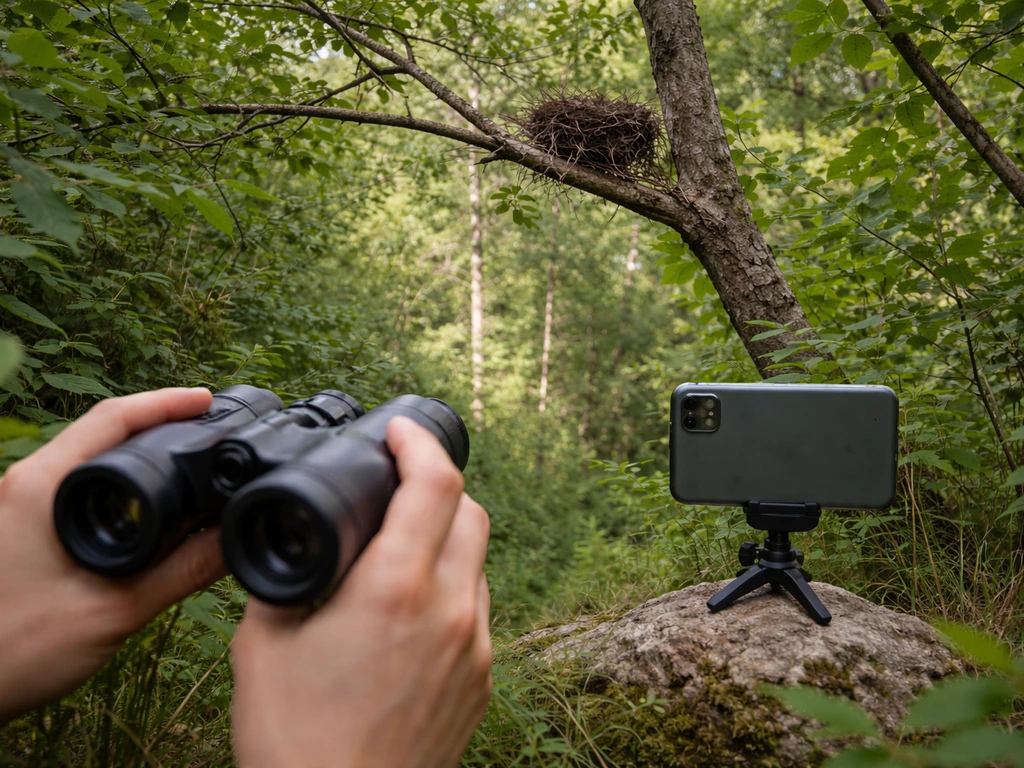
The goal is to gather enough information to make a confident ID from at least 10 to 15 feet away, ideally with binoculars. NestWatch guidance similarly emphasizes distance-first monitoring, including watching the female from a distance through binoculars to reduce the chance of detection while she visits the nest to lay blank" rel="noopener noreferrer">from at least 10 to 15 feet away, ideally with binoculars. blank" rel="noopener noreferrer">Do not approach the nest directly, push branches aside, or lean in for a closer look. Disturbing an active nest, even briefly, can cause adults to abandon it during the sensitive early laying phase.
What to observe from a distance
- Nest height and placement: Is it on the ground, in a shrub fork, plastered to a vertical surface, or inside a cavity? Height above ground narrows the species list significantly.
- Nest shape and size: Is it a neat woven cup, a messy platform of sticks, a mud-reinforced bowl, or a domed structure with a side entrance? A robin's cup is about 6 inches across. A hummingbird's thimble-sized cup is the size of a walnut shell.
- Nest materials: Mud, grass, bark strips, spider silk, moss, feathers, animal hair, or human-sourced material like string or plastic. Barn swallows use mud pellets. Carolina wrens pack a cavity with leaves and bark. Eastern bluebirds line their box with fine dry grass.
- Adult bird appearance: You do not need to see the eggs. Use binoculars to ID the adult sitting on or near the nest and work from there. A field guide or a birding app like Merlin will confirm the species, and each species has well-documented egg characteristics you can cross-reference.
- Egg glimpse (only if visible without disturbance): If the nest is positioned so you can see into it from a standing distance, note color, pattern, and approximate size. Do not reposition yourself in ways that require pushing vegetation aside or stepping closer.
Once you have the likely species, a dedicated egg and nest identification guide or a resource like the Peterson Field Guide to North American Bird Nests can fill in the egg details without you ever needing to physically inspect the nest. With the right criteria, learning how to identify bird eggs from photos and measurements can help you confirm species without disturbing the nest. This is exactly the approach that experienced nest monitors use.
When and how to search safely (seasonal timing and low-impact methods)
Timing matters more than most people realize. Both the season and the time of day affect how much disturbance your search causes and how easy nests are to spot.
Best times of year
- Early spring (March to April in most of the U.S.): Trees haven't fully leafed out yet, making cup nests in deciduous trees and shrubs much easier to spot. This is also when the first nesting attempts begin for early breeders like robins, mourning doves, and house finches.
- Late spring through summer (May to July): Peak nesting season for most North American backyard species. Foliage is dense, which makes nests harder to see but also means behavioral cues are at their most obvious. Focus on following adults rather than scanning vegetation.
- Fall and winter: Once leaves drop, old nests from the previous season become visible in trees and shrubs. Cornell's NestWatch specifically recommends fall as a good time to study nest locations and structure because you can observe without risking any disturbance to active nests.
Best time of day
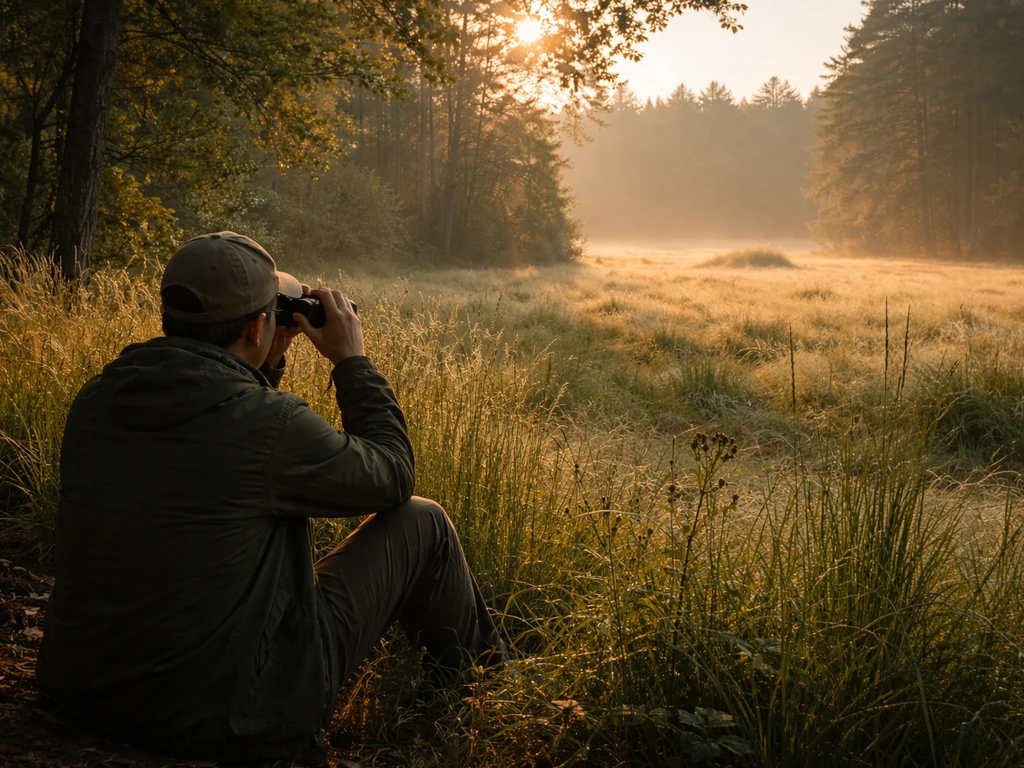
Early morning, within the first two hours after sunrise, is when nest activity is highest and easiest to read. Adults are actively feeding, males are singing at their territorial perches, and females are making laying visits. Avoid searching around midday when heat can cause adults to incubate more tightly and behavioral cues are harder to read. Late afternoon is a reasonable second choice.
Low-impact search technique
- Sit or stand quietly at a single observation point for at least 10 to 15 minutes before moving. Reactive behavior you trigger by walking around is harder to interpret than natural behavior you observe while still.
- Use 8x or 10x binoculars to follow individual adults. Watch where they go when they are not feeding. Repeated visits to one spot with no food in their bill almost always indicates a nest with eggs.
- Note GPS coordinates or take a reference photo of the area (not the nest itself) so you can relocate the site without trampling through the same zone repeatedly.
- Limit yourself to one or two quiet passes per week near a known nest site. Frequent visits, even from a respectful distance, add cumulative stress to nesting adults.
- If you cannot find a nest despite obvious territorial behavior, try sitting still near the male's favorite song perch at dawn and watching where the female goes. She will almost always reveal the nest location within 20 to 30 minutes of patient observation.
What to do the moment you find a nest
The most important first step is to back away calmly and quietly. Do not linger. Do not try to peek inside. Do not call others over to look right away. Your immediate presence near an active nest is the single biggest threat to it in that moment.
Document it properly
Once you have moved at least 15 feet away, take a photo using a zoom lens or phone camera with digital zoom so you do not have to step closer. Photograph the nest in context (showing its position relative to the branch, eave, or ground) and, if visible from a standing distance, a shot showing inside the cup. Jot down the date, approximate location in your yard, height above ground, and what you observed about adult behavior. This information is genuinely useful for species identification and, if you choose to participate, for contributing to citizen science platforms like NestWatch.
Legal and ethical checklist
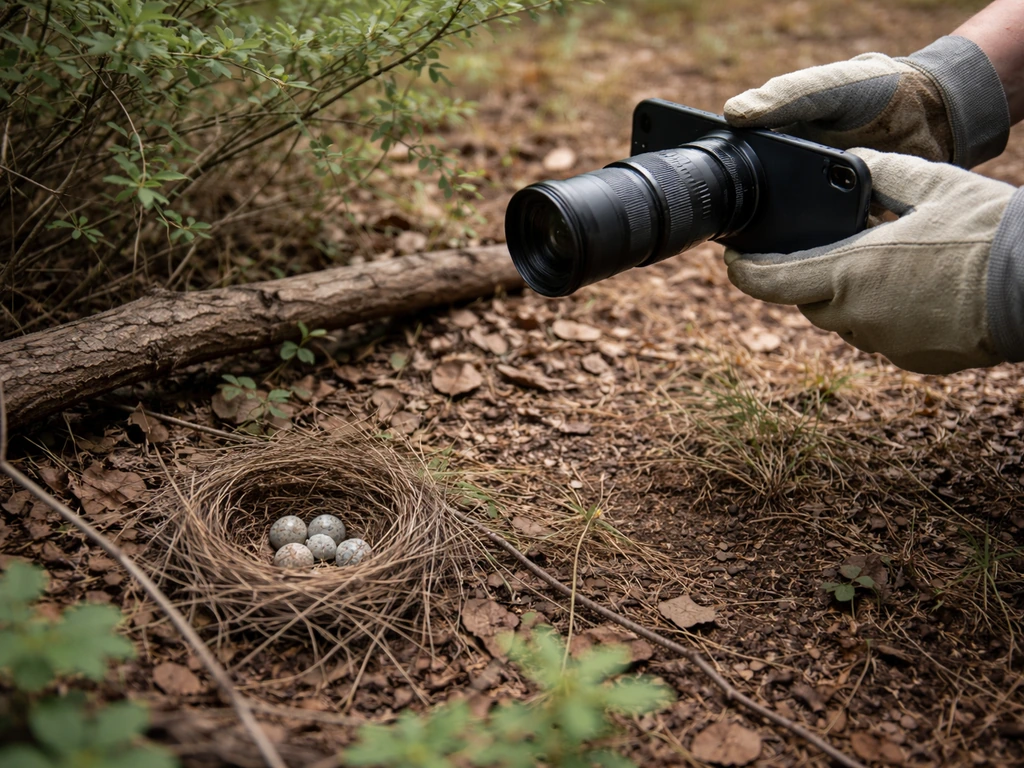
- Do not touch the eggs or nest materials under any circumstances unless a licensed wildlife rehabilitator or USFWS-permitted individual instructs you to.
- Do not move the nest, even if it is in an inconvenient spot. Moving an active nest with eggs is illegal under the MBTA.
- Do not attempt to candle, float-test, or otherwise 'check' eggs by handling them. Observation-based assessment from a distance is the right approach.
- Do not share the exact GPS location publicly or on social media if predators or nest poachers are a realistic concern in your area.
- If the nest is in immediate danger (for example, a tree company is scheduled to work on the tree tomorrow), contact your local USFWS field office or a licensed wildlife rehabilitator before doing anything. They can advise on permit-based options.
If you find eggs outside the nest
If eggs have fallen from a nest and you can locate the nest nearby, gently returning them to the nest is the appropriate action, and USFWS guidance supports this for nestlings in similar situations. If the eggs are still viable and the nest is accessible, follow a careful step-by-step approach to return them and reduce disturbance what to do if bird eggs fell out of nest.
The old myth that parent birds will abandon eggs or chicks touched by humans is not accurate for most species. If the nest is completely gone or unreachable, contact a licensed wildlife rehabilitator rather than attempting to incubate eggs at home. More detail on what to do in these situations is covered in guides specifically focused on eggs that have fallen from nests.
Protecting the nest once you know it's there
Now that you have found the nest, a few simple yard management steps can dramatically improve the odds that those eggs actually hatch and the chicks fledge successfully.
Predator management
- Keep cats indoors during nesting season, especially in the two weeks after eggs hatch when fledglings are on the ground. Domestic cats are the leading human-associated cause of bird mortality in North America.
- If the nest is in a nest box, add a predator guard baffle to the mounting pole. A 24-inch smooth metal baffle below the box prevents raccoons and snakes from climbing up.
- Avoid placing bird feeders directly next to a known nest site. Feeder activity attracts house sparrows, grackles, and crows, which are common nest predators.
- Motion-activated sprinklers positioned to cover the ground around a known ground nest can deter raccoons and opossums at night without harming the nesting birds.
Foot traffic, mowing, and physical barriers
- Mark ground nests with a loose ring of small garden stakes or flags at a 6-foot radius so family members and lawn care workers know to avoid the area. Do not place the markers so close that they attract visual attention to the nest itself.
- Delay mowing within 10 feet of a known ground nest until after the clutch has fledged. Most backyard ground nests complete the egg-to-fledge cycle in 25 to 35 days, so this is a manageable pause.
- If the nest is on a heavily used porch or walkway, temporarily redirect foot traffic with a simple rope or garden border. Birds habituate to predictable, calm human movement, but erratic or close disturbance during incubation increases abandonment risk.
- Avoid running string lights, hanging new wind chimes, or doing any construction work within 10 to 15 feet of an active nest until after fledging.
Nest box management
If you have nest boxes in your yard, monitor them weekly during nesting season using the low-impact approach described above: a quick, calm look inside, no lingering, and no handling of eggs or adults. NestWatch's monitoring protocol is the gold standard for this. After a nest is fully complete (all young have fledged and the box has been vacant for at least a week), you can clean out the old nest materials and unhatched eggs. NestWatch confirms this is legal and recommended for nest box hygiene, since removing old nests encourages a second nesting attempt and reduces parasite loads.
Your next steps after finding a nest
Once you have documented the nest and set up a quiet buffer around it, you are in a good position to simply enjoy the process. Check in visually from a respectful distance every few days, keep a simple log of what you observe (adults present, any changes in behavior, approximate hatch date once you know the incubation period for the species), and take the occasional zoom photo to track progress. This kind of structured, low-impact observation is exactly what platforms like Cornell's NestWatch are built for, and your data contributes to long-term population monitoring.
If you want to go deeper on species identification from egg traits and nest structure, a dedicated guide to bird eggs or a field-focused nest guide will give you the material-by-material, measurement-by-measurement detail that makes remote ID reliable. And if the situation turns complicated, whether because the nest is in a problem location, eggs have fallen out, or you are unsure whether a nest is still active, those specific scenarios each have their own set of protocols worth knowing before you act. If you need help identifying likely eggs by what you see at the nest, look for the species clues and use distance-based observations eggs have fallen out.
FAQ
How can I tell an egg site is active without getting close?
Use a distance-first checklist. If you cannot confirm adults are actively incubating or feeding from at least 10 to 15 feet, treat the site as unconfirmed and leave it alone. Midday still counts as possible, but your evidence should rely more on repeated cues (adults returning to the same spot, consistent behavior) than on a single glance.
What should I do if I find eggs, but I cannot identify the species?
Yes, and the safe move is to switch from “egg-finding” to “nest-site confirmation.” Keep searching from a distance for behavioral proof, then stop. If you locate an active nest but cannot confirm the species confidently, document the context photos and move on, instead of trying to verify by closer inspection.
How do I handle a nest in a busy spot like near a driveway or garden bed?
If you see a nest in an area you regularly disturb, create a temporary buffer immediately. Avoid mowing, digging, trimming, or using loud tools near the nest, and keep pets inside or away. If you must do yard work, pause and wait until the nesting cycle ends and the nest is clearly inactive for at least a week (for nest boxes, follow the protocol for cleaning only when vacant).
Can I identify bird eggs just by looking at egg color and size?
Don’t rely on egg appearance alone. Many species lay similar-looking eggs, and lighting or dirt can mislead you. The better approach is to identify the species by nest site and adult behavior (perch habits, nest type, territorial displays) first, then use an egg guide as a secondary match.
How close is too close when I’m trying to take photos?
Use the “step-back rule.” If you already moved close enough to make birds flush or alarm-call, back away farther and stay still for a few minutes before observing again. Avoid lingering, and do not approach for “just one more photo,” because repeated visits increase risk even if each look seems brief.
What are the safest tactics for finding and avoiding ground nests?
Yes. If a nest is on the ground, the main risk is accidental destruction during normal movement or yard tasks. Walk around the area more slowly, scan the ground ahead of you, and mark the location mentally rather than physically. If you need to pass through daily, reroute temporarily so you do not step on the exact spot.
What should I do if I discover eggs that have fallen out, but I’m not sure where the nest is?
Handle fallen eggs only if you can confirm they are from an active nest that is nearby, and only by reducing disturbance, not by “checking” the nest repeatedly. If the nest is gone, inaccessible, or the young appear stranded, contact a licensed wildlife rehabilitator instead of trying to incubate or raise them at home.
What details should I write down for the best species identification later?
When you document, focus on measurements you can take without approaching: estimate height from a fixed reference point, note the exact location (for example, “under the eave 3 feet from the door”), and record adult behavior patterns. Avoid handling the eggs or the nest, and avoid removing leaf litter or debris that might help you locate the exact position later.
Is it okay to bring friends or kids over to watch me find the nest?
Practice “no crowding” rules. Do not call other people over, and keep visits short even if you think someone else can ID it faster. If you want a second opinion, share your distance-based photos and field notes rather than bringing more observers to the site.
What if my yard schedule conflicts with an active nest I find?
If the nest is in a spot where it will be affected soon (for example, a tree branch scheduled for removal), stop and plan around the nesting timeline. Reassess after fledging when the nest is clearly vacant. If you are unsure whether it is still active, pause further work until you can confirm inactivity from a distance.
How do I avoid confusing a roosting spot with a nesting site?
A useful error-check is to watch whether the same adult pair repeatedly uses the location. Single-day activity can be misread if birds are just using the area opportunistically. Give yourself at least a few observation windows from a safe distance before concluding that eggs are present.