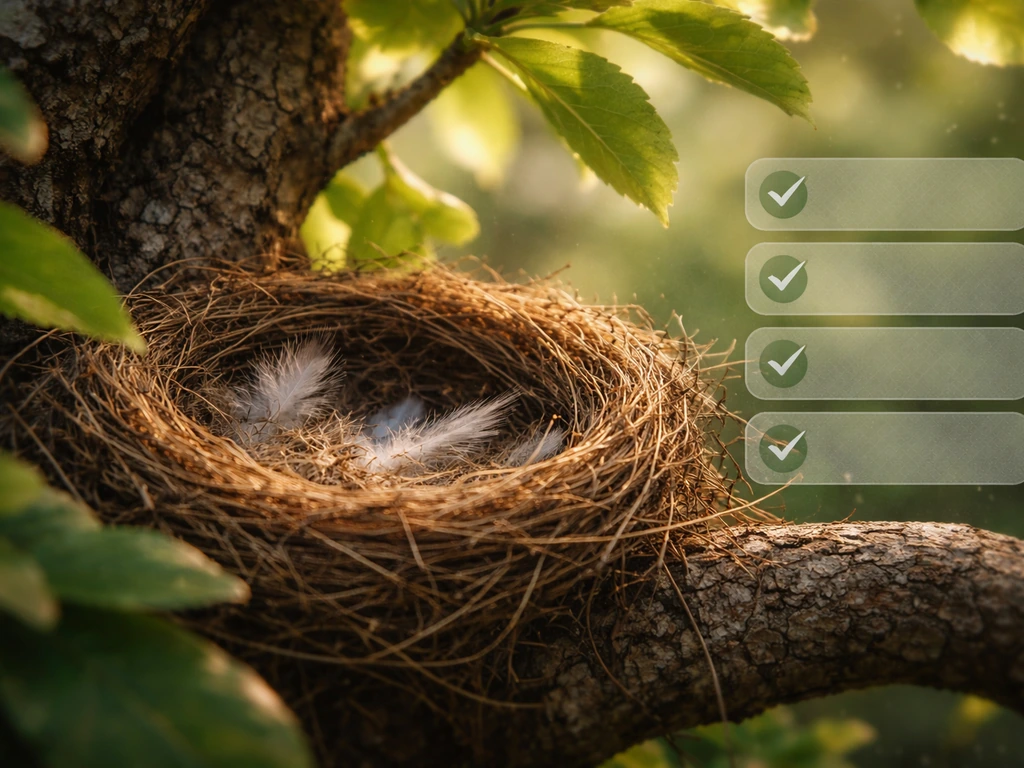
If you find a baby bird on the ground, the single most important step is figuring out what you're actually dealing with before you touch anything. A featherless or sparsely feathered nestling that clearly fell from a nest needs gentle, prompt help getting back. Learning how to identify a nestling bird, especially by its feathers and behavior, helps you choose the safest next step. A fully feathered fledgling hopping around on the ground is almost certainly fine and should be left alone. And an adult bird circling an area or calling from a nearby branch almost never needs human intervention at all. Getting that identification right is what determines everything that follows.
How to Help a Bird Find Its Nest Safely and Legally
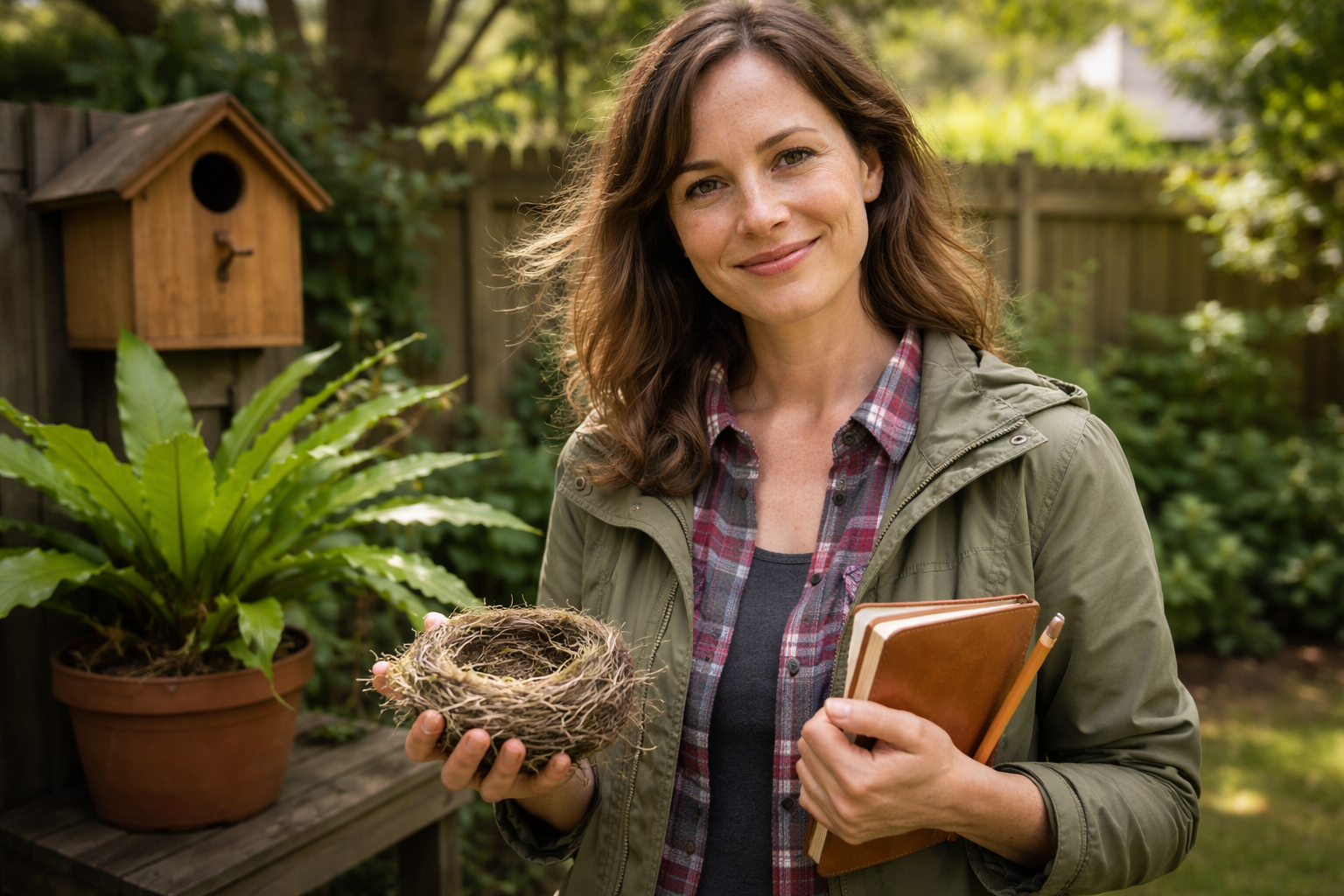
Maya Bennett
1 May 2026
First: Figure Out What You're Actually Looking At
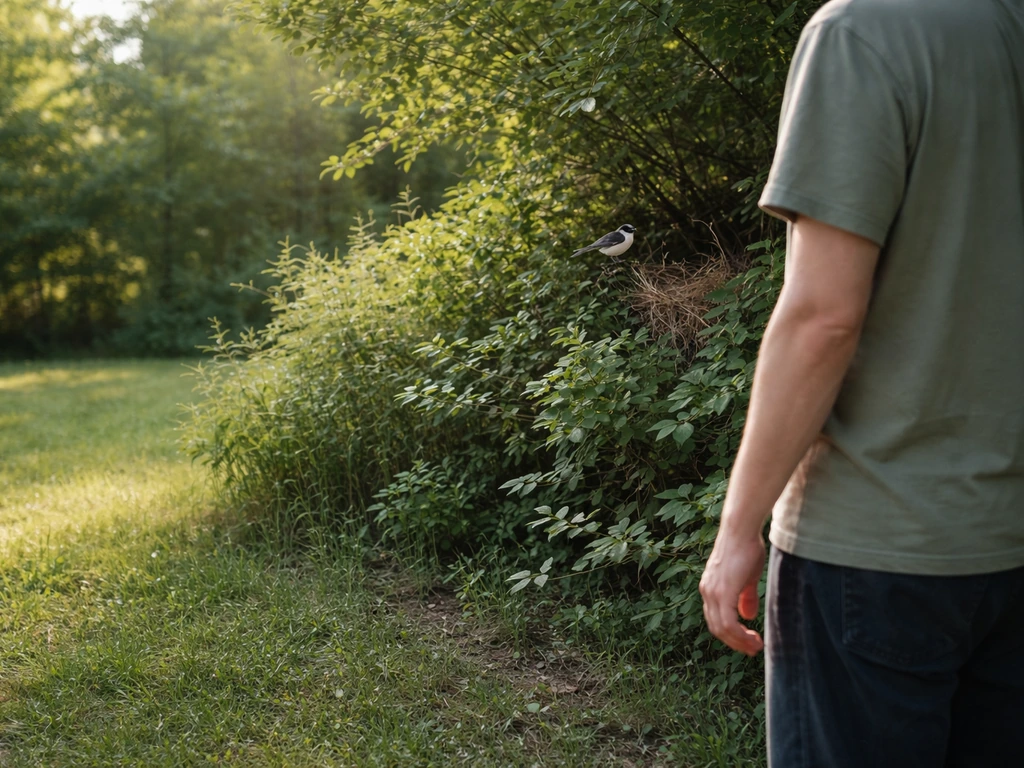
The word 'lost' doesn't quite apply to birds the way it does to a dog or a child. Birds navigate by instinct, scent memory, and visual landmarks, and parents almost always know exactly where their offspring are. So the first thing to do is slow down and observe for at least 5 to 10 minutes from a comfortable distance, ideally 20 to 30 feet away. What you're watching for tells you everything. If you're wondering how to identify a bird nest, start by observing the structure, placement, and surrounding activity from a distance.
There are three situations you might be dealing with, and the right response is different for each one. Here's how to tell them apart:
| Type | What it looks like | What to do |
|---|---|---|
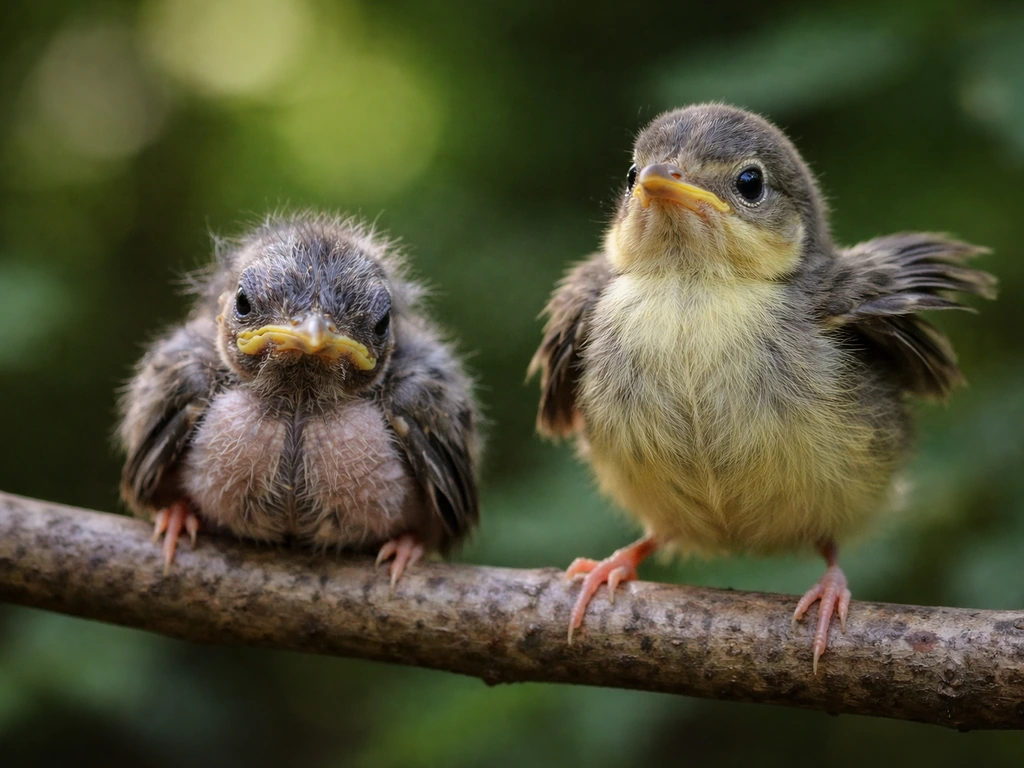
| Nestling | Naked or with sparse pin feathers, eyes possibly closed, weak movements, can't hop or grip a branch | Find the nest and gently return it, or keep it safe in shade while parents locate it |
| Fledgling | Fully or mostly feathered, alert, hopping, short clumsy flights, may have a short stubby tail | Leave it alone, parents are almost certainly nearby and actively feeding it |
| Adult | Full adult plumage, normal-sized, behaving oddly near one area or calling repeatedly | Observe from a distance; only intervene if visibly injured (bleeding, dragging wing, unable to move) |
Fledglings are the most common source of misplaced concern. It looks helpless and ungainly because it is, but that's completely normal. Birds like American Robins, House Sparrows, and Blue Jays spend several days on the ground or in low shrubs between leaving the nest and flying competently, and their parents are watching the whole time. Taking a fledgling inside is almost always the wrong call. If you suspect the mother bird has abandoned the nest, the safest move is usually to get a wildlife rehabilitator involved rather than trying to take over care Taking a fledgling inside.
Safety Rules Before You Do Anything Else
Whether you're dealing with a nestling, a fledgling, or an active nest you've stumbled across, there are a few firm rules that protect both the birds and you legally. Most bird nests are protected under the U.S. Migratory Bird Treaty Act (MBTA), and it is illegal to destroy a nest that has eggs or chicks in it, or if young birds are still dependent on the nest for survival firm rules that protect both the birds and you legally. These aren't suggestions, they're the difference between helping and causing harm.
- Do not move eggs or a complete nest. In the United States, it is illegal under the Migratory Bird Treaty Act to move, disturb, or destroy the nest of a migratory bird while it is active (containing eggs or young). The penalty can include fines and criminal charges. If you're outside the US, similar protections exist in Canada, the UK, and most of Europe.
- Do not bring the bird inside for more than a very brief, protective moment unless you are an authorized wildlife rehabilitator. Indoor environments, handling stress, and incorrect food can kill a bird in hours.
- Do not try to feed the bird. Baby birds have very specific dietary needs and feeding them the wrong thing (bread, milk, seeds from your feeder) can cause fatal crop impaction or aspiration.
- Minimize handling time. You don't need to scrub your hands with soap before touching a nestling, but do wash them. The old myth that a parent will abandon a chick because of human scent is largely false for most songbirds, but excessive handling does cause real stress to the chick and risks injury.
- Keep cats, dogs, and children back immediately. Fledglings are killed by cats more than by any other single cause. Get any pets inside or leashed before you do anything else.
- Don't hover. Once you've done what you can, step back and give the parents clear visual and acoustic access to the bird.
How Birds Actually Find Their Way Home (and What Your Help Looks Like)
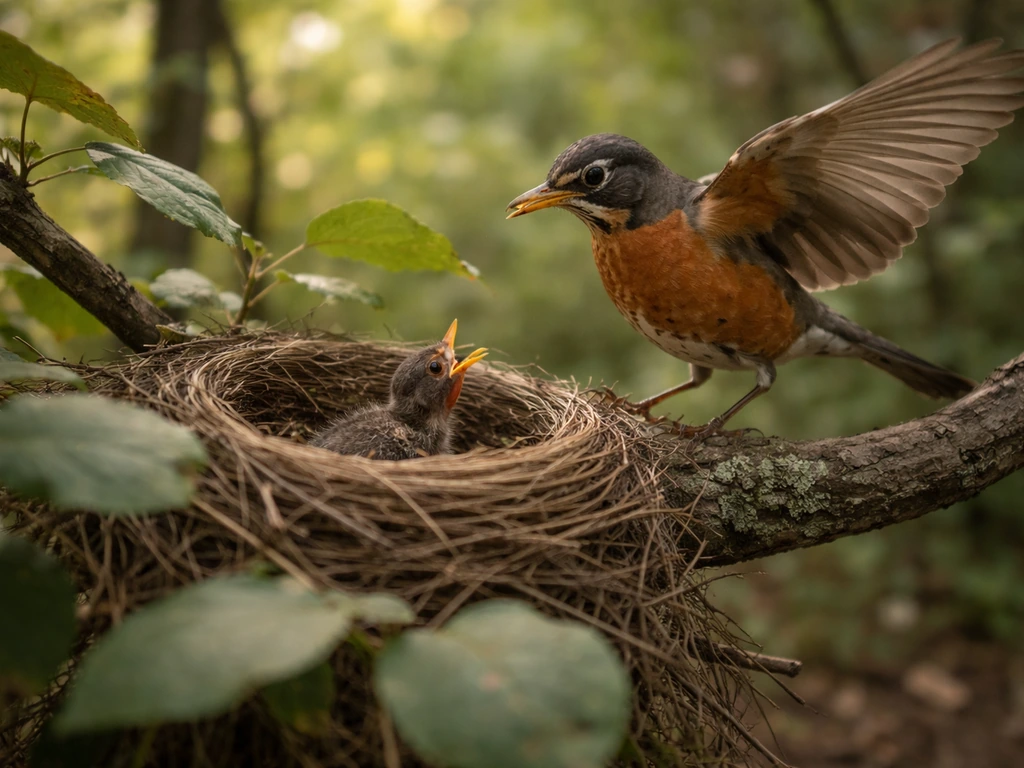
Adult birds don't need help finding their nests. They built them, they know exactly where they are, and they locate them using a combination of spatial memory, visual landmarks, sound, and in some species, magnetic field sensing. What you're actually helping with, when it's appropriate to help at all, is getting a displaced nestling close enough to the nest that the parents can hear it and reach it safely.
Parent birds recognize their chicks primarily by their calls, not by sight. A nestling that's crying from the ground or a nearby bush will be heard by its parents within minutes if they're still in the area. This is important because it means you don't need to search the neighborhood for a nest. If the nest is more than roughly 50 to 100 feet away, the parents may not bridge that gap. Your job is to create a safe situation close to where the bird came from, not to go on an expedition.
In practical terms, 'helping a bird find its nest' almost always means one of two things: either you place a nestling back in the nest you can see nearby, or you make the bird safe in place and wait for the parents to come to it. You are the facilitator of reunification, not the navigator.
Step-by-Step: Reuniting a Nestling with the Nest
If you've confirmed you have a nestling (naked or barely feathered, can't grip or hop), here's exactly what to do. Move through these steps calmly and quickly.
- Secure the area first. Get pets and curious onlookers back at least 30 feet. This is the most time-sensitive step because predators follow commotion.
- Look for the nest within a radius of about 10 to 15 feet from where you found the bird. Check tree branches directly overhead, dense shrubs at head height, and any cavity openings (holes in trees, gaps under eaves). Most nestlings don't roll far from their source.
- Note whether the bird is cold to the touch. A cold, limp nestling is in distress. Cup it gently in your palms for 2 to 3 minutes to warm it before handling further; a cold bird placed back in a nest can chill siblings.
- If you find the nest, wash your hands, then cup the nestling in two fingers and thumb supporting the body, never squeezing the chest or wings. Lift it only as high as needed and place it into the nest among its siblings.
- If the nest is damaged or destroyed, you can create a substitute nest. Use a small berry basket, a clean margarine tub with a few drainage holes, or a plastic cup. Line it with the original nesting material if you can gather it, or use dry grass and fine plant fiber. Attach it to the branch or as close to the original nest location as possible with twine or a zip tie.
- Back away immediately. Go inside or at least 30 feet away and observe for the next 30 to 60 minutes. The parents should return within that window. If you can't see them from 30 feet, try binoculars.
- If you cannot locate the nest at all, place the nestling in a shaded spot off the ground (a low branch, a shrub fork at 3 to 4 feet) where cats can't easily reach it, directly under or close to where you found it. The parents will respond to its calls. Do not move the bird further than necessary.
Timing matters. The best window for returning a nestling is daytime, roughly between 7 a.m. and 5 p.m. in spring and summer, when parents are most actively feeding. If you find the bird late in the evening and parents are not active, keep the nestling warm and contained overnight in a small ventilated box lined with tissue, placed somewhere dark and quiet at room temperature (around 75 to 80 degrees Fahrenheit), and attempt the reunification at first light. Do not attempt to feed it.
What About the Fledgling on Your Lawn?
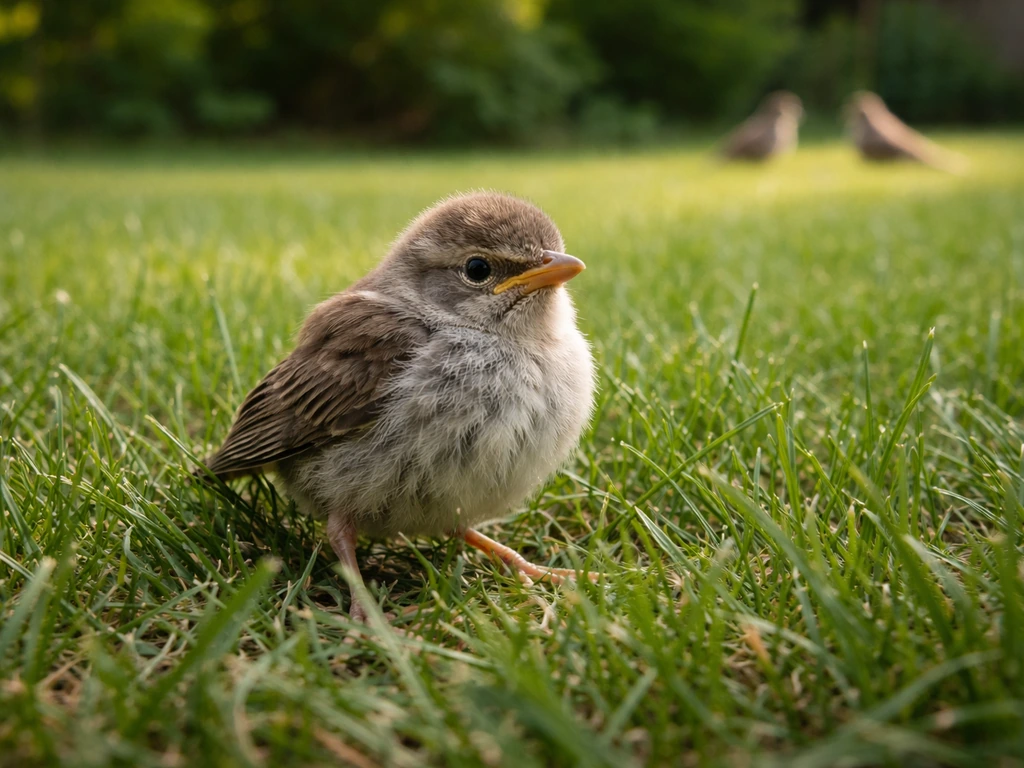
For fledglings, the process is simpler: mostly, do nothing. Watch for 30 minutes from a distance. If the parents are coming and going (look for adults landing nearby, calling, or carrying food), the bird is fine. If you see adults repeatedly visiting the spot with food or nest-building, that is a strong sign the nest is active active nest. If there is an immediate predator threat like a cat sitting three feet away, you can gently move the fledgling to a safer spot within the same general area, a shrub, a low branch, the other side of a fence, but no further. The parents will find it by sound.
Making the Area Safe So It Doesn't Happen Again
Once you've handled the immediate situation, take a few minutes to reduce the risk of it happening again during the active nesting season, which runs roughly from late March through August across most of North America.
- Keep cats indoors or supervised outdoors from April through August. Even a single outdoor cat can eliminate an entire fledgling cohort from a backyard nest in one season.
- Temporarily fence off or block access to the area directly under the nest. A simple ring of temporary garden fencing around the base of a tree is enough to deter most ground-level threats.
- Trim back overhanging branches that give crows, jays, and squirrels a launching platform directly above the nest. A 2 to 3 foot clear gap around the nest location makes snatch attacks much harder.
- If you know where the nest is, avoid mowing or using power tools within 15 to 20 feet of it during peak nesting activity. Vibration and noise alone can cause parents to abandon a clutch.
- Leave natural nesting materials available in your yard: short lengths of dry grass (4 to 6 inches), strips of soft plant bark, small clumps of pet fur or undyed cotton fiber placed in a mesh holder. This encourages birds to build in your yard where you can watch for problems rather than in less-visible spots.
- Install baffles on any poles supporting feeders or nest boxes. A standard cone or cylinder baffle mounted 5 feet off the ground blocks the vast majority of squirrel and rat snake access.
When to Stop DIY and Call a Wildlife Rehabilitator
There are situations where the right answer is not to handle the bird yourself but to get a licensed professional involved quickly. Wildlife rehabilitators are trained, legally authorized, and equipped in ways that ordinary people simply aren't. Calling them is not giving up; it's the most genuinely helpful thing you can do in these circumstances.
- The bird is visibly injured: bleeding, a dragging or misshapen wing, leg injury, head tilted to one side (a sign of head trauma or neurological injury), or it cannot stand.
- You've watched from a distance for 2 full hours and no parent has returned. This, combined with a bird that is cold, silent, and weak, is a strong sign of abandonment or a dead parent.
- The nest has been completely destroyed and you cannot build a substitute close to the original location.
- The bird is a protected species you're unsure how to handle, or you're dealing with a large number of displaced birds (a tree removal gone wrong, a demolition project).
- You found the bird in weather that is actively dangerous: temperatures below 50 degrees Fahrenheit, heavy rain, or strong winds, and the parents are not returning.
- You have any doubt at all about whether you're helping or harming. Rehabilitators would rather you call with a question than have a bird die because you were hesitant to reach out.
In the United States, you can find your nearest licensed rehabilitator blank" rel="noopener noreferrer">through the National Wildlife Rehabilitators Association or the Wildlife Center of Virginia's online directory. For a broader starting point on where to find a bird nest in your area, you may also want to use local directories like these. Many local Audubon Society chapters also maintain referral lists. When you call, note the species if you can identify it, the bird's approximate age (nestling or fledgling), the exact location and conditions where you found it, and how long it has been there. That information will save significant time.
On the legal side: remember that in the US, handling, possessing, or transporting a migratory bird without authorization is a federal offense under the Migratory Bird Treaty Act, even if your intentions are good. The short-term exception is immediate rescue transport to a licensed rehabilitator. Do not keep the bird, attempt to raise it yourself, or delay getting it to someone authorized to care for it.
Troubleshooting by Nest Type and Season
Different nest types create different problems, and the season shapes how urgently you need to act. Here's a quick breakdown for the most common situations.
Tree and Shrub Nests (Open Cup Nests)
These are the classic bowl-shaped nests made from grass, twigs, mud, and plant fiber, used by robins, thrushes, finches, and warblers. They're typically 5 to 25 feet off the ground. A nestling that falls from this type of nest is usually dislodged by wind, sibling jostling, or a predator strike. Look directly overhead and in a 10-foot radius. The nest is usually easy to spot from below. These nests are the best candidates for the substitute nest approach if the original is destroyed.
Cavity Nests (Woodpeckers, Chickadees, Bluebirds, Wrens)
If a nestling has fallen from a cavity nest, the challenge is that you usually can't get to the nest to return the bird. Don't try to push a nestling back up through a hole in a tree unless the opening is accessible and you can clearly see the nest chamber inside.
Instead, build a substitute nest container (a small berry basket lined with dry grass works well) and attach it as close to the cavity entrance as possible, within 2 to 3 feet. How to display bird nests at home also means placing them safely and legally, without stressing active nesting pairs. The parents will hear the chick and investigate. For nest box cavities, you can sometimes open the box, place the nestling inside, and close it again.
Ground Nests (Killdeer, Sparrows, Meadowlarks, some Warblers)
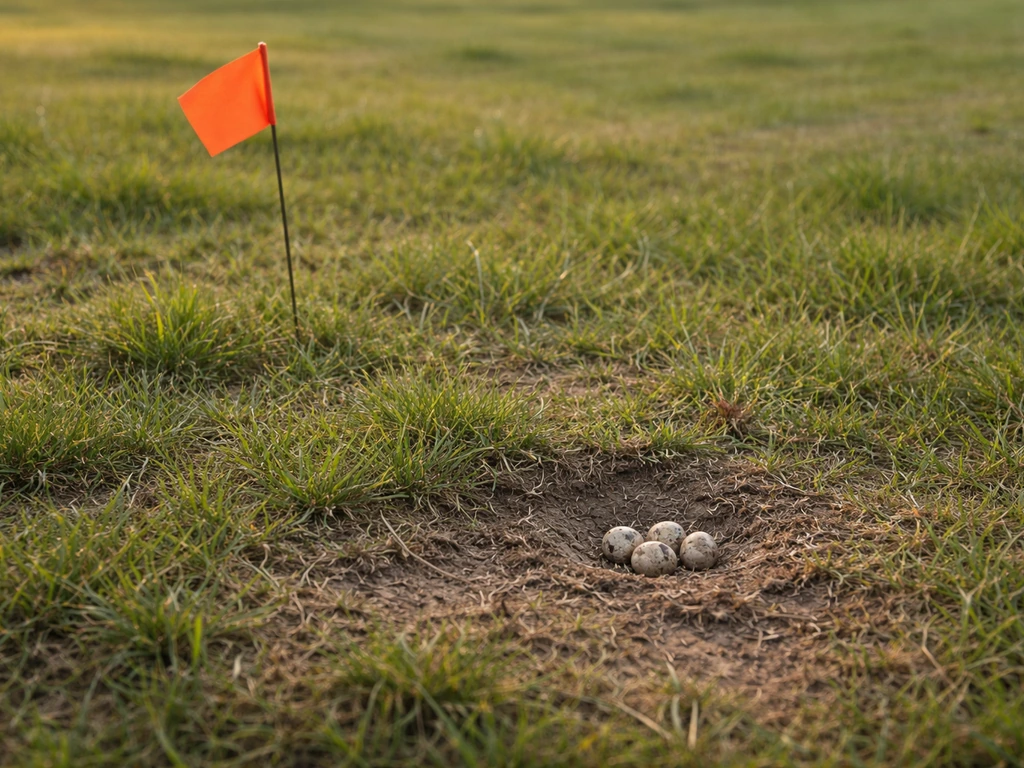
Ground-nesting birds are among the most legally and practically sensitive situations. If you find a ground nest, do not approach it, mark it with a flag, or alter the surrounding vegetation. Ground nesters are extremely prone to abandonment when a nest feels discovered. If a chick has wandered from a ground nest, leave it and back away immediately. Ground-nesting species often have precocial young (able to move around shortly after hatching) that are supposed to be away from the nest. Killdeer, for instance, lead their chicks away from the nest almost immediately after hatching. What looks lost often isn't.
Seasonal Timing: When Stakes Are Highest
| Season / Month | What's happening | Priority actions |
|---|---|---|
| Late March to April | First nesting attempts; many species laying eggs; nests still being built | Avoid disturbing building activity; do not move nests with eggs under any circumstances |
| May to June | Peak hatching; highest number of nestlings; fledgling activity begins | Most likely time to find a baby bird on the ground; follow full reunification protocol |
| July to August | Second broods for many species; late fledglings; juveniles still dependent | Fledgling activity ongoing; continue predator control; still active nest protection applies |
| September onward | Nesting mostly complete; nests can now be removed if inactive | Safe to clear old nests from structures; confirm nests are inactive before removal |
If you're reading this in May, you're right in the heart of peak nesting season for most of North America. Nestling and fledgling encounters are at their highest right now, which means the steps in this guide are immediately relevant. A little patience, a clear eye for what you're looking at, and the discipline to back away and observe rather than rush in are what make the difference between a bird that survives and one that doesn't. If you suspect a nest has been abandoned, you can use careful observation and the parents' behavior to confirm before taking any action.
FAQ
How do I know if I should intervene or leave a baby bird alone?
Not always. If the bird is fully feathered, it is very likely a fledgling and should generally be left alone unless there is an immediate danger (like a cat nearby or it is in a roadway). If it is barely feathered or cannot grip or hop, it is usually a nestling and should be returned or secured close to where it was found, ideally during daytime.
If the bird seems separated from its nest, should I look around to find where it belongs?
Limit your search to the immediate area where the bird was found. Parents call and locate nestlings by sound, so walking far away, moving the bird repeatedly, or canvassing the neighborhood can separate it from the parents’ hearing zone (often roughly 50 to 100 feet). If you cannot return it close by or the bird is in a dangerous spot, contact a licensed rehabilitator.
What should I do if I find a nestling but it is late in the day?
Avoid handling unless you have confirmed it is a nestling (naked or barely feathered and unable to grip or hop). Even then, use minimal, calm contact, and do not give food or water. For overnight containment, keep it in a small ventilated box lined with tissue, somewhere dark and quiet at room temperature, and attempt reunification at first light.
Can I move a fledgling if there is a cat or other immediate danger?
If predators are an issue, you can reduce danger locally, without relocating it far. Move a threatened fledgling only within the same general area, to a safer spot such as the other side of a fence or into nearby low vegetation where parents can still reach by sound. Do not transport it long distances yourself.
What if the bird is a ground-nesting chick, or I find it near a ground nest?
Ground-nesting situations are different. If you see precocial chicks that are wandering, don’t try to return them to the nest and don’t approach the nest area. Marking with flags or disturbing vegetation can increase abandonment risk. Back away and watch from a distance, then contact local wildlife help if you are unsure whether it is truly out of place.
How do I help if the chick fell from a cavity nest or a nest box?
Yes, sometimes. For cavity nests, the safest approach is usually a substitute container positioned near the cavity entrance (about 2 to 3 feet from the hole) and made to drain and keep the chick stable, such as a small basket lined with dry grass. Only consider opening a nest box and placing the chick inside if the box is accessible and you can close it again promptly.
What if I can see the nest but can’t physically reach it easily?
If the nest is visible and accessible and the chick can be returned without causing disturbance, placing it back is often the right move. If the nest is inaccessible or you cannot see the nest chamber, don’t try to force the chick into a hole. Use a substitute container approach near the entrance, and get a rehabilitator involved if you cannot position it safely.
What information should I collect before calling a wildlife rehabilitator?
If you do not know the species, that is still okay. When you call, describe the appearance (size, color, and whether it seems nestling or fledgling), and include the location, the approximate time you found the bird, weather conditions, and how long it has been out. If you can safely observe from a distance, note adult activity such as calling, landing, or carrying food.
How long should I wait and watch before I take action?
Keep it brief and purposeful. Use observation first (typically 5 to 10 minutes from a comfortable distance), then act only within the guidance for nestlings versus fledglings. Longer handling attempts, repeated picking up, or prolonged repositioning can stress the bird and may reduce the parents’ ability to locate it.
Is it illegal to keep a baby bird until I find help?
No. In the US, possessing or transporting a migratory bird without authorization is a federal offense, even with good intentions. The only common exception is immediate transport to a licensed rehabilitator for rescue. Don’t keep the bird at home or try to raise it yourself.
Does the time of day or season change what I should do?
Yes, and it matters. In spring and summer, reunification windows are best during the day, roughly 7 a.m. to 5 p.m. If you find a bird outside this window, you should keep it warm and contained overnight (ventilated box, lined tissue, dark and quiet at room temperature) and attempt reunification at first light, without feeding.
Next Article
How to Know If a Bird Nest Is Abandoned: Checklist
Use a quick checklist to tell active vs abandoned nests, avoid common false signals, and know safe next steps.