
Here is the short answer: if there are eggs or live chicks in that nest, do not touch it. Walk away, come back in a few weeks, and reassess. Walk away, come back in a few weeks, and reassess, since timing determines when you can remove a bird nest safely when can i remove a bird nest. If the nest is truly empty and abandoned, you have more options, but there are still right and wrong ways to handle it. The sections below will walk you through exactly how to figure out which situation you are in and what to do next, today.
Should I Remove a Bird Nest From My House? What to Do

Maya Bennett
21 Apr 2026
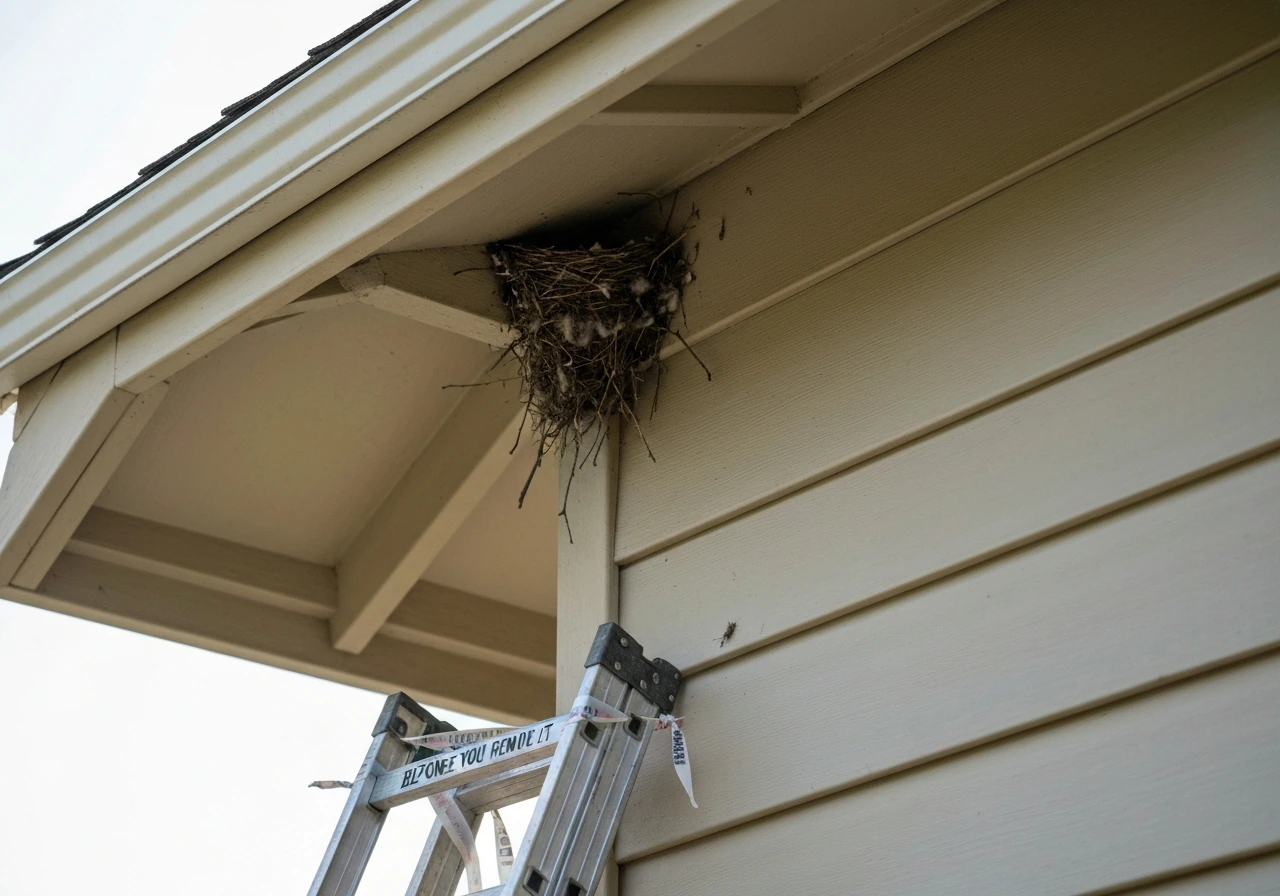
Leave it or remove it: a quick checklist

Before you do anything else, run through this checklist. It takes about two minutes and will save you from making a costly or illegal mistake.
Leave the nest alone if any of the following are true:
- You can see eggs or chicks inside, even just one
- An adult bird has visited the nest in the last four weeks
- Fledglings (young birds with feathers but not yet flying well) are nearby on the ground or in low branches
- You are unsure whether the nest belongs to a native migratory species (the answer is almost always yes)
- The nest is causing no immediate structural damage, fire hazard, or documented health risk right now
You can proceed with removal planning if all of the following are true:
- The nest is completely empty, with no eggs and no chicks
- No adult bird has been observed visiting for at least four weeks (NestWatch recommends this waiting period because people frequently misjudge nest abandonment too early)
- The breeding season is clearly over for the species involved, or you are outside peak nesting season
- You have confirmed the species is not protected under a special listing beyond the standard Migratory Bird Treaty Act (MBTA) coverage
- Removal is necessary because of a documented hazard such as a blocked dryer vent, fire risk in an electrical box, or a confirmed pest infestation
Identify the nest and the bird before anything else
Knowing what you are dealing with changes everything. Take a photo from a safe distance (do not lean in close if adults are present) and look for these quick ID markers:
- Cup-shaped nest of grass, twigs, and mud in an eave or on a ledge: very likely American Robin or a swallow species
- Mud tubes or jug-shaped mud nests stuck to vertical walls or under overhangs: Cliff Swallows or Barn Swallows, both MBTA-protected
- Loose, bulky twig pile in a shrub or tree fork near the house: likely a crow, jay, or dove
- Cavity or hole nest in a vent, dryer exhaust, or attic gap with softer material inside (feathers, lint, grass): House Sparrow, European Starling, or Carolina Wren
- Small delicate cup of plant fibers, spider silk, and lichen, often on a horizontal branch: hummingbird or vireo, both federally protected
Location matters as much as construction. A nest in your dryer vent or a bathroom exhaust fan is a fire and moisture hazard that needs to be resolved, but it still must be handled legally. A nest tucked in a hanging flower basket or on a porch column is rarely dangerous and almost always temporary. A nest deep inside an attic insulation layer is a different category entirely and may involve pests beyond the birds themselves.
Two introduced, non-native species, House Sparrows and European Starlings, are not protected under the MBTA. That gives you somewhat more flexibility with their nests. However, every other common backyard bird you are likely to encounter, including robins, wrens, swallows, finches, and hummingbirds, is a protected migratory species. When in doubt, assume protection applies.
What the law actually says about removing a nest
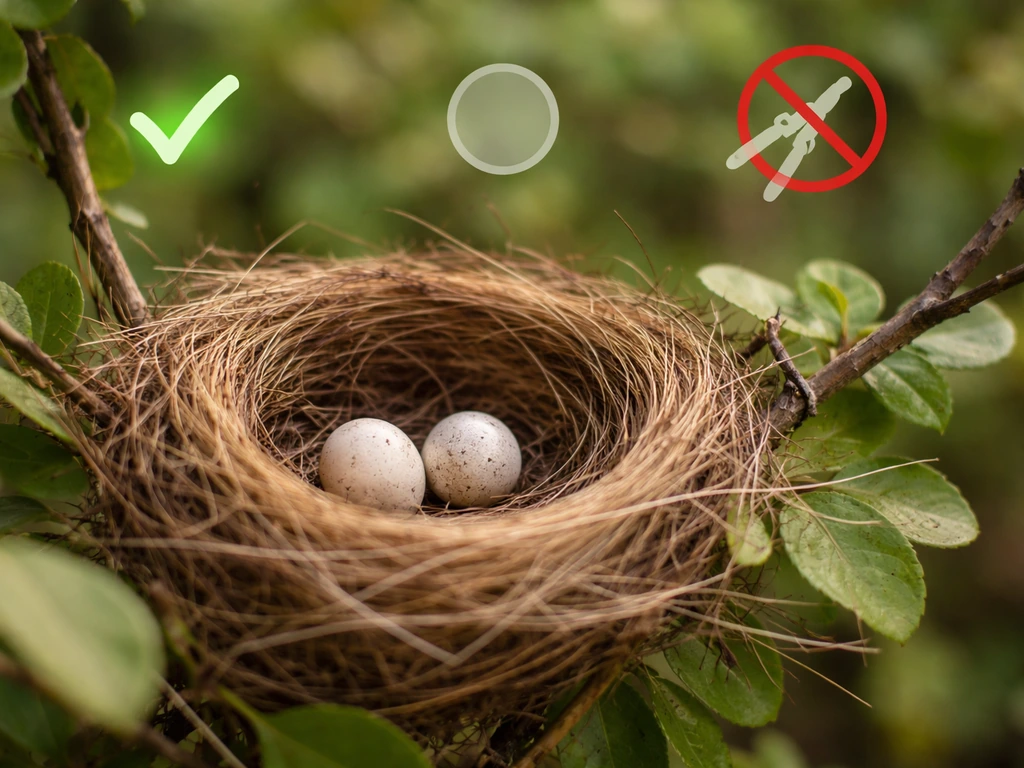
In the United States, the Migratory Bird Treaty Act makes it illegal to destroy, move, or damage an active nest that contains eggs or chicks, or where young birds are still dependent on the nest for survival. This is not a gray area. The U.S. Fish and Wildlife Service is clear: you are generally required to wait until the nest becomes inactive (no eggs, no chicks, no longer used for breeding) before destroying it. Permits for active nest removal are issued only in limited circumstances, typically when there is a direct human health or safety concern or the birds themselves are in immediate danger.
In Canada, the Migratory Birds Regulations (2022) offer similar protections, and in some provinces such as Ontario, you may need approval from the provincial ministry before disturbing a wild bird's nest or eggs. Florida, to give one state example, no longer issues state-level active nest removal permits for non-listed species, meaning a federal MBTA permit would be required. The bottom line: check your specific state or provincial rules in addition to the federal baseline, because local protections can be stricter.
If you are dealing with a nest that is causing a genuine, documented safety hazard and you cannot wait, contact the USFWS or your regional wildlife agency directly to ask about an emergency permit. Do not simply remove the nest and hope for the best. Penalties under the MBTA can include fines and in serious cases criminal charges.
Real safety risks you need to think through before removal
Disease and respiratory hazards
Accumulated bird droppings, whether in a nest, around it, or in an attic where birds have been nesting repeatedly, can harbor Histoplasma capsulatum, the fungus that causes histoplasmosis. The CDC is specific: do not sweep or vacuum dry droppings, because this aerosolizes spores. Instead, use a wet cleaning method: apply a disinfectant, let it soak, then carefully bag and remove the material. For larger accumulations, the CDC recommends professional hazardous waste cleanup rather than DIY. A properly fitted respirator (N95 minimum, P100 preferred for enclosed spaces) is appropriate PPE for any hands-on nest or droppings removal. Psittacosis (from parrots and some other species) and avian influenza are additional concerns in specific contexts, reinforcing the case for protective equipment.
Parasites and secondary infestations

Bird nests, especially older ones, frequently harbor mites, lice, blow flies, and in some cases bat bugs or other parasites. When a nest is removed or the birds leave, these parasites can migrate into the structure of your house looking for a new host. This is one reason to seal entry points promptly after nest removal and to dispose of nesting material in a sealed bag immediately rather than leaving it nearby.
Bird aggression and fall risk
Mockingbirds, swallows, and Red-winged Blackbirds in particular will dive-bomb and physically strike people who approach an active nest. Beyond the startling factor, this creates a real fall hazard if you are on a ladder. Never attempt to inspect or remove a nest from a ladder while adults are actively defending it. Wait until you can work safely.
What to do right now: active nest vs. abandoned nest
If the nest is active
Your job right now is mostly to leave it alone and manage your own space around it. A few practical steps help you get through the nesting period without conflict:
- Mark the date today. Most songbird nesting cycles, from egg-laying through fledging, run roughly four to six weeks. You will have a clearer picture by mid-May or early June depending on species and your location.
- Minimize disturbance nearby. Limit foot traffic, loud power tools, and pet access within about ten feet of the nest if possible.
- Document what you observe with phone photos. A photo log lets you track whether the nest is still active and provides a record if you later need to contact a wildlife agency.
- If the nest is in a hazardous location like a dryer vent, contact USFWS or a licensed wildlife rehabilitator now to discuss your options. Do not seal the vent while birds are inside.
- If birds are dive-bombing you near an entry point you use daily, a temporary visual deterrent such as a hanging reflective object near (not at) the nest can sometimes reduce aggression without disturbing the nest itself.
If the nest appears abandoned
Resist the urge to act immediately. NestWatch recommends waiting a full four weeks from the last time you observed an adult bird at the nest before concluding it is abandoned. Failed nests, nests with cold eggs after a cold snap, and nests where an adult was killed can all look abandoned when the situation is actually more complicated. After that four-week window has passed with no activity, you are on much firmer ground to proceed with removal.
Humane alternatives: deter, exclude, and prevent reuse
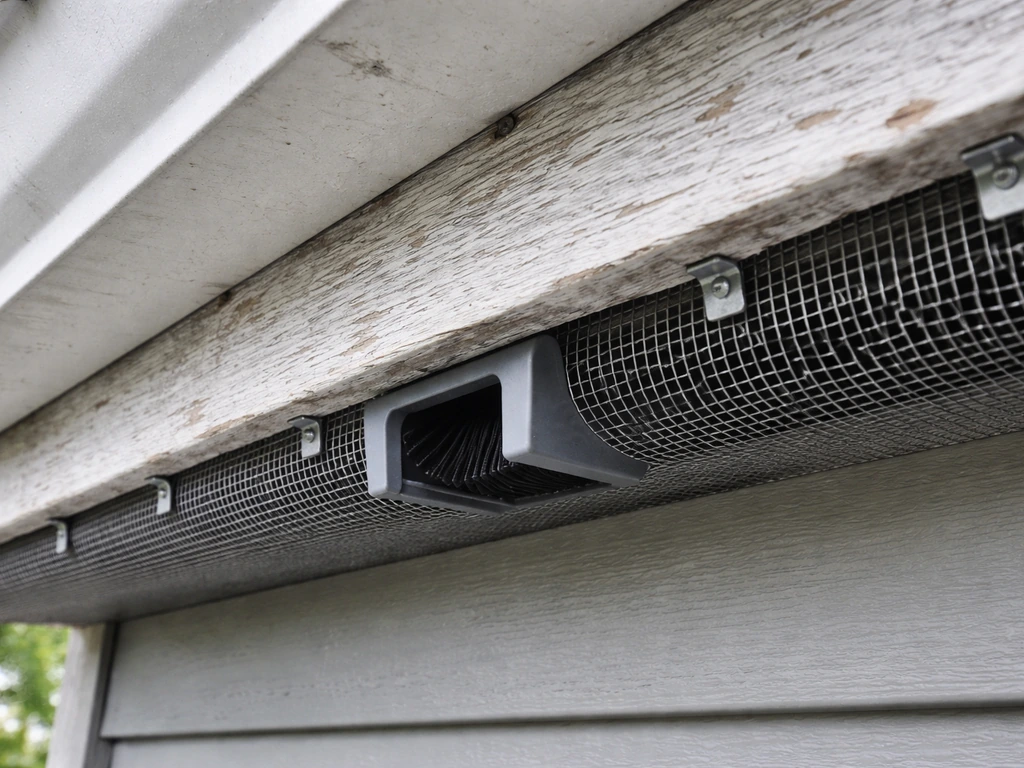
Removal fixes today's problem. Exclusion prevents next year's problem. These are the approaches that actually work long-term and that do not put you on the wrong side of the law.
- Physical exclusion is the gold standard. Once a nest is inactive and removed, seal the entry point with hardware cloth, metal flashing, or an appropriately sized vent cover. For vents, use a commercial pest-proof vent cover rated for your duct diameter.
- One-way exclusion doors can be useful for situations where birds have entered an attic or enclosed space and you need to let them leave without re-entering. A one-way door lets an animal exit through its normal route but physically prevents re-entry. Remove the device after a few days and seal the opening permanently.
- Surface deterrents for ledges, eaves, and beams include bird spikes, slope barriers (angled boards or foam that prevent landing), and bird gel. These are most effective when installed before the nesting season begins, ideally in late winter in most of the continental U.S.
- Visual and auditory deterrents (reflective tape, predator decoys, motion-activated sprinklers) have mixed results and require frequent repositioning to remain effective. They work best as a short-term bridge while you implement physical exclusion.
- Swallows and other protected species cannot legally be harassed off an active nest, but pre-season exclusion on structures where they nested previously is both legal and effective. Plan for this in February or early March before they return.
True nest relocation, meaning picking up an active nest and moving it a few feet, is almost never effective and is generally illegal for protected species under the MBTA without a permit. Adult birds often abandon a nest that has been moved, even a short distance, especially during the egg stage. Exclusion and prevention are the ethical and practical route. Use only a one-way door when you are sure no young will be trapped inside after the adult is evicted, per Maine IFW guidance.
How and when to remove a nest safely, step by step
Once you have confirmed the nest is inactive, the breeding season is over, and you are legally clear to proceed, here is how to do this correctly.
- Gear up first. Put on disposable gloves (nitrile is fine), an N95 or P100 respirator, safety glasses, and clothes you can immediately bag and wash. Do not skip the respirator, especially in enclosed spaces like attics or soffits.
- Dampen the nest material with a water-and-disinfectant solution (a dilute bleach solution works: about one part bleach to ten parts water) and let it soak for a few minutes. This reduces airborne dust and kills pathogens. Do not use dry sweeping or dry vacuuming.
- Remove the nest carefully and place it directly into a heavy-duty plastic bag. Seal the bag immediately. If you find old eggs (unhatched), these are typically legal to discard but check your state rules, as some states have additional regulations.
- Clean the surface where the nest sat with the same disinfectant solution. Let it air dry.
- Inspect the surrounding area for droppings accumulation. If there is significant buildup in an attic or enclosed space, assess the volume before proceeding. Large accumulations (more than a square foot or two of dense material) are a job for a professional hazmat or wildlife remediation service per CDC guidance.
- Repair and seal the entry point or attachment surface. For eaves and soffits, use paintable exterior caulk for small gaps and hardware cloth or metal flashing for larger openings. This is the most important step for preventing reuse.
- Dispose of the bagged nest and gloves in an outdoor trash bin. Wash your hands thoroughly and change your clothes.
- Monitor the site for two to three weeks. Birds returning to a now-sealed site will often attempt to start a new nest immediately nearby. Redirect them with deterrents and check for any gaps you may have missed.
Timing by season
| Time of year | Typical nesting status in the continental U.S. | Action window |
|---|---|---|
| January to February | Pre-nesting for most species; some early nesters like Great Horned Owls already active | Best time to install exclusion and deterrents before birds return |
| March to April | Peak nest-building and egg-laying for many common species | Do not remove active nests; monitor and document only |
| May to June | Peak hatching and fledging; high nest activity | Do not disturb; wait for fledging to complete |
| July to August | Many first broods fledged; some species on second or third brood | Assess carefully; some nests still active, some now truly inactive |
| September to October | Most breeding complete for temperate species | Safe removal and exclusion window for most species opens |
| November to December | Breeding season over for nearly all temperate species | Best window for cleanup, repairs, and exclusion installation |
Keep in mind that these windows shift by two to four weeks depending on your latitude, elevation, and local climate. Birds in the southern U.S. typically start nesting earlier and may have longer seasons. The four-week observation rule from NestWatch still applies regardless of calendar date.
When to call someone instead of doing it yourself
Some situations genuinely require a professional. If the nest is inside a wall void, deep in attic insulation, or in a chimney with significant droppings accumulation, the health and structural risks go beyond what most homeowners should handle alone. A wildlife rehabilitator is the right call if you find injured or orphaned chicks. A licensed pest control or wildlife removal company is appropriate for large-scale droppings cleanup or structural damage assessment. For questions about whether a permit is needed, go directly to your regional USFWS office or equivalent provincial authority. If you are wondering “can you remove bird nests,” a good first step is to ask your regional USFWS office or your provincial wildlife authority whether a permit is required for your exact situation. For help with the details, find out who removes bird nests in your area and what type of permit or cleanup is needed. Knowing who to contact before you need them is genuinely useful, so it is worth identifying the right local contact now rather than scrambling in the moment. For bird nest removal, start with your local wildlife agency or a licensed wildlife removal professional, and ask whether cleanup and timing are allowed in your area who to contact.
The questions of exactly when removal is legal, whether old nests in trees need to come down at all, and what species-specific timing rules apply are worth exploring in more depth if your situation is complicated. Each of those scenarios has its own considerations that go beyond this general guide.
FAQ
If I’m not sure whether the nest has eggs, can I remove it anyway?
No, you should not remove it as long as eggs, live chicks, or continued breeding use is possible. Instead, take a photo from a distance and watch for consistent signs of inactivity (no adults returning, no eggs, no chicks) before doing anything.
What if the nest looks empty, but I saw birds there recently?
Yes, even if you think the nest is “abandoned,” keep the waiting window. NestWatch guidance is to wait about four weeks from the last time you saw adults at the nest before treating it as inactive, because cold eggs, failed breeding attempts, and nest loss due to a predator can look abandoned early.
Is it ever okay to remove just the nesting material, not the nest itself?
There is a key difference. Removing nesting material after the nest is inactive is typically a different situation than destroying or moving an active nest. If you are unsure about activity, pause and confirm inactivity first, then handle the nesting material and clean-up using appropriate safety steps.
What should I do if the nest is in a place that could cause a fire or moisture problem?
If the nest is in a high-risk location like a dryer vent, bathroom exhaust, or attic insulation, prioritize making the area safe without disturbing the birds. You can usually control human access (close a door, block off the area) and handle ventilation hazards after the nest is confirmed inactive.
How do I decide the right waiting period if birds start nesting at different times in my area?
Don’t rely on calendars alone. Nesting timing shifts by latitude, elevation, and local weather, but the practical rule still applies, wait roughly four weeks from the last observed adult activity before concluding the nest is inactive.
Can I move an active nest a few feet to keep birds away from people?
Not in the sense of picking up an active nest. Even if you move it a short distance, most protected species will abandon it, and it can still be considered unlawful destruction without the right permit.
If it’s a safety emergency, do I still need a permit to remove an active nest?
For protected species under MBTA, skipping the permit is the risky move. Permits for active nest removal are limited, typically for direct health or safety threats or immediate danger to the birds, so contact your regional USFWS office or provincial authority before acting.
I already cleaned droppings with a vacuum, did I make things worse?
If you have droppings that may be dry, do not sweep or vacuum. Use wet disinfection methods, allow appropriate contact time for the disinfectant, then bag and remove materials carefully, for larger contamination consider professional hazardous waste or wildlife cleanup.
Do inactive nests still pose health risks like mites or parasites?
In practice, yes. Even when you are working on an inactive nest, older nesting materials often contain mites or other parasites that can spread when disturbed. Wear protective gear and plan to seal entry points promptly after removal.
Why is it dangerous to approach the nest to confirm it’s active?
Yes. Birds like swallows, mockingbirds, and red-winged blackbirds can physically attack people who approach an active nest, which also creates a ladder and fall hazard. Avoid inspection or removal while adults are defending, wait until you can work safely.
When is it better to call a pro instead of handling nest removal myself?
Usually, you should not treat a deep attic or wall void nest as a typical DIY project. Structural hazards, hidden droppings, and containment issues are reasons to use a licensed wildlife removal company or a professional hazmat-style cleanup for the mess.
Do old nests in trees need to come down, or can I leave them?
Older nests in trees are often handled differently than nests inside a structure. The key question is whether the nest is still being used for breeding or dependent young, if it is inactive you may be able to remove it, but species and local rules can still apply.
Who should I contact first, and what details should I have ready when I call?
Start with the exact question for your location and structure, whether it is an active nest, where it is located, and what you want to do (exclusion, removal, and cleanup). Your regional wildlife agency can tell you if the situation is permit-eligible and what timing requirements apply.