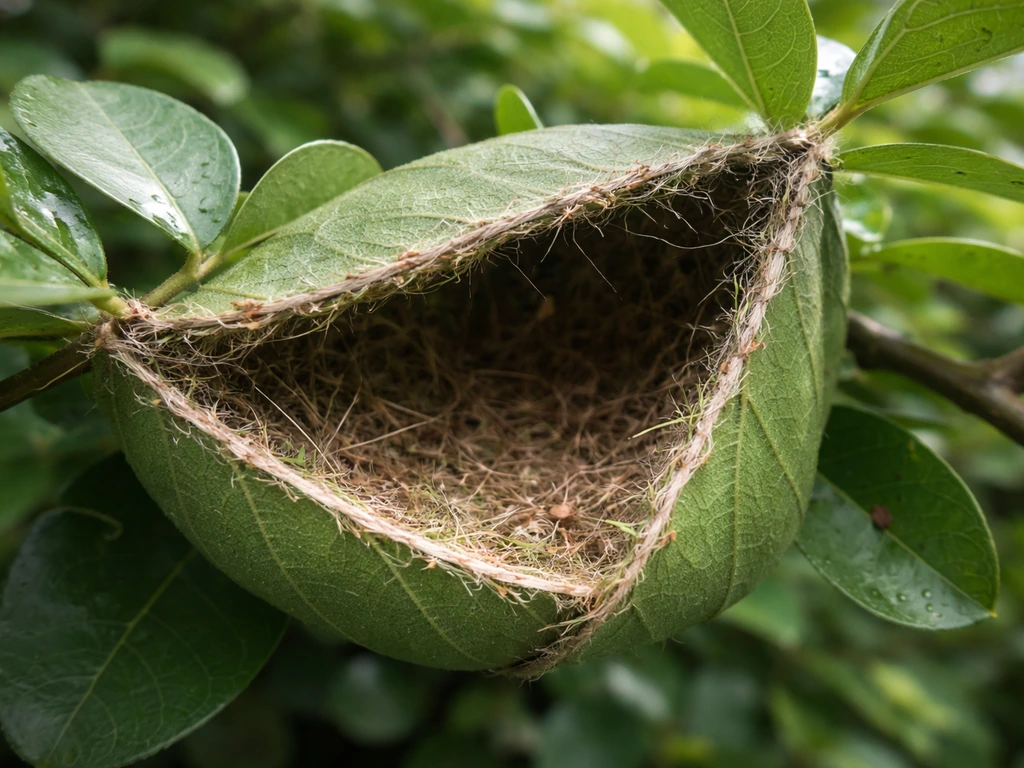
Weaver birds build their nests by weaving long, thin strips of grass and leaves into a tight, ball-shaped structure that hangs from a tree branch. The male does most of the work, looping and stitching strips together the way you might braid or knot string, until the nest is strong enough to hold eggs and chicks safely. It is one of the most impressive building projects in the bird world, and a Class 3 student can follow the whole process step by step.
How Does a Weaver Bird Make Its Nest Class 3

Maya Bennett
14 May 2026
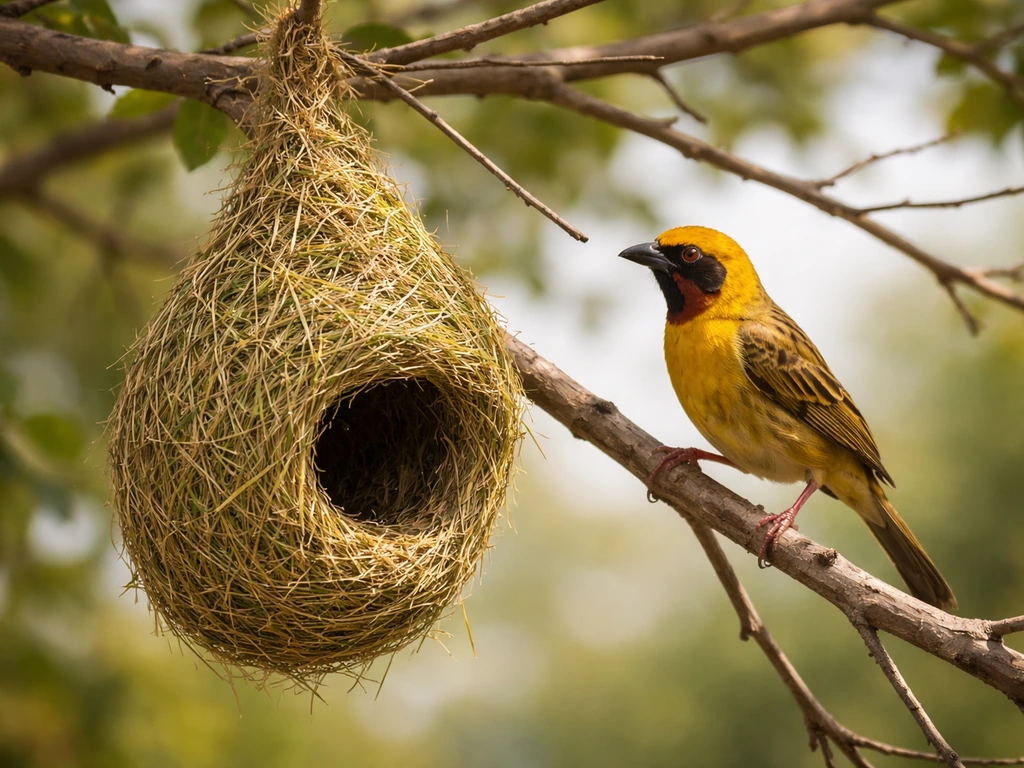
The kid-friendly answer: what weaver birds actually do
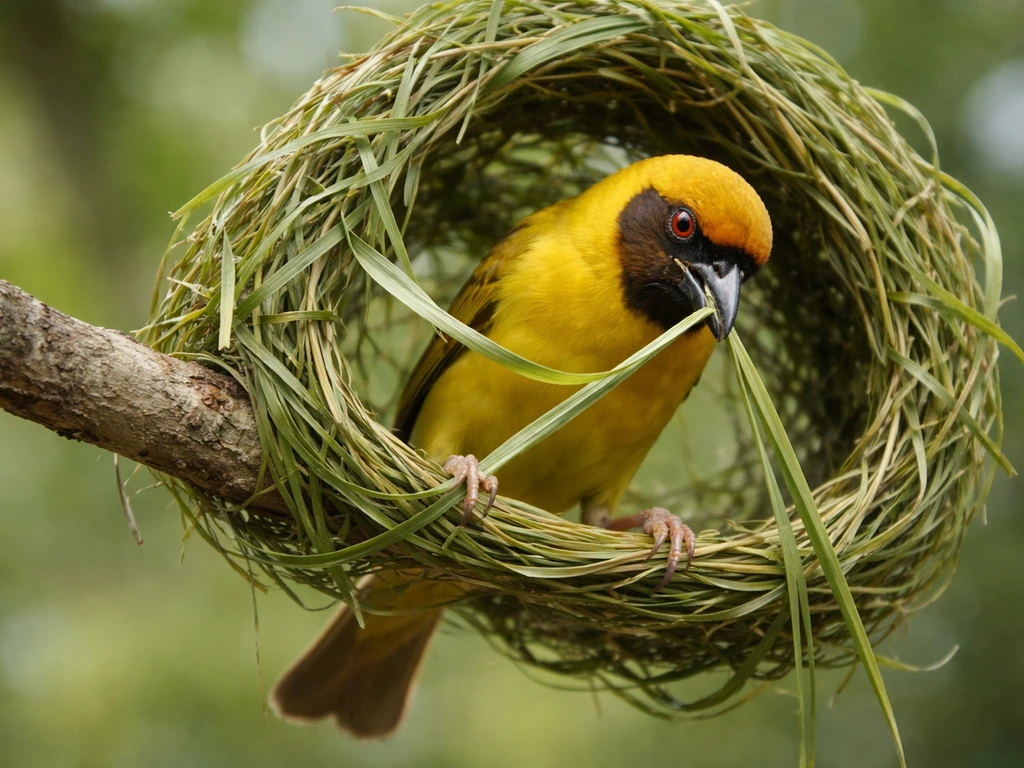
Imagine building a house using only your mouth and feet, with no glue, no nails, and no hands. That is exactly what a weaver bird does. The male bird finds long blades of grass, flies to a tree branch, and starts weaving them together, over and under, loop by loop, the way you weave paper strips in an art class.
Weaver birds make their nests by finding long grass blades or other plant strips and weaving them together over and under until the nest is strong. When the nest is finished it looks like a round basket or a small hanging bottle, with a hole at the bottom or side so the bird can fly in and out. The female checks the nest before she agrees to move in.
If she does not like it, the male sometimes tears it apart and starts all over again.
Picking the right spot and gathering materials
Before a single strand is woven, the male weaver bird surveys the area carefully. He looks for a branch that hangs out over water or has no easy path for snakes and other predators to climb. Thorny trees, palm trees, and branches that dangle over ponds or rivers are favourites. The Baya Weaver (Ploceus philippinus), one of the most commonly described species in school textbooks from South and Southeast Asia, attaches its nest to palm fronds or the tips of thin, swaying branches specifically because the movement makes it harder for predators to reach the eggs.
Once the site is chosen, the male collects his materials. Once you know where the bird will build, you can follow the same steps to understand how tailors birds build nests Once the site is chosen. He tears long, thin strips from grass blades (especially wild grasses like Guinea grass, Panicum maximum), palm fronds, and broad leaves. He does this with his beak, gripping the leaf near the base and pulling downward in one clean motion to get a long, unbroken strip. The strips need to be flexible enough to bend without snapping and strong enough to hold a knot. He carries them back to the branch one at a time and gets to work.
How the weaving actually works: braiding, stitching, and binding
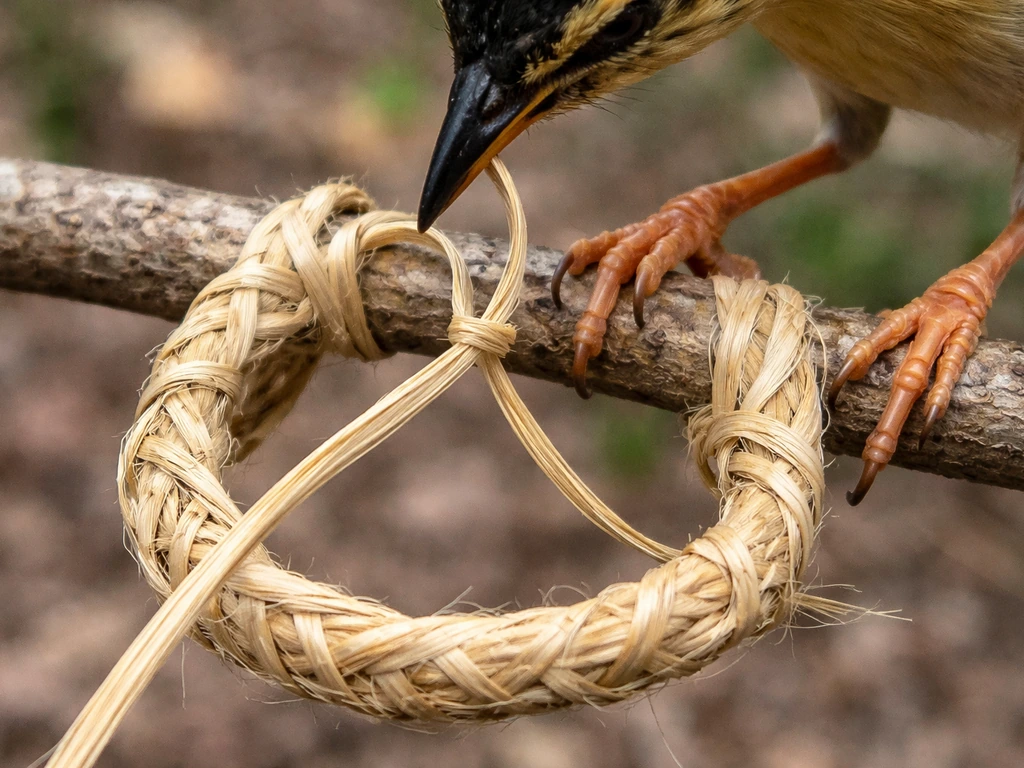
This is the part that makes weaver birds genuinely remarkable. The male anchors the first strip around the branch by looping it over and pulling the free end back through, creating a knot with his beak and feet working together. He then continues looping new strips in, passing each one over and under the previous strips, exactly like stitching or interlacing fabric.
The PDF description likewise explains that during weaving the bird grips a strip and loops it back into the nest substrate as stitching or interlacing to give the structure strength stitching or interlacing fabric. The bird must grip the strip, push it through the gap, and then pull it tight, all with its beak.
Ornithologists describe this motion as stitching, because it really does look like a bird sewing.
As more strips are added, a ring forms first. This ring becomes the frame of the nest, and the male weaves outward and downward from it to build the rounded body of the structure. The weaving becomes denser and tighter as he works. A partly built nest at this stage is sometimes called the 'helmet stage' in Baya Weaver descriptions, because it looks like an open helmet or half-bowl hanging from the branch. The male repairs weak spots by weaving in fresh strips to tighten the structure, almost like darning a sock.
Different species use slightly different weaving patterns and nest shapes, but the core mechanical process, looping strips and stitching them back into the structure, is the same across weaver species. The Village Weaver (Ploceus cucullatus), common in sub-Saharan Africa and the species most frequently shown in textbook diagrams, produces a coarsely woven outer shell using this exact technique.
Shaping the nest: entrance, chambers, and lining
Once the main chamber is complete, the male adds the entrance. In many weaver species this is a downward-facing tube or tunnel, which makes it very difficult for snakes to slide inside. The Baya Weaver builds a particularly dramatic version: a long vertical entrance tube that points downward, giving the finished nest an upside-down flask or retort shape. The tube can be quite long in proportion to the chamber, and the bird must fly upward into it to enter. The Village Weaver uses a shorter downward-facing entrance hole rather than a tube.
The Sociable Weaver (Philetairus socius) from southern Africa takes a different approach entirely, building a giant communal haystack-like structure on a large tree or telephone pole that houses dozens or hundreds of pairs, each with its own private chamber and entrance tunnel. Those tunnels are about 25 cm long and lined with sharp, downward-pointing straw bristles that poke any snake trying to enter. This communal 'apartment block' can weigh over a tonne and last for generations.
After the male's work is inspected and accepted by the female, she (or in some species, she and the male together) lines the inside of the chamber with softer materials. The Village Weaver's interior is thatched with short strips of palm and grass blades, grass seed heads, and feathers. This lining cushions the eggs, keeps chicks warm, and is a completely different texture from the rough outer weave. In the Cape Weaver, the male builds the entrance tunnel only after the female has accepted the nest, and then the female takes over to line the interior herself.
A quick comparison of nest shapes by species
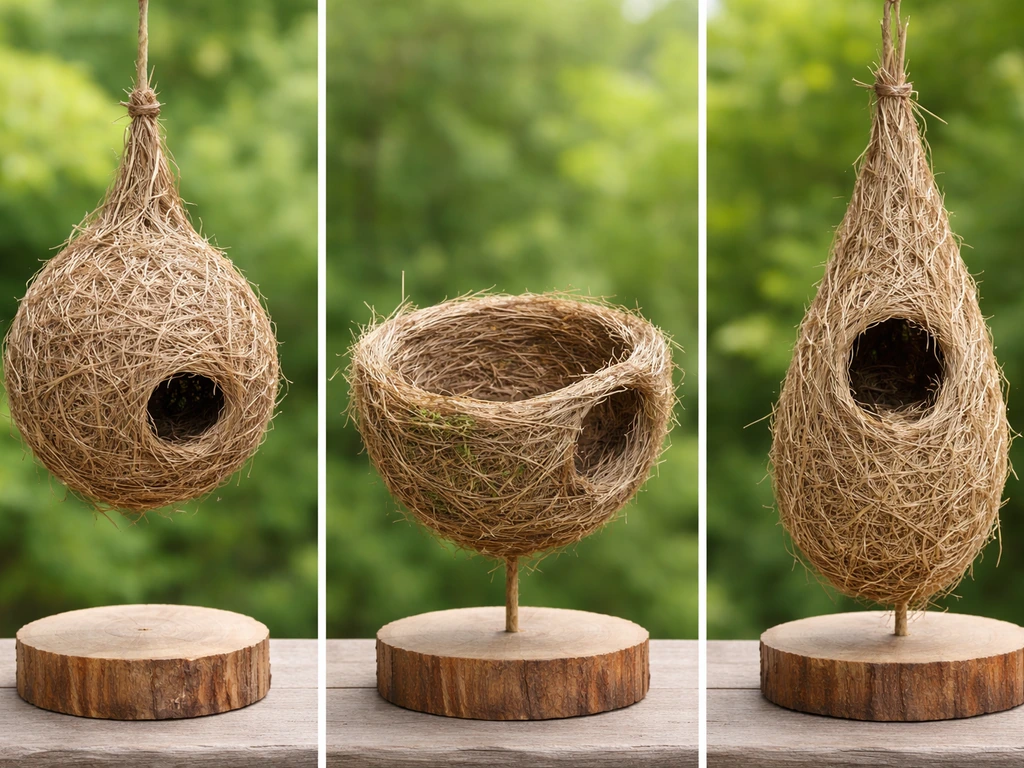
| Species | Nest shape | Entrance type | Who builds |
|---|---|---|---|
| Village Weaver (Ploceus cucullatus) | Round, hanging ball | Short downward-facing hole | Male weaves outer shell; female lines interior |
| Baya Weaver (Ploceus philippinus) | Retort/upside-down flask | Long vertical downward tube | Male builds almost entirely; female adds finishing touches |
| Cape Weaver (Ploceus capensis) | Oval hanging basket | Downward entrance tunnel added after female accepts | Male weaves and adds tunnel; female lines inside |
| Sociable Weaver (Philetairus socius) | Communal haystack with many chambers | Individual tunnels ~25 cm long, bristle-lined | Colony builds together; large twig roof, grass chambers |
What to look for in the field: signs of an active weaver nest
If you are watching birds and spot a hanging woven nest, here is how to tell whether it is still active. An active weaver nest will have adult birds flying back and forth, often carrying strips of grass or food. You may see a male hovering below the entrance, calling or displaying to attract a female. The nest material at the attachment point, where it meets the branch, often looks fresh and green rather than dry and brittle. Near Baya Weaver colonies you will typically see several nests in different stages: some are just rings, some are at the helmet stage, and some are fully formed.
- Look for fresh green grass strips or damp-looking material: a sign the nest is newly built or being repaired
- Listen for a constant chittering or tinkling call from the colony, especially around sunrise when birds become most active
- Watch for a male clinging below the entrance and flapping his wings, a display that says 'come inspect my nest'
- Check the entrance tube: if it is clean, dry, and rounded at the edges, the nest has seen a lot of use
- If you see no adult birds for several weeks and no change in the nest's appearance, it may be abandoned, but give it at least four weeks before drawing that conclusion
- Note the location: over water, on a drooping branch, or near a large colony are all classic weaver bird choices
When you find an active nest, keep your distance. A good pair of binoculars and a notebook are all you need. Jot down the date, the tree species, the approximate height of the nest, the number of nests in the colony, and any behaviour you observe. A quick phone photo through binoculars gives you a record without needing to get close. If the birds are giving loud alarm calls for more than a few minutes after you arrive, move further away. Your presence is stressing them.
The ethical and legal rules around bird nests
blank" rel="noopener noreferrer">In the United States, active bird nests are protected under the Migratory Bird Treaty Act (MBTA). That means it is illegal to disturb, move, or destroy a nest that contains eggs or young birds without a federal permit. Those permits are issued only in very limited circumstances, such as genuine human health or safety emergencies. Even picking up a nest and keeping it at home as a decoration is technically illegal without a permit, whether you found it in a tree or on the ground. Other countries have similar protections, so if you are outside the US, check your local wildlife laws before doing anything with a nest.
An empty nest with no eggs or birds in it sits in a legal grey area in the US: the MBTA does not prohibit destroying an unoccupied nest by itself, but possession without a permit can still be problematic. The safest and most conservation-minded approach is simply to leave all nests where you find them, active or not. The nest is part of the habitat, and even an old woven nest can be reused, studied, or shelter invertebrates that feed other wildlife.
- Do observe from a distance using binoculars, ideally 10 metres or more away
- Do take photos and notes to share with local birdwatching groups or citizen science platforms
- Do alert a licensed wildlife rehabilitator immediately if you see a nestling on the ground that appears injured
- Don't touch, move, or remove an active nest under any circumstances
- Don't collect or keep nests, eggs, or feathers from active nests, even as teaching materials
- Don't trim trees or clear vegetation during the active nesting season without checking with your local wildlife authority first
- Don't let pets near an active nest; keep cats and dogs indoors or on leashes in areas where ground-level nests may be present
Found a weaver nest near your home? Here's what to do
Weaver birds are not common in most of North America outside of introduced populations in Hawaii and a few other areas, but if you are reading this after spotting a woven nest anywhere in the world, the practical steps are the same. A common tailorbird nest is another woven nest type, and it shares the same general idea of interlacing materials into a strong, protective structure.
First, identify whether the nest is active by watching it quietly from a distance for ten to fifteen minutes. If adults are coming and going, treat it as a protected active nest and adjust your plans around it. Most songbird nests finish their cycle (from egg-laying through fledging) within about a month of incubation starting, so any disruption to your garden or property will be short-lived.
If you have construction, tree trimming, or vegetation clearing planned and you have found an active nest in the work zone, stop work in that immediate area and contact your local wildlife authority or a licensed wildlife professional before proceeding. In the US, the USFWS provides timing guidance for vegetation clearing that is specifically designed to help homeowners and contractors avoid disturbing active nests. Getting that guidance before you start is both the legal and practical thing to do.
- Watch the nest from at least 10 metres away for 10 to 15 minutes to confirm activity
- Photograph the nest from a distance, capturing the shape, attachment point, entrance type, and surrounding vegetation
- Note the date, time, tree species, nest height, and any behaviour you observe
- If the nest is in a work zone, pause work near it and contact your local wildlife authority or the USFWS before proceeding
- If a nestling or fledgling is on the ground and clearly injured, call a licensed wildlife rehabilitator right away rather than trying to handle the bird yourself
- If you are unsure whether a nest is abandoned, wait at least four weeks and watch for any adult activity before assuming it is empty
- Share your observations with a local birdwatching club or a citizen science platform to help researchers track weaver bird populations and nesting success
Weaver birds are extraordinary architects, and watching one build from scratch is one of the most rewarding experiences in birdwatching. Whether you are a Class 3 student writing about the Baya Weaver for a school assignment or a homeowner who just found a woven nest in the backyard tree, the best thing you can do is slow down, watch carefully, and let the bird finish what it started. The nest-building process covered here is closely related to how other skilled nest-builders like the tailor bird work, using plant materials and precise physical movements to create a safe space for their young, which is worth exploring if you want to go deeper into the world of bird construction.
FAQ
How can a Class 3 student describe the nest-building steps without getting confused by the different weaver species?
Use the “core sequence” idea: pick a safer spot, pull long strips with the beak, anchor the first strip around the branch, then loop and stitch more strips over and under to make a ring that grows into a hanging basket. Finish by adding the entrance, then the female lines the inside with softer material after accepting it.
Do weaver birds always build a hanging basket, or can the nest be a different shape?
They can differ a lot. Many species build a round hanging structure with a side or bottom opening, but others make a downward tunnel, and the Sociable Weaver builds a huge communal haystack that contains many separate chambers and entrances.
How do we know if a woven nest is active if we cannot clearly see eggs?
Look for repeated adult activity. If birds are continuously flying in and out, carrying strips or food, and you sometimes see the male displaying near the entrance, the nest is likely active even if eggs are hidden inside.
What does “active” nesting look like over time, for example during the helmet stage?
You might see multiple nests at different build stages in one colony. A helmet-stage nest looks like an open half-bowl, later it becomes denser and more enclosed, and finally the entrance tube or opening is added. Presence of birds working on specific nests is a strong clue.
Why do weaver birds choose branches over water or hard-to-climb areas?
These spots make predation harder. A dangling branch or palm fronds can reduce how easily snakes and other predators reach the eggs, and some entrance designs also make it difficult for intruders to slide inside.
Does the female weaver bird always line the nest, or does she sometimes do less?
Often she adds the softer lining after inspection, but the division of labor can vary by species. For example, in the Cape Weaver, the male delays the entrance tunnel until after the female accepts, and then the female handles the interior lining.
What is the main difference between the outside weave and the inside lining?
The outside is tightly woven for structure and protection, while the inside uses softer, cushioning materials such as palm strips, grass blades, grass seed heads, and feathers. That texture change helps keep eggs safer and chicks warm.
Are the entrances always at the bottom, and do they always prevent snakes?
Many weaver nests have a downward-facing entrance, which makes climbing in difficult for snakes. Some species use a downward tube, which adds protection by creating a longer, more challenging path inward.
How long is the weaver bird nest-building process likely to take once the male starts?
It depends on conditions and species, but you can think of it as a multi-stage build that progresses from ring frame, to helmet-stage structure, to a finished chamber with an entrance, then interior lining. Colonies often show simultaneous nests at different stages because builds do not all finish at the same time.
What should someone do if they find an active weaver nest near a planned activity like trimming or clearing?
Stop the work in that immediate area and contact your local wildlife authority or a licensed wildlife professional before continuing. In the US, follow official timing guidance for vegetation clearing to reduce the chance of disturbing active nests.
Is it legal to move an empty woven nest for a decoration?
In the US, an unoccupied nest can fall into a legal grey area, and owning or moving nests without the right authorization can still be problematic. The safest approach is to leave nests where they are and check local wildlife laws where you live.
What’s a safe way to observe without stressing the birds?
Use binoculars and watch from a distance. If alarm calls start and continue for more than a few minutes, move farther away. Keep notes or photos taken through binoculars instead of approaching the nest.
Next Article
How Tailor Birds Build Nests Step by Step and What They Use
See how tailor birds stitch leaf nests step by step, what materials and silk fibers they use, and how to observe safely.