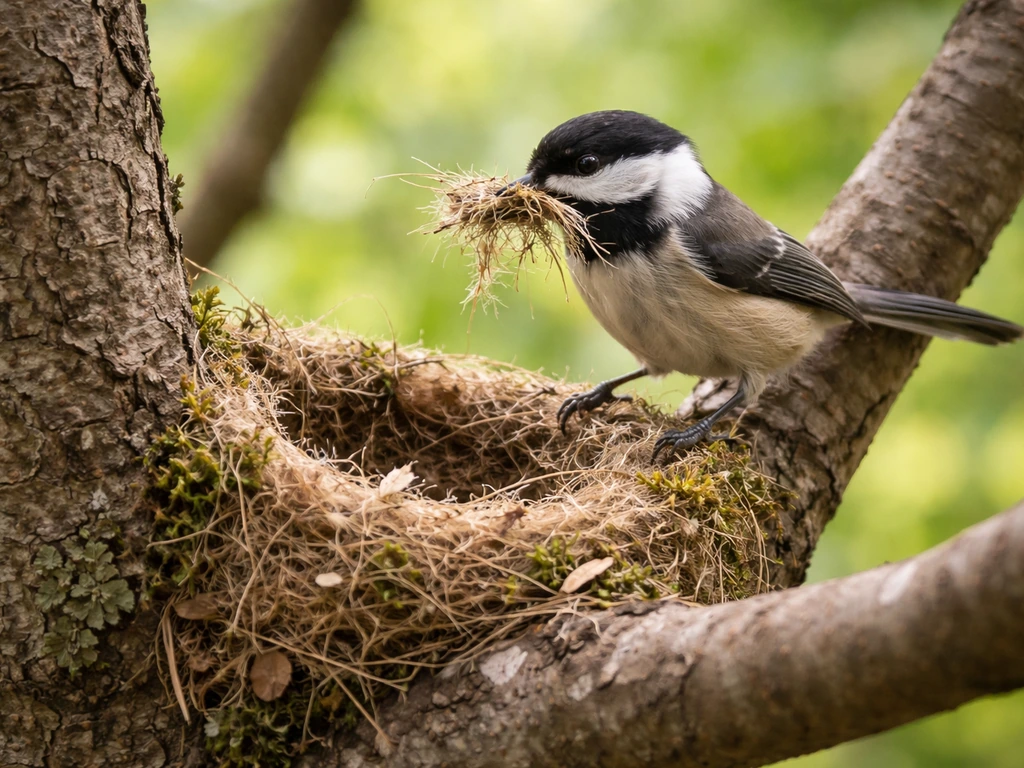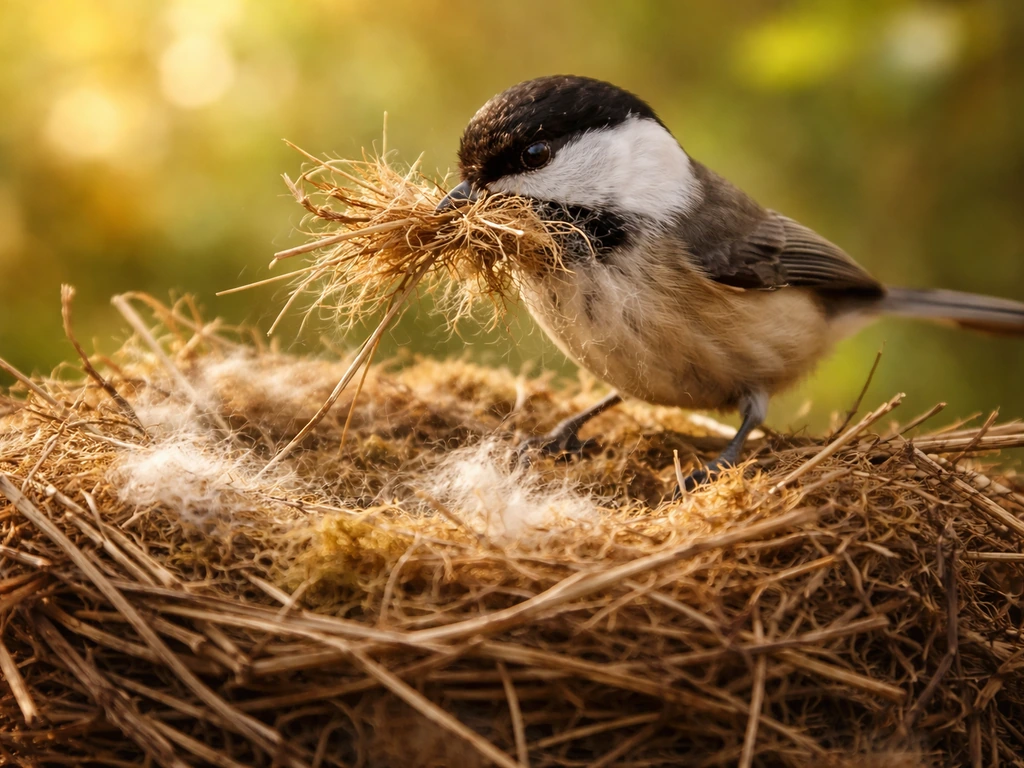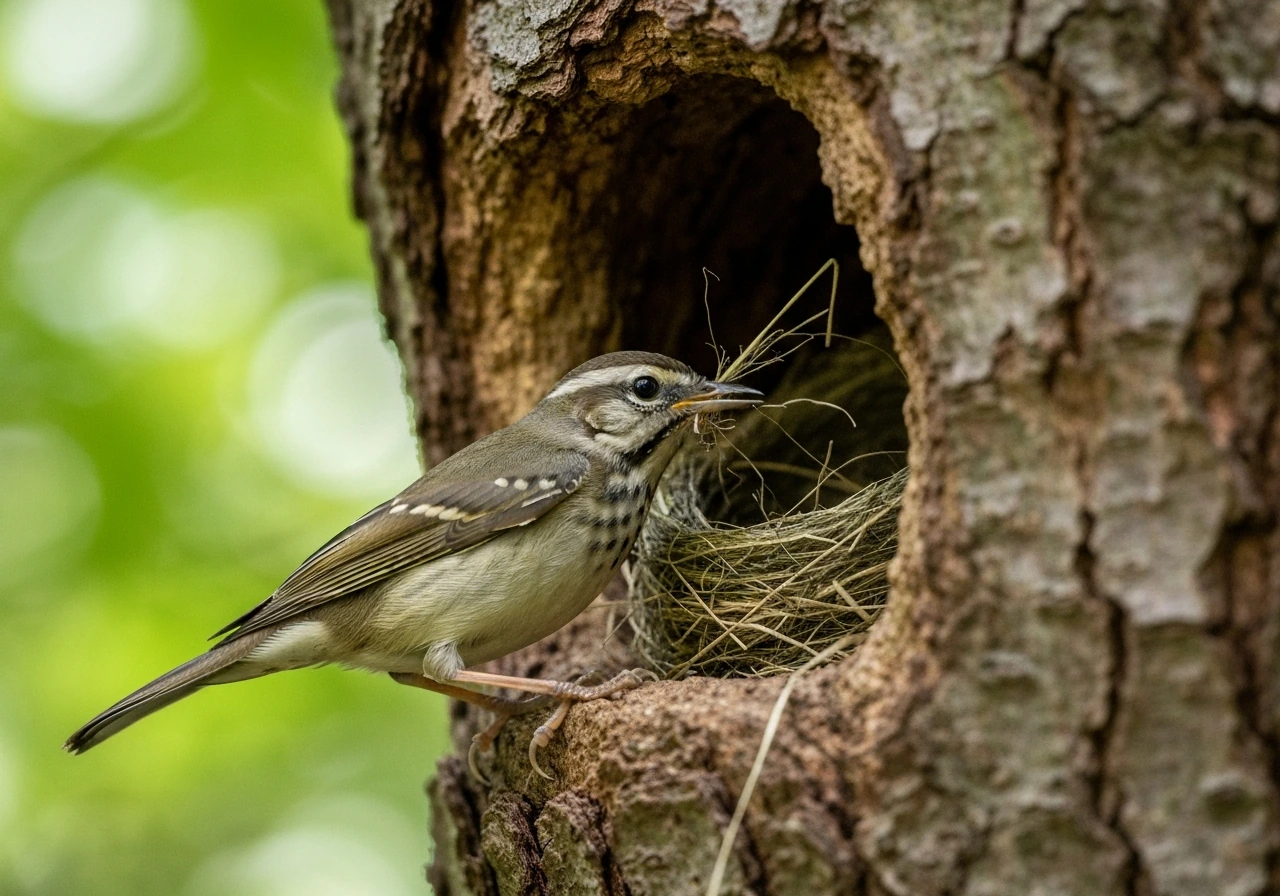
Yes, nest-building in birds is primarily instinctive. Birds are born with a genetic blueprint that drives them to build nests at specific times of year, in specific locations, using species-typical materials and structures. If you are wondering about timing, the speed depends on the species and nest materials, but some birds can assemble a nest surprisingly quickly build nests. A house wren doesn't need to be taught to stuff a cavity with twigs, and an American robin doesn't learn from its parents how to cup mud into a nest bowl. That drive is hardwired. But instinct doesn't tell the whole story: birds also learn from experience, adapt to local conditions, and refine their technique over multiple nesting seasons. So the honest answer is that nest-building is mostly instinct with a real layer of learned skill on top.
Is a Bird Building a Nest an Instinct? What to Do

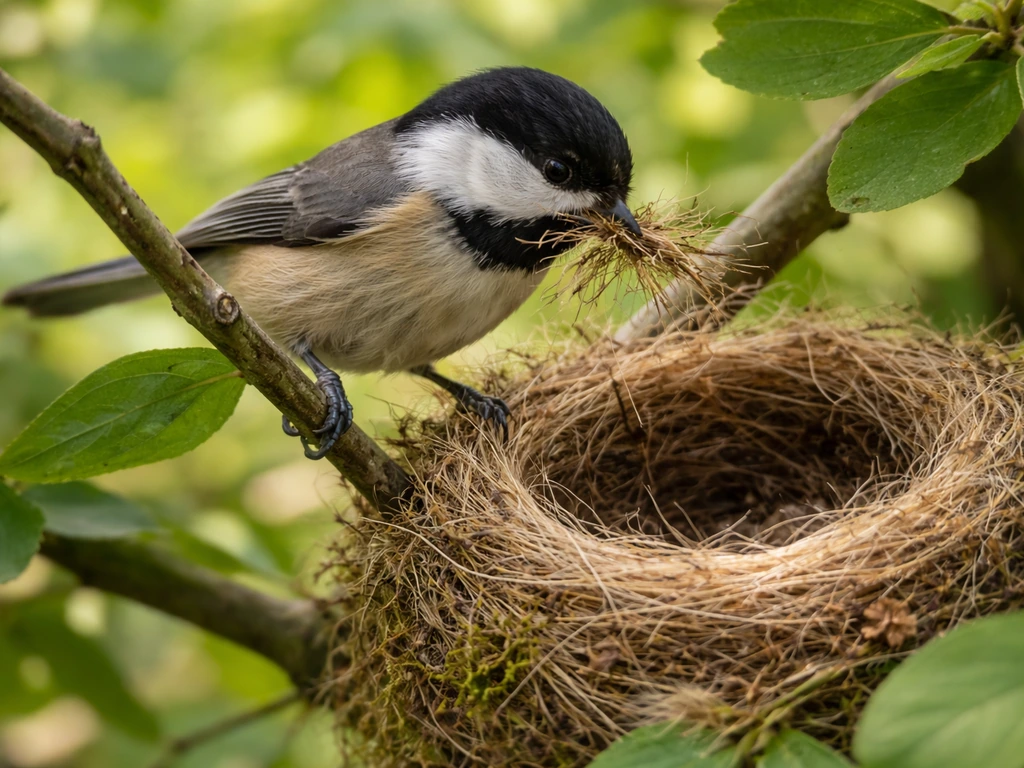
Bird nesting behavior: instinct vs. learning
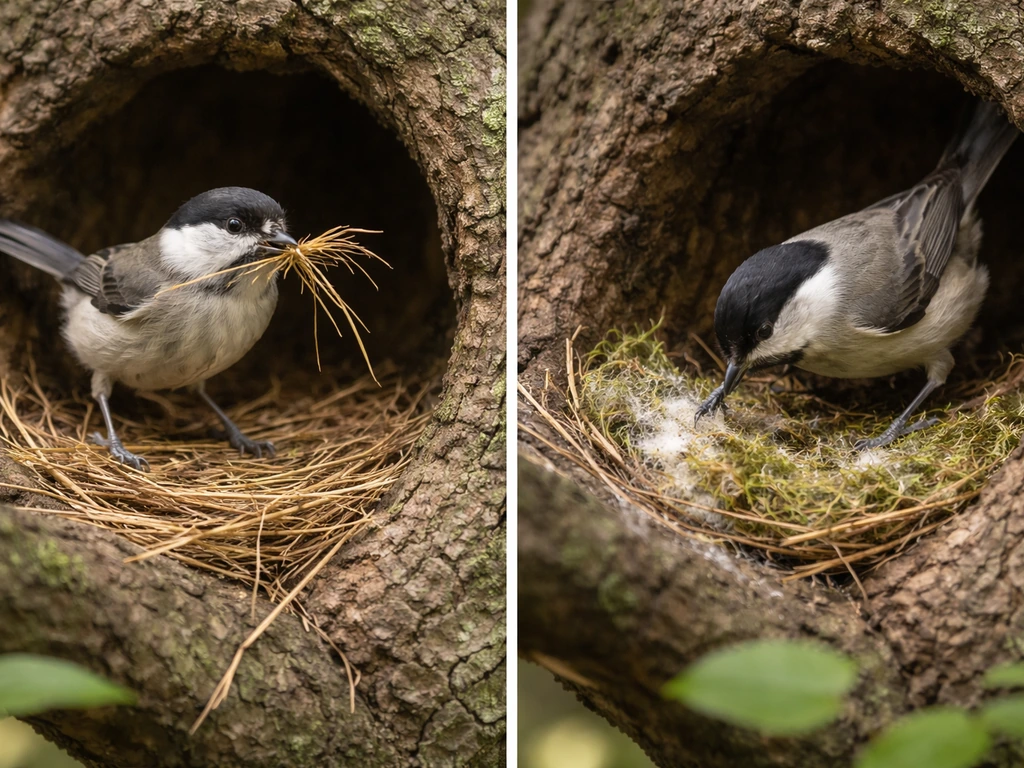
Think of instinct as the framework and learning as the finishing work. A first-year bird will attempt to build a species-typical nest even if it has never seen one built before. The general shape, placement preference, and core materials are genetically encoded. Studies with weaver birds raised in isolation still attempted to weave nests in the species-typical pattern, which is about as clean a demonstration of hardwired behavior as you can get. Yes, while nest-building often looks instinctive, researchers also document learning and experience shaping details is a bird building a nest a learned behavior.
Where learning comes in is at the edges of that blueprint. An experienced bird tends to build a tighter, better-insulated nest than a first-timer. Birds adjust material selection based on what's locally available, and they respond to environmental feedback, such as which nest sites hold up in wind and which get raided by predators. Over multiple seasons, individuals improve. This is why the question of whether nest-building is a learned behavior deserves its own full treatment alongside this one: both things are true, they just operate at different levels.
The practical takeaway for you as an observer is this: when you see a bird building a nest, the basic behavior itself is normal and species-typical. You don't need to worry that something is wrong just because a bird is constructing a nest in an unexpected spot. What matters is whether the behavior fits the species, the season, and the location, and whether anything around the nest is causing visible stress.
How to tell if what you're seeing is normal, instinctive nest-building
The clearest sign that nest-building is proceeding normally is that it matches the species-typical pattern. Here's what to check when you spot a bird actively constructing:
- Materials match the species: robins use mud and grass; house sparrows stuff nests with coarse grass and feathers; barn swallows plaster mud pellets cup-shaped under eaves; hummingbirds bind tiny cups with spider silk. Seeing the right materials for the bird you're watching is a green light.
- Placement fits the species: ground-nesters like killdeer scrape bare soil or gravel, tree cavity nesters like chickadees seek openings 4 to 30 feet up, and cup nesters like song sparrows tuck nests low in dense shrubs. Mismatched placement can indicate habitat pressure.
- Timing is right for the season: most North American songbirds begin nesting from late March through July. Seeing nest construction in this window is entirely expected. Out-of-season building (late fall, for example) is worth noting.
- The bird is making repeated trips: a bird carrying material back and forth in a focused, purposeful pattern is actively building. A bird that picks up material and drops it, or makes only a few scattered trips, may be exploring rather than committed to a nest site.
- The bird appears calm: alert but not frantic. A bird that is constantly alarm-calling, abandoning the site, or acting erratically while trying to build may be under pressure from predators or human disturbance.
If you want to confirm the species, take a photo of the bird itself and the nest structure. Note the nest's height above ground, its shape (cup, cavity, platform, pendant), approximate diameter (palm-sized is roughly 3 to 4 inches; dinner-plate sized is more like 8 to 12 inches), and the dominant materials. Those four data points will get you most of the way to a confident ID using a field guide or a resource like Cornell Lab's All About Birds.
Why birds build: breeding, territory, and mate attraction
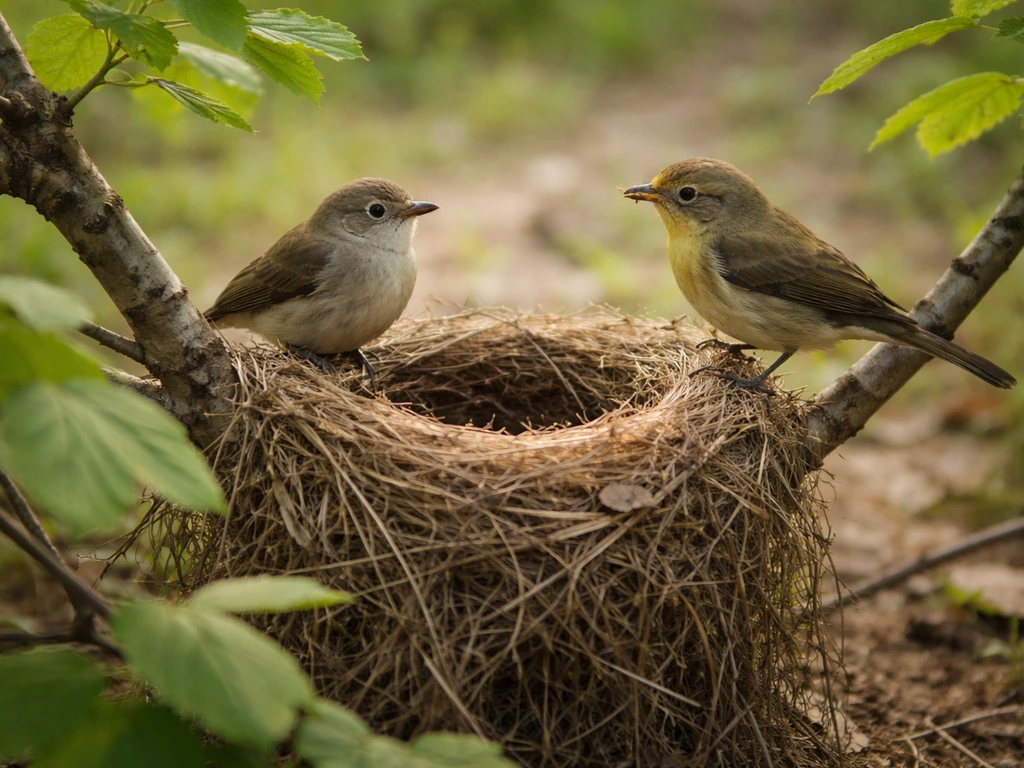
The core driver behind nest-building is reproduction. Nests are not homes in the way we think of them. They are incubation and brooding structures, built specifically to hold eggs and protect young chicks long enough to fledge. Once the young leave, most birds abandon the nest entirely. Some species will reuse the same site for a second or third brood within a single season, but even then, they often add fresh material or rebuild partially.
Nest-building also plays a role in mate attraction and pair bonding. In some species, particularly among wrens and weaverbirds, males build multiple partial or complete nests as a display to attract females. The female inspects them and selects a mate partly based on nest quality. So if you see a male bird busily constructing without a female obviously present, that's not unusual at all. It's part of the courtship sequence.
Territory is a related factor. Active nest-building signals to competitors that a territory is claimed and occupied. This is why you'll often see birds building early in the season before eggs are laid, sometimes weeks before actual egg-laying begins. If you're curious about the full 'why' behind nest construction beyond the instinct question, that's a topic worth exploring in its own right.
When nest-building seems 'off': stress, habitat changes, and human interference
Most of the time, a bird building a nest near your home is doing exactly what it should be doing. But there are situations where the behavior signals something worth paying attention to.
Signs that something may be wrong
- Repeated nest abandonment: if a bird starts a nest, leaves, starts again in a different spot nearby, and keeps cycling, it may be reacting to a predator in the area (snake, cat, or corvid) or to human disturbance near the site.
- Nest built in a very exposed or unusual location: birds under habitat pressure due to development, vegetation loss, or displacement sometimes attempt to nest in unsuitable spots, like on the ground in an open lawn, on a flat rooftop, or in a potted plant on a busy porch. This is a habitat availability signal, not random behavior.
- Out-of-season construction: a bird attempting to build in October or November in a temperate climate may be responding to an unusual warm spell or hormonal disruption. It's rare but not unheard of.
- Frantic, incomplete building with constant alarm calls: this usually points to an active predator threat nearby. Scan for cats, crows, or snakes in the area.
- Nest material removal by another bird: house sparrows and European starlings are invasive competitors known to evict native species and remove nesting material from boxes and cavities. If you see this, the bird being displaced is the one in trouble, not the one doing the displacing.
Human interference is one of the most common causes of disrupted nesting. Mowing too close to a ground nest, trimming a hedge with an active nest inside, or repeatedly approaching to check on a nest box can cause birds to abandon even after eggs have been laid. The instinct to nest is strong, but the instinct to flee a perceived threat is stronger. NestWatch advises that if a sitting bird does not leave on its own, you should not force it off the nest The instinct to flee a perceived threat is stronger..
What to do if you find an active nest
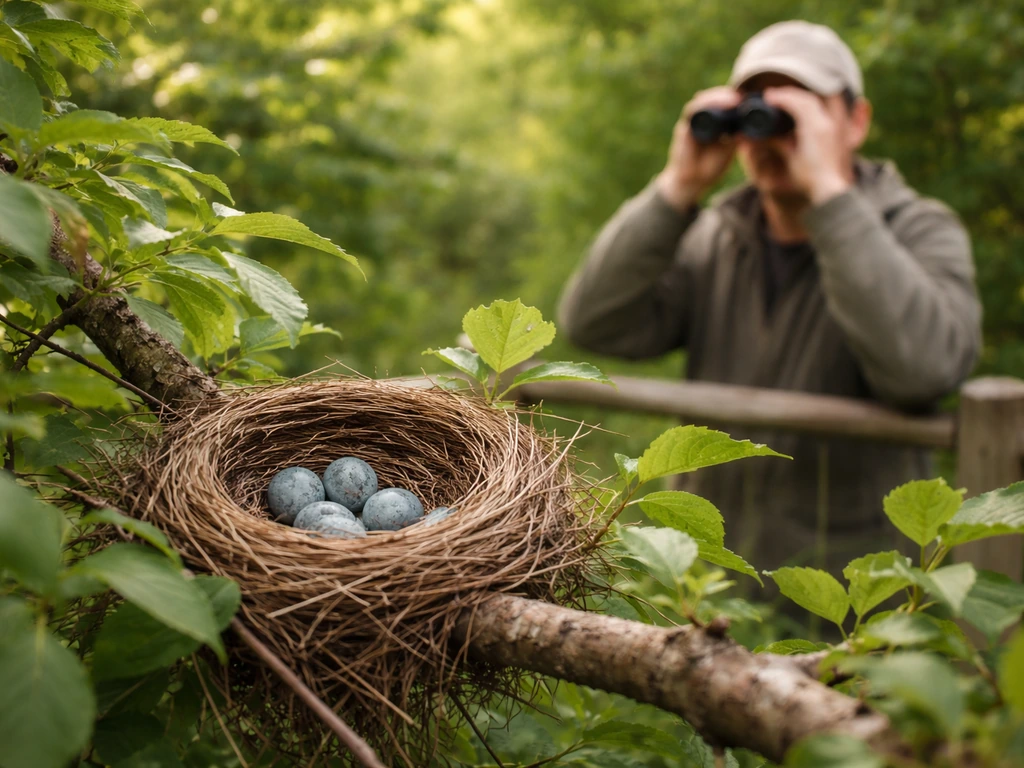
Finding a nest under construction is exciting, and the most useful thing you can do for the bird is observe from a comfortable distance and stay out of the way. How long it takes depends on the species and the nesting conditions, but many birds complete nest building fairly quickly within a nesting cycle how long does it take to build a bird nest. Here's a practical approach:
- Establish a safe observation distance: for most songbirds, 10 to 15 feet is close enough to watch with binoculars without causing the bird to flush. For ground-nesters like killdeer or shorebirds, give 20 to 30 feet of clearance. If the bird stops what it's doing and watches you, you're too close.
- Take a photo or quick notes: record the nest's location (height, substrate, compass direction it faces), approximate size, the materials you can see, and the species of bird if you can ID it. This is genuinely useful for tracking nesting success and for citizen science platforms like Cornell Lab's NestWatch.
- Check at low-traffic times: if you need to monitor a nest box, do so briefly and only when the adult has left on its own. NestWatch guidance is clear: do not force a sitting bird off the nest.
- Protect from known hazards: if the nest is in a location where a cat or other predator is a real and immediate risk, a physical barrier like a simple wire cage around the base of a nest box pole can help. Don't add anything that touches or shades the nest itself.
- Mark the area if needed: if the nest is in a spot that could be accidentally disturbed (like a low shrub near a path you regularly use), place a small visual marker nearby, not on the nest, to remind yourself and others to give it space.
One thing worth understanding is that different nest-building stages call for different levels of vigilance. A bird still gathering materials is in the earliest phase, before eggs are present. A bird incubating eggs is more sensitive to disturbance. A nest with newly hatched chicks is at its most critical point. The further along the nesting cycle, the more important it is to minimize any activity near the site.
Legal rules, ethical do's and don'ts, and next-step troubleshooting
In the United States, most wild bird nests, eggs, and chicks are protected under the Migratory Bird Treaty Act (MBTA). This is federal law, and it applies to the vast majority of native songbirds, raptors, and waterbirds. The practical meaning: you cannot legally remove, relocate, or destroy an active nest (one containing eggs or chicks) without a federal permit. Even an inactive nest of a migratory species is technically protected, though enforcement focuses on active nests. In Canada, the Migratory Birds Convention Act provides similar protection. In the UK, the Wildlife and Countryside Act 1981 protects all wild bird nests in use or being built.
The only birds not covered by the MBTA in the US are non-native invasive species: European starlings, house sparrows, and pigeons (rock doves). If you're managing a nest box program and one of these species has taken over a box, removal of their nests is legally permissible and often recommended to protect native cavity-nesting species.
What you should do
- Observe without disturbing: watch from a distance with binoculars and take notes or photos.
- Leave active nests in place: if eggs or chicks are present, the nest must stay where it is.
- Contact a licensed wildlife rehabilitator if you find an injured adult near a nest or a chick that has clearly fallen and cannot be returned.
- Use NestWatch or a similar citizen science platform to log what you're seeing: it contributes to real conservation data.
- If a nest is in a genuinely dangerous or impossible location (inside machinery, in a location that will definitely be destroyed), contact your local wildlife agency or a licensed wildlife professional before doing anything.
What you should not do
- Do not relocate an active nest yourself, even a short distance. Parent birds use location cues to find their nest and may not recognize it if moved.
- Do not remove eggs to 'protect' them. Eggs require the parent bird's body heat and precise incubation conditions.
- Do not assume a nest is abandoned just because you don't see the adult. Many species leave the nest for hours at a time during incubation.
- Do not trim vegetation, mow, or do construction work directly around an active nest. Wait until the nest is empty and the young have fledged.
- Do not handle chicks unnecessarily: the myth that human scent causes abandonment is false, but handling chicks does cause stress and increases the risk of injury.
Quick checklist for today
- Identify the bird species if you can: photo, field marks, and nest materials.
- Note the nesting stage: material gathering, nest construction, egg-laying, incubation, or chick-rearing.
- Check the calendar: are you in the core nesting window for your region (March through July in most of North America)?
- Assess any active threats: predators, scheduled yard work, or construction near the site.
- Set a soft perimeter: use string, stakes, or simple markers to keep pets, children, and foot traffic away.
- Log it: snap a photo and note the date, location, and species. Submit to NestWatch if it's a North American species.
- Check back from a distance every few days to track progress, and plan to leave the nest structure in place until you're confident it's inactive.
The bird you're watching knows what it's doing. That nest-building drive is one of the most reliable, ancient behaviors in the animal world. Your job is mostly to get out of the way, observe carefully, and step in only when there's a real problem that a human can actually fix. Most of the time, the best thing you can do is exactly nothing, and let instinct do its work.
FAQ
If a bird builds a nest in an unusual place, does that mean the nest-building is not instinct?
Not necessarily. Birds can choose atypical locations when local conditions change (a safer cavity is available, predators are frequent elsewhere, or weather patterns shift). What matters is whether the structure and materials still match what that species typically uses and whether the bird shows distress or repeated abandonment attempts.
Can a bird reuse an old nest, and is that still considered instinct?
Yes. Many species reuse sites, and some rebuild on top of older material or add fresh lining each season. Reuse can look like a learned tweak (better materials, better placement), but the overall decision to use the same site or rebuild is still largely driven by species-typical behavior.
What if the bird keeps abandoning the nest while building, is it abnormal?
Abandonment can happen when the attempt is repeatedly blocked by disturbance, predator pressure, or unsuitable site conditions (poor weather exposure, unstable ledge, or access blocked). If you see frequent stop-and-start behavior right after human activity, reduce interference and keep distance rather than assuming something is wrong with the bird’s instinct.
How can I tell whether a bird is just collecting materials or actually building for eggs?
Material gathering usually involves irregular trips and adding small amounts. Incubation is signaled by longer periods of sitting tight on the nest, reduced carrying, and less time spent away. The shift from frequent hauling to steady presence is the clearest practical indicator that eggs are likely involved.
Is it okay to move a nest box if a bird starts building inside it?
In most cases, no. If it is an active nest, moving can trigger abandonment and, in many places, may be illegal without permits. If the location is truly unsafe (construction risk, drainage hazard), wait until the nesting cycle is finished, then adjust the box position.
Should I remove competing nests or “failed” nests once the bird leaves?
Be careful with timing and location. Even nests that seem unused may still be legally protected if they are from migratory species in the US or comparable protected species in other countries. If you want to tidy up, wait until the birds have clearly finished and confirm local rules before removal.
When is nest-building actually a sign of courtship rather than just raising chicks?
Courtship construction is most likely when you see a bird building (often a male) where eggs are not yet present and there is a mate selection context (a nearby female inspecting structures or the builder making repeated displays). Some species build partial structures as part of mate attraction even if the final nesting attempt happens later.
If I see a nest near a sidewalk or driveway, what’s the lowest-impact way to handle it?
Create a quiet exclusion zone without touching the nest. Use temporary visual barriers or keep people and pets away, and avoid mowing, trimming, or landscaping within the nest area. The goal is to reduce disturbance during material gathering, incubation, and chick-rearing, which are the most sensitive stages.
Does providing nesting materials near your home change whether nest-building is instinct?
It can change the outcome, but it does not replace instinct. Birds still follow species-typical placement and architecture patterns, and they will decide whether the offered materials fit their needs. If you choose to provide materials, only add those that are natural for local species (avoid harmful or treated items) and keep placement consistent with the species you want to attract.
Are there any times when you should call wildlife or local authorities about an active nest?
Yes, if there is a clear safety issue you cannot reasonably fix (entanglement in fencing, exposure to ongoing construction, or a nest repeatedly failing due to chronic disturbance). Also call if a bird appears injured or trapped. Otherwise, the recommended default is observation from a distance and avoiding interference.