
Bird nests show up in more places than most people expect, and the best way to find one is to stop looking for the nest itself and start watching the birds instead. To learn the exact steps, follow the guidance on locating a nest by observing bird behavior instead of searching blindly how to find a bird nest.
Where to Find a Bird Nest: Ethical, Step-by-Step Guide

Maya Bennett
7 May 2026
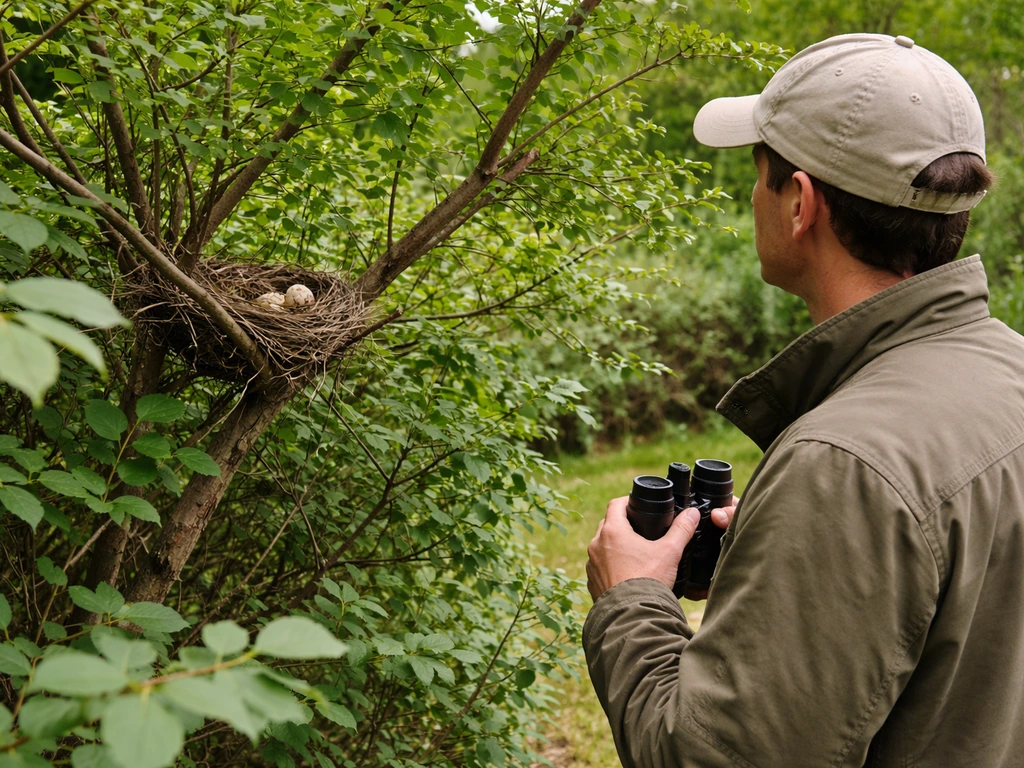
Alarm calls, food-carrying flights, and persistent perching near one spot will lead you to a nest faster than scanning every shrub in the yard. Once you know what behavioral cues to follow, and which habitat types to check by season, you can locate nests reliably without getting close enough to cause harm. To display bird nests safely and responsibly, focus on observation tools like binoculars and keep a respectful distance from active sites.
Best places to check first (by habitat and season)
Timing matters as much as location. Most North American songbirds begin nesting between late March and early June, with peak activity in May. Right now, in early May, nesting is in full swing across most of the continent, which makes this one of the best possible times to look. Here is where to focus your attention depending on where you are.
| Habitat | What to check | Peak season |
|---|---|---|
| Backyard shrubs and hedges | Dense deciduous shrubs 3–8 ft high, especially near a fence or wall | April–June |
| Deciduous and mixed forest | Branch forks 10–30 ft up, canopy edges, understory tangles | April–July |
| Coniferous forest / evergreens | Against the trunk near a limb junction, protected by foliage | March–June |
| Open fields and meadows | Low grass tussocks, ground depressions, fence post cavities | May–July |
| Wetlands and pond edges | Cattail clumps, reedy vegetation, low overhanging branches | May–July |
| Human structures | Eaves, gutters, porch ledges, barn rafters, nest boxes | March–July |
| Cliff faces and open ground | Rocky outcrops, sandy banks, gravel bars near water | April–June |
In a typical backyard, start at eye level and work outward. Robins, cardinals, and song sparrows favor shrubs and low tree crotches. Mourning doves build notoriously flimsy platform nests in the horizontal crook of a tree, often surprisingly low (5–10 ft). House sparrows and house finches will use nearly any cavity or sheltered ledge on a building. If you have a brush pile or hedgerow, check it carefully because it is some of the most productive nesting habitat you can have.
What nesting behavior looks like
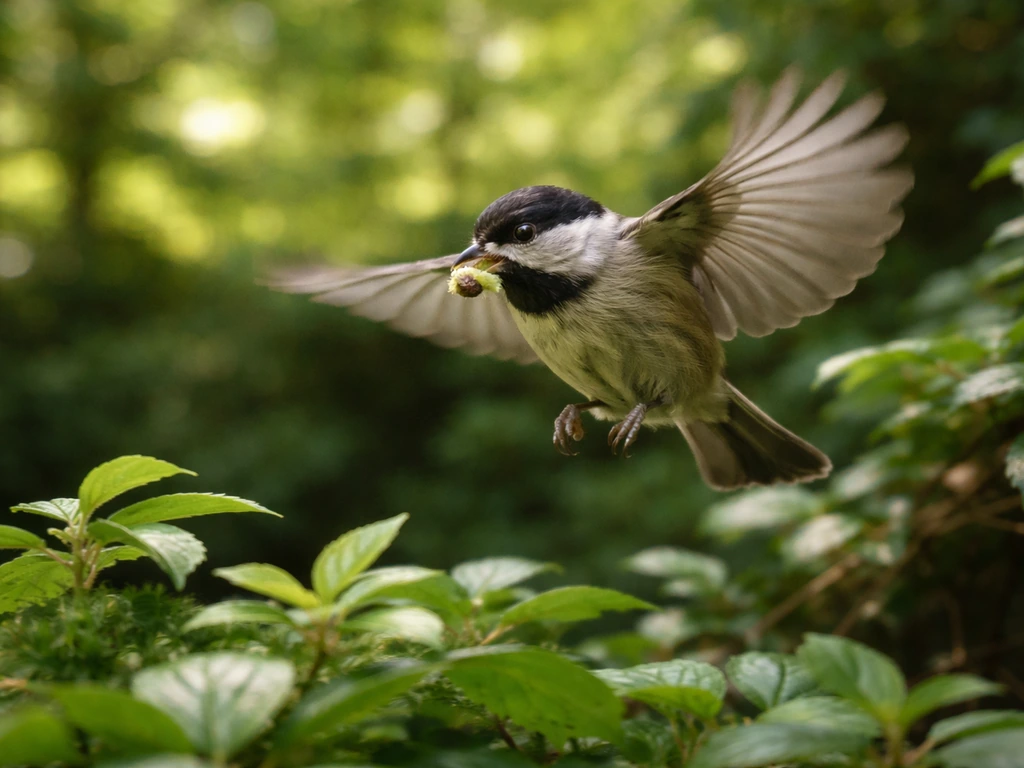
Birds give away their nests constantly, as long as you know what to look for. The most reliable signals are behavioral, not structural. Watch for these cues from a comfortable distance, ideally with binoculars. Learning to identify a bird nest starts with observing behavior from a safe distance before you focus on structure binoculars.
- Food delivery flights: A bird repeatedly carrying insects, caterpillars, or berries in its bill and disappearing into the same spot almost always means active nestlings nearby. Watch for 5–10 minutes from a stationary position.
- Alarm calls: Sharp, repeated chip notes or scolding calls directed at you (or your pet) are a strong sign you are too close to a nest or fledgling. The bird is not going away because it cannot.
- Persistent perching: Adults that repeatedly return to the same branch, ledge, or cavity entrance are either incubating eggs or guarding young. Note the exact spot and watch patiently.
- Nest material carrying: Seeing a bird fly with a beak full of grass, bark strips, mud, spider silk, or feathers tells you a nest is being built right now. Follow the flight path carefully.
- Territorial aggression: Males singing from a fixed perch or actively chasing other birds out of a small area are advertising a territory that almost certainly contains a nest or prospective nest site.
- Begging calls: A high-pitched, insistent cheeping coming from dense vegetation often means fledglings are present, which puts an active or recently vacated nest very close by.
NestWatch recommends using alarm cries of adults and begging calls of young birds as active location tools, not just warning signs to back away from. Let the sound guide you to the general area, then use binoculars from at least 10–15 feet away to confirm. Do not push closer just because you cannot see the nest yet.
Reading the nest itself: structure and materials
Once you have found a candidate site, the nest's architecture and building materials tell you a lot about who built it, which helps you confirm the species and understand what protection it may need. Cornell Lab's Bird Academy identifies four broad nest design categories used by North American birds.
| Nest type | What it looks like | Common builders |
|---|---|---|
| Cup | Bowl-shaped, often woven, 2–5 inches across; lined with soft material | Robins, warblers, sparrows, finches |
| Platform / shelf | Flat or loosely piled sticks; little or no inner cup | Mourning dove, osprey, herons |
| Cavity | Hole in tree, post, or structure; nest inside is a cup of soft material | Woodpeckers, bluebirds, chickadees, wrens |
| Scrape | Shallow depression in ground with little or no added material; sometimes lined with pebbles or feathers | Killdeer, plovers, some terns and gulls |
| Woven / pendulous | Flask- or sock-shaped, hanging from a branch tip | Baltimore oriole, bushtit |
Material choices narrow the species list further. Mud-reinforced cups point to robins or barn swallows. Lichen on the exterior suggests a hummingbird or wood pewee nest. Spider silk holding a tiny cup to a branch tip usually means a hummingbird. Strips of bark and plant fiber twisted together in a hanging pouch indicate an oriole. Grass, hair, and fine rootlets lining a deep cup fit a wide range of sparrows and finches. You do not need to touch the nest to assess these things; binoculars at a short distance are enough for a solid read.
Nesting locations broken down by site type
Trees (open canopy and forest edge)
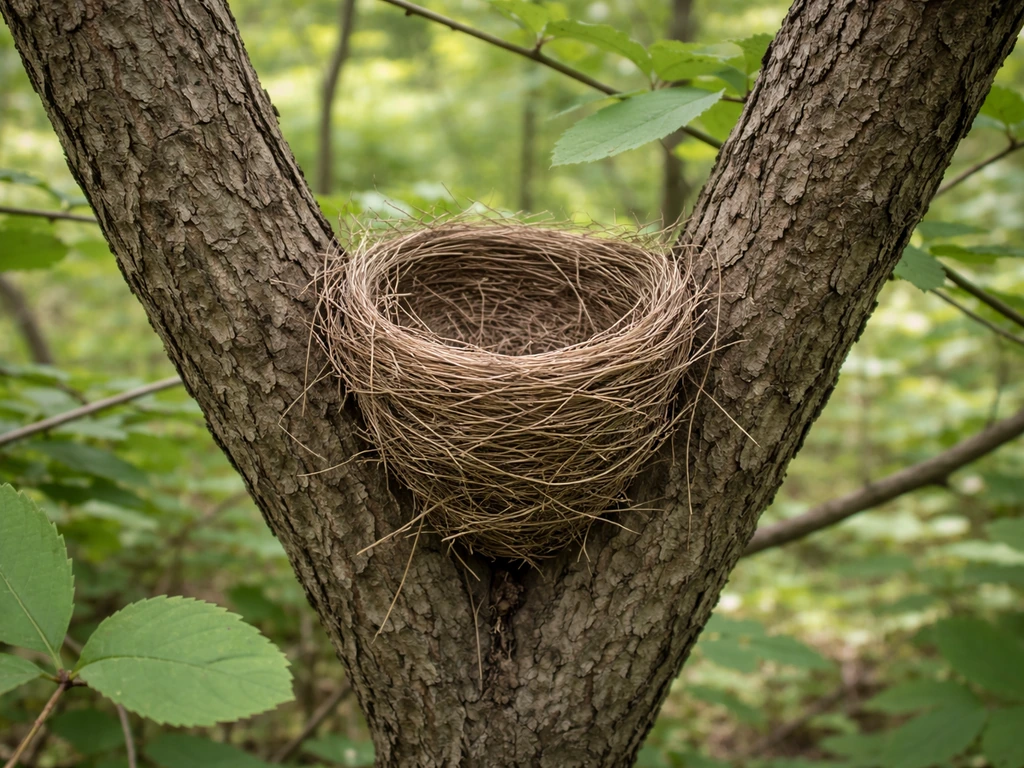
Look at branch forks and crotches rather than scanning the entire canopy. Most songbird cup nests are tucked into a Y-shaped junction for stability, often on the south or east-facing side of the tree. In leafless early spring, old nests from the previous year become visible as dark tangles against the sky. These are not active, but they tell you a species used that tree before and may return. New nests are being built right now, so watch for fresh material at branch junctions. In dense forest, warblers and vireos nest surprisingly low (4–15 ft) in understory trees, while larger species like red-tailed hawks build bulky stick platforms 30–70 ft up near the forest edge.
Shrubs, hedges, and dense undergrowth
This is the most productive zone to search in a typical backyard. Cardinals, catbirds, mockingbirds, and song sparrows all favor dense shrubs between 3 and 8 feet tall. Look for a slight thickening or tangle in the interior of the plant, especially at a junction of multiple branches. You will rarely see the nest from above; crouch down and look up through the shrub. A white stripe of bird droppings on leaves below a nest site is a useful giveaway once nestlings are present. After nestlings are present, you can identify them by their begging calls and the size and condition of their bodies in the nest once nestlings are present.
Cavities (natural and man-made)
A cavity nest is almost invisible from the outside. Look for a round or oval hole in a dead tree (snag), a fence post, or a nest box. Then watch the entrance for several minutes. An adult entering or exiting confirms activity. Chickadees, nuthatches, wrens, bluebirds, and tree swallows all use cavities. Woodpeckers excavate their own holes in dead wood; other species use abandoned woodpecker cavities or purpose-built boxes. If a nest box in your yard looks occupied, watch the entrance hole from 15+ feet away rather than opening the box.
Ground nests
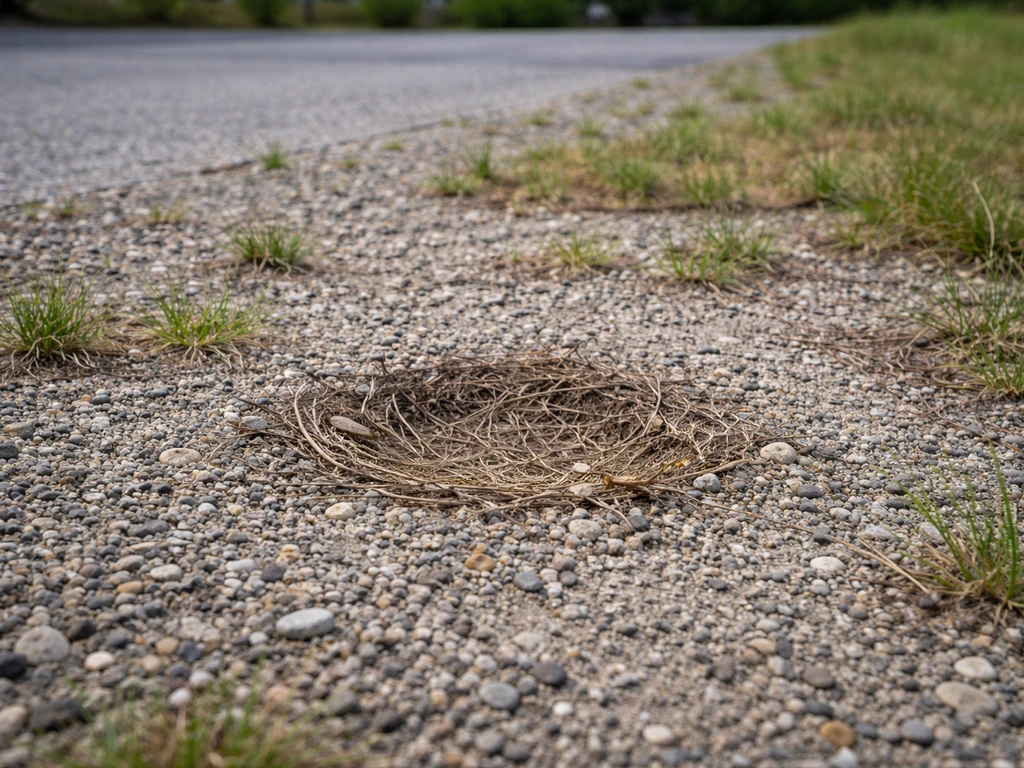
Ground nesters are easy to walk right past and easy to accidentally harm. Killdeer nest on open gravel, sometimes in a driveway or parking lot, with almost no nest material at all. Ovenbirds build a domed nest on the forest floor. Meadowlarks and savannah sparrows nest in grass tussocks. If you startle a bird from the ground and it runs along the ground with a wing dragging (the broken-wing display), you are within a few feet of a scrape nest and you should back up immediately and give the area a wide berth.
Wetland and waterside sites
Red-winged blackbirds weave cup nests into upright cattail stalks 1–3 feet above the water. Marsh wrens do the same, often building multiple dummy nests in the same territory. Great blue herons and egrets build stick platform colonies (rookeries) in tall trees or shrubs right at the water's edge, sometimes with dozens of nests visible from a distance. Ducks often nest in dense marsh vegetation at or near water level. Scan from the shore with binoculars rather than wading in.
Human structures (buildings, eaves, and bridges)
Robins, barn swallows, and phoebes plaster cup nests of mud and plant material onto ledges, beams, and the tops of outdoor light fixtures. House sparrows and starlings pack loose material into any gap or vent opening. Chimney swifts nest inside chimneys. Cliff swallows build mud jug nests in colonies under bridges and eave overhangs. If you suspect a nest in a hard-to-see spot (inside a gutter, above a porch light), watch adult birds arriving and departing repeatedly before doing anything. Do not probe or reach into the spot.
Legal and safety basics you need to know before you look
In the United States, the Migratory Bird Treaty Act makes it illegal to take, possess, or destroy migratory birds, their nests, or their eggs. Specifically, destroying a nest that contains eggs or chicks is a federal offense. In the U. S.
, most bird nests are protected under the Migratory Bird Treaty Act, making it illegal to destroy a nest that contains eggs or chicks or otherwise contains young birds dependent on the nest destroying a nest that contains eggs or chicks. Permits for nest removal are issued by the U.
S. Fish and Wildlife Service only when a nest poses a genuine human health or safety problem, not for convenience. In Canada, the Migratory Birds Convention Act and the Migratory Birds Regulations impose similar protections, and provinces may add their own requirements. The bottom line: if you find an active nest on your property, you are generally not allowed to move or destroy it while eggs or chicks are present, regardless of where it is located.
Some species carry additional protection layers. Piping Plovers in Canada, for example, are protected under specific guidance that makes it an offence to damage, destroy, remove, or disturb a nest during the full breeding season from May 1 through August 15. If you are near known habitat for rare or threatened species, check with your state or provincial wildlife agency before approaching any nest site.
From a safety standpoint: keep pets away from nest areas. Dogs and cats actively disturb and kill nesting birds and fledglings even when the owner thinks the pet is just sniffing around. CDC guidance for healthy pet and wildlife interactions specifically flags pets as a disturbance risk around vulnerable young animals. Keep dogs leashed in areas where ground-nesting birds are active, and keep cats indoors during the nesting season.
What to do when you find an active nest
Finding a nest is exciting, and the instinct to get a closer look is completely natural. Here is how to do it responsibly. If you are still searching, focus on bird behavior and cues from a distance so you can narrow down where the nest is without disturbing the area how to help a bird find its nest.
- Stop where you are. Note the exact location (tree species, height, compass direction of nest placement) before moving any closer.
- Watch from a distance first. Spend at least 5–10 minutes observing from 10–20 feet away with binoculars. Confirm adult activity before concluding the nest is active. NestWatch recommends waiting for the adult to leave the nest on its own rather than flushing it off.
- Take photos without flash if possible. A single, flash-free photo from a respectful distance is all you need for documentation. If light is low and flash is unavoidable, NestWatch advises taking only one photo and checking that no predators have been attracted to the area first.
- Record your observations. Note the date, time, number of adults seen, nest materials visible, approximate height, and any eggs or chick sounds. A short written note made on the spot is far more reliable than memory later.
- Report it if you want to contribute. NestWatch (nestwatch.org) is Cornell Lab of Ornithology's citizen science platform for nest monitoring. Submitting your observations there puts your data to scientific use while the protocol keeps disturbance to a minimum.
- Leave the area promptly. Do not linger. Prolonged human presence near a nest elevates stress in adult birds and can attract predators to the site.
- Mark it mentally, not physically. Do not tie flagging tape or otherwise mark a nest tree in ways that draw human or animal attention to the site.
- If the nest is on your property and causing a conflict, contact your state or provincial wildlife agency before taking any action. They can advise on legal options, and in genuine safety cases, can help facilitate the permit process for nest removal.
If you find what looks like an abandoned nest, or a nest with eggs that have not hatched after a long time, there are specific steps for assessing that situation. Similarly, if a fledgling is on the ground near a nest, knowing whether the nest is still active changes everything about how you should respond. Both of those situations are more nuanced than they look and deserve their own careful approach.
A quick seasonal checklist to act on right now
Since it is early May and nesting is peaking across most of North America, here is a practical checklist you can use today.
- Walk your yard slowly in the early morning (6–9 a.m.) when adult feeding trips are most frequent and easiest to observe.
- Check every dense shrub, especially those with new leaf coverage that would hide a cup nest from above.
- Look at the junctions of tree limbs at 5–25 feet for cup and platform nests, using binoculars from the ground.
- Inspect building ledges, porch lights, and eave corners for mud smears or plant fiber that indicate a swallow or robin nest in progress.
- Listen before you look: spend two minutes standing still with your eyes closed to pick up alarm calls, begging calls, or repeated chip notes that indicate a nest is nearby.
- Check any nest boxes or cavities in dead trees by watching the entrance for 5 minutes from a respectful distance.
- If you have a lawn or meadow edge, walk it slowly and watch your feet for scrape nests in short grass or bare soil.
- Keep a notepad or use a phone note to record location, date, nest type, and species if known. A field guide's nest section and a tool like the Merlin app can help with identification.
Once you have confirmed an active nest, the most important next step is deciding how to observe it over time without causing harm. That means understanding whether the nest is truly active versus abandoned, learning what the structural cues tell you about the species involved, and knowing how to help if something goes wrong, like a parent bird disappearing.
If you are unsure, focus on behavior like adults returning with food and young begging rather than just the nest appearance how to tell if a bird nest is active. If mom bird abandons the nest, the response depends on whether the eggs are still viable and what warning signs you see in the surrounding area a parent bird disappearing. Each of those follow-on situations has its own set of practical steps worth knowing before you need them.
FAQ
What should I do if I think the nest is abandoned, but I cannot confirm whether adults are still visiting?
Yes, but only after you can confirm it is inactive. If adults are still visiting (steady arrival and exit over several minutes), treat it as active even if eggs are hard to see. If you are unsure, keep distance and wait, because “quiet” can change quickly when parents are away briefly to feed or avoid predators.
How can I tell the difference between an old nest and a currently active one?
Do not rely on the nest structure alone. Empty-looking nests can persist after a failed attempt, and newly built nests can be hard to see. Use consistent behavioral evidence (adults returning with food, young begging sounds, or repeated activity at a cavity entrance) before you consider the site inactive.
If a parent bird disappears for a while, does that mean the nest is in trouble or abandoned?
Assume it is active unless you have evidence to the contrary, especially if the nest contains visible eggs or nestlings. When a parent disappears for long stretches, observe from a distance first, then increase your distance even more rather than moving in. If you notice chicks cooling, unusual bleeding, or repeated frantic adult behavior, contact local wildlife authorities for guidance.
What is the safest minimum distance to view a nest without disturbing birds?
Too-close checking is the most common mistake. Instead, use binoculars or zoom to read nest placement and materials, and confirm activity by watching from at least 10 to 15 feet away. If the bird changes behavior, leaves the area for longer periods, or shows distress, back off further.
What if I hear nestlings begging but I cannot locate the nest itself?
If you hear begging calls near a structure but cannot see the nest, focus on the adult’s behavior. Follow the adult’s predictable routes with binoculars, then check likely microhabitats nearby (same shrub interior, same cavity entrance, or same ledge). Do not “hunt” by poking gaps, gutters, or dense brush.
If a nest is blocking a driveway, vent, or doorway, can I move it or remove the nesting material?
In most cases, do not attempt to relocate nesting materials, even if you think it is your property. Moving a nest can be illegal and can also expose eggs or young to predators and temperature stress. The proper next step is to contact your local wildlife agency or a licensed wildlife rehabilitator if the nest blocks a doorway, walkway, or essential work.
How should I handle nests that are inside hard-to-reach places like chimneys or gutters?
If a nest is inside a building feature (chimney, gutter, vent, or porch light fixture), watch from outside and avoid opening access points. For occupied sites, use a professional such as a wildlife remover who works under wildlife guidance, because timing matters and repeated entry can cause abandonment.
What should I do if I find a ground nest while mowing or walking near the area?
For ground nesters, the key decision is whether the adult is showing a distraction display (running with a wing dragging) or repeatedly returning to the same spot. If you see that behavior, back up immediately, keep people and pets away, and avoid mowing or landscaping until the birds fledge or the area is confirmed safe.
A chick or fledgling is on the ground near the nest, should I pick it up?
Wait and observe rather than trying to “rescue” an apparent fledgling. Many young birds hop or flutter before they can fly well, and parents may be nearby. A good safety step is to keep distance, limit pets, and watch for adult feeding behavior from afar to judge whether the nest is still functioning.
If I want to monitor a nest for learning or photography, how do I do it without increasing risk to the birds?
Use a “monitor, don’t interfere” routine. Check the nest area only briefly, at consistent intervals, and stop if adults change to sustained alarm or fewer feeding trips. If you need to document, note dates, times, and behaviors (food delivery frequency, begging intensity) rather than taking the nest contents to verify activity.
Next Articles
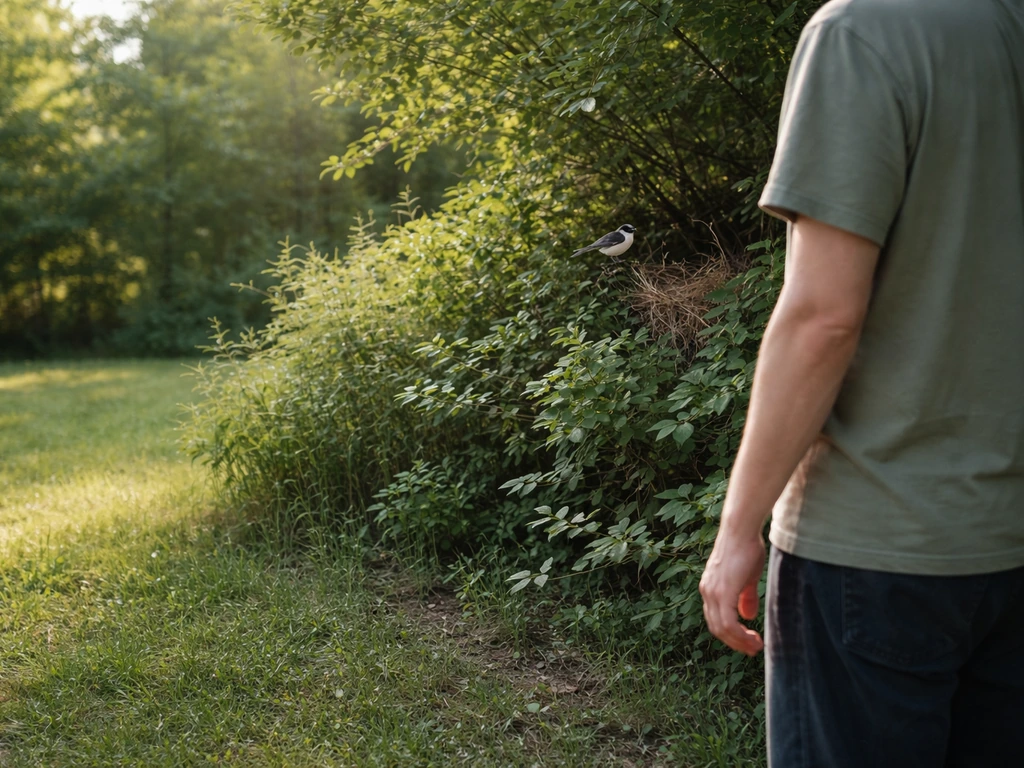
How to Help a Bird Find Its Nest Safely and Legally
Step by step guide on how to help a bird reunite with its nest safely and legally, without disturbing active nests.
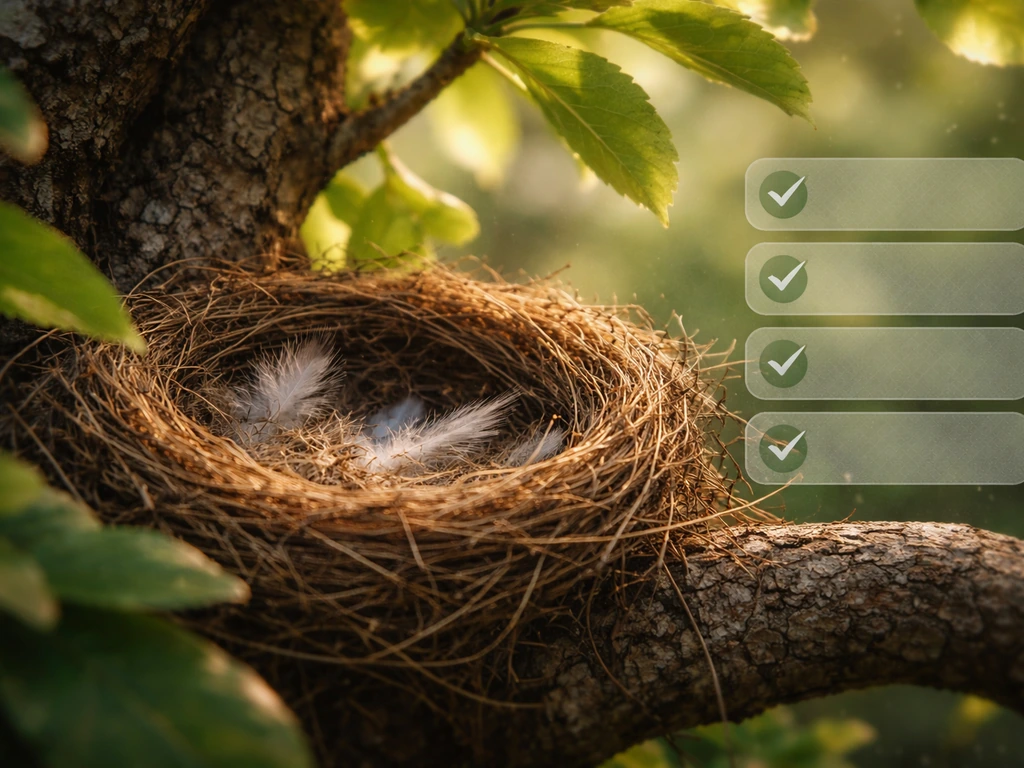
How to Know If a Bird Nest Is Abandoned: Checklist
Use a quick checklist to tell active vs abandoned nests, avoid common false signals, and know safe next steps.
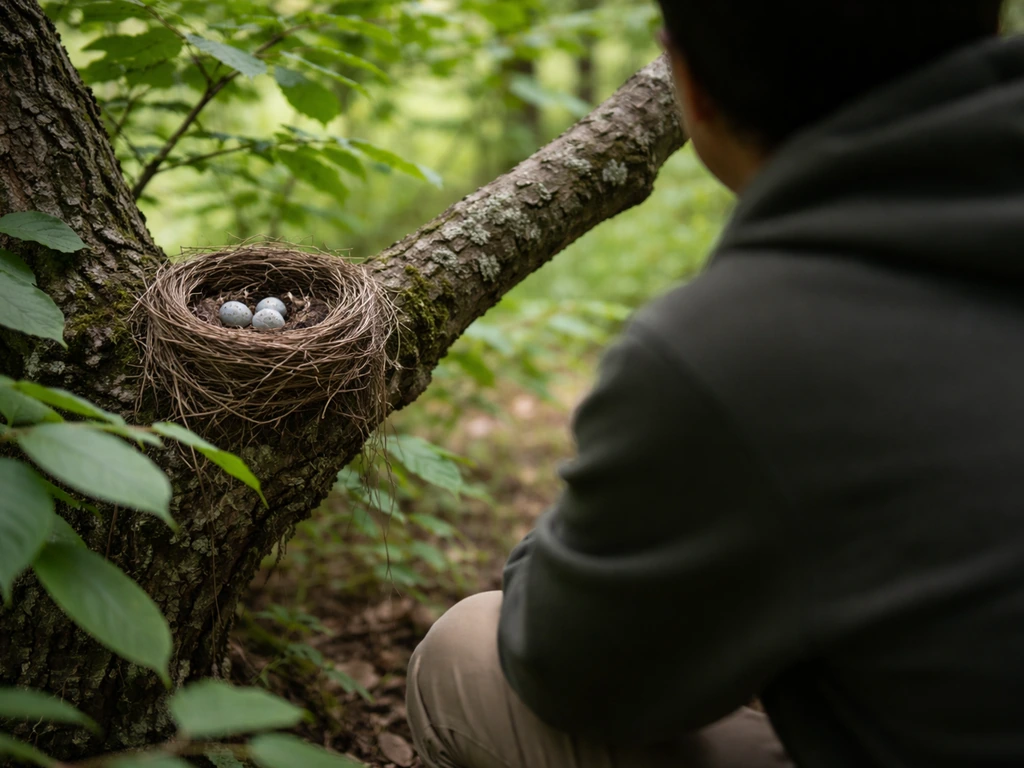
What to Do If Mom Bird Abandons the Nest: Triage and Steps
Triage steps to tell true abandonment from normal behavior, plus what to do for eggs or nestlings and when to call rehab