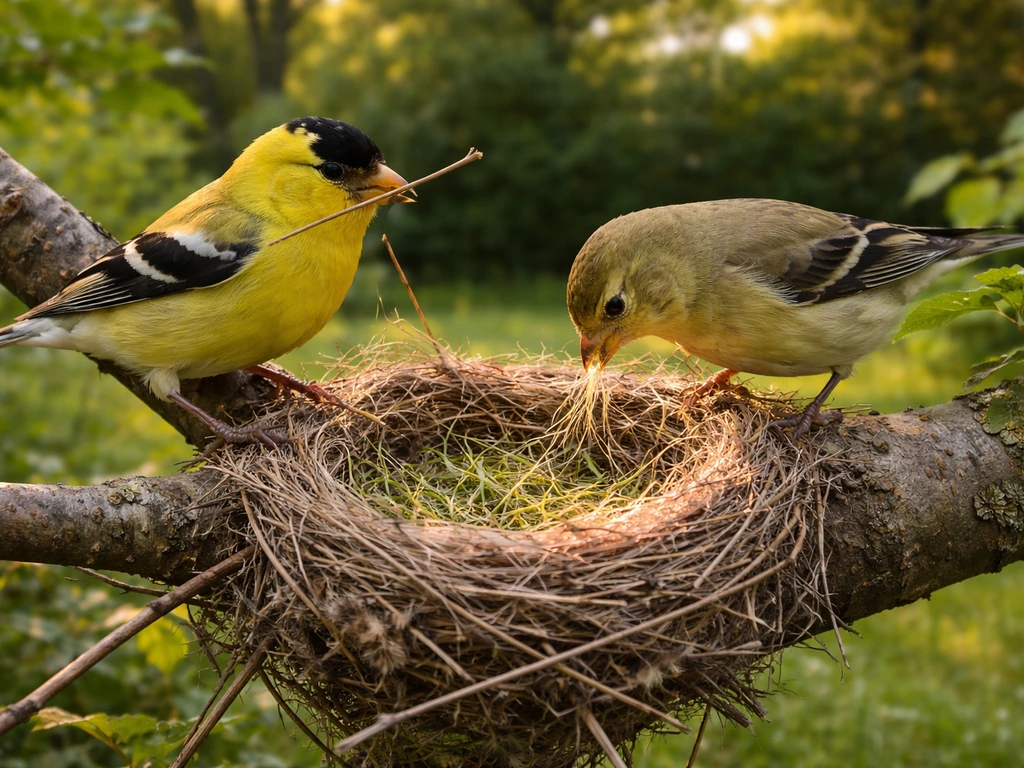
If a bird just built a nest on your porch, take a breath before doing anything. Whether you can move it, leave it, or block it depends entirely on one thing: whether there are eggs or chicks in it right now. The U. S.
When a Bird Builds a Nest on Your Porch: What to Do Today

Maya Bennett
13 May 2026
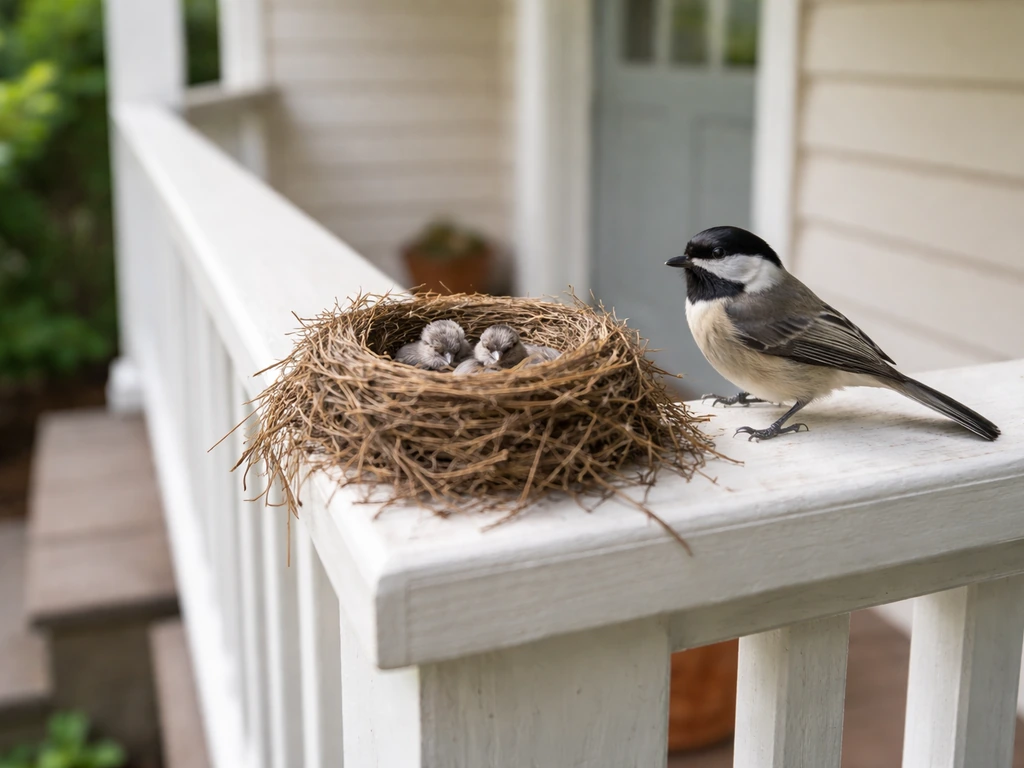
Fish & Wildlife Service notes that a porch nest with eggs or chicks is generally treated as an active nest and is protected under the Migratory Bird Treaty Act, so destroying it without a permit is illegal A porch nest that contains eggs or chicks is generally treated as an “active nest”. An empty nest can be removed without penalty.
A nest with eggs or live young is federally protected in the US under the Migratory Bird Treaty Act, and touching it without a permit is illegal. A bird building a nest is an example of pre-breeding behavior, so it's especially important to avoid disturbing an active nest once eggs are present. So step one is always a quick, close-but-careful look to figure out exactly what you're dealing with.
First: figure out what's in the nest and how active it is
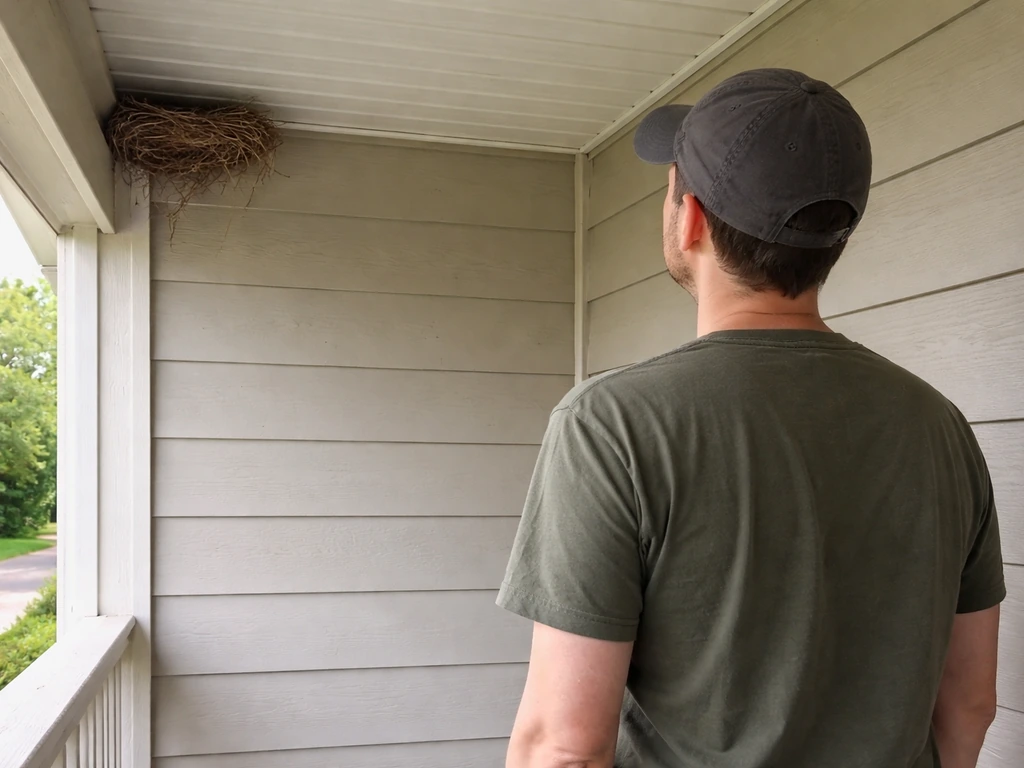
Before you do anything else, take a slow walk past the nest from a few feet away and just observe for a minute or two. You're looking for three things: nest contents, adult bird behavior, and signs of recent construction. In most cases, you will see the mom and dad birds both helping with nesting tasks like building, incubating eggs, and feeding chicks.
- Empty nest, no eggs: You're in the clear legally. The bird may still be building or may have abandoned it. Either way, you can remove it now if you want to.
- Eggs present: Active nest, fully protected. Do not touch, move, or disturb it.
- Naked or downy chicks: Peak protection period. This nest is as active as it gets.
- Feathered juveniles (fledglings) still in or near nest: Still protected. The nest stays until they're independent.
- Adult birds repeatedly returning to the same spot: Almost certainly active even if you can't see inside easily.
To get a better look without flushing the adult birds, use your phone camera at arm's length to peek into the nest, or use a small mirror on a stick. Don't stand over it or put your face directly in front of it. Most songbirds won't permanently abandon a nest because of a brief, non-threatening human presence, but repeated close disturbance can cause them to leave eggs or small chicks to get cold, which can be fatal.
Identify the species and nest type
You don't need to be an expert birder, but knowing your species helps you predict how long the nest will be active and what kind of bird behavior to expect on your porch. Some fish species, like the stickleback, build nest structures in a similar way to how birds prepare a home which fish builds nest like a bird. Common porch nesters in North America include American Robins (cup nests of mud and grass, about 6 inches across, often on ledges or in light fixtures), Barn Swallows (mud pellet nests plastered to vertical surfaces, roughly 5 inches wide), House Sparrows and House Finches (loose, messy nests packed into corners and cavities), Carolina Wrens (domed nests of leaves and bark, often tucked into hanging plants or open shelves), and Mourning Doves (flat stick platforms, sometimes dangerously flimsy).
Note the materials you see. Mud and grass formed into a cup usually means a robin or swallow. A nest that's mostly dry leaves, bark strips, and hair crammed into a corner is probably a wren. Straw and feathers in a cavity opening point to sparrows or finches.
These material clues directly connect to how the nest was built, something worth understanding if you want to predict the bird's behavior. Bird nests are made differently depending on the species, but most follow a similar build-and-line process using the materials available nearby. Knowing how birds build nests can also help you choose the least disruptive actions while they’re raising their young.
Incubation periods vary by species but most small songbirds hatch within 11 to 14 days of laying, and fledglings leave the nest another 10 to 17 days after that. While incubation timing and nesting materials vary, the common goal across bird species is that they build nests to protect eggs and raise their young do all bird species build nests. How does a bird make a nest? The process varies by species, but most birds gather materials and build safe structures to protect eggs and raise their young build nests. Swallows can take slightly longer.
What the law and ethics actually require
In the US, most wild birds are protected under the Migratory Bird Treaty Act. The legal line is simple: a nest becomes 'active' the moment the first egg is laid, and it stays active until fledged young are no longer dependent on it. During that window, destroying the nest, its eggs, or harming the birds is a federal violation. This applies to the vast majority of songbirds you'll find on a porch.
The US Fish and Wildlife Service (FWS) does clarify one important nuance: destroying an empty bird nest (one with no eggs and no birds) is not prohibited under the MBTA, as long as you don't collect or possess the nest in the process. So if a bird started building but hasn't laid yet, removing the partial nest is legal. Not all bird species build nests the same way, but many start with the early building stage before eggs appear building but hasn't laid yet. The catch is that you need to be certain it's truly empty.
Ethically, even if a nest is empty and removable, it's worth asking whether you're at a point in the season where the bird might still return to lay. If a robin has been working on that nest for three days and there are no eggs yet, she's likely to lay within another day or two. If you are wondering when does a bird make a nest, remember that timing can vary, but a robin that has been building for a few days often lays soon after. Removing it at that moment means she starts over, wastes energy, and may choose a worse location. The conservation-minded call is usually to wait a day or two and re-check before removing.
Three common species that are NOT protected under the MBTA are House Sparrows, European Starlings, and Rock Pigeons. These are introduced, non-native species, and their nests can be legally removed at any stage. If you can identify your porch bird as one of these, your options are broader, but it's still worth acting thoughtfully.
Keep using your porch without disturbing the nest
Living alongside an active nest for three to five weeks is genuinely manageable if you make a few small adjustments. The goal is to reduce unpredictable, sudden disturbances while still going about your life. Birds on active nests get used to predictable human movement much faster than sporadic surprises.
- Use the same entry/exit path every time, ideally one that passes the nest at a consistent distance. Vary nothing if you can help it.
- Move any porch furniture that requires you to pass within two to three feet of the nest. Give the bird a clear flight path to and from the nest.
- Keep dogs and cats indoors or leashed away from the porch area. Even a pet that isn't hunting actively can stress an incubating bird enough to cause nest abandonment.
- Skip loud porch projects (drilling, sanding, power washing) until after the nest is empty. If it's truly urgent, do it early morning when parents are out foraging and work as far from the nest as possible.
- Cover or secure any open garbage or compost near the porch. This reduces activity from crows, raccoons, and other nest predators that your porch bird will now be stressed about.
- Turn off or dim bright porch lights at night. Light attracts insects, which attracts larger animals, and can disorient nesting birds.
One practical tip: put a small piece of tape or a sticky note on the door handle facing the nest as a daily reminder for family members. It sounds trivial but it genuinely helps everyone remember to move slowly and quietly when using that door.
Deterrents that are actually safe and bird-friendly
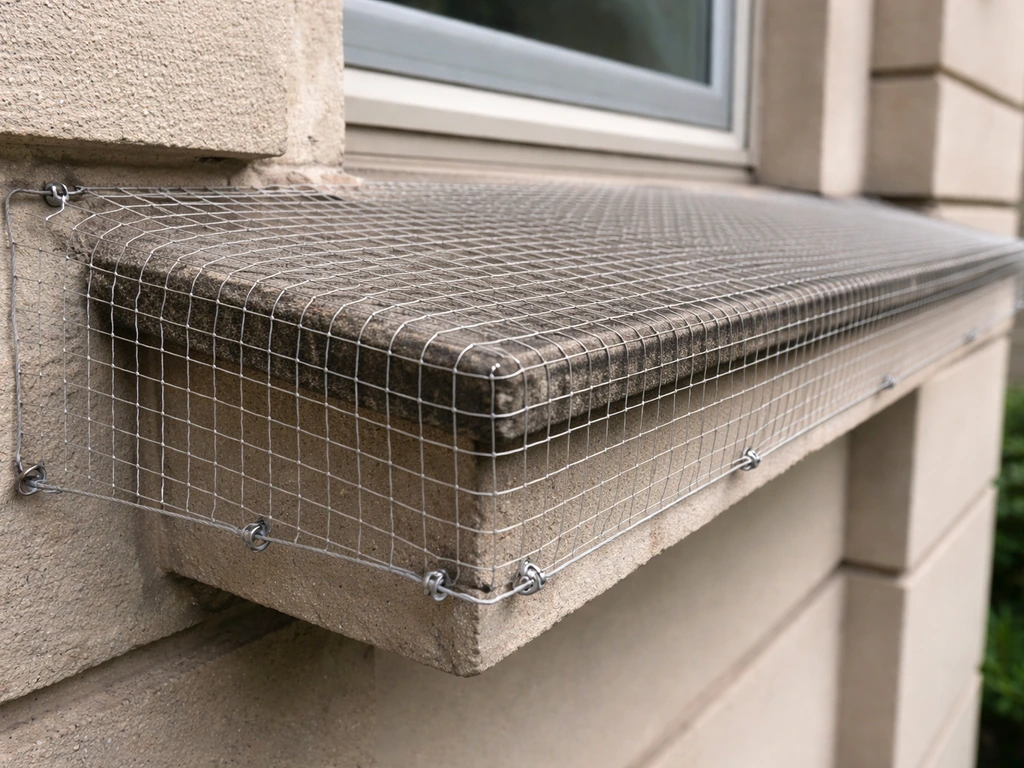
If the nest is still being built (no eggs yet) and you want to discourage nesting in that spot, there are several effective, humane options. The critical rule: once eggs are present, deterrents that block access or cause disturbance become off-limits because you'd be trapping or disrupting an active, protected nest.
Before eggs are laid (still in the building phase)
- Physical blocking: Hang bird netting (available at most garden centers) over the specific ledge, rafter, or light fixture being used. Fine mesh (3/4 inch or smaller) prevents entry without harm. Install it gently and make sure no birds are already inside.
- Surface texture changes: Birds prefer flat, stable ledges. Attaching a slope (a 45-degree wooden or plastic wedge) to a favored ledge makes it awkward to build on.
- Remove the partial nest daily: If the bird has only been building for a day or two and you don't want a nest there, consistently removing the new material each morning discourages them from committing. Once eggs are laid, this window is closed.
- Reduce attractants: Birds nest where they feel safe and have food nearby. Removing bird feeders within 20 to 30 feet of the porch during nesting season reduces interest in the area.
- Reflective deterrents: Strips of reflective tape or old CDs hung near the targeted spot can discourage initial site selection. These work better as prevention than as a mid-nesting deterrent and lose effectiveness after a week or two.
After eggs are laid (deterrents to avoid)
Once the nest is active, anything that blocks the parents' access or deliberately frightens them off the nest is off the table both legally and ethically. That includes placing netting over an occupied nest, using ultrasonic repellers near the nest, using sprinklers timed to the parents' return schedule, or spraying anything near the nest area. Your job during this phase is minimizing disturbance, not discouragement. Save your deterrent strategy for after the birds have fledged.
When relocation is actually allowed, and how to get help
Relocation of an active nest is rarely legal, and doing it yourself is almost never the right call. FWS issues removal or relocation permits only in cases where the nest is causing a genuine human health or safety issue, or where the birds themselves are in immediate danger. A nest that's inconvenient, messy, or near a door doesn't typically qualify. A nest built inside an electrical panel or directly in a gas vent is a different story.
If you believe your situation genuinely meets the safety threshold, here's the process to follow:
- Contact your state's wildlife agency first. In many states, they can authorize limited action faster than federal channels and can advise whether your situation qualifies.
- Reach out to a licensed wildlife rehabilitator. These professionals can sometimes legally move a nest to a nearby safe location when permitted, and they're your best resource for advice on whether your case is an exception.
- Call a licensed pest control company that specializes in bird management. They understand the MBTA, can assess the legal path, and can apply for permits when appropriate.
- Document everything: photos of the nest location, the safety hazard, and the bird activity. You'll need this for any permit application.
- Do not attempt to move the nest yourself. Even with good intentions, an unauthorized move of an active nest is a federal violation and often results in nest failure anyway, since birds frequently abandon relocated nests.
If you discover abandoned eggs (adult birds not returning for 24 to 48 hours, eggs cold to the touch), injured chicks on the ground, or a nest in immediate structural danger, a licensed wildlife rehabilitator is your fastest resource. They can legally handle eggs and chicks in ways you cannot.
The timeline: what to expect and what to do when they leave
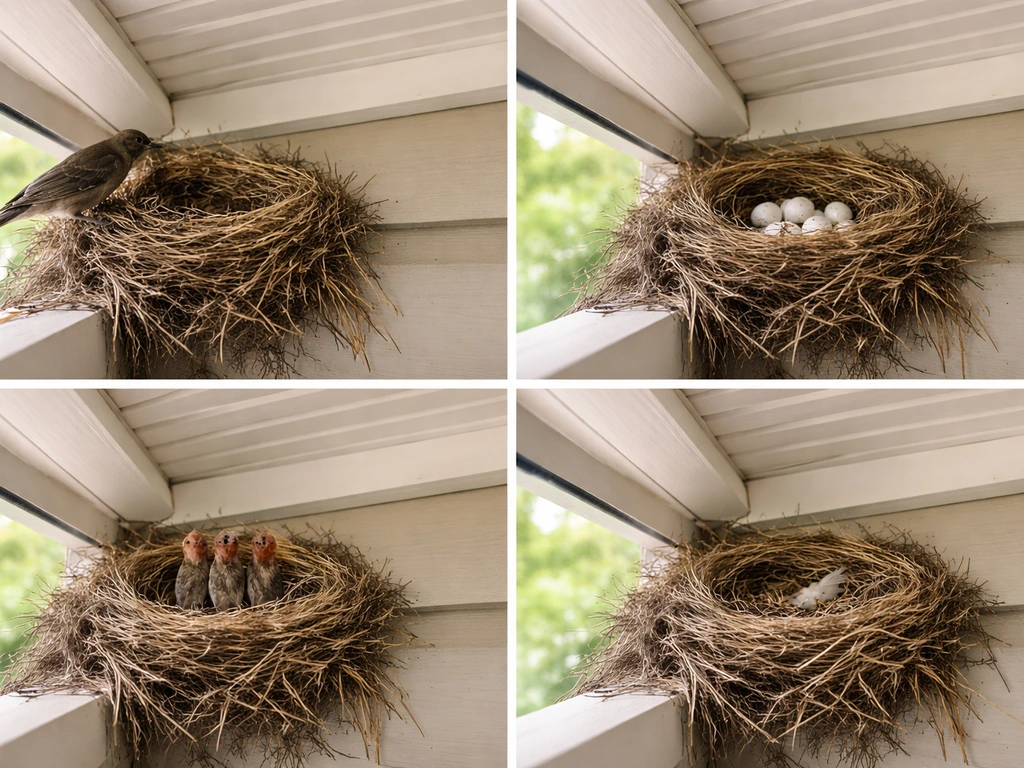
Most porch nesting situations resolve themselves within four to six weeks from egg-laying. Here's a rough calendar to set your expectations:
| Phase | Typical Duration | What You'll See |
|---|---|---|
| Nest building | 3 to 7 days | Frequent adult trips carrying materials; lots of fussing around the spot |
| Egg laying | 1 to 6 days | Female present in nest most of the day; very quiet behavior |
| Incubation | 11 to 17 days (varies by species) | One or both parents sitting on nest; quick exits if startled |
| Nestling stage | 10 to 17 days | Visible feeding trips; chick sounds increase as they grow |
| Fledgling stage | A few days near nest | Young birds nearby but mobile; parents still feeding them off nest |
| Nest abandoned | After fledglings are independent | No adult returns for 24–48 hours; nest visibly inactive |
Once you're confident the nest is empty and abandoned (watch for 48 hours with no adult returns), you can legally remove and clean it up. Wear gloves. Old nests harbor mites, lice, and bacteria, so seal the nest in a plastic bag and dispose of it in outdoor trash. Scrub the surface where it was attached with a diluted bleach solution (1 part bleach to 9 parts water) and let it dry completely.
After cleanup is the ideal time to install your long-term deterrents: netting, slope boards, or spike strips on the preferred ledge. Birds are creatures of habit and will attempt to return to the same spot the following spring, often within a few weeks. If you act right after the nest is removed rather than waiting until the following February, you'll intercept that instinct before it becomes a multi-year problem.
Porch-specific problems: predators, traffic, and structure
Predator pressure
Porches attract nest predators: raccoons, snakes, crows, and neighborhood cats. If you start noticing a raccoon investigating the porch at night or a snake in the area, you have a few ethical options. A cone-shaped baffle on a post below a hanging plant nest can block climbing predators. A motion-activated sprinkler positioned to cover the porch perimeter (not the nest area itself) can deter raccoons without disturbing the nesting birds. Keep all pet food indoors, especially at night. If cats from the neighborhood are the problem, consider placing a temporary wire fence or pen around the base of the area below the nest to deny ground-level access.
High foot traffic and doors
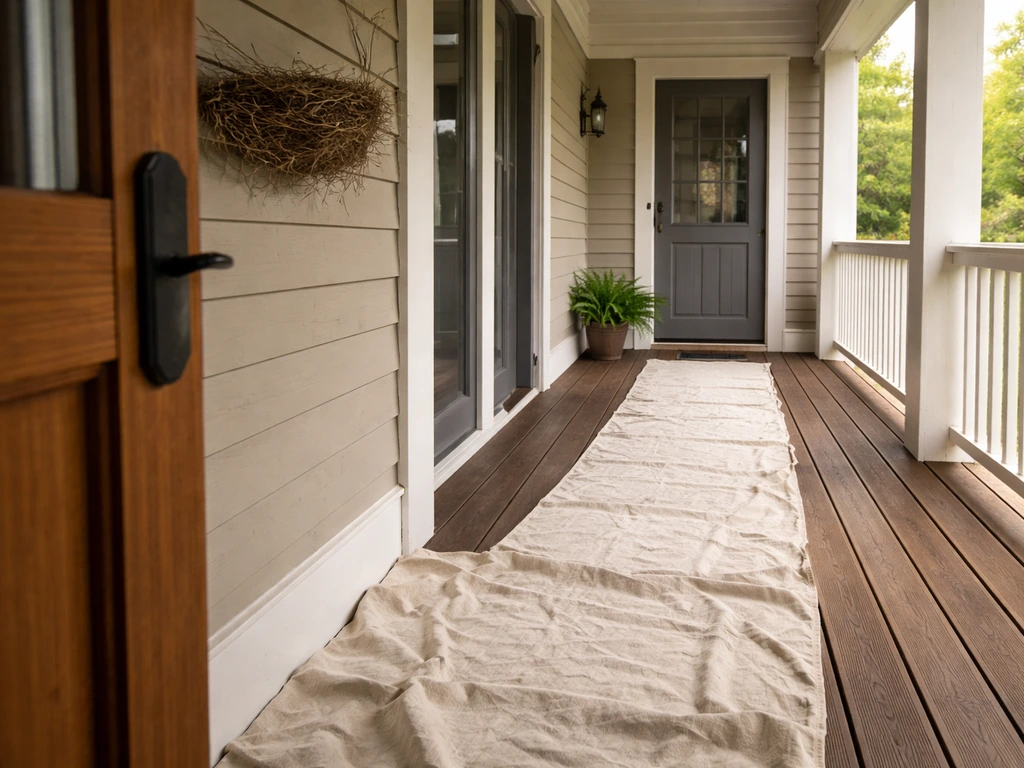
A nest above or beside a frequently used door is one of the more stressful situations for the bird and the homeowner. If you have a secondary entrance, switch to it for the nesting period. If not, establish a household rule: open and close the door slowly, no sudden movements or loud conversation near that door, and keep the door closed as quickly as possible so the parents aren't blocked from the nest. A nest above a front door used by delivery drivers and guests is genuinely difficult. A polite, laminated note saying 'Bird nesting in progress, please knock softly' sounds a little extra but it genuinely reduces the chaos.
Structural and cleanliness concerns
Bird droppings are acidic and can stain or degrade wood, painted surfaces, and outdoor furniture over a few weeks of heavy use. Place a plastic sheet or drop cloth on surfaces directly below the nest. Clean it daily with diluted white vinegar, which breaks down droppings without harsh fumes near the nest. If the nest is on or in a light fixture, turn off that light for the duration to prevent overheating of eggs or chicks. A nest inside a functional vent is an urgent problem regardless of nesting stage: clogged vents are a fire and carbon monoxide hazard and should be addressed with professional help as fast as the legal pathway allows.
When the season is over and the birds have gone, check the area they used for any structural damage, water intrusion from nest materials retaining moisture against wood, or remaining debris that could block airflow. A five-minute inspection with a flashlight can catch a minor problem before it becomes an expensive repair.
Your action plan based on nest status right now
To keep this practical, here's the decision tree in plain terms. Look at your nest right now and match your situation:
| What you see | Legal status | What to do today |
|---|---|---|
| Partial nest, no eggs, bird still building | Removable now | Decide: remove and deter, or let it proceed. Act within 24 hours either way. |
| Complete nest, no eggs, no bird activity for 48+ hours | Removable now | Remove, clean, install deterrents immediately. |
| Eggs present, adult returning regularly | Fully protected (MBTA) | Minimize disturbance, prepare your 4–6 week plan, set up drop cloth below. |
| Chicks in nest, active feeding | Fully protected (MBTA) | Same as above. Note hatch date to estimate fledge timing. |
| Fledglings near but off nest | Still protected | Do not block the area. Give them 3–5 more days. |
| Nest is a safety hazard (vent, electrical) | May qualify for permit | Contact state wildlife agency and a licensed wildlife rehabilitator today. |
| House Sparrow, Starling, or Rock Pigeon confirmed | Not protected under MBTA | Can be removed at any stage, but act humanely and promptly. |
The overwhelming majority of porch nesting situations are temporary, self-resolving, and manageable with a few weeks of patience and a handful of small adjustments. The birds aren't choosing your porch to make your life harder. They chose it because it felt safe and sheltered, which is actually a sign you've created a welcoming outdoor space. Once they've raised their young and moved on, a few targeted deterrents will send the message that it's time to find a different spot for next season.
FAQ
What if the nest looks empty, but I am not sure whether eggs were laid yet?
If there are no eggs and no chicks, you can usually remove an unfinished, truly empty nest. The key caveat is certainty, because the nest becomes legally active once the first egg is laid. If you cannot confidently confirm no eggs, wait and re-check from a distance for a full day or two before doing anything.
Is it okay to spray or smear something on the porch to keep the bird from staying during an active nest?
Do not use adhesives, sprays, or sticky substances on or near an active nest. Even if you are trying to make the area less attractive, these can trap feathers, contaminate eggs or chicks, and increase parental abandonment risk. For active nests, the safe approach is minimizing sudden disturbances, then adding long-term deterrents only after fledging.
How long do I have to wait before I can consider an active nest abandoned?
If the adult birds are gone for long stretches, use time plus behavior to decide. Many birds take short foraging trips, so missing one return does not necessarily mean abandonment. A practical threshold many people use is 48 hours with no adult returns plus eggs that are cold to the touch before treating the nest as abandoned.
Can I still use the porch if the nest is active?
Yes, you can have the porch usable with adjustments. Keep doors and traffic predictable, avoid blocking access routes under the nest, and use alternatives like using another entrance. If you must work on the porch, schedule tasks during times adults are away, stay farther back, and avoid sudden vibrations near the nest location.
Should I stop feeding birds when a nest is on my porch?
Feeding birds near the porch can backfire because it increases foot traffic and can attract competitors or predators. If the nest is active, consider temporarily pausing nearby feeding sources, especially on the same ledge or roofline, and instead keep pet food and trash secured to reduce predators.
What should I do if I see a chick on the porch floor?
If you find an injured chick on the ground, do not attempt to “raise” it yourself. Contact a licensed wildlife rehabilitator, and in the meantime keep pets and people away from the area. If the chick is still alive, the best immediate help is reducing stress and getting professional care quickly.
Can I move the nest to another spot so I can use the porch?
For active nests, do not relocate, remove, or even shake the structure. Even when a nest seems inconvenient, relocation is rarely allowed, and disturbing parents can cause cooling and death of small chicks. The legally safer plan is to wait out the nesting period, then install deterrents after fledging.
What are safe ways to protect an active nest from raccoons or snakes?
Trying to “cover” an active nest with anything like netting can become a trapping hazard, and it also increases disturbance when parents try to access the nest. If you need predator management, use options that do not block nest entry, such as a cone-shaped baffle for climbing predators on the supporting post below (when appropriate) or a perimeter-focused motion deterrent.
What if the nest is in an electrical panel, vent, or near utility openings?
If the nest is on or inside a vent or other utility opening, treat it as urgent. The risk is not only bird safety, but blocked airflow and hazards like fire or carbon monoxide. Contact a professional as fast as possible while also following legal guidance on not disturbing active nests.
Are there any species where I can remove a nest right away, even if it is on my porch?
If you suspect house sparrows, starlings, or rock pigeons, you may have broader removal options because they are not protected under the Migratory Bird Treaty Act. Still, confirm identification carefully and avoid actions that could affect a protected native species. If you are unsure, treat it as protected and wait.
What signs tell me I am disturbing the bird too much while checking on the nest?
Use distance and timing. View from the side if possible, keep your face out of the nest line, and limit checks to short windows. If the adults repeatedly hover without settling, dive, or stop feeding after you approach, back off further and resume only from a greater distance.
How should I clean up an empty nest after the birds have left?
After the nest is gone, gloves and containment matter. Seal the old nest in a plastic bag before disposal and clean the attachment surface thoroughly to reduce mite and bacteria risk. Avoid dry sweeping or blowing debris, since that can aerosolize droppings and contaminants.
My nest is by a main entry door, what is the best daily routine during the nesting period?
For porch use, manage access rather than speed. A helpful rule is keep the door opening routine slow and consistent, avoid loud conversations right beside the nest, and minimize time with the door held open. If there is a secondary entrance, switching to it often reduces stress dramatically.
What should I inspect after the birds leave to prevent damage from the nest?
When the nesting season ends, inspect for more than droppings. Look for water retention from nest materials, wood staining, and any structural wear around the attachment point. A quick flashlight check can catch small cracks, soft spots, or hidden buildup before it becomes a repair.
Next Article
Does the Mom or Dad Bird Build the Nest? Roles Explained
Learn who builds bird nests, how roles vary by species, and how to observe safely without disturbing nesting birds.