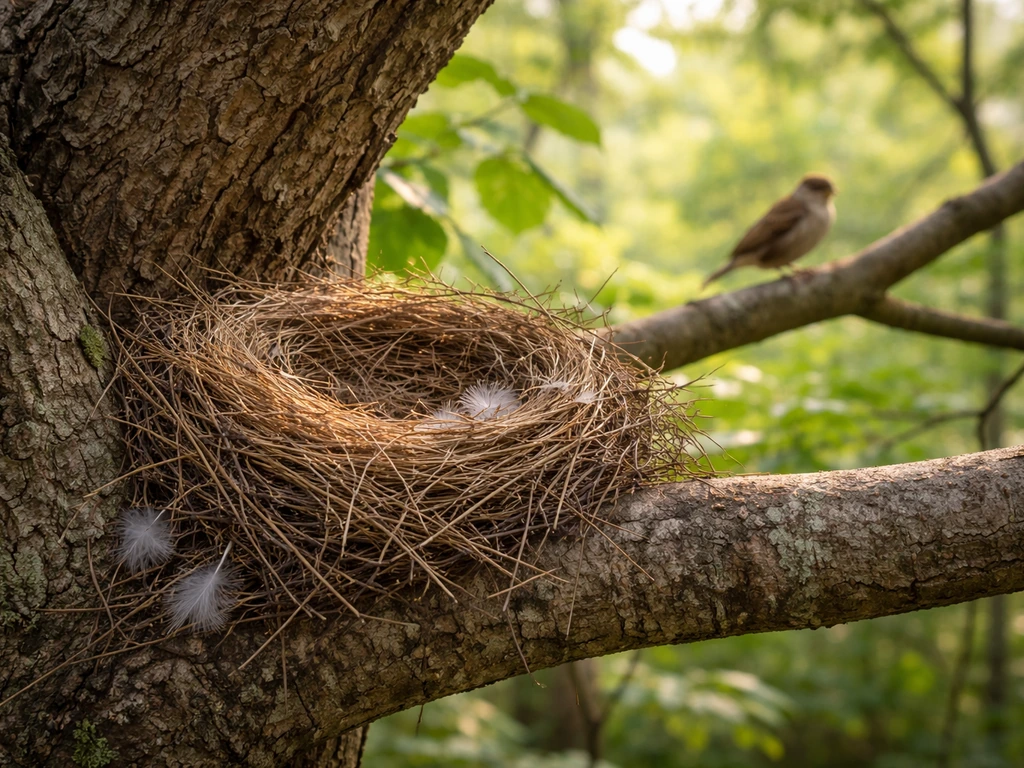
The birds most likely using other birds' nests fall into two very different groups: true brood parasites (mainly Brown-headed Cowbirds in North America, cuckoos in Europe and beyond) that sneak eggs into active nests for the host to raise, and nest usurpers like House Sparrows, European Starlings, and House Wrens that physically take over a cavity, box, or platform nest built by another species. Which one you're dealing with depends heavily on where you live, what nest type you're looking at, and what exactly seems "off" about the eggs or chicks you're seeing.
Which Bird Uses Other Birds Nests? ID Guide by Region

Maya Bennett
27 May 2026
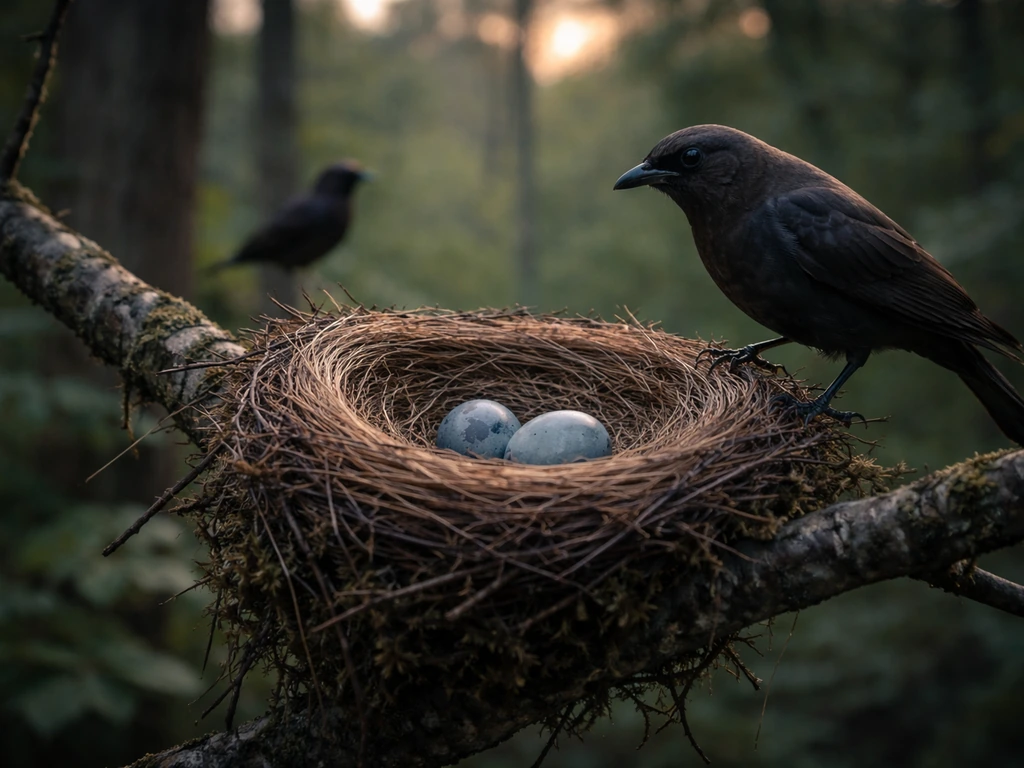
Two very different behaviors: brood parasites vs. nest usurpers
It helps to nail down this distinction early because the two behaviors look completely different in the field, and what you should do about each one is also different. A brood parasite does not evict the nest owner. The original bird stays, incubates, and raises the parasitic chick alongside (or instead of) its own young. The nest itself looks undisturbed. What looks wrong is the egg or the chick, not the nest structure. A nest usurper, on the other hand, physically claims the nest or cavity. The original occupant is driven out, the old nest material may be buried, rearranged, or destroyed, and the usurping species takes full ownership.
NestWatch flags this distinction explicitly in their monitoring guidelines: finding a cowbird egg in a nest is brood parasitism, not a nest takeover, and the two events require different documentation and different responses. Mixing them up leads to misdiagnosis, so keep this framework in mind before you do anything else.
Birds that use other birds' nests: who they are and how they do it
True brood parasites
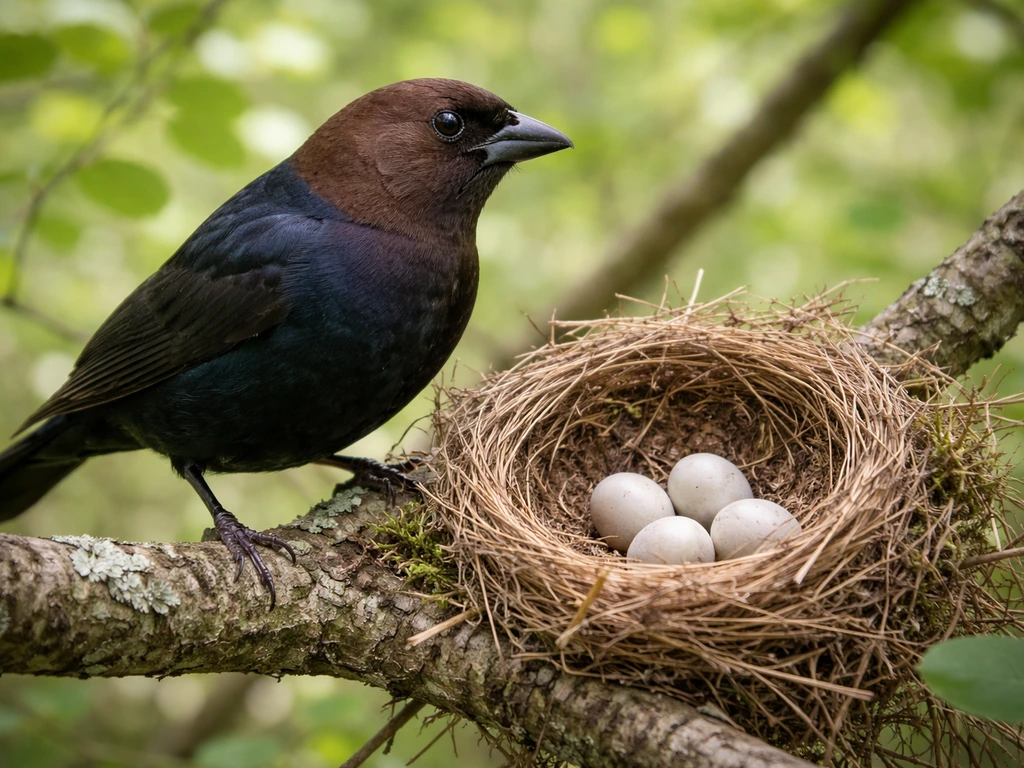
In North America, the Brown-headed Cowbird (Molothrus ater) is the only widespread obligate brood parasite most people will ever encounter. Obligate means it has no choice: it does not build nests at all. The female scouts active nests of other songbirds, slips in when the host is away, removes or damages one or more host eggs, and lays her own egg in the gap. She does this repeatedly across many nests throughout the breeding season, sometimes laying over 40 eggs in a single season. The Bronzed Cowbird (Molothrus aeneus) does the same thing but is limited to the southwestern U.S. and south into Central America. Outside North America, Old World cuckoos (family Cuculidae) are the textbook example: they go further than cowbirds, often mimicking the color and pattern of the host's own eggs to reduce the chance of rejection.
Nest usurpers
Nest usurpers don't parasitize eggs; they take real estate. In many cases, bird nests are reused, or parts of them are retained, which can affect how you interpret what happened after an event in the first place are bird nests reused. The two most notorious usurpers in North America are non-native: House Sparrows (Passer domesticus) and European Starlings (Sturnus vulgaris). Both were introduced to the U.S. in the 1800s and aggressively compete with native cavity-nesters for nest boxes and natural holes. House Sparrows will destroy eggs, kill chicks, and even kill adult birds to take a nest box. Starlings use their size advantage to displace woodpeckers and flickers from cavities those birds spent weeks excavating. Among native species, the House Wren (Troglodytes aedon) is a well-documented usurper: research published in the Journal of Field Ornithology found that House Wrens destroyed or took over 38.4% of Prothonotary Warbler nests in one monitored population. Tree Swallows compete for boxes too, though their takeover rate in that same study was only about 1.5%.
Which species are likely in your region
| Species | Type | Region | Target Hosts / Nest Types | Key ID Cue |
|---|---|---|---|---|
| Brown-headed Cowbird | Brood parasite | North America (widespread) | Warblers, sparrows, vireos, finches (open cup nests) | Speckled egg slightly larger than host's; glossy brownish-white with dark spots |
| Bronzed Cowbird | Brood parasite | SW United States, Mexico, Central America | Orioles, sparrows, warblers | Pale blue-green egg; male has distinctive red eye and neck ruff |
| Common Cuckoo | Brood parasite | Europe, Asia, Africa | Reed Warblers, Dunnocks, Robins | Egg closely mimics host egg color; single egg per nest |
| House Sparrow | Nest usurper | North America (introduced, widespread) | Bluebirds, Tree Swallows, wrens (cavity/box nesters) | Messy nest of grass, feathers, trash; evicts original occupant |
| European Starling | Nest usurper | North America (introduced, widespread) | Flickers, woodpeckers, kestrels (large cavities) | Takes over larger holes; iridescent black plumage; loud, varied calls |
| House Wren | Nest usurper (native) | North America (widespread) | Prothonotary Warblers, chickadees, nuthatches (cavities/boxes) | Fills cavity with sticks; may puncture eggs of rival; small brown wren |
| Tree Swallow | Nest usurper (minor) | North America | Other cavity/box nesters | Iridescent blue-green back; white underparts; aerial forager near boxes |
If you're in the eastern U.S. woodland edge or suburban habitat and something is wrong with a songbird nest, a Brown-headed Cowbird is the single most likely culprit. If you're watching a nest box and the original occupant disappeared or was killed, start with House Sparrow. In larger cavities or if you saw a woodpecker displaced, Starling is the first suspect. In Europe, the Common Cuckoo is the equivalent of the cowbird, with a more sophisticated egg-mimicry system layered on top.
How to tell it's brood parasitism: signs in eggs, chicks, and behavior
Egg-stage signs
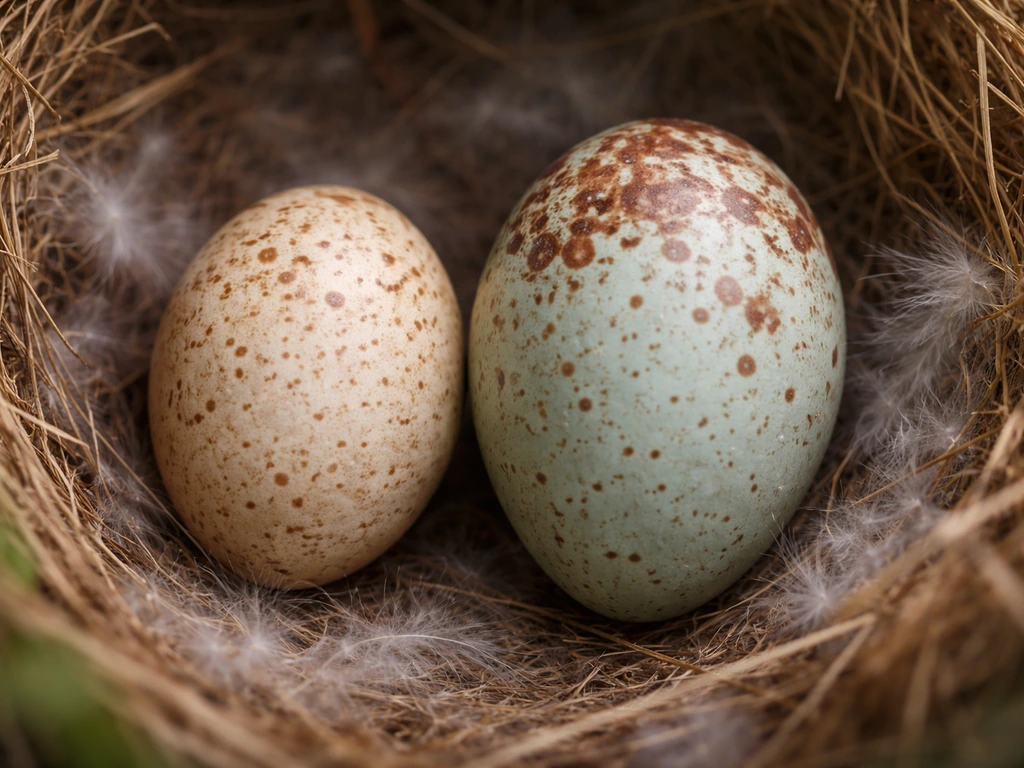
- One egg looks different from the rest: slightly larger, differently colored, or differently patterned than the clutch.
- You count one more egg than the host species typically lays (most small songbirds lay 3 to 5 eggs).
- One or more host eggs is missing or damaged, especially broken on the nest rim (cowbirds often remove one host egg per parasitic egg laid).
- The odd egg is glossy brownish-white with dark brown or gray speckles if you're suspecting a cowbird.
- In cuckoo territory, the odd egg may match the host clutch suspiciously well (egg mimicry); look for minor size differences.
Hatching and chick-stage signs
- One chick hatches noticeably earlier than the others. Cowbird eggs have a shorter incubation period than most host species, so the cowbird chick has a head start.
- One chick is significantly larger than its nestmates within just a few days, even though they hatched around the same time.
- The larger chick begs louder and more persistently, capturing most of the food the parents bring.
- In cuckoo systems, the cuckoo chick may physically push unhatched eggs or smaller nestmates out of the nest, leaving a single enormously demanding chick that the host continues to feed even after it dwarfs them.
Behavioral signs at the nest
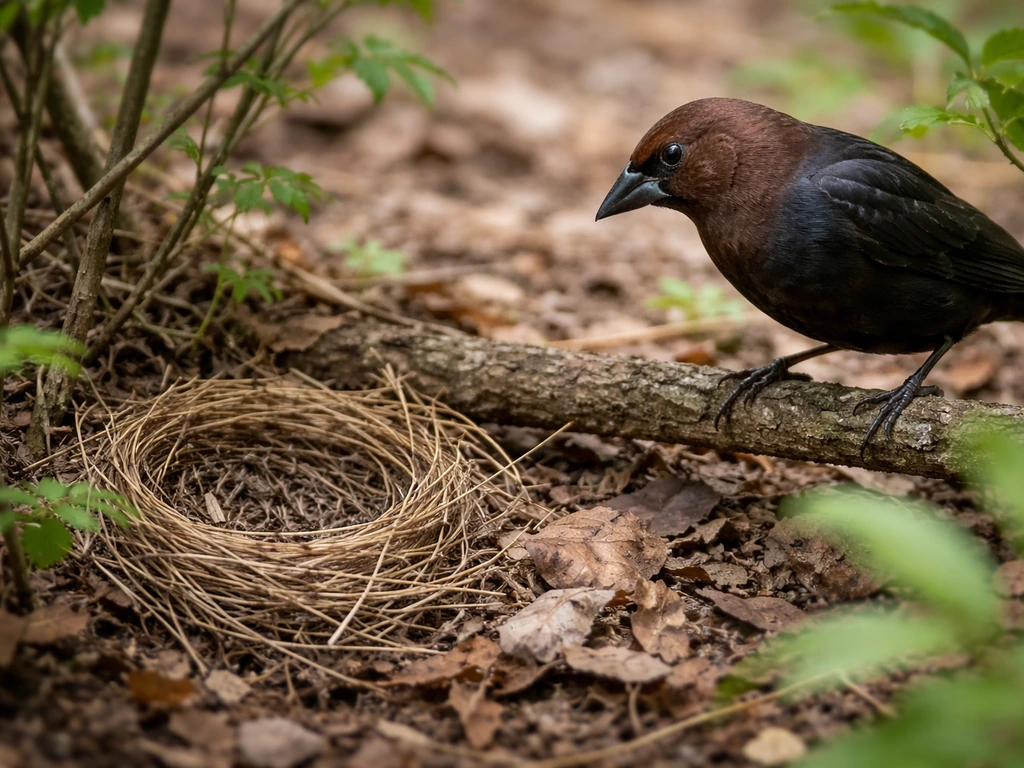
- You see an adult female cowbird (brown, finch-sized, shorter tail than a blackbird) lurking near the nest before eggs appear, or watching from a nearby perch.
- The host adult seems confused, agitated, or spends extra time at the nest rim compared to normal incubation behavior.
- The host continues feeding an outsized chick well after the nesting period would normally end.
How to identify the parasite from nest type, timing, and habitat
Nest type is your first filter. Brood parasites like cowbirds target open cup nests: the kind small songbirds weave from grass, bark strips, or plant fibers in shrubs, low trees, or ground vegetation. If the suspicious nest is a tidy cup in a shrub and has that odd egg, you're looking at brood parasitism, almost certainly a cowbird in North America. Usurpation, on the other hand, happens almost exclusively in cavities, nest boxes, or pre-built platform nests. Usurpation, on the other hand, happens almost exclusively in cavities, nest boxes, or pre-built platform nests will a bird use an old nest. If the nest is inside a box or a tree hole and the original occupant is gone, think usurper.
Timing matters too. Cowbird egg-laying peaks in May and June across most of North America, perfectly synchronized with the peak nesting season of its host species. If you're checking a nest in early May and suddenly find a new egg that doesn't match, cowbird is an immediate suspect. Cowbirds also lay in sequences with gaps of at least two days between eggs in a series, so if the odd egg count increases by one every couple of days, that pattern is consistent with ongoing cowbird activity. Outside peak nesting (late July onward), parasitism events drop sharply. That confusion matters because some situations involve parasites adding eggs, while others involve nest usurpers taking over the space, not just laying eggs usurpation events drop sharply.
Habitat gives you another layer of confirmation. Brown-headed Cowbirds are strongly associated with forest edges, open woodlands, suburban parks, and agricultural areas. They avoid deep, unbroken forest interior (which is part of why forest fragmentation has made them more of a conservation problem for forest-interior songbirds). If the nest you're watching is in a forest edge habitat near a field or lawn, cowbird parasitism is far more likely than if you're deep in an interior forest. For European readers, Common Cuckoo parasitism is most associated with reed beds, scrub, and woodland edge, depending on which host race (gente) of cuckoo is involved.
What to do if you find a suspected nest parasite
The legal reality first
Before you do anything physical, understand the legal framework. In the United States, most wild bird nests and their contents are protected under the Migratory Bird Treaty Act of 1918. This includes both the host species and, importantly, the cowbird. Removing, possessing, or destroying eggs without a federal permit is illegal and can carry criminal penalties. The MBTA does not broadly prohibit nest destruction when no possession occurs, but disturbing or destroying an active nest during breeding season is still a serious issue, particularly for any species of conservation concern. NestWatch's Code of Conduct puts it plainly: in most instances it is illegal to touch or physically disturb an active nest or its contents without proper permits. Do not remove cowbird eggs from a wild nest unless you have explicit authorization.
What you should do
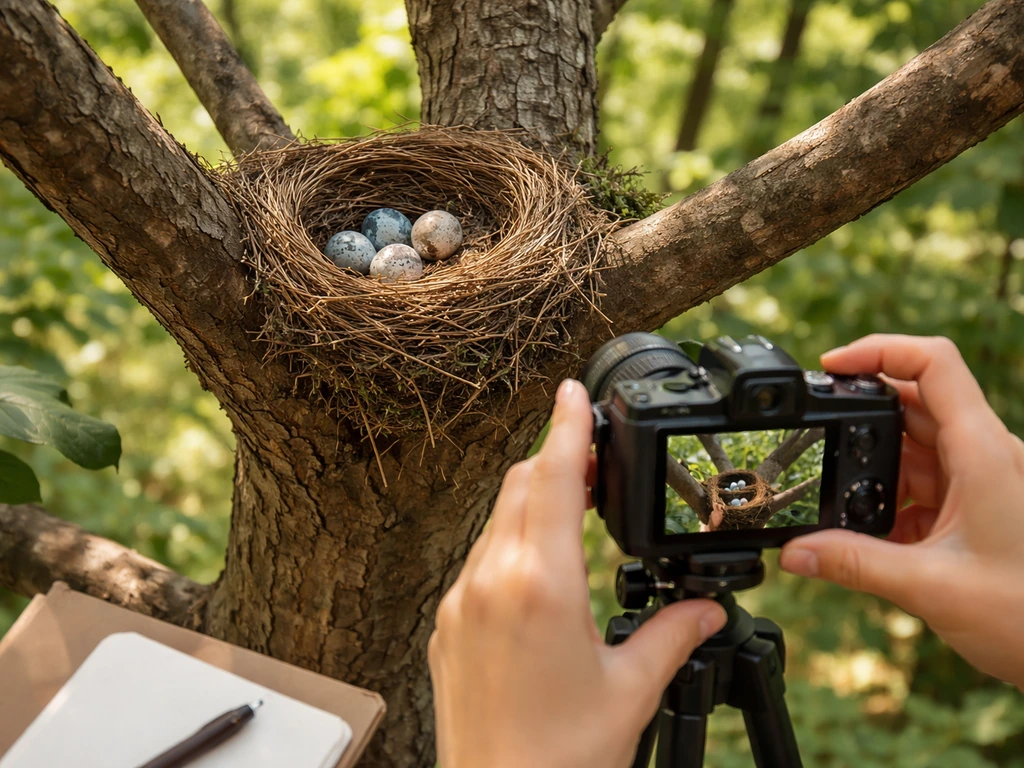
- Photograph everything before touching or approaching closely. Get a clear shot of the full clutch, the individual odd egg, and the nest location. Note the date, time, habitat type, and host species if you can identify it.
- Record a brief written note: nest height, nest material and construction style, number of eggs (including the suspected parasite egg), egg colors and markings, and any adult birds you observed near the nest.
- Observe from a safe distance (at least 10 to 15 feet for small songbirds) and minimize visit duration. Do not flush the incubating adult off the nest.
- If you monitor nest boxes as part of a citizen science program like NestWatch, report what you see using the correct outcome codes. Brood parasitism is its own category, distinct from nest failure or takeover.
- Contact your local wildlife authority or a licensed wildlife rehabilitator if you believe the nest belongs to a species of special concern, or if you see signs of an invasive species (House Sparrow, European Starling) actively destroying a nest with protected native birds inside.
What you should not do
- Do not remove cowbird or cuckoo eggs from a wild nest without a federal permit. This is illegal regardless of your conservation intent.
- Do not relocate or remove an active nest. Moving it will almost always cause abandonment and is prohibited under the MBTA.
- Do not handle chicks or eggs to 'check' them. Even brief handling can stress adults enough to cause abandonment.
- Do not attempt to identify host or parasite adults by aggressively approaching or flushing birds from the nest repeatedly.
- Do not assume a nest with a cowbird egg is 'failed' and abandon monitoring. Many host species successfully raise their own chicks alongside a cowbird chick.
Nest protection and predator management going forward
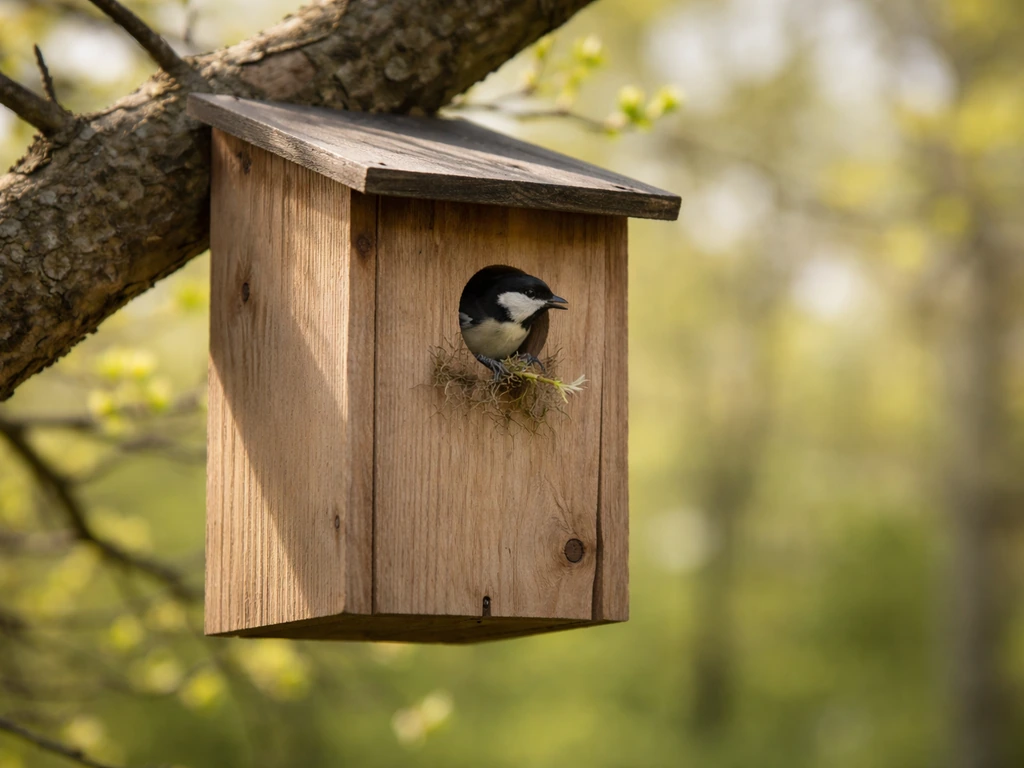
If you manage nest boxes, you have more legal flexibility than if you're watching a wild open-cup nest, because House Sparrows and European Starlings are non-native, unprotected species in North America. You can legally remove House Sparrow nests from boxes (before eggs hatch), evict Starlings, and modify your box entry-hole sizes to exclude them. A 1.5-inch diameter hole excludes Starlings while allowing bluebirds and Tree Swallows. House Sparrows can squeeze through a 1.5-inch hole, so sparrow-resistant box designs (like the Peterson or Van Ert style) and active monitoring are the more effective tools.
For predator management around any nest, focus on the approach rather than the nest itself. Baffles on nest box poles (a smooth, wide cone baffle at least 18 inches in diameter, positioned at least 4 feet off the ground) are the single most effective tool against raccoons, snakes, and cats. Keep boxes away from fence lines, shrub tangles, and overhanging branches that give predators a jumping-off point. For open-cup nesters, there's less you can do structurally, but minimizing lawn mowing and foot traffic near known nest sites reduces disturbance-related predation pressure significantly.
Reducing cowbird pressure on a landscape scale is a conservation challenge, not a backyard fix. Cowbirds thrive on habitat fragmentation, so the most effective long-term protection is supporting or participating in forest corridor conservation efforts in your region. On the ground, some land managers use licensed cowbird trapping programs in areas where endangered host species (like Kirtland's Warbler) are present, but these require federal permits and are not something private individuals should attempt on their own.
Seasonal outlook: when to watch for this and what to expect
| Month | What to watch for | Key activity |
|---|---|---|
| March to April | Nest building begins for early species; cavity nesters claim boxes first | House Sparrows and Starlings begin usurping boxes; monitor weekly |
| May | Peak cowbird egg-laying begins; most open-cup nests are active | Check watched nests for odd eggs; photograph clutches at each visit |
| June | Cowbird parasitism continues; first hatches appear; usurpation peaks for cavity nesters | Watch for size-mismatched chicks; note which eggs hatch first |
| July | Second broods start for many species; cowbird activity continues but slows | Continued monitoring; watch for late-season parasitism events |
| August | Most nesting wraps up; fledglings disperse; cowbird activity drops sharply | Observe outcomes; clean nest boxes after confirmed nesting end |
| September onward | Nesting season over for most species; birds flock and disperse | Box maintenance: clean, repair, add baffles before next spring |
The window from early May through late June is when you'll see the vast majority of cowbird parasitism events. If you're watching nests and want to build a useful record, this is the period to check every two to three days and photograph the clutch at each visit. Changes in egg count or the sudden appearance of an out-of-place egg will show up clearly when you compare photos side by side. For cavity-box managers, the critical window is even earlier: House Sparrows begin claiming boxes as early as late February in warmer regions, often before your target species even returns from migration. Staying ahead of that is the single most effective thing you can do for native cavity-nesting birds on your property.
Whether you're a first-time nest-finder wondering why one chick looks so much bigger than the others, or an experienced nest-box monitor trying to confirm a usurpation event, the same core approach applies: observe carefully, document with photos, identify the nest type and host species first, and then use timing and egg or chick differences to narrow down which bird is really responsible. Will a bird reuse a nest is a separate behavior from cowbird parasitism and nest usurpation, but it can change what you expect to see at a site usurpation event. If you find an abandoned nest, the next step is to consider whether a nest usurper will move in or whether another bird will reuse it will another bird use an abandoned nest. You're far more likely to be looking at a cowbird situation than anything exotic, and now you know exactly what to look for and what the rules are for what comes next.
FAQ
How can I tell if an “extra egg” is brood parasitism or just a nest that was reused?
Reuse can create confusing egg histories, but a brood parasite event usually leaves an egg that does not match the host’s timing and pattern, often appearing abruptly during the May to June window. If the nest was freshly rebuilt or you have photo evidence of when the egg count first changed, compare your earliest photo to later visits, reuse is more consistent with older nest material and less with a sudden addition of a single mismatched egg.
What if the host species is still incubating, but one chick looks different or bigger, is that still cowbird parasitism?
Often yes, but confirm the context. Cowbird chicks typically differ in size and appearance from the host’s nestlings, and they are most likely when the nest is an open cup in forest edge or suburban habitats during peak season. If the nest is a cavity or nest box and the original occupants are gone, that points more toward usurpation than parasitism.
Can a nest usurper add eggs too, so it looks like parasitism?
Yes, it can look similar from a distance. A usurper may take over a cavity and then lay its own eggs, so the nest ends up containing eggs that do not belong to the original occupant. The key tell is whether the previous adult disappeared, whether you find evidence of nest material being removed or rearranged, and whether the takeover happens as a clear before and after event rather than as an egg addition while the host remains present.
What does an usurpation “site change” look like in the real world?
After a takeover, look for physical disruption: nest lining may be torn up, buried, or replaced, and you may find different nest material textures than the host used originally. In boxes, the new occupant may also appear quickly and consistently return to the same cavity entrance, while the former occupant stops visiting or is no longer seen at that site.
How often should I check nests without increasing disturbance?
For documentation, the article recommends checking every two to three days in the May to late June window, but the safest approach is to minimize visits and use photo comparisons from the same distance and angle. Avoid handling nests or lingering at the entrance, and if you observe unusual aggression or nest abandonment, stop and switch to remote monitoring if available.
I found a cowbird egg, can I remove just that egg to “help” the host birds?
In the United States, removing or possessing eggs from wild nests generally requires federal authorization under the Migratory Bird Treaty Act, and doing so without explicit permission can create legal risk. Instead, focus on accurate documentation (photos, dates, host identity) and contact a local wildlife or bird monitoring group for guidance on appropriate next steps.
If a House Sparrow takes over my nest box, should I evict immediately or wait until a certain stage?
Timing matters. The article notes you have more flexibility with non-native nest box users, and it specifically mentions removing House Sparrow nests from boxes before eggs hatch. If you see eggs, delay decisions until you can confirm the stage, and then follow an established sparrow-resistant management plan rather than repeatedly opening the box during active occupancy.
Does egg color alone reliably identify cowbirds versus host birds?
Not reliably. Cuckoos can mimic host egg appearance, and different host species lay eggs with wide natural variation. Use a combination of nest type (open cup versus cavity), habitat, timing (peak May to June), and your photo record of when the mismatch appeared, rather than relying on egg color by itself.
What if I’m outside the typical May to June window and still see strange eggs, could it still be a brood parasite?
Parasitism drops sharply after late July, but you can still see unusual outcomes if hosts have second broods or if local breeding schedules shift due to climate. Check your region’s host species nesting timing, and verify whether the host is actively nesting and whether the egg change happened during a plausible host breeding phase.
How do I know if the “bird using other birds’ nests” is actually a usurper taking a cavity, not a parasite laying eggs?
Ask two questions. First, does the host adult remain in the nest and continue incubating or brooding after the odd egg appears, which supports parasitism. Second, does the previous occupant disappear and do you see signs of nest material being removed or replaced, which supports usurpation. Nest type is the fast shortcut: open cup sites strongly suggest cowbird-type parasitism, while boxes and tree cavities strongly suggest usurpation.
If I find an abandoned nest, how can I predict whether it will be reused or taken over?
Reuse is more likely when the nest remains intact and relatively undisturbed, while takeover is more likely if the nest’s contents are removed, the nest lining is changed, or a different species starts using the same cavity quickly. Keeping date-stamped photos helps you see whether occupancy resumes after abandonment, or whether a new species moves in following a physical disruption.
Are there “look-alike” cases I should rule out, like multiple host eggs from different adults?
It can happen that clutches contain more than one adult’s influence, or that eggs appear because of disturbance and rebuilding, but a true brood parasite event typically shows an abrupt mismatch in egg count and timing. If you do not have a clear timeline from visits, prioritize nest type and habitat cues and re-check at a minimal disturbance interval to build a reliable before and after record.
Next Article
Are Bird Nests Only for Eggs? Uses, Activity Signs, What to Do
Bird nests are used for more than eggs: incubation, brooding, shelter, protection, and courtship. Learn activity signs a