You can narrow down what bird made a nest by checking five things in order: the nest's overall shape, its construction materials, how it's attached or positioned, where it sits in the landscape, and when you found it. Most people can get to a confident shortlist within a few minutes using just those clues, then confirm with a photo and a free app like Merlin or NestWatch's identification tool.
What Bird Made This Nest? Step-by-Step Identification Guide

Maya Bennett
28 May 2026
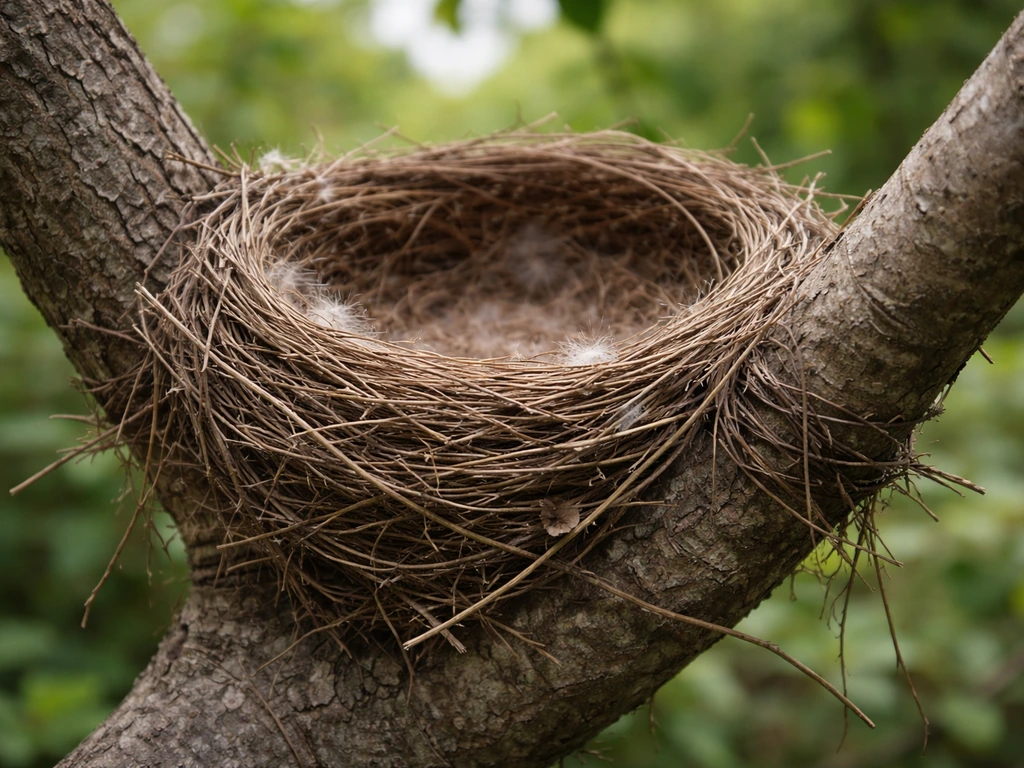
Start with what you already know about the nest

Before you look anything up, jot down what you already noticed. You don't need to be a birder to do this well. Even rough observations cut the field of possible builders dramatically. Ask yourself: Is the nest active right now (eggs, chicks, or a returning adult)? Did you see or hear any birds near it? What time of year is it? Active nests in spring and summer (roughly March through August in the Northern Hemisphere) belong to the nesting season, which matters both for identification and for what you're legally allowed to do next.
Write down or photograph everything before touching or moving anything. Even a rough sketch with dimensions helps. Under the Migratory Bird Treaty Act in the U.S., it's illegal to collect, possess, or transfer most migratory bird nests, so treating the nest as protected from the start is the right instinct. Your notes become your identification toolkit.
Quick identification using nest structure, shape, and materials
Shape is your fastest filter. Cornell Lab's NestWatch identifies five major nest forms, and knowing which one you're looking at immediately rules out large groups of species.
| Nest Form | What It Looks Like | Common Builders |
|---|---|---|
| Open cup | Bowl-shaped depression, no roof, often woven tightly | Robins, thrushes, warblers, finches, orioles |
| Enclosed dome with side entrance | Roofed ball shape with a hole on the side | Wrens, dippers, some sparrows |
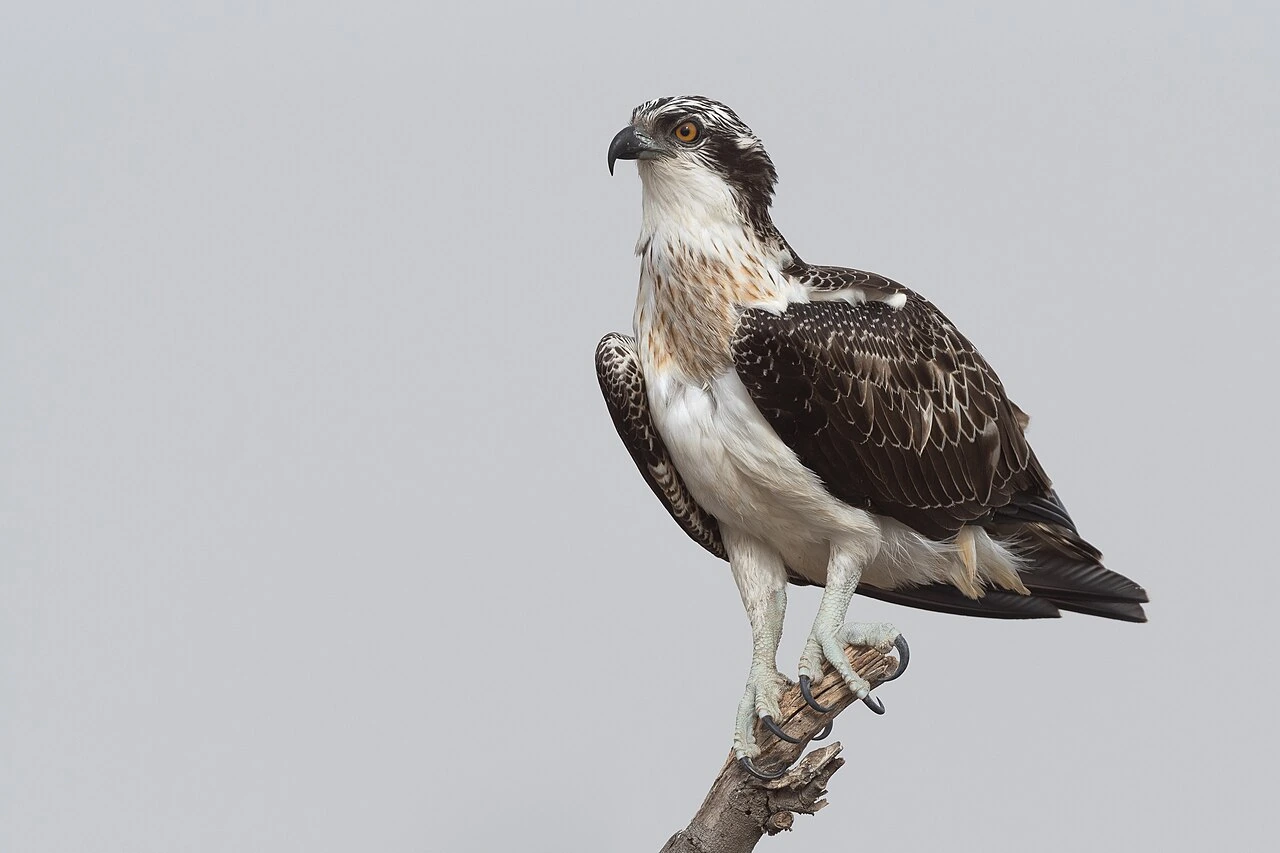
| Platform | Large, flat, loose pile of sticks | Eagles, ospreys, herons, ravens |
| Cavity | Hole in wood or another structure; nest material inside | Bluebirds, nuthatches, woodpeckers, chickadees |
| Scrape | Shallow depression in ground or gravel, minimal lining | Killdeer, gulls, terns, nightjars |
| Hanging pouch | Deep woven sock or bag suspended from a branch tip | Orioles, weavers |
| Mud cup | Hard, mud-walled cup, often stuck to a vertical surface | Phoebes, cliff swallows, barn swallows |
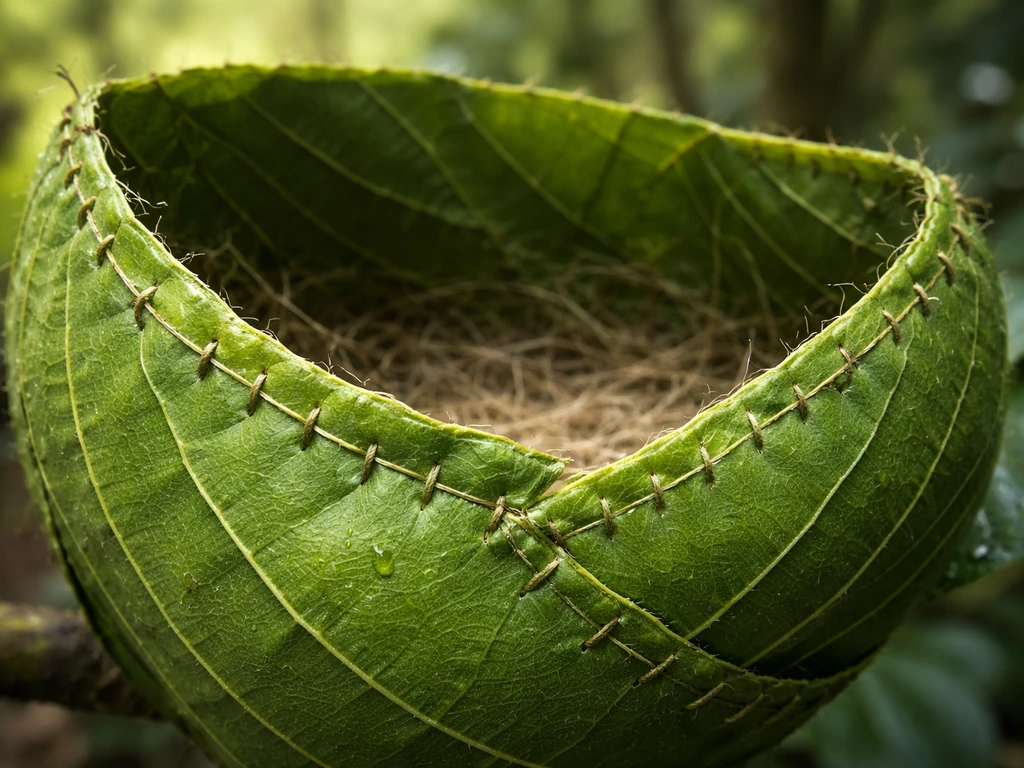
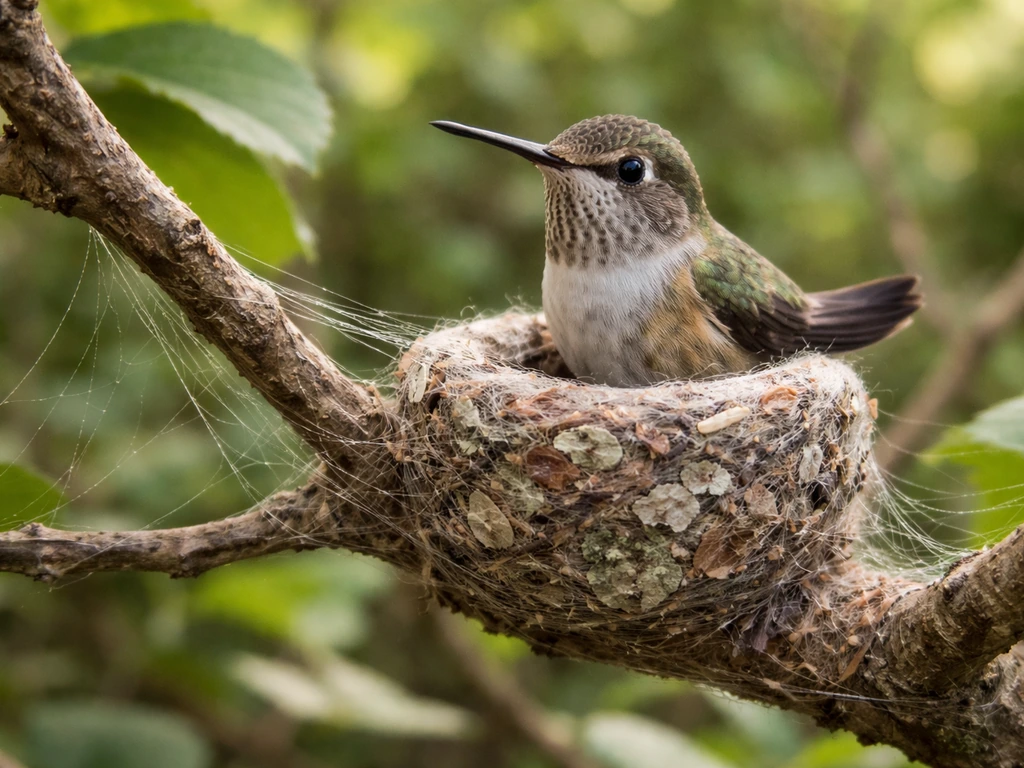
Once you have the shape, look at the materials. If the nest is built from sticks, focus on which stick-building species matches the size and placement what bird builds a nest with sticks. Run through this checklist mentally or in your notes: Is the outer wall made of twigs, grass stems, bark strips, or mud? Is there a soft inner lining of feathers, fur, plant down, or spider silk? Can you see any human-made materials like string, plastic, or lint woven in? Are there leaves stitched or folded around the outside? Each material narrows the list further. Mud walls that feel rock-hard and contain more than a thousand individual pellets are a strong sign of cliff swallows. A nest bound together visibly with spider silk and feather lining often points to hummingbirds or certain warblers. A nest where large leaves appear to be folded and stitched together with plant fibers or silk threads is almost certainly the work of a tailorbird, common in South and Southeast Asia.
Also measure what you can without touching the nest. Cup diameter, overall height, and depth of the bowl all matter. A robin's cup is typically around 6 inches across and 3 inches deep. A hummingbird nest is golf-ball-sized, roughly 1.5 inches across. A bald eagle platform nest can be 5 to 6 feet wide after years of additions. Size alone can get you from dozens of candidates to a handful.
Location clues: where the nest is built (and what that implies)
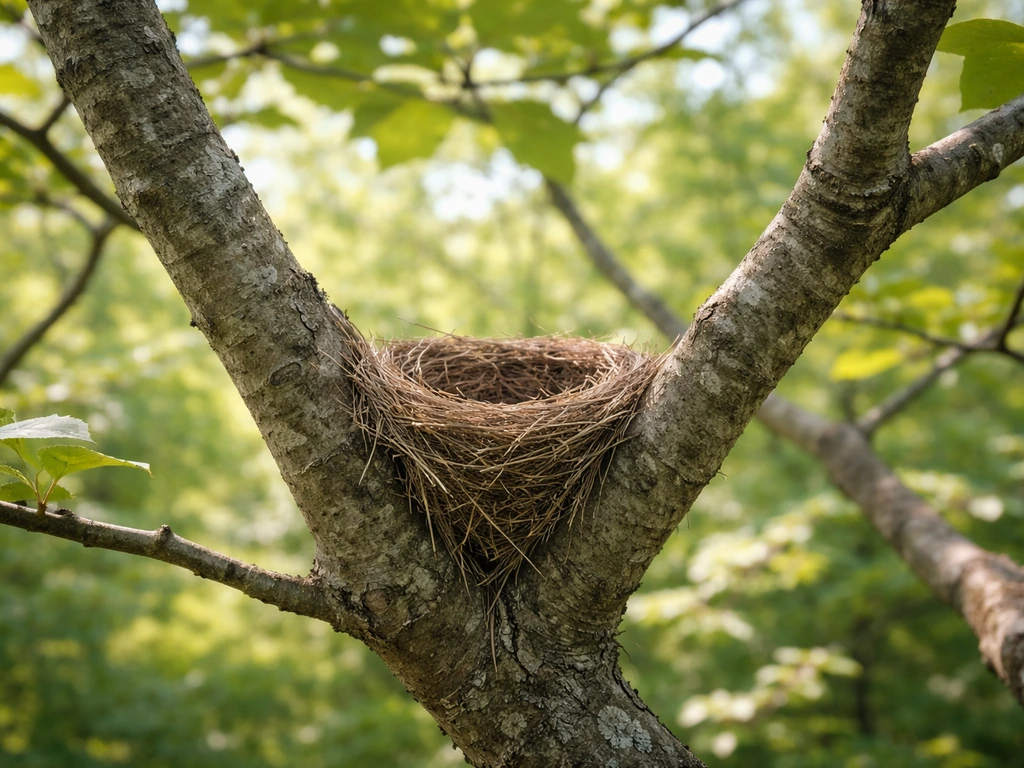
Where a nest sits is almost as diagnostic as what it's made of. NestWatch's documentation system specifically records substrate (what the nest is attached to), habitat type, and height above ground because those three factors together are strong predictors of the builder. Here's how to read common locations:
- High tree canopy, suspended from branch tips: Orioles and other hanging-nest builders favor deciduous tree canopies. The nest swings freely and is deliberately hard for predators to reach.
- Dense shrub or low fork in a tree, 2 to 10 feet up: Many sparrows, thrushes, and warblers build open cups here. A three-way branch fork is a classic attachment point for several species, so you'll need extra cues to separate them.
- On a ledge, eave, beam, or bridge underside: Barn swallows build mud cups on horizontal ledges. Eastern and black phoebes also use ledges and sometimes the eaves of buildings. Cliff swallows cluster their mud nests in colonies on cliff faces or bridge pylons.
- Cavity in a tree trunk or branch: Bluebirds, nuthatches, and chickadees use natural or woodpecker-drilled holes. Check the entrance hole diameter: bluebirds prefer about 1.5 inches; chickadees use slightly smaller openings around 1.1 to 1.25 inches.
- Ground level in grass, gravel, or sand: Killdeer make a simple scrape in open ground, often with a few pebbles as lining. Many ducks, some sparrows, and nightjars also nest on the ground, usually under some vegetation cover.
- Inside a mailbox, dryer vent, or enclosed structure: House sparrows and house wrens are the most common opportunists here. Wrens often stuff the cavity with sticks before adding a small feather-lined cup.
- Near or over water: Great blue herons build large stick platforms in trees near water. Ducks may nest in reed beds. Swallows often forage over water but attach nests to nearby structures.
Record the habitat around the nest too, not just the immediate substrate. A cup nest in a suburban garden hedge means something very different from the same shape in a salt marsh or a mountain meadow. Season matters alongside location: if you found this nest in late May, species that typically have early clutches (like American robins, who can start in March) may already be on a second brood, while species with a single late clutch are just getting started.
Distinguishing common look-alikes (and what to check next)
Nest identification gets genuinely tricky because, as Audubon points out, an open cup lashed into a branch fork can fit more than one species in the same area. Here are the most commonly confused pairs or groups, and the specific cues that separate them:
| Look-alike Group | Key Diagnostic Cue | What to Check |
|---|---|---|
| American robin vs. thrushes | Robin lines the inner cup with mud; thrushes typically do not | Press a fingertip gently against the inner wall (if safe and nest is inactive). Mud layer = robin. |
| House sparrow vs. house wren (cavity) | Sparrow nests are loose, grassy, and messy with feathers; wren nests are a dense stick bundle with a tiny feather cup inside | Look at the cavity entrance: wrens pack sticks right to the entrance hole. |
| Barn swallow vs. cliff swallow (mud) | Barn swallow cup is open at the top; cliff swallow cup has a narrow tunnel entrance | Check for an entry tunnel. Cliff swallow nests are fully enclosed with a small round opening. |
| Eastern phoebe vs. barn swallow (ledge) | Phoebe nests are mostly moss and mud; swallow nests are almost entirely mud pellets | Look for green moss on the outer wall. Moss = phoebe. |
| Chipping sparrow vs. field sparrow (cup) | Chipping sparrow lines the cup heavily with hair (especially horsehair); field sparrow uses finer grass | Hair lining so dense it looks felted = chipping sparrow. |
| Oriole hanging nest vs. vireo cup | Oriole pouches are deep and woven, hanging from a single branch tip; vireos build shallower cups slung between two twigs | Depth of the bowl and attachment points. Oriole = single tip; vireo = two-point sling. |
When you're stuck between two candidates, check these four things in sequence: the lining material (feathers, hair, moss, mud, or plant down), the attachment method (woven around twigs, plastered onto a surface, wedged into a fork, or freestanding), whether there's an entrance hole or tunnel versus an open top, and the interior diameter of the cup or cavity. These four details together usually break the tie. If you're dealing with a nest made entirely of mud, remember that species like cliff swallows are known to carry over a thousand individual mud pellets to complete a single nest, so the sheer density and smoothness of the mud wall is itself a clue. If you’re specifically wondering which bird make nest of pebbles, focus on the nest wall and how those stones are stacked or bound together mud pellets.
Some nests also have very distinctive secondary materials that are diagnostic on their own. Spider silk used as binding or stretchy coating often points to hummingbirds. In some species, spider silk is used to bind the nest materials, which can make spiders even part of the nesting setup. blank" rel="noopener noreferrer">Leaves that appear folded and stitched with plant fibers or insect silk are the hallmark of tailorbirds. Nests incorporating lichens on the exterior suggest species like the blue-gray gnatcatcher. Seaweed or shells in coastal scrapes narrow the field to shorebirds and seabirds. If any of those match, you've essentially got your answer.
Best next steps for safely observing and documenting the nest
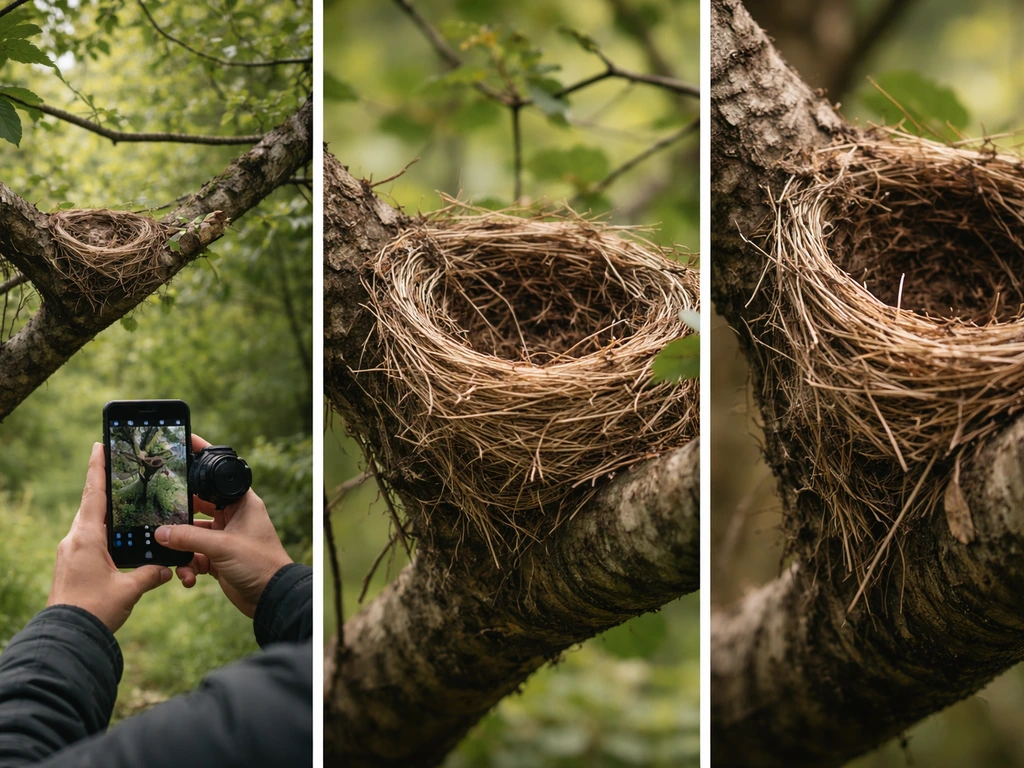
The single best thing you can do right now is take photos. Get the overall shape from a few feet away, then zoom in on the materials, the attachment point, and any entrance hole. If it's safe to do so without disturbing the nest, photograph the interior. You don't need to touch anything. Cornell Lab and NestWatch both recommend photos plus sound recordings as the primary identification tools, and for good reason: the combination of what you see and what you hear from a nearby adult bird can confirm an ID that the nest alone leaves ambiguous.
- Photograph the nest from multiple angles without moving branches or vegetation. Capture the full nest, the attachment point, and any visible lining.
- Record any bird sounds in the immediate area using your phone. Even a 30-second clip can be run through Merlin's Sound ID to get a species shortlist.
- Note the GPS coordinates or a precise address and habitat description. Height above ground to the nearest foot is useful.
- Check at dawn or dusk from at least 10 to 15 feet away to see which adult returns. Behavior (feeding chicks, incubating, singing nearby) confirms the builder faster than any other method.
- Upload your photos to NestWatch, eBird, or iNaturalist. The community there can confirm or correct your identification within hours.
- If possible, set up a trail camera at a safe distance rather than returning repeatedly. Repeated human visits near an active nest stress the adults and can attract predators.
Smithsonian National Zoo's monitoring guidelines note that nests should be avoided during the building phase and in the first few days of incubation, when adults are most likely to abandon if disturbed. If you found this nest while it's still being built or eggs were just laid, give it a wider berth and rely on your camera rather than close-up visits. Nesting stages run from building through egg laying, incubation, nestlings, and finally fledging, and each stage carries different risks of disturbance.
Human actions: what to do (and not do) with an active nest
This is where a lot of people get into trouble, so let's be direct. In the U.S., most songbirds and migratory birds are protected under the Migratory Bird Treaty Act. That protection extends to their active nests. A nest is considered active from the moment the first egg is laid until the young no longer depend on it. Disturbing, moving, or destroying an active nest without a federal permit can result in significant fines. The MBTA does not prohibit destroying an empty, inactive nest (one with no eggs or birds present), but it does prohibit collecting or possessing it. So you can remove an old, abandoned nest; you cannot take it inside, keep it, or sell it.
In the U.K., RSPB guidance is similarly protective: cutting or destroying an active nest during vegetation work is an offence, it's illegal to prevent birds from accessing their nest, and nuisance or property damage is not automatically a legal reason to remove a nest. If you're in a different country, check your local wildlife protection laws, as most nations have equivalent protections for native birds.
Permits to remove or disturb nests are issued by the U.S. Fish & Wildlife Service, but only in specific circumstances: typically when the nest poses a genuine human health or safety risk, or when the birds themselves are in immediate danger. A nest in an inconvenient location (over a doorway, in a garden light, in a gutter) does not usually qualify on its own.
Practical steps for homeowners
- If the nest is active, delay any maintenance or removal work until the young have fledged. This is usually 2 to 6 weeks from egg laying for most songbirds.
- Mark the nest location and set a reminder to check in 4 weeks. In most cases the nest will be empty and you can remove it without any legal issue.
- If the nest is in a genuinely dangerous location (inside electrical equipment, blocking a critical vent), contact your local wildlife rescue organization or a licensed wildlife rehabilitator before doing anything. They can advise on permit options.
- If a chick falls from the nest, contact your local wildlife rescue or Audubon chapter. Do not attempt to raise it yourself in most jurisdictions.
- Once a nest is confirmed empty and the nesting season is over, remove it if it's causing a problem. Clean the site to discourage reuse in a problematic spot, and consider installing a proper nest box nearby as an alternative.
- Do not trim hedges, shrubs, or trees between March and September (the core nesting season) without checking for active nests first. Both U.S. federal law and U.K. legislation treat destruction of active nests as a violation.
The golden rule: when in doubt, leave it alone and observe from a distance. Most nests are only active for a few weeks. Patience costs you nothing and protects both you and the birds. If identification is still unclear after photos and observation, reach out to your local Audubon chapter, wildlife trust, or a licensed bird bander. They see dozens of nests a season and can often confirm a species from a single photo in minutes.
FAQ
What bird made this nest if I only have a photo but no audio or time of year?
Start with shape and attachment, then use size and lining to narrow candidates. If you cannot tell lining from distance, prioritize the nest’s placement details (tree species or substrate, height above ground, and whether it’s woven, wedged, plastered, or freestanding). Photo-only identifications are often ambiguous between similar cup nesters, so include one wide shot plus one close shot of the exterior wall and any entrance opening.
What bird made this nest if it looks like an open cup but I cannot find a visible entrance?
Many “cup” nests are entrance-light or entrance-free from the camera angle, so focus on whether there’s a tunnel, a notch on one side, or a consistently oriented opening. Also check for a thicker side wall or a deeper bowl (often indicates a species that relies on concealment). If there is no clear opening, the builder is usually a typical cup-nester rather than a species that uses a cavity or enclosed entrance.
How can I tell what bird made this nest if there are no eggs or chicks present?
An inactive nest can still be identifiable by structure, materials, and location, but you must be careful not to assume it’s empty. Look for signs of recent use like fresh lining, intact binding, and fresh droppings or debris nearby. Legally, treat it as potentially active until you’re confident there are no adults, eggs, or dependent young, and avoid handling it regardless.
What bird made this nest if it is mud-based, but it’s not on a cliff?
Mud construction is not exclusive to cliff settings. Even off-cliff, look for the mud wall’s texture (smooth and tightly packed) and whether the “wall” density suggests many pellets. Also note orientation and mounting surface (underside of bridges, culverts, building overhangs). That combination often separates similar mud-builders from mud-adhering species.
What bird made this nest made of pebbles, and how do I confirm without touching it?
For pebble nests, examine how stones are stacked or bound. Look closely at the outer layer for whether pebbles are interlocked, coated with mud or plant fiber, or simply scattered. A dense, bound wall usually points to a nest type designed to hold shape against wind or spray. Take a side-angle photo to show how the pebbles relate to the supporting surface.
What bird made this nest if leaves look folded and stitched?
Leaf folding that appears deliberately stitched with plant fibers or silk is a strong indicator, but confirm by checking the outside construction. Photograph the junctions where leaf edges meet, and look for a consistent pattern rather than random leaf placement. Placement also matters, whether it’s in shrubs, forest edges, or warmer regions, because those affect which species use that technique.
How can I tell what bird made this nest if there are spider webs or spider silk present?
Spider silk can be a binding or coating, so check whether it’s used to connect materials into a unified structure rather than just “accidental” webs. Look for silk strands along seams between twigs, along the outer wall, or where feathers and plant fibers meet. If silk appears to function like structural glue, the candidate list shifts toward species known for silk-bound nests.
What bird made this nest, but the same shape exists for multiple species in my area. What’s the best tiebreaker?
Use lining and attachment in that order. Lining type (feathers, hair, moss, mud, plant down) plus how the nest is secured (woven around supports, plastered to a surface, wedged into a fork, or freestanding) usually separates the most common look-alikes. Measurements help too, but only after those two cues are clear from photos.
How much does location matter for what bird made this nest (garden vs. marsh vs. mountains)?
It matters a lot because the same nest form can belong to different species depending on habitat. Record substrate (species and whether it’s a hedge, reed bed, cliff face, or ground scrape), height, and nearby vegetation type. Even the same shape can correspond to different nesters in suburban hedges versus wetland edges, so don’t skip the habitat context.
What should I photograph to get an accurate answer to “what bird made this nest”?
Take four angles if possible: a wide view showing the whole nest and nearby perches, a mid-range exterior shot showing wall texture and materials, a close-up of the attachment point or base, and a detailed shot of any entrance or interior wall. Avoid flash and keep distance. If you can record audio, capture 30 to 60 seconds with the adult nearby if it happens.
Can I move branches or weeds to see the nest better so I can identify what bird made it?
No. Disturbing vegetation around a nest can increase the chance of abandonment, especially during the building phase or early incubation. Instead, use zoom, change your position, and photograph from multiple safe distances. If visibility is blocked, it’s better to delay identification than to rearrange anything around the nest.
What if I’m not sure whether the nest is active, does the law treat it differently?
In practice, treat it as active until you have clear evidence otherwise. In the U.S., protections generally apply from the first egg until the young no longer depend on the nest, and destroying or taking an active nest can carry penalties. When uncertain, observe from a distance and avoid any contact that could be considered interference.