
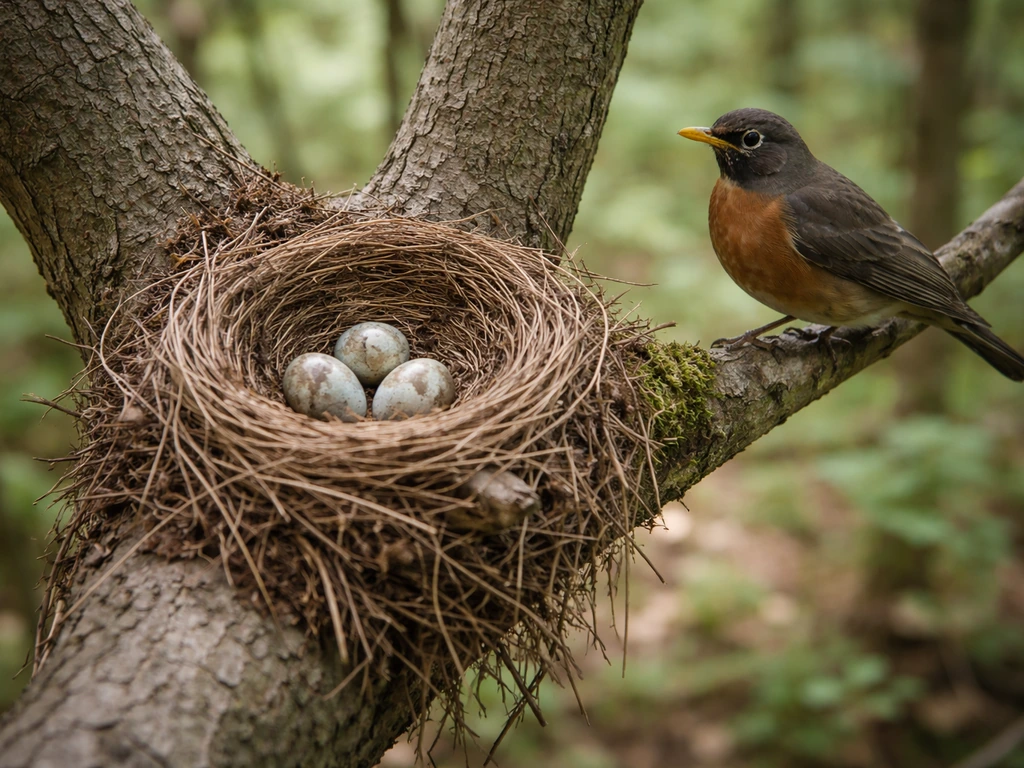
A nest is active if it currently holds eggs, live nestlings, or shows regular adult visits for incubating or feeding. The fastest way to confirm activity today is to stand back at least 30 feet, watch quietly for 10 to 20 minutes, and look for an adult returning to sit on or feed at the nest. If you see that, you have your answer. If you don't see adults right away, the physical clues inside and around the nest can fill in the gaps.
How to Tell If a Bird Nest Is Active: Quick Checklist

Maya Bennett
19 May 2026
Quick checklist: active or not?
Run through this list before you do anything else. You don't need all of these to confirm activity. One or two strong signals is usually enough.
- Adult bird seen returning to the nest or sitting inside it
- Adult carrying food (insects, berries, worms) toward the nest
- Adult carrying a white fecal sac away from the nest
- Audible cheeping or begging calls coming from inside the nest
- Adult bird displaying alarm behavior (dive-bombing, loud scolding calls, wing-spreading) when you approach
- Visible eggs or feathered/naked nestlings when viewed from a safe distance
- Fresh droppings on the rim or below the nest (white streaks on a branch or wall beneath it)
- Nest cup looks clean and well-shaped, not flattened or weathered
- Nest material has been added or rearranged recently (look for fresh green leaves or new feather lining)
- The leaf test: a small leaf or twig placed lightly at the nest entrance is gone or moved 24 hours later
If you checked at least two or three of these and got a yes, treat the nest as active and leave it alone. If everything comes back negative and the nest looks weathered, flattened, or structurally collapsed, you're likely looking at a finished or abandoned nest. The article on how to know if a bird nest is abandoned goes deeper into that side of the question if you need it.
Behavioral signs that tell you the nest is in use
Adult behavior is the most reliable real-time signal you have. If you're wondering how to identify a bird nest in your yard, start by watching from a distance for signs of adults returning to incubate or feed. Sit or stand at a comfortable distance, ideally with binoculars, and just watch. You're looking for a pattern, not a single sighting.
Adults returning to incubate
During incubation, one or both parents (depending on species) make regular trips back to sit on the eggs. The trips are often short, especially in warm weather, and you might catch an adult landing on a nearby branch before dropping into the nest. If the nest is in your bushes or eaves, you may not see this unless you're watching specifically for it. Give yourself a full 15 to 20 minutes before concluding no one's home.
Food deliveries and fecal sac removal
Once eggs hatch, adult behavior shifts dramatically. Instead of sitting quietly, they become courier birds, arriving every few minutes loaded with insects or caterpillars. Watch for an adult landing on a branch just below or beside the nest, then dipping in briefly before flying off again. On the return trip, watch for a parent carrying a small white blob away from the nest.
That's a fecal sac, essentially a sealed waste packet the nestlings produce, and adults remove them to keep the nest clean and predator-free. Fecal sac removal is a near-certain confirmation that there are live chicks inside. NestWatch’s monitoring manual describes these coded nest-check indicators and provides guidance on what to do during checks to avoid disturbance [Fecal sac removal is a near-certain confirmation that there are live chicks inside. ](https://nestwatch.
org/wp-content/uploads/2020/01/NestWatchmanual20191106. pdf).
Defensive behavior
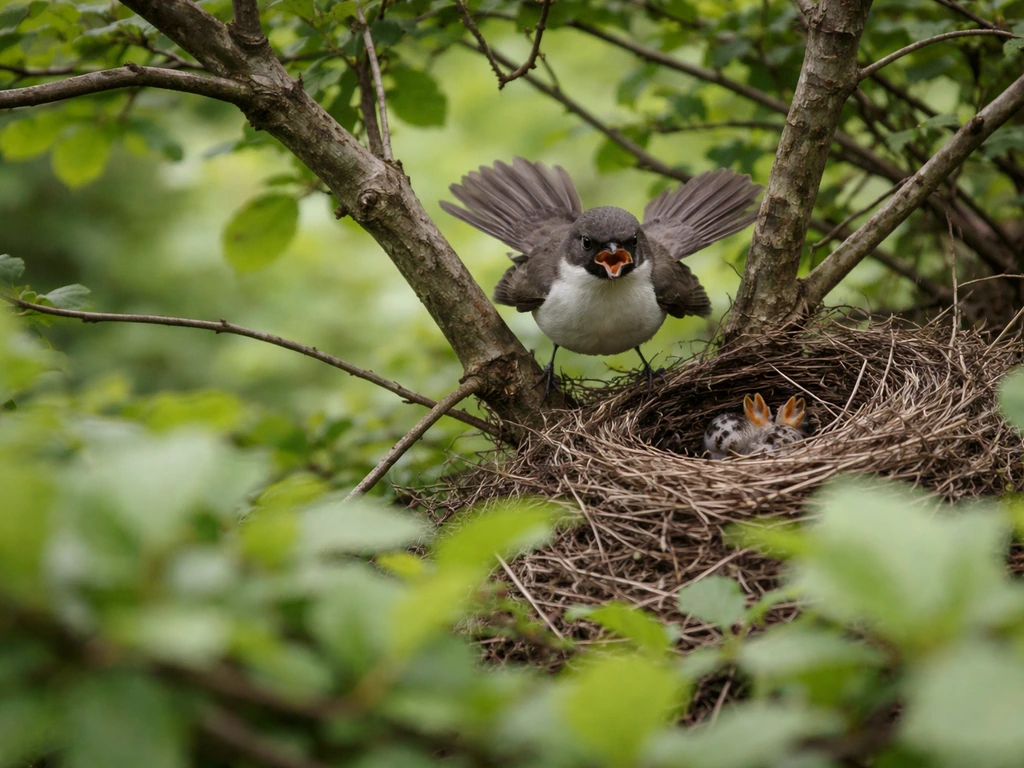
If an adult bird starts scolding loudly, doing a broken-wing display, or dive-bombing you as you approach, that's a strong active-nest signal. Mockingbirds, robins, and red-winged blackbirds are especially aggressive defenders. The moment you notice this behavior, back up immediately. The bird is telling you clearly that you're too close.
What absence of adults doesn't mean
Don't assume a nest is abandoned just because you haven't seen or heard an adult recently. If you suspect the mother bird has abandoned the nest, your best move is to confirm whether there are still living nestlings or active visits before taking action what to do if mom bird abandons nest. NestWatch has documented eggs that hatched long after monitors assumed the nest was inactive. Adults can be gone for stretches during incubation, and some species are quiet and inconspicuous by nature. If the nest looks structurally sound and you're not sure, give it time. The standard guidance is to wait four weeks after eggs are first spotted before drawing any conclusions about abandonment.
Physical signs inside and around the nest
When you can't observe adults directly, the nest itself tells a story. You don't need to touch or approach closely to read these clues.
Eggs and chicks
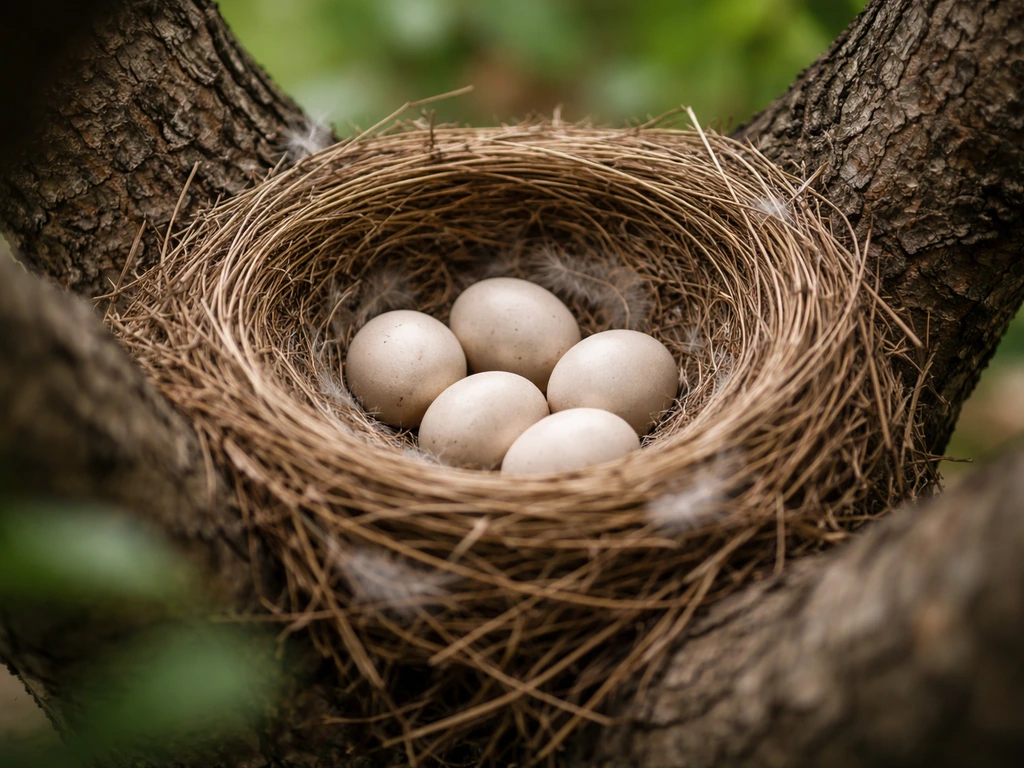
If you can see eggs from a safe distance (binoculars help here), the nest is active by definition unless those eggs have been sitting untended for more than four or five weeks with no adult visits at all. Cracked or missing eggshell fragments on the ground directly below the nest often mean eggs have hatched recently. Cracked or missing eggshell fragments on the ground can also help you understand whether nestlings have recently hatched eggs have hatched recently. Nestlings are obvious once they're a week or more old, especially in open-cup nests where you can see beaks pointing upward.
Nest condition and fresh lining
An active nest looks maintained. The cup is well-shaped and holds its structure. Many species add soft lining material, such as feathers, plant down, or fine grass, right before laying. If you notice what looks like newly added material compared to the outer structure, that's a sign the nest is in active use. A nest that's been rained on repeatedly, has collapsed walls, or is covered in spider webs and leaf debris is more likely finished for the season.
Droppings and debris timing
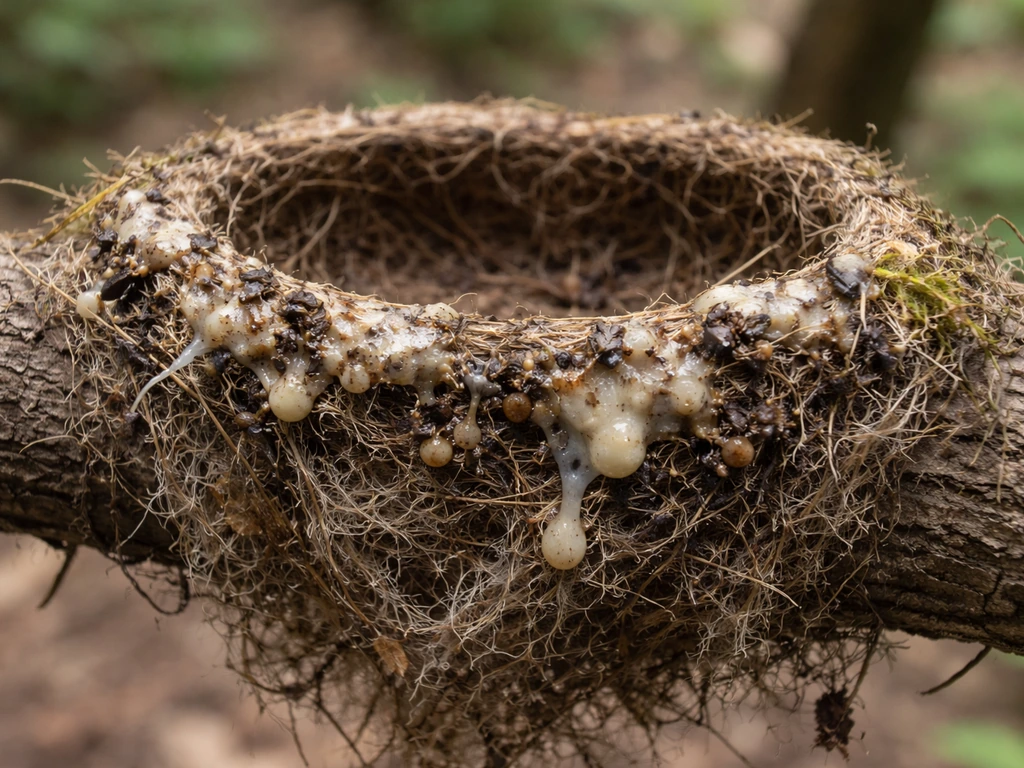
Fresh white droppings on the rim, on branches below the nest, or on hard surfaces directly underneath it are a good activity indicator. Keep in mind that the absence of droppings during early incubation is normal because adults don't produce large volumes at the nest and nestlings haven't hatched yet. As chicks grow, waste output increases quickly and becomes very obvious.
The leaf test
If you genuinely can't observe the nest contents from a distance, some nest surveyors use a simple leaf test: place a small, lightweight leaf or piece of dry grass loosely at the entrance of a cavity nest, or on the edge of an open cup, and check back roughly 24 hours later. If it's gone or moved, something living is interacting with that nest. This works best for cavity nests where you can't see inside without disturbing the bird. Use this method sparingly, it's a last resort, not a routine check.
What active looks like for common backyard nest types
Different nest styles and species have different patterns, so it helps to know what you're looking at. A cavity nester and an open-cup nester don't behave the same way, and their activity signs can look very different.
| Nest type / common species | Where to find it | Active behavior clues | Physical clues |
|---|---|---|---|
| Open-cup (American robin, song sparrow) | Shrubs, tree forks, window ledges | Adult sitting low in cup; frequent food deliveries; loud alarm calls | Visible eggs or nestlings; fresh mud rim; droppings below |
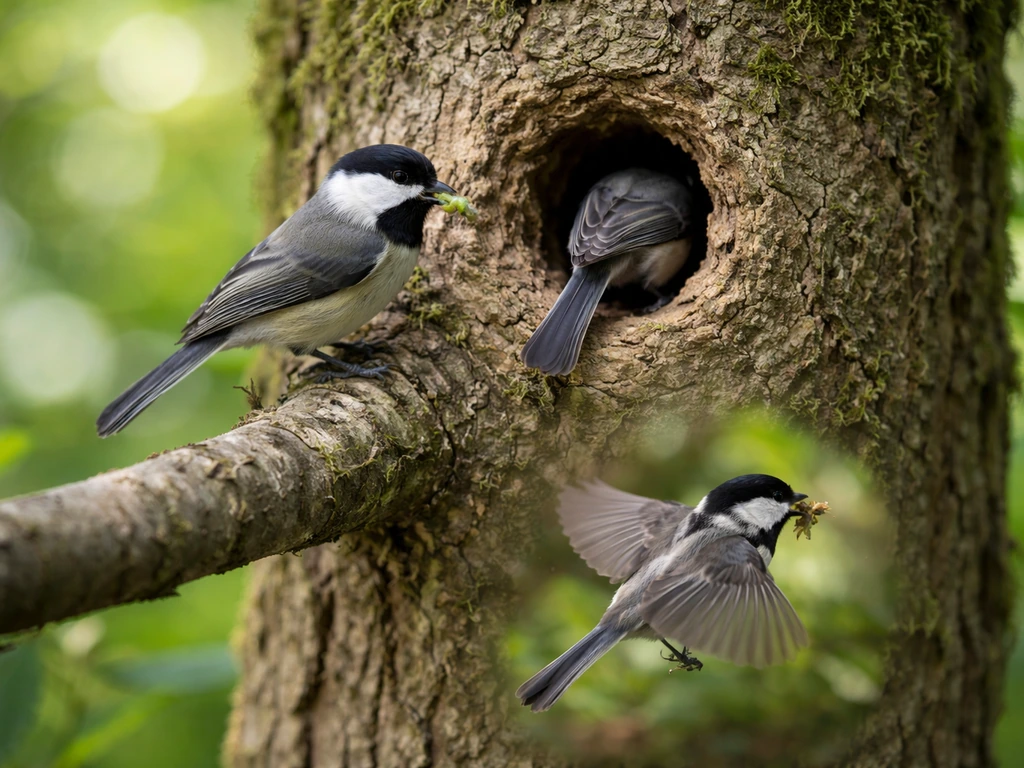
| Cavity / nest box (bluebird, chickadee, house wren) | Tree holes, nest boxes, wooden structures | Adults entering/exiting the hole repeatedly; singing male nearby | Peeping from inside; fecal sacs dropped at entrance; feather lining visible |
| Platform (mourning dove, some hawks) | Flat tree branches, ledges, eaves | Adult sitting flat and still for long periods; mate nearby | Eggs visible from below; droppings accumulating on surface beneath |
| Cup in dense cover (cardinal, catbird) | Dense shrubs, brambles | Very secretive; alarm calls are the main giveaway | Droppings on branches below; adult flushing from shrub when approached |
| Ground nest (killdeer, sparrows) | Lawn edges, gravel, open ground | Broken-wing distraction display; adult running away from nest to draw you off | Shallow scrape with eggs, camouflaged; no obvious structure above ground |
For cavity nesters especially, what counts as active can be harder to see from outside. Watch the entrance hole for 10 to 15 minutes. A bird going in and out multiple times is a reliable signal. A nest box with a dark interior and no movement at all over two full observation windows is more likely inactive, but don't pull the box open to check without reading the cautions below.
When to check and when to leave it completely alone
The best approach is always distant observation first. Binoculars from 30 feet or more give you most of what you need without disturbing a thing. Only approach closer if you genuinely need to confirm contents and can't do so any other way.
Safe observation practices
- Watch from at least 30 feet away with binoculars; a zoom lens on a camera works well too
- Observe for 10 to 20 minutes before concluding the nest is inactive
- If you must approach a nest box or elevated nest for a closer look, do so only when the adult has left voluntarily, never flush the bird off the nest
- Limit close checks to once every 3 to 5 days at most; daily disturbance adds real stress
- Vary your approach path each time to avoid creating a worn trail that predators can follow directly to the nest
- Never touch eggs or nestlings; the myth that parents abandon a nest after human touch is mostly false, but handling can cause real physical harm to eggs and young chicks
- Avoid checking at dawn and dusk, which are peak feeding times and the most critical periods for nestling survival
When to back off entirely
If the adult is displaying alarm behavior, visibly flushing repeatedly, or the nestlings are calling loudly and moving toward the nest rim, you're too close. Back away immediately. Smithsonian's nest monitoring guidelines specifically warn that startled adults can knock eggs or chicks out of the nest. If the bird won't settle back down within a few minutes of you retreating to distance, leave the area entirely and try observing again later in the day.
What to do once you've confirmed the nest is active
Once you know for certain you have an active nest, your job shifts from investigation to protection and patience. Here's what that looks like in practice.
Adjust your yard work schedule
This is the most immediate practical step for most homeowners. Mowing directly under or near an active nest stresses the birds and can vibrate eggs off the cup. Trimming shrubs with an active nest inside can flush the adults off permanently. Push those tasks back until after the nest cycle ends. Most songbird nests run about four to six weeks from egg-laying to fledging, so you're typically looking at a short delay. Mark the area with a small garden flag or a note on your calendar so you don't forget.
Basic predator protection
- Keep cats indoors or supervised during the nest cycle; free-roaming cats are the single largest source of nest predation in suburban yards
- If the nest is in a nest box, add a predator guard (a metal baffle on the pole or a wooden entrance extender) to prevent raccoons and snakes from reaching in
- Don't prune away the surrounding vegetation that provides natural cover, even if it looks messy
- Avoid attracting crows or jays to the immediate area by temporarily relocating feeders that draw them close to the nest site
What not to do
- Do not relocate the nest, even if the location is inconvenient; birds have strong site fidelity and will not find a moved nest
- Do not add material to the nest or try to reinforce it
- Do not remove the nest to see what's inside
- Do not use pesticides near the nest site during the active period; nestlings that eat poisoned insects can die quickly
- Do not share the exact nest location on public social media, as this can bring too many visitors and increase stress on the birds
Document what you're seeing
Take a quick photo from a safe distance every few days and jot down what you observed and the date. This gives you a timeline that's genuinely useful if the nest later seems to stall or if you need to report a disturbance or injury to a wildlife rehabilitator. NestWatch's free monitoring program accepts exactly this kind of data and puts it to good scientific use.
Legal protections and what you're not allowed to do
This isn't a gray area. In the United States, the Migratory Bird Treaty Act (MBTA) makes it illegal to destroy, damage, or disturb a nest that contains eggs or live chicks. That covers virtually all native songbirds, raptors, shorebirds, and waterfowl. A USFWS fact sheet states directly that destroying active nests is 'blank" rel="noopener noreferrer">fully prosecutable,' and that a permit is required even to disturb an active nest, a permit that is issued only in very limited circumstances.
The MBTA does allow removal of a nest that contains no eggs or birds, because no possession of a protected species occurs during that act. So a finished nest from last season sitting on your porch is generally fine to remove. But if there's any doubt about whether it's still active, leave it alone and observe first.
In Canada, the framework is similar. Environment and Climate Change Canada defines an occupied nest as one containing a live migratory bird or a viable egg during breeding season. Activities that could disturb or destroy such nests must be avoided, adapted, rescheduled, or relocated. Canadian guidance explicitly states that removing a nest after the breeding season, once it no longer contains a live bird or viable egg, has no effect on the birds' ability to nest again.
What requires a permit
- Destroying an active nest (eggs or chicks present) for any reason, including construction or renovation
- Disturbing or moving an active nest, even to a safer location nearby
- In Canada, any work that could damage or destroy an occupied migratory bird nest without prior avoidance or rescheduling
What does not require a permit (generally)
- Removing an old, empty, clearly finished nest from last season
- Observing an active nest from a safe distance
- Installing predator guards or nest boxes near but not touching an active nest
- Adjusting yard work timing to avoid disturbance
Non-native, non-migratory species like European starlings and house sparrows are not protected under the MBTA, so the legal calculus is different for those specific birds. But even in those cases, most wildlife professionals recommend against disturbing nests carelessly, both because it's good practice and because misidentification of species is easy.
Your next steps right now
If you've found a nest and you're not sure what to do, here's the short version: grab binoculars, watch from a distance for 15 minutes, and run through the checklist at the top of this article. If you are trying to locate one in the first place, focus on likely nesting spots like shrubs, eaves, and cavities grab binoculars, watch from a distance for 15 minutes.
Use the steps in this guide to identify whether the nest is active and to confirm it safely find a bird nest. If the nest looks active, mark the area, adjust your yard schedule, and let the birds do their thing. If you're still uncertain after watching for a few days, give it the full four-week window before drawing conclusions about abandonment.
If you need more detail on abandoned nests, use the guide on how to know if a bird nest is abandoned. And if you need to take any action that might disturb an active nest, check local regulations first, because the legal protections are real and the fines are too.
Most of the time, the birds just need you to stay back and be patient. That's genuinely the most helpful thing you can do. If a bird seems to be looking for its nest, start by keeping people and pets away and give it time, since it often returns once the area is calm and safe help a bird find its nest.
FAQ
How long should I watch before I decide a nest is not active?
No. A lack of adult sightings for a short window can happen when adults take brief feeding or incubation breaks, especially early morning, bad weather, or in cavity nests. If you cannot confirm adults after 15 to 20 minutes of quiet, distant observation, switch to nest-based clues (eggshell fragments, fecal sacs, fresh lining) rather than assuming inactivity immediately.
Can I touch the nest or open it to confirm whether it is active?
Use caution, because the “stirs moving” idea can backfire. If the nest is active, handling, repositioning, or shining a bright light inside can chill eggs or cause adults to abandon. For uncertainty, watch from at least 30 feet longer, use binoculars, and only consider nest-entry checks if you are authorized and trained.
What if I only see one adult bird near the nest one time?
Yes, but the pattern matters. A single adult landing once can be unrelated activity, even in an active territory. Look for repeated returns, consistent timing (short trips during incubation, frequent deliveries during chick stage), or alarm behavior when you approach.
What does it mean if there are no droppings under the nest?
Some nests can be active even when you do not see droppings. Early incubation produces little waste at the nest, and droppings might fall on foliage, not the visible rim. If droppings are absent, rely more on eggshell timing, fresh lining, adult return rates, or chick-courier behavior rather than droppings alone.
How can I tell if a cavity nest is active when I cannot see inside?
If it is a cavity nest, the entrance-hole watch is usually more reliable than checking the outer rim. Watch for multiple entries and exits across two or more observation windows, and do not assume inactivity just because you cannot see eggs or nestlings through the hole.
Can an active nest look abandoned for part of the day?
Egg or nestling activity can be intermittent. In some species the adults may stay away longer while foraging, so “adult not seen yet” is not the same as “adult never returns.” If you cannot confirm activity on day one, try again at a different time of day before concluding the nest is abandoned.
How do I interpret fresh nesting material when I’m not sure when it was added?
Freshly added nesting material is a strong indicator, but the direction of change matters. If you see newer lining inside the cup, or recently gathered fibers compared with the outer structure, that points to active use. If the nest is uniformly old, weathered, and structurally collapsed, fresh-material clues are less likely.
Does the advice change if I think the nest is European starling or house sparrow?
Avoid assuming species identity from behavior alone. Some non-native species may be less protected, but misidentification is common, especially with similar-looking songbirds and sparrows. If you are not confident, treat the nest as protected and keep distance, since the legal and safety stakes are high.
What should I do if I need to mow or repair something near an active nest?
Yes. If a nest is active and you must move or repair something nearby, contact local wildlife authorities or a qualified wildlife rehabilitator before doing any work. Many permits are narrow and time-sensitive, and even well-intended repairs can qualify as disturbance if adults are incubating or feeding chicks.
How do I handle uncertainty when I cannot clearly see eggs?
Give it the full window before taking “abandoned” actions. For many cases, the guidance is to wait about four weeks after eggs are first spotted, because some eggs hatch later than expected and monitoring can miss intermittent adult returns. If you cannot see eggs clearly, extend monitoring across multiple days and times before deciding.