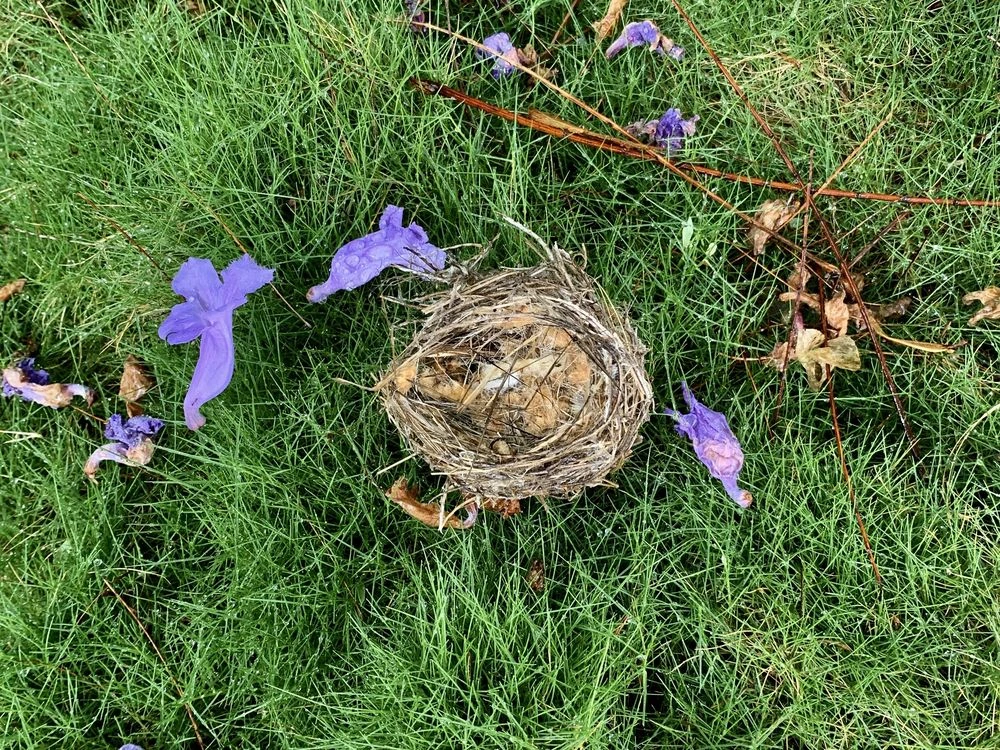
If you find a bird nest that has fallen out of a tree, the best thing you can do in most cases is put it back as close to its original spot as possible, then step back and watch from a distance. Birds do not abandon their nests or chicks because a human touched them, that's a myth. The bigger risks are temperature exposure, predators, and well-meaning people doing too much too fast. Common culprits include predators, weather extremes, and people disturbing nests, all of which can lead to nest failure. Here's how to handle the next hour or two the right way.
What to Do If a Bird Nest Fell Out of a Tree
Maya Bennett
18 May 2026
First steps: assess safety and the situation
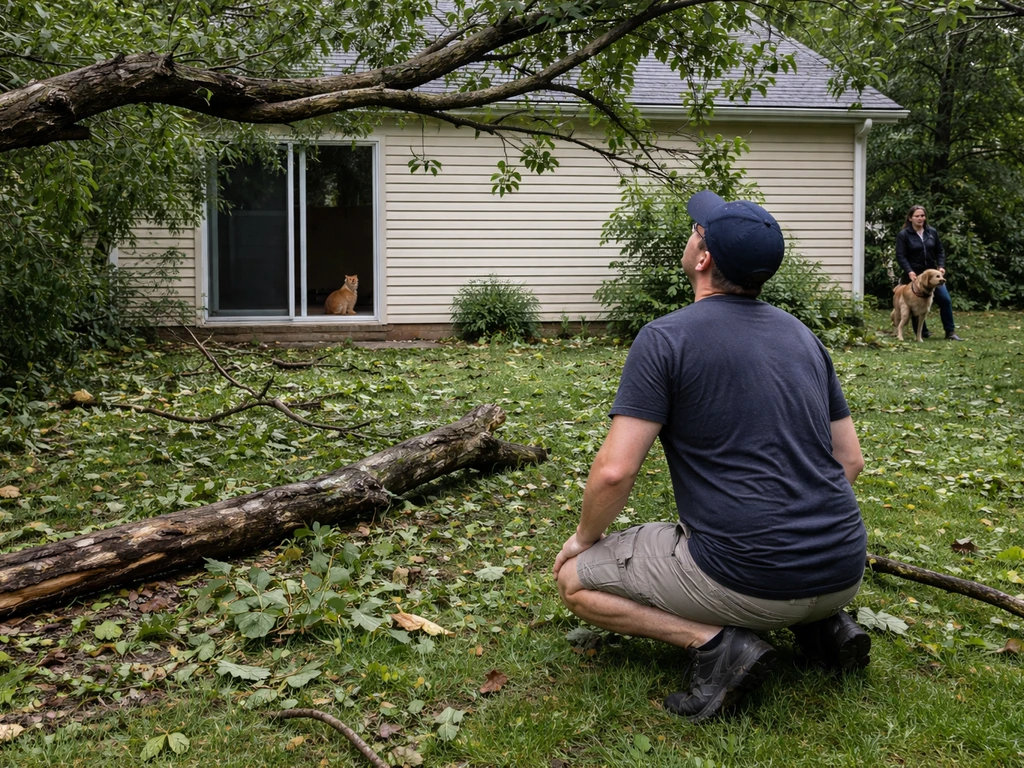
Before you touch anything, take 60 seconds to read the scene. Look up: is there a broken branch overhead that could still fall? Is the tree damaged from a storm, with more debris likely? If the area feels structurally unsafe, don't linger underneath it. Also check the weather, if it's a hot day (above 85°F) or cold (below 50°F), time is a real factor for any eggs or chicks on the ground, and you'll want to act within the next 30 minutes rather than deliberating for an hour.
Get pets and children back inside or away from the area immediately. A cat or dog that mouths a baby bird, even briefly, introduces bacteria that can be fatal, and their presence will prevent parents from returning. Once the area is clear, take a quick photo of where the nest landed and where it came from in the tree. That reference will help when you go to put it back.
How to identify what you found
You need to figure out two things: what kind of nest it is, and what stage any birds inside are at. These answers drive every decision you make next.
Reading the nest itself
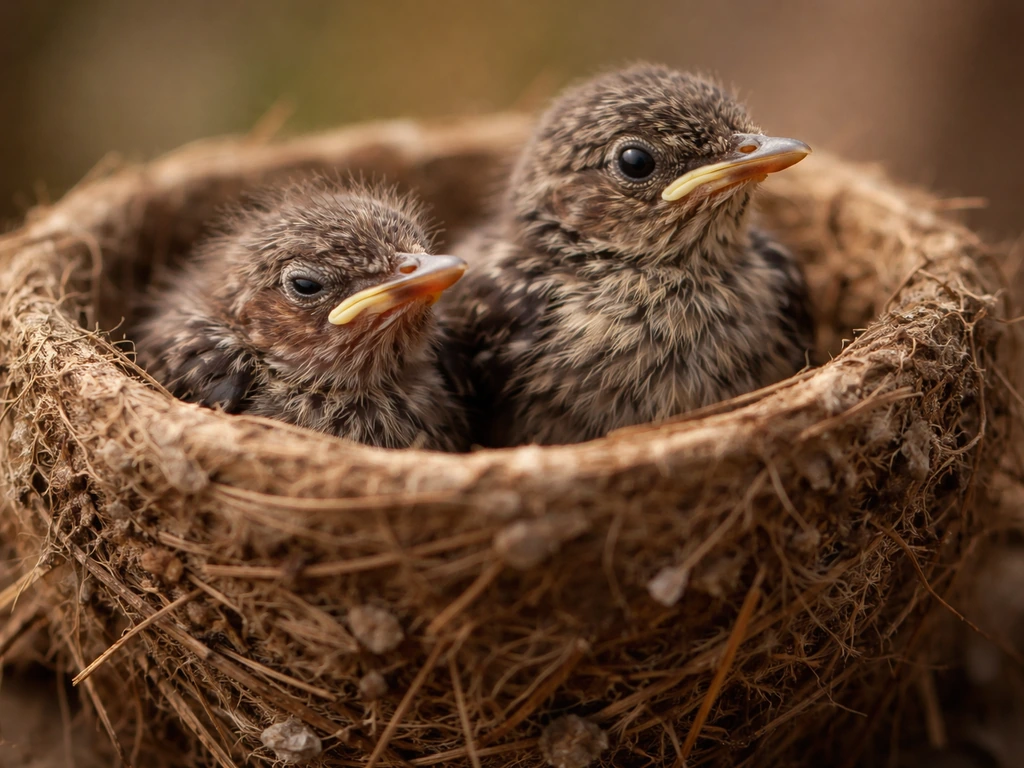
A cup-shaped nest woven from grasses, plant fibers, and mud is typical of robins, thrushes, and many songbirds. A looser, bulkier twig platform usually means a dove or larger bird. If the nest is a tightly woven pouch hanging from a branch tip, you're likely looking at an oriole nest. Knowing the rough species helps you gauge how long the nesting cycle has left and whether you're dealing with a very small, delicate species or something more robust.
Nestling vs. fledgling, the most important distinction
If there are birds in or near the nest, identify their stage before doing anything else. A nestling has little to no feathering, mostly bare pink or grayish skin, maybe sparse down, eyes possibly still closed, and very little ability to move on its own. A fledgling is noticeably more feathered, has a short stubby tail, can hop and grip, and may have left the nest on purpose even before it can fly.
Fledglings found hopping on the ground are often not in crisis, they're in a normal developmental phase where parents are still feeding them on the ground for days or even up to a week. A nestling on the ground, on the other hand, is genuinely out of place and needs help getting back.
| Feature | Nestling | Fledgling |
|---|---|---|
| Feathers | Sparse or none; mostly bare skin | Mostly feathered; short tail visible |
| Eyes | Often closed or just opening | Open and alert |
| Movement | Helpless; can barely lift head | Hops, grips, may attempt short flights |
| On the ground | Out of place — needs intervention | Often normal; parents nearby |
| Typical action | Return to nest or make surrogate | Leave alone; monitor for parental care |
What to do based on the bird's stage
If the nest has eggs only
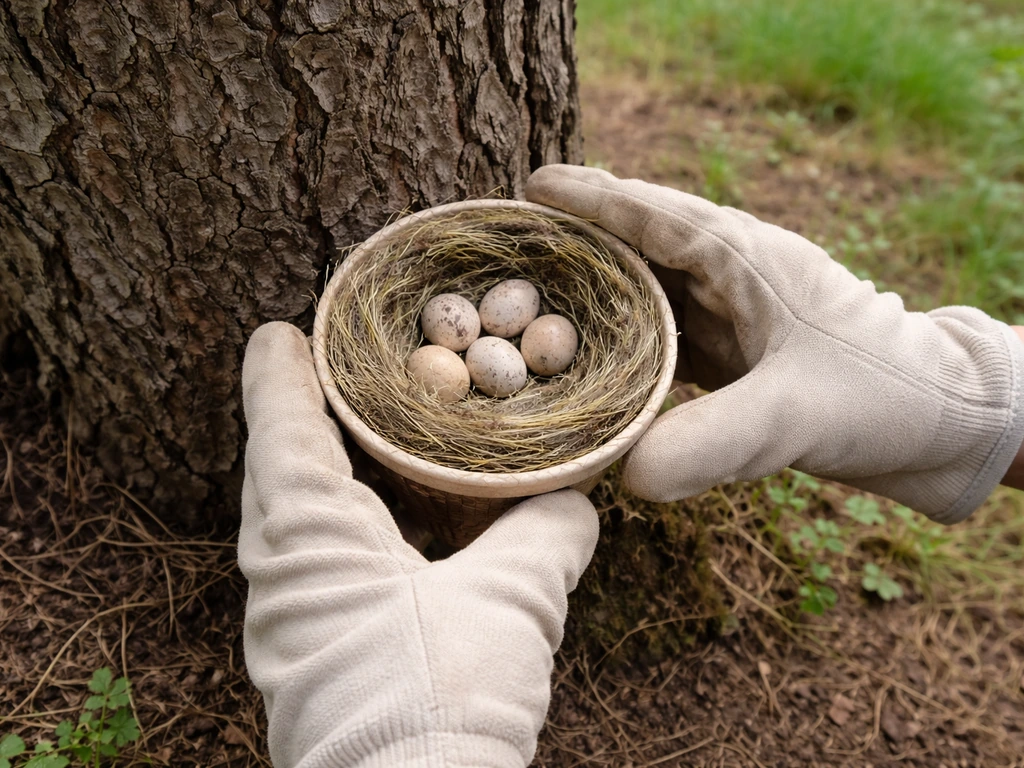
Try to return the nest to its original location as quickly as you can. Eggs cool and lose viability fast, especially in cold or windy conditions. Use garden gloves or a clean cloth to handle the nest, gently collect any eggs that rolled out, and place them back inside. If the nest has fallen, use this step-by-step guide on how to get a bird nest down safely and quickly.
Then secure the nest in the same spot in the tree using a small plastic container (like a strawberry basket or mesh produce bag) fastened to the branch with cable ties. Make sure it's stable, a nest that rocks or tips will be abandoned. Once it's back up, move away and watch from at least 30 feet for an hour to see whether the incubating adult returns.
If nestlings (baby birds) are in the nest
Returning the nest to the tree is still the best first move. If the original nest is too damaged to hold babies safely, make a surrogate: take a small plastic container or cardboard box, punch drainage holes in the bottom, and line it with dry leaves, dried grass, or crumpled paper towels shaped into a cup.
Transfer the nestlings gently and secure the surrogate nest in the tree as close to the original spot as possible, in a shaded area out of direct sun and sheltered from rain if you can manage it. Step back and watch from a distance. According to guidance from multiple wildlife clinics, parents recognize their chicks by sound, not smell, and will return to feed even after human handling.
Watch for about one to two hours without hovering close. If a parent comes and feeds even once during that window, the family unit is intact and your job is essentially done. If no parent appears after two hours, that's your cue to call a wildlife rehabilitator.
If it's a fledgling
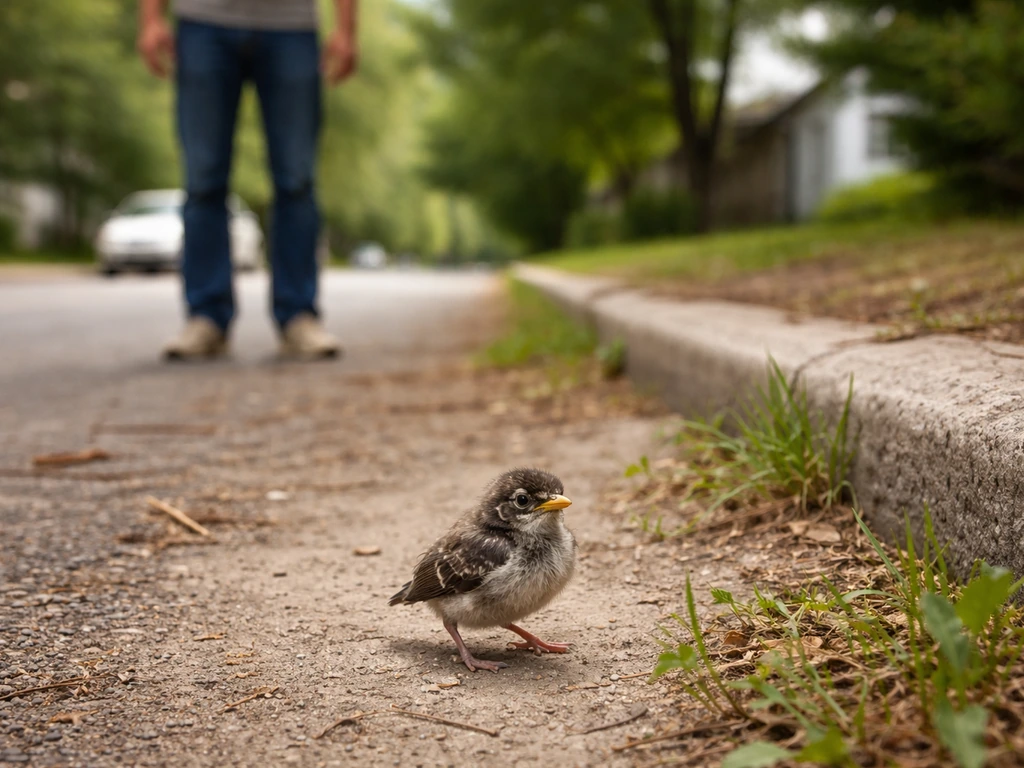
The most common mistake people make is rescuing a fledgling that doesn't need rescuing. If the bird is feathered, hopping around, and acting alert, leave it exactly where it is. Move pets and people away, and watch from a distance. Parents are almost certainly nearby and actively feeding it. If the fledgling is in a genuinely dangerous spot (middle of a busy road, directly under a predator), you can move it a few feet to safer ground or low shrub cover, but don't take it inside. If no parent appears within about an hour and the bird seems weak or injured, then contact a rehabilitator.
Legal and ethical rules before you do anything
In the U.S., most wild birds are protected under the Migratory Bird Treaty Act (MBTA). This federal law makes it illegal to take, possess, or destroy migratory bird nests when eggs or dependent young are present. Practically speaking, this means you cannot simply throw a fallen nest in the trash if it has eggs or chicks in it, and you cannot keep baby birds at home to raise them yourself. Returning a nest to its tree is not a violation, it's the right thing to do. What crosses the legal line is transporting live birds off your property without a permit, housing them without a wildlife rehabilitation license, or intentionally destroying an active nest.
State laws layer on top of federal protections, and some species (like certain raptors or songbirds) carry additional protections. If you suspect you're dealing with a protected or rare species and aren't sure what to do, call your state wildlife agency before taking any action beyond keeping people and pets away.
One important ethical point: do not assume a nest is abandoned just because you haven't seen a parent in 20 minutes. Adults often leave the nest to forage and won't approach if you're standing nearby. Give it real time, at least an hour of observation from a respectful distance, before concluding the nest is truly unattended.
When to call wildlife rehab or a local authority
Some situations are beyond what a well-meaning homeowner should handle alone. Contact a licensed wildlife rehabilitator if any of the following apply: Mass Audubon notes that most of the time it’s best to do nothing (leave them be) and assess for injury, and that blood or obvious damage should trigger contacting a licensed wildlife rehabilitator.
- The bird is visibly injured — bleeding, a drooping or broken wing, inability to stand, labored breathing, or flies circling it
- The bird is cold, limp, or unresponsive (eyes fully closed, lifeless posture)
- A cat or dog has had physical contact with the bird, even briefly — bacterial infection from a bite or scratch is a serious risk that needs veterinary-level treatment
- No parent has returned after two hours of watching from a distance
- You cannot safely reach the original nest location or a nearby branch to replace it
- There are extreme weather conditions (temperature below 45°F or above 95°F) and you cannot return the nest quickly
- You believe the bird is a protected species like a hawk, owl, or songbird with unusual markings you don't recognize
To find a licensed rehabilitator near you, search the National Wildlife Rehabilitators Association database or call your state's fish and wildlife agency. Many animal control offices also have direct referral lines for bird emergencies. While you wait for guidance, keep the bird calm and warm: place it in a ventilated cardboard box lined with paper towels, and set one end of the box on a heating pad on the lowest setting. Do not put the whole box on the heat source, the bird needs a cool side to move to if it gets too warm. And do not offer food or water. Feeding a baby bird incorrectly can cause aspiration and death faster than going hungry for a few hours.
Protecting the nest area and preventing it from happening again
Once the nest is back up and parents are returning, your next job is to reduce threats to the nest for the rest of the nesting cycle. If you found a bird nest in your tree, focus on the safest steps to protect the nest area and support the parents rather than trying to remove it immediately. Keep cats indoors, full stop. Even a cat that watches from below will suppress parental feeding behavior. If you have outdoor cats, this is the moment to bring them in for the next two to four weeks until the chicks fledge.
Add a temporary predator deterrent if you have known squirrel, raccoon, or crow activity in the yard. A simple cone-shaped baffle on the tree trunk (similar to what you'd use on a bird feeder pole) can block climbing predators from reaching the nest. Avoid placing anything that could tangle birds or hatchlings.
To prevent future falls, look at why this one came down. Storm damage, a structurally weak branch, heavy nest construction in a location that couldn't support the weight, or a nest built on a surface with no real anchor point are the most common causes. If a particular branch is consistently chosen by nesting birds but tends to shed nests, consider adding a shallow wire basket or wooden platform to that spot before next season. Birds will often reuse or nest near a proven site.
Aftercare: what happens next and what not to do
Once the nest is secure and parents are back, monitor it passively. Check from a distance once or twice a day, binoculars are ideal, but resist the urge to look into the nest directly or repeatedly. Excessive disturbance can stress the adults and interrupt feeding. Most songbird nestlings fledge within 10 to 14 days of hatching, so the active phase passes quickly.
When the birds are definitively gone (no activity for several days, chicks confirmed fledged), you can remove and dispose of the nest. Once the birds are gone, you can dispose of the nest, which is a key part of how to remove a bird nest safely. At that point, the MBTA no longer restricts you from handling it since the nest is inactive. Wear gloves, old nests can carry mites, lice, and bacteria. Do not compost a nest from a yard where cats have been hunting nearby; bag it and discard it instead.
A short list of things not to do
- Don't feed nestlings or fledglings anything — no worms, cat food, water, or bread. Parents will feed them if given the chance.
- Don't attempt to raise a baby bird yourself at home. It's illegal without a permit and survival rates under amateur care are very low.
- Don't move the nest more than once. Repeated relocation stresses the parents and reduces the chance they'll return.
- Don't use glue, tape, or chemicals to secure a nest — these can trap and injure birds.
- Don't assume the nest is abandoned because a parent hasn't appeared within 15 or 20 minutes of you standing there. Your presence is likely the reason the parent is staying away.
- Don't put the nest in direct sunlight or leave it fully exposed to rain — shelter matters.
- Don't try to reunite the nest if a pet has mouthed the birds. Call a rehabilitator instead.
The core principle here is to intervene minimally and purposefully. Give the parents every realistic chance to resume care, protect the nest from immediate physical threats, and call in a professional the moment you're dealing with an injury or a situation outside your ability to manage safely. In most cases, a fallen nest is a fixable problem, you just need to act calmly, think about it from the bird's perspective, and stay out of the way once you've done your part. If the nest is stuck in a chimney, use the same calm, bird-safe approach and follow the specific steps for getting a bird nest out of a chimney how to get bird nest out of chimney.
FAQ
Should I cover a fallen nest with a towel or leave it exposed to the elements?
Leave it alone after you’ve moved it back or set a surrogate. If you must protect it briefly while waiting, use a loose, breathable cover (like dry leaves) to reduce sun or wind exposure, avoid sealing it airtight, and never place plastic directly over eggs or nestlings.
What if the eggs or nestlings are cold when I find them?
Aim to return them quickly, warmth matters, but use only gentle stabilization. If you cannot get the nest back immediately, place the bird(s) in a ventilated cardboard box and use a heating pad on the lowest setting for short periods, keeping one side cooler so they can move away if they warm too much.
Can I use a “birds are abandoned” rule if no parent shows up quickly?
Don’t rely on a short window. Adults often forage and avoid the area while you are nearby, so observe from a respectful distance for at least an hour (or longer if weather is extreme) before assuming abandonment.
If it’s a fledgling on the ground, should I put it back in the nest?
Usually no. For a hopping, feathered fledgling, the parents often feed it on the ground for days. Put it back only if it is in immediate danger, and in that case move it a short distance to nearby cover, not far away.
How far should I move a vulnerable fledgling to safety?
Move it only a few feet to the closest safe option, such as low shrubs or the edge of a yard away from foot traffic. Avoid carrying it to a different property, and do not place it in a new nest or enclosure.
What if the nest is broken and won’t hold eggs or chicks?
Use a surrogate as described, but focus on stability and correct sizing. Ensure the container is the right size to prevent rolling, line it with dry, loose material, and secure it so it cannot tip or rock in wind.
Is it okay to pick up the entire nest if it fell, instead of touching eggs or chicks?
If you can place the nest back without heavy handling of eggs or nestlings, that’s fine. Minimize contact time, use gloves or a clean cloth, and avoid shaking the nest during transport back to the tree.
How do I know whether I should call a wildlife rehabilitator right away?
Call immediately if you see bleeding, inability to stand or broken wings, severe chilling, or predation damage, or if you cannot safely put the nest back due to structural hazards. Also call if no parent returns after about two hours for nestlings, or about one hour for a vulnerable bird, and the bird appears weak.
What should I do if the nest fell onto a road, sidewalk, or other public area?
First secure the area by keeping people and pets away. Then move the bird only as far as needed to get it out of immediate danger, and return it to the original area’s nearby cover or the nest location when it’s safe to do so.
Can I keep the fallen nest outside until I figure it out, instead of acting immediately?
Don’t delay. Eggs and very young nestlings lose viability faster as temperature and wind change, so act within about 30 minutes in hot or cold weather. If you must pause, clear the area first, take a quick photo, and then proceed with the safest next step.
Do I need to clean or disinfect the nest before putting it back?
No, cleaning is unnecessary and can harm the birds. The priority is quick placement back to the tree or using a surrogate, and then passive monitoring. Avoid spraying disinfectants or adding chemicals to the nest.
Will returning the nest cause the parents to reject the chicks?
Typically no. Parents find young by cues like sound, and they regularly return after normal human contact in most cases. The main risks are disturbance, temperature exposure, and predators rather than smell.
Can I remove the fallen nest later if it looks messy or damaged?
Wait until nesting is definitively over. The article’s guidance implies you should dispose of the nest only after no activity for several days and chicks have fledged. Removing earlier can interrupt care and create orphaning risk.
What predator deterrents are safest for a nest that’s back in the tree?
Use physical barriers that prevent climbing, like a cone-shaped baffle on the trunk, and keep anything that could entangle birds or hatchlings out of reach. Avoid tying strings, using sticky substances, or placing loose netting near active nests.
Next Articles
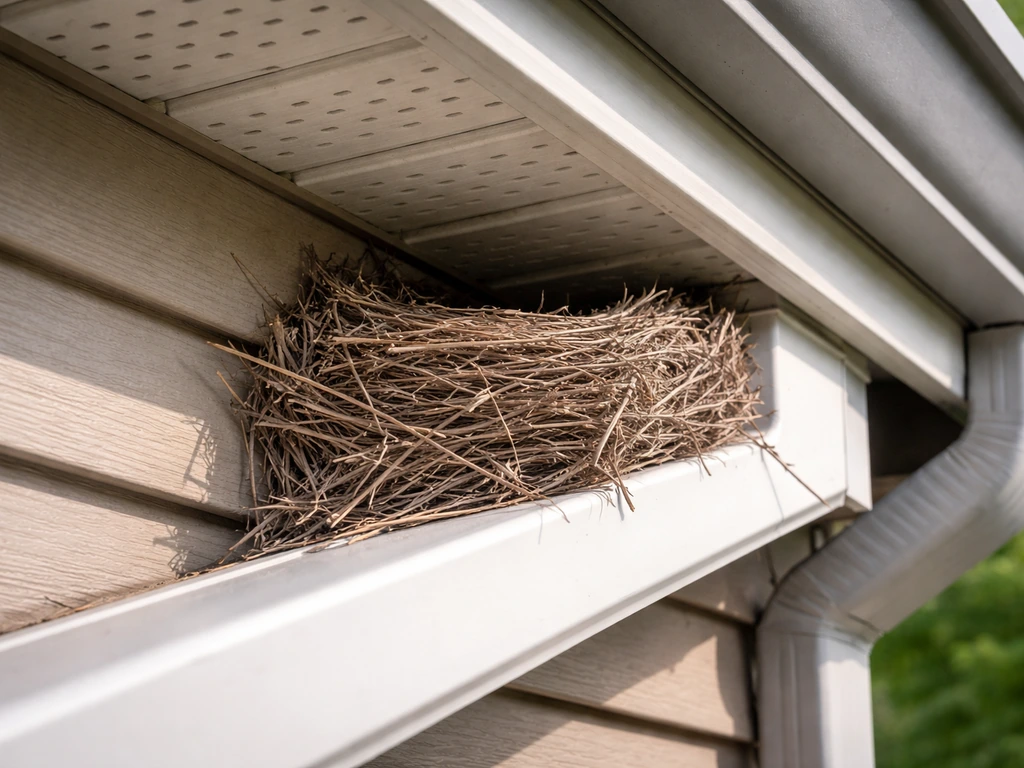
How to Get a Bird Nest Down Safely and Humanely
Step-by-step humane ways to get a bird nest down safely, check if active, follow laws, then prevent it returning.
Days Gone How to Destroy Bird Nests: Ethical Removal Steps
Ethical, legal steps to stop nesting in Days Gone style scenarios: identify nests, avoid active removal, use exclusion a
What Destroys Bird Nests: Causes and How to Protect Them
Learn what destroys bird nests, spot clues on-site, and protect active nests from predators, weather, people, and diseas