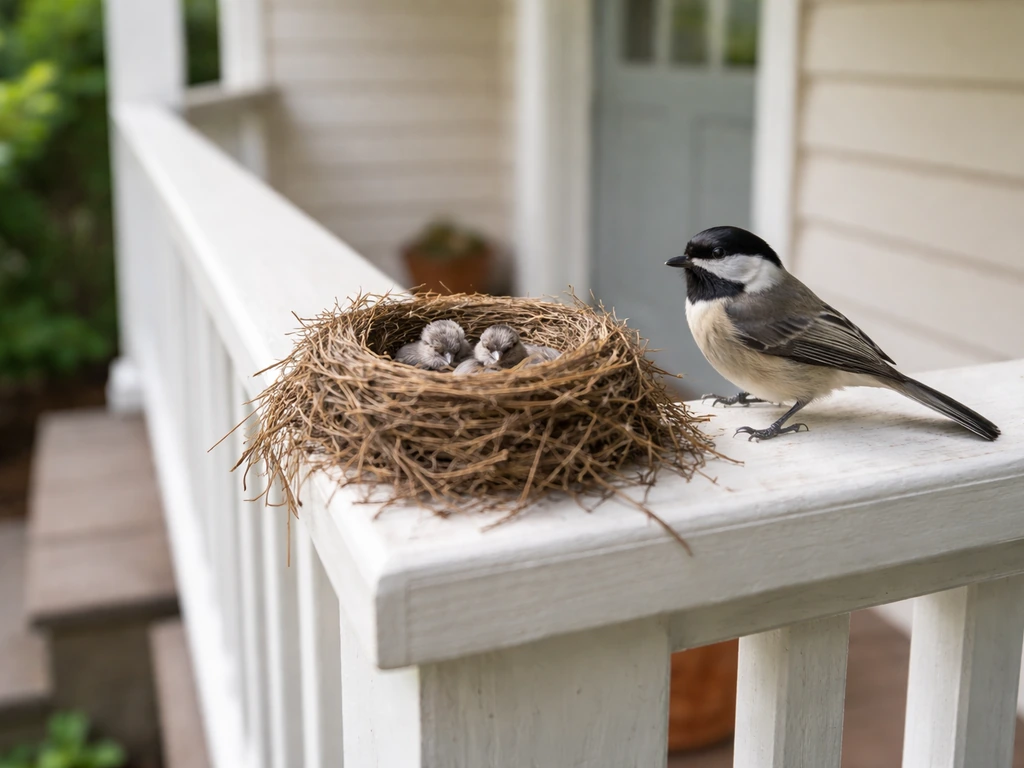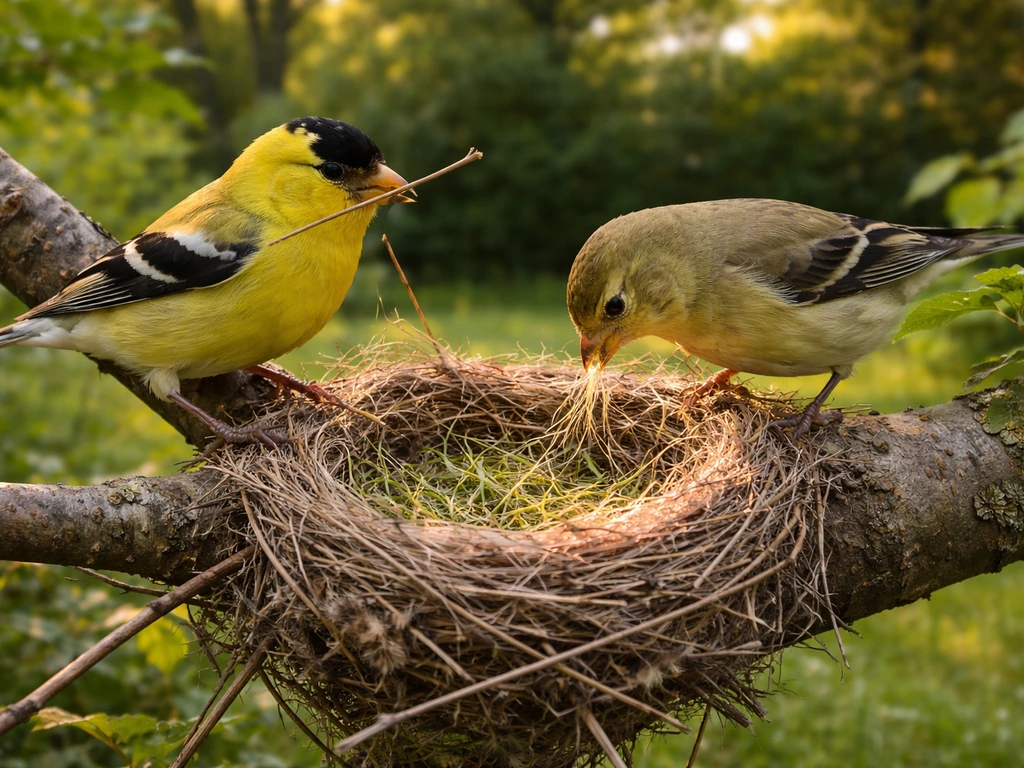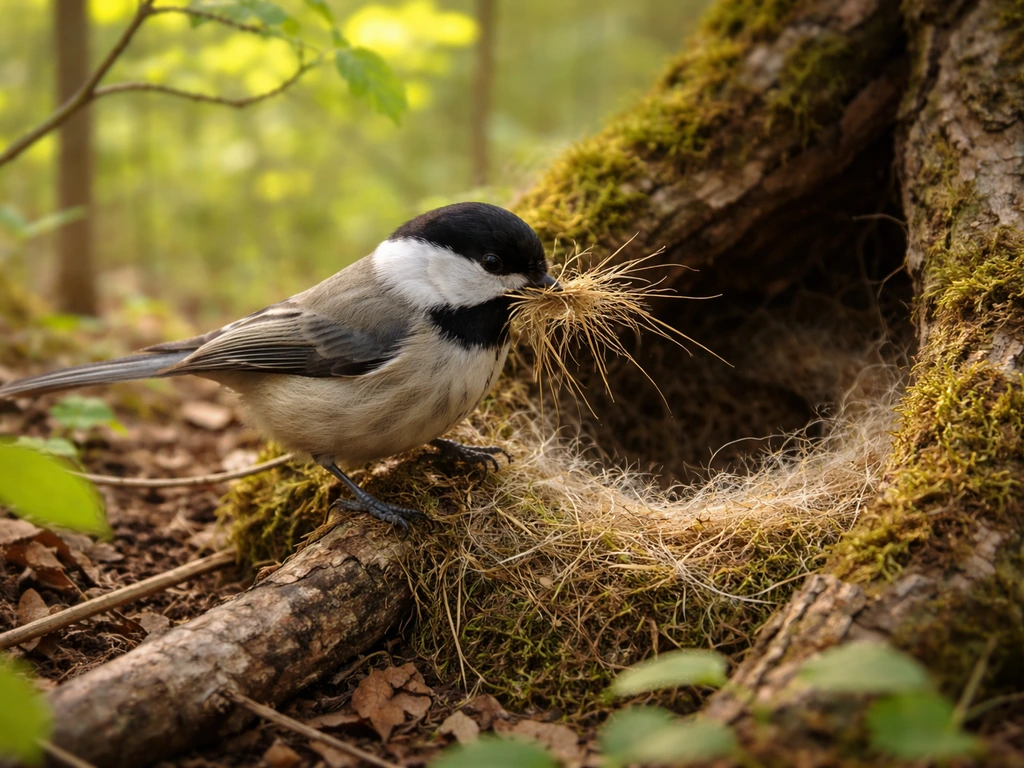
No, not all bird species build nests. Most do, but a meaningful number lay eggs directly on the ground with no structure at all, excavate burrows, take over existing cavities, or skip nest-building entirely by dropping their eggs into another bird's nest. The word "nest" covers an enormous range of behaviors, from a woven grass cup in a shrub to a shallow scrape in gravel where a bird simply settled for a moment. If you've just found eggs or chicks somewhere unexpected, that range matters a lot for figuring out what you're looking at and what you should do next.
Do All Bird Species Build Nests? What to Do Today

Maya Bennett
16 May 2026
What actually counts as a "nest"?
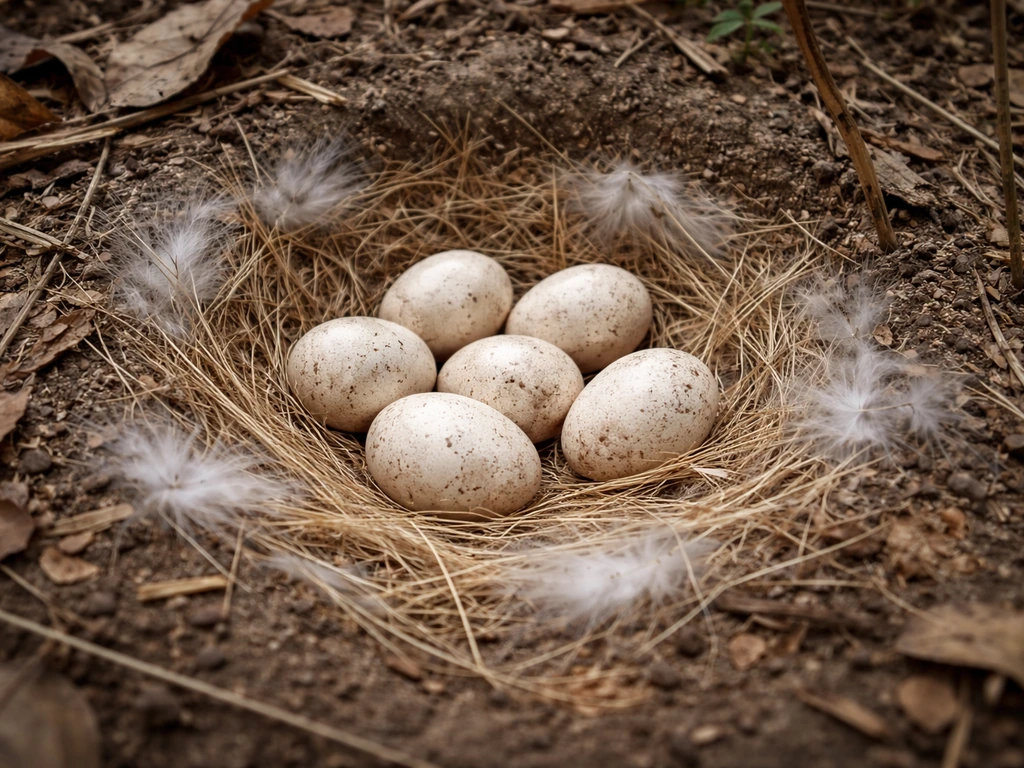
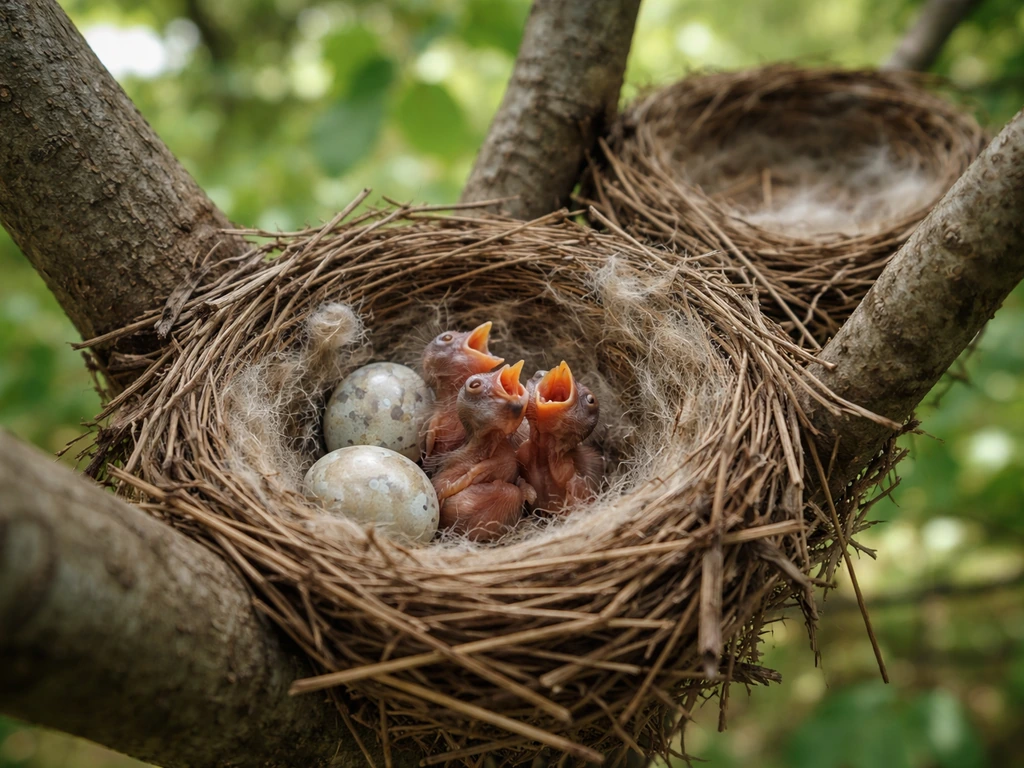
A nest is any site a bird uses to incubate eggs and shelter young, and it does not have to look like the cup-shaped structure most people picture. A bird building a nest is an example of a broader nest-building behavior that fits within these nest types. Researchers classify nest types into scrapes, platforms, cups, domed structures, primary cavities (excavated by the bird itself), and secondary cavities (existing holes the bird moves into).
Some scientific datasets even flag certain species in a separate "parasite" column because brood-parasitic birds genuinely don't fit any nest-type category at all. The Scientific Data (purl) nest-type definitions similarly include a “Scrape” category, helping standardize how minimal nest sites are treated in dataset classifications parasite" column.
Sometimes the nest can be a simple scrape rather than a built structure, which is a useful comparison point for what a bird nest is made of. It's also worth separating the nest itself from the clutch (the set of eggs laid) and the nest site (the location chosen). A killdeer's clutch sits in a scrape that looks like little more than a few pebbles arranged in a shallow depression. The eggs are the clutch.
The patch of gravel is the site. The "nest" is technically a scrape, even though a casual observer might not recognize it as one.
The main nest styles and the birds that use them
Cornell Lab's Bird Academy breaks nest forms into a handful of major types, and understanding them helps enormously when you're trying to ID what you've found. Here's how they map to real birds you're likely to encounter.
| Nest Type | What It Looks Like | Example Species |
|---|---|---|
| Scrape | Shallow depression in ground, minimal or no material added | Killdeer, common nighthawk, common poorwill |
| Cup | Bowl-shaped structure of grass, mud, bark, spider silk; placed in shrubs or trees | American robin, song sparrow, yellow warbler |
| Platform / Stick nest | Large flat pile of sticks, often reused and added to yearly | Bald eagle, osprey, great blue heron |
| Domed / Enclosed | Roofed structure with side entrance; grass, moss, or mud | Marsh wren, ovenbird, some weavers |
| Primary cavity | Hole excavated by the bird itself in dead or living wood | Downy woodpecker, pileated woodpecker |
| Secondary cavity | Existing hole taken over from another species or natural decay | Eastern bluebird, Carolina chickadee, tree swallow |
| Burrow | Tunnel dug into a bank or flat ground | Belted kingfisher, bank swallow, Atlantic puffin |
| No nest (brood parasitism) | Eggs laid in a host species' nest; no nest built | Brown-headed cowbird, some cuckoos |
The who-builds-it question also varies by species. In some, only the female constructs the nest; in others, both partners share the work or the male builds multiple "trial" nests for the female to choose from. That's covered in more depth in a related article on whether mom or dad builds the nest, but the short version is: it's genuinely species-specific. If you want the full picture, the next step is learning how birds make a nest for their species, including what materials they use and how they choose a nesting spot how does a bird make a nest? (how birds make a nest).
Bird species that skip the typical nest entirely
Ground scrape nesters
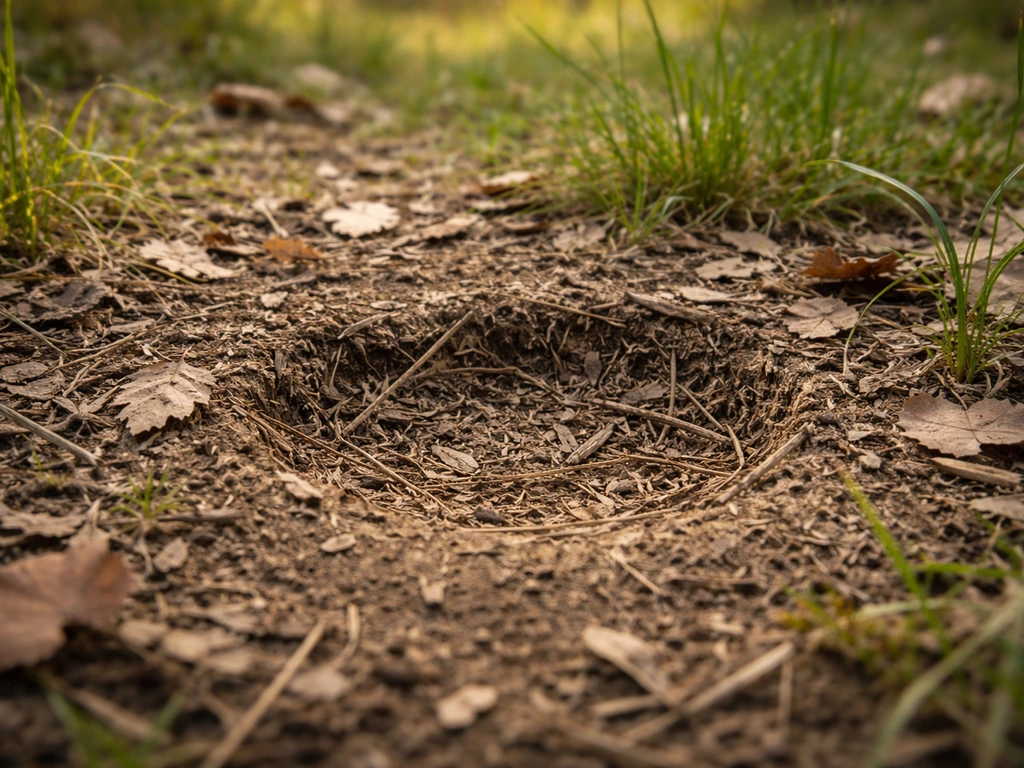
The common poorwill does not make a nest at all, just a slight scrape in the ground, according to Cornell Lab's All About Birds. Common nighthawks go even further, blank" rel="noopener noreferrer">laying eggs directly on bare gravel, sand, or flat rooftops with no preparation beyond choosing the spot. eBird's Wisconsin Breeding Bird Atlas explicitly warns surveyors to watch their step near nighthawk locations because eggs and flightless chicks blend into the substrate and are easily crushed. These birds rely on camouflage and cryptic coloration rather than physical protection from a structure. The eggs are patterned to match the ground and the incubating adult is nearly invisible at rest.
Burrow nesters
Belted kingfishers excavate nesting tunnels in vertical sandy or earthen banks along waterways. The NPS reports that a pair can dig roughly a foot of tunnel per day, and Audubon notes the finished burrow typically runs three to six feet deep, with some reaching as far as 15 feet. Bank swallows do something similar in colonial groups, pocking a bank face with dozens of holes. Burrowing owls, Atlantic puffins, and Leach's storm-petrels are other familiar burrow nesters.
In all these cases, there is construction happening, but it's underground, so you won't see any obvious above-ground nest structure. Which fish builds nest like a bird is another example of how animals can use structures in unexpected ways Burrowing owls, Atlantic puffins, and Leach's storm-petrels.
Cavity nesters (primary and secondary)
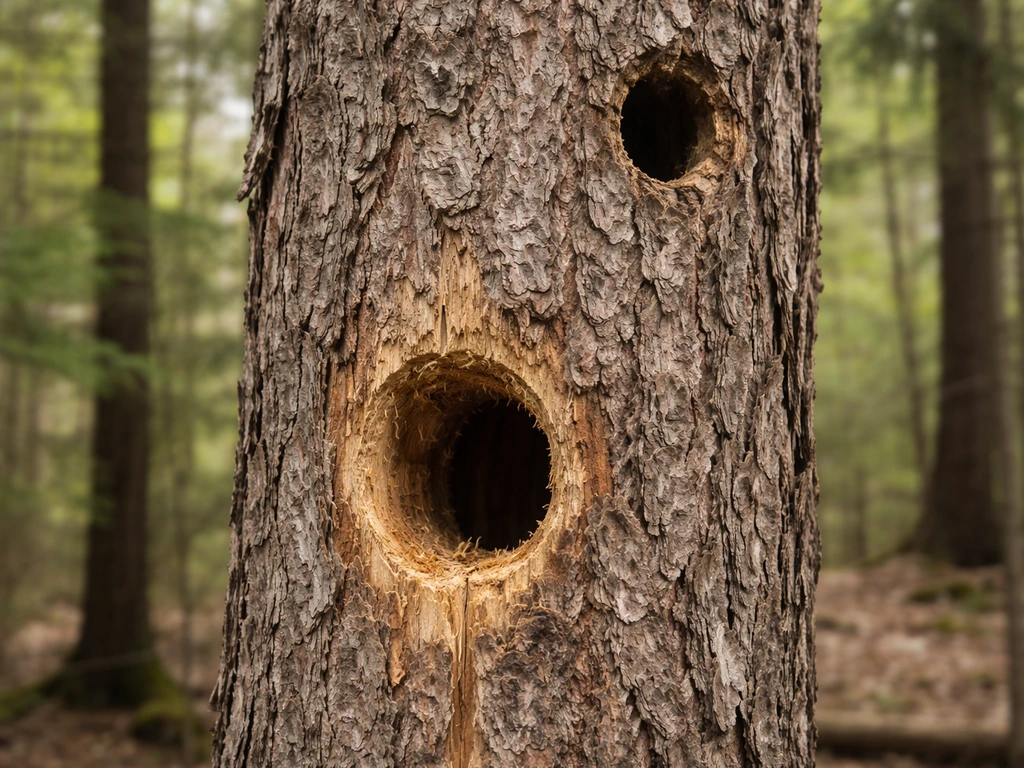
Woodpeckers are the primary cavity excavators: they chisel holes into snags (dead standing trees) and sometimes living wood. Many other species, called secondary cavity nesters, skip the excavation and simply move into woodpecker holes or natural rot cavities. Eastern bluebirds, tree swallows, Carolina chickadees, and great crested flycatchers all do this. Inside the cavity there may be a cup nest of grass and feathers, or almost nothing, depending on species. This is why leaving dead trees standing on your property matters so much for cavity-nesting bird conservation.
Brood parasites
The brown-headed cowbird is the classic North American example. Females scout other birds' nests, sneak in when the owner is away, remove or damage one of the host's eggs, and deposit their own. The host species raises the cowbird chick, often at the expense of its own young. Cowbirds can parasitize more than 200 host species and may visit many different nests in a single breeding season. Some cuckoo species use the same strategy globally, though Britannica is careful to note that not all cuckoos are brood parasites. These birds have no nest of their own at any stage, which is why scientific datasets treat them as a categorically separate case.
How to identify what you found in your yard or on a trip
When you come across eggs or a nest, run through these quick checks before touching or moving anything.
- Location and height: Is it on the ground, in a shrub, in a tree hollow, on a ledge, or in an embankment? Ground eggs with no structure strongly suggest a scrape nester. A hole in a sandy bank is almost certainly a burrow. A mud cup in a porch eave is almost certainly an American robin or barn swallow.
- Materials: Cup nests typically use grass, rootlets, bark strips, spider silk, or mud. Cavity nests may have soft linings of feathers or fur. A scrape may have nothing, or a thin scattering of pebbles or debris. Note the materials and take a photo.
- Egg appearance: Heavily patterned, cryptically colored eggs (spotted, blotched, streaked) often belong to ground-nesting species where camouflage is the main defense. Cavity-nesting species often have plain white or pale blue eggs because the cavity itself provides concealment.
- Size of the structure: Measure or estimate. A robin cup is roughly 6 inches across outside and 3 inches inside. A bald eagle platform can be 4 to 5 feet wide. A scrape may have no measurable dimension at all.
- Adult bird behavior nearby: Is an adult flushing repeatedly from a specific ground spot? That's a strong sign of a ground nester. Are you hearing an alarm call from cover? Back up and watch from at least 30 feet away. Let the parents tell you where the nest is.
- Check for odd eggs in an otherwise normal nest: A visibly larger egg or a differently patterned egg among a host's clutch is a common sign of cowbird parasitism.
Take photos from a distance with a zoom lens or your phone's digital zoom before getting close. Photos are your best documentation tool and will help a wildlife rehabilitator or birding community ID the species remotely if you need to ask for help later.
What to do right now if you've found an active nest
For nests in trees, shrubs, or structures

The most useful thing you can do is nothing dramatic. Audubon's guidance is clear: leave the nest alone, keep cats indoors, and minimize how often you walk past or near it. If the nest is on your porch and you need to use the door, that's fine, but avoid lingering close to it. Audubon notes that if you are right next to the nest, parents may stay away until you leave, which can stress adults and chill eggs. Establish a watching spot at least 20 to 30 feet away, and keep visits short. The NestWatch Manual from Cornell Lab reinforces this: don't startle birds and never force an adult off a nest.
For nests or eggs on the ground
Ground nests are easy to accidentally destroy. Mark the area with a ring of small flags or stones at a radius of about 10 feet to remind household members and guests where not to walk. Keep dogs leashed or out of that area entirely. If you have a lawn mowing schedule, postpone it. Most ground-nesting species fledge in three to four weeks from hatching, so the disruption is temporary. If the nest is in a high-traffic area like a gravel driveway, post a handmade sign to alert others. This is low-effort and genuinely saves nesting attempts.
Predator protection without harming wildlife
- Keep domestic cats strictly indoors during nesting season (roughly March through August in most of North America). Cats are the single largest human-associated source of bird mortality.
- If a nest is on a post or railing, a cone-shaped baffle below the nest location can deter climbing predators like raccoons and snakes.
- Don't add shiny deterrents or wind chimes near an active nest. They stress the adults more than they deter predators.
- If corvids (crows, jays) are harassing a nest, your presence nearby can actually deter them temporarily, but don't stay so long that you prevent the adults from returning.
- Never use pesticides near an active nest. Many songbirds feed insects to nestlings, and pesticide-killed prey is a real hazard.
When you find a baby bird on the ground
The Washington Department of Fish and Wildlife makes the key distinction: if the bird is feathered (a fledgling) and hopping around, it almost certainly has parents nearby still feeding it. Leave it where it is. If the bird is naked or mostly featherless (a nestling) and clearly fell from the nest, you can gently place it back in the nest if you can see and safely reach it.
The myth that human scent will cause parents to abandon young is false for virtually all North American bird species. Audubon is explicit about this: handle it as little as possible, but placing a nestling back is far better than leaving it on the ground. If you cannot locate or reach the nest, call a licensed wildlife rehabilitator before doing anything else.
The legal and ethical lines you need to know
In the United States, roughly 1,100 native bird species are protected under the Migratory Bird Treaty Act (MBTA). That protection extends to their nests and eggs. The practical upshot for homeowners: if a nest is active (contains eggs or chicks), you cannot legally remove or destroy it without a federal permit. The U.
S. Fish and Wildlife Service is explicit that destruction of a bird nest alone (with no eggs or birds present) is generally not prohibited under the MBTA, provided you don't possess the nest after the fact. But the moment eggs or chicks are involved, destruction becomes a potentially prosecutable take of a migratory bird. Permits for removal are issued only under narrow circumstances, such as a genuine human health or safety concern.
"I don't want this nest here" does not qualify.
The clearest practical rule: if you find it with eggs or young in it, treat it as protected until you hear otherwise from a wildlife authority. Don't pick it up, don't move it to the garage, and don't save it as a souvenir after the season. Keeping a nest you found on the ground is also illegal without a federal permit, even if it's obviously abandoned.
Do's
- Observe from a distance and document with photos.
- Keep pets away from the nest area for the duration of the nesting cycle.
- Alert household members and visitors to the nest's location.
- Contact your state wildlife agency or a licensed wildlife rehabilitator if you have a safety concern or find an injured bird.
- Wait until after the season is over (nest is cold and clearly abandoned) before removing or trimming vegetation where an inactive nest sits.
Don'ts
- Don't remove or relocate an active nest without authorization from a federal or state wildlife agency.
- Don't collect or keep a nest, egg, or feather from a protected species without a permit.
- Don't attempt to raise a nestling yourself. Licensed rehabilitators have the training, permits, and diet knowledge to do it safely.
- Don't assume a ground nest is abandoned just because you don't see an adult sitting on it. Many ground nesters leave the nest frequently and the adult may be watching from nearby cover.
- Don't spray pesticides, trim hedges, or mow grass in an area with an active nest.
When to call a wildlife rehabilitator
Call a licensed wildlife rehabilitator if: the nest has been physically destroyed and you have uninjured eggs or nestlings with nowhere to go; a nestling is injured (bleeding, broken limb, obvious trauma); a fledgling is in immediate danger from a cat or other predator and cannot be moved to safety nearby; or you've watched a fledgling for several hours with no parent contact at all. Audubon emphasizes calling before intervening, not after. In the U.S., you can find a local rehabilitator through the National Wildlife Rehabilitators Association directory or your state's fish and wildlife agency website.
A quick seasonal note on timing
In North America, most passerines (songbirds) nest between April and July, with peak activity in May and June. Ground nesters like nighthawks start later, often in June. Cavity nesters like bluebirds and tree swallows can start as early as March in southern states. Some species, including American robins and mourning doves, raise two or three broods per season, so a nest that looked finished in May may be re-occupied in July.
If you're planning any yard work, a quick visual check of shrubs, eaves, window ledges, and ground cover before you start is worth two minutes of your time. It's much easier to adjust a work plan than to deal with accidentally disturbing an active nest. Related topics on when birds make nests and what materials they use can help you read the seasonal cues and understand what you're seeing as nesting progresses.
Bird nests are built in different ways, depending on the species, habitat, and available materials what materials they use.
FAQ
If I see eggs on the ground, does that mean that species does not build nests at all?
Not always. Some birds lay on a bare spot but still create a nesting site by choosing a specific microhabitat (for example, gravel versus leaf litter). Also, what looks like “no nest” may be a scrape, so the practical check is whether there is a defined incubation area the adult consistently attends.
Are backyard “no nest” situations always okay to relocate, like moving a rock or leaf pile?
Do not relocate anything once you’ve identified active eggs or chicks, even if it seems minor. Clearing stones, leveling debris, or moving nearby objects can expose eggs or increase predation, and it can be treated as disturbing an active nest.
How can I tell whether I’m looking at a nest, a temporary roost, or food debris?
Look for repeated adult attendance at one exact spot and signs of incubation, like the same adult returning regularly or nearby defensive behavior. If there is no adult activity and the items appear scattered and old, it may be non-nesting material, but when in doubt treat it as a nest until a wildlife authority advises otherwise.
Do both parents incubate, or does it matter which bird is present?
It matters by species. Some birds have shared incubation, others rely mostly on one adult. From a safety perspective, what matters most is minimizing disturbance, since even if one parent is away, the other may still be incubating or feeding.
What if the adult bird leaves when I approach, does that mean the nest is abandoned?
Not necessarily. Many birds temporarily depart to reduce threat or because they can’t risk being caught by predators. A better decision rule is timing: if eggs or chicks are present, avoid repeated close visits and instead keep distance and wait for adult returns.
Is it true that human scent will make parents abandon eggs or chicks?
For virtually all North American birds, the “scent abandonment” concern is not supported as a general rule. The bigger issues are handling stress and physical disturbance. If you must help, the priority is minimizing time and doing only what you are specifically able to do safely.
When should I mark the area for a ground nest, and how close should I keep it?
Marking helps, especially during mowing or foot traffic. A practical target is about 10 feet from the suspected nest site, and use low, visible markers that do not attract attention to the eggs themselves. If the nest is near a road or walkway, adjust the boundary so people can’t drift closer unintentionally.
If I find a chick, can I assume it’s old enough to be a fledgling and leave it alone?
Not always. Fledglings are usually feathered and moving around, but nestlings can sometimes look partially developed. If the bird is naked or mostly featherless, treat it as a nestling and contact a rehabilitator if you cannot confidently return it to the nest.
Can I put a discovered nest or eggs into a safer container like a box to “protect” them?
No, not if eggs or chicks are still present. Moving eggs, transferring them to a container, or storing them at home can be illegal and usually prevents proper incubation. If protection is needed, restrict access from people and pets and call a licensed rehabilitator.
Does the law differ if the nest is in my yard but clearly abandoned-looking?
Yes, but “abandoned-looking” is not the same as “no longer active.” If eggs or chicks are present, treat the nest as active and protected until confirmed otherwise. If you find the nest outside the breeding period with no eggs or young, you may still want guidance before removal, because status can be misread.
What should I do if the nest is on my porch steps or door path and I must pass by daily?
Create a consistent, predictable route and set up a viewing spot farther away, so you do not repeatedly startle adults during each entry. Keep pets indoors and avoid lingering near the entrance. If you can cover access to the exact area without blocking the birds' normal movement, that often reduces conflict.
How can I get help quickly if I’m unsure what bird species I’m dealing with?
Use distant photos that show both the adult (if visible) and the nest site context (ground, cavity entrance, bank, roof surface). Include a wide shot for habitat and a close shot for any patterning on eggs or the chick's appearance, then contact a local birding group or wildlife rehabilitator with those images.